Can You Braze Exhaust Pipe
Yes, you can braze exhaust pipe. In order to do so, you will need a torch and some brazing rod. First, heat up the area that you want to braze.
Then, touch the brazing rod to the heated area and allow it to melt. Once the brazing rod has melted, it will form a bond with the metal of the exhaust pipe.

YOLANDO
3'' Mild Steel Exhaust Pipe Kit, 3''…
- This Universal Custom Exhaust Kit Made of High Quality Mild Steel with Computerized Mandrel-Bends for Strength and Durability, 16-…
- 16-Gauge Piping Walls Of This Custom Exhaust Kit
- 4 X 47.3" Straight Pipes, 4 X 90 Degree Pipes, 4 X 45 Degree Pipes, 4 X 180 Degree U-Bends
As an Amazon Associate I earn from qualifying purchases.
- Clean the exhaust pipe and surrounding area with a wire brush to remove any rust or debris
- Apply a thin layer of brazing flux to the area where the two pipes will be joined
- Place the pieces of pipe together and heat them with a propane torch until they are glowing red hot
- Touch the end of a piece of brazing rod to the joint and allow it to melt and flow into the gap between the pipes
- Continue adding more brazing rod until the joint is filled, then remove the torch and allow the joint to cool
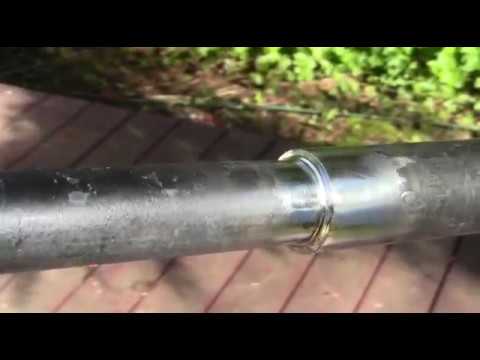
Muffler Brazing with steal
How Do You Fix an Exhaust Pipe Without Welding?
If your car’s exhaust pipe has developed a hole or crack, you’ll need to repair it as soon as possible. A hole in the exhaust pipe can cause the engine to run louder than normal and can also lead to dangerous fumes being emitted into the passenger compartment of the vehicle.There are several ways that you can repair a hole in an exhaust pipe without welding.
One option is to use an exhaust putty or patch kit. This type of kit typically comes with a piece of cloth that you place over the hole and then apply the putty or cement to hold it in place. Another option is to use stainless steel clamps to secure a patch over the hole.
Whichever method you choose, be sure to follow the instructions carefully and allow plenty of time for the repair to dry before driving your car again.
Can You Weld Muffler Pipe?
Welding a muffler pipe is not as difficult as it may seem. In fact, with the right tools and techniques, anyone can weld a muffler pipe with ease. Here are the steps you need to follow to weld a muffler pipe:
1. First, you need to gather all the necessary tools and materials. This includes a welding machine, welding rod, gloves, mask and safety goggles.2. Next, you need to clean the area where you will be welding.
This is important because any dirt or debris on the surface can cause problems when welding. Use a wire brush to remove any rust from the surface of the pipe.3. Once the area is clean, set up your welding machine according to the manufacturer’s instructions.
Then, put on your gloves and safety goggles.4. Now it’s time to start welding! Begin by striking an arc on the end of the pipe that you will be welding first.
Then slowly move along the length of the pipe while maintaining a consistent speed and pressure. Be sure to keep your hand moving at all times so that you don’t overheat one spot on the pipe which could cause damage.5 .
When you reach the end of the weld, release the trigger and allowthe arc to cool for a few seconds before moving onto another section ofthe pipe . Repeat this process until you have completed Weldingthe entire mufflerpipe .
Can You Weld Exhaust With a Propane Torch?
Yes, you can weld exhaust with a propane torch, but it’s not the ideal method. Propane torches produce a lot of heat, which can warp the metal and make it difficult to get a good weld. It’s also hard to control the flame with a propane torch, so you might end up burning through the metal or not getting enough heat to properly weld the joint.
If you’re going to use a propane torch for welding exhaust, make sure you have plenty of experience and practice first.
What is the Best Welding Method for Exhaust Pipe?
Welding is a common way to join exhaust pipes, and there are several methods that can be used. The best method for welding exhaust pipe depends on the materials being used, the thickness of the pipes, and the desired finish.MIG welding is a popular choice for welding exhaust pipe because it is fast and relatively easy to learn.
This type of welding uses an electrode that is fed through a wire feeder, and the arc between the electrode and the workpiece melts the metal so that it can fuse together. MIG welding works well on thin materials like exhaust pipe, and it can produce a smooth finish.TIG welding is another option for welding exhaust pipe.
TIG welders use a tungsten electrode that is non-consumable, meaning it doesn’t need to be replaced as often as other types of electrodes. TIG welders also have more control over the heat than MIG welders, making them ideal for delicate projects or those that require precision. TIG welds are generally stronger than MIG welds, but they can be more difficult to master.
Exhaust Pipe Welding Methods: Pros & Cons |
Credit: biketransplant.tripod.com
Brazing Exhaust With Coat Hanger
Brazing exhaust with a coat hanger is a popular do-it-yourself method for repairing leaks in car exhaust systems. The process is simple and only requires a few tools and materials that are readily available. Brazing exhaust with a coat hanger is an effective way to repair small leaks, but it’s not recommended for larger holes or leaks that are located in difficult-to-reach areas.
Can You Braze Stainless Steel Exhaust
You can braze stainless steel exhaust systems, but it is not as common as welding. The main reason for this is that brazing does not create as strong of a joint, and welding is generally seen as a better option when working with exhaust systems. However, there are some benefits to brazing over welding.
For example, brazing is less likely to distort the metal, and it can be used on thinner metals than welding. Additionally, brazing can be done without removing the existing finish on the metal, which is often a desirable trait when working with exhaust systems.
Brazing Steel With Propane Torch
Brazing is a process of joining two pieces of metal together using a filler material. In order to braze steel with a propane torch, the following steps must be taken:1. Clean the surfaces of the steel that will be joined together.
This can be done with a wire brush or sandpaper. The goal is to remove any rust or dirt that could prevent proper bonding.2. Apply flux to the clean surfaces.
Flux helps to prevent oxidation and ensures a strong bond between the metals.3. Heat the steel with the propane torch until it is reddish-orange in color. The heat should be applied evenly to avoid hot spots.
4. Touch the tip of the brazing rod to the molten flux on the surface of the steel. The rod will start to melt and flow into the joint area between the two pieces of metal. Continue moving along the length ofthe joint, applying additional filler material as needed.
5 .
Conclusion
In conclusion, it is possible to braze exhaust pipe, but it is not recommended. This is because the high temperatures required for brazing can damage the pipe and make it more likely to break.
Related pick: Check today's price on Amazon