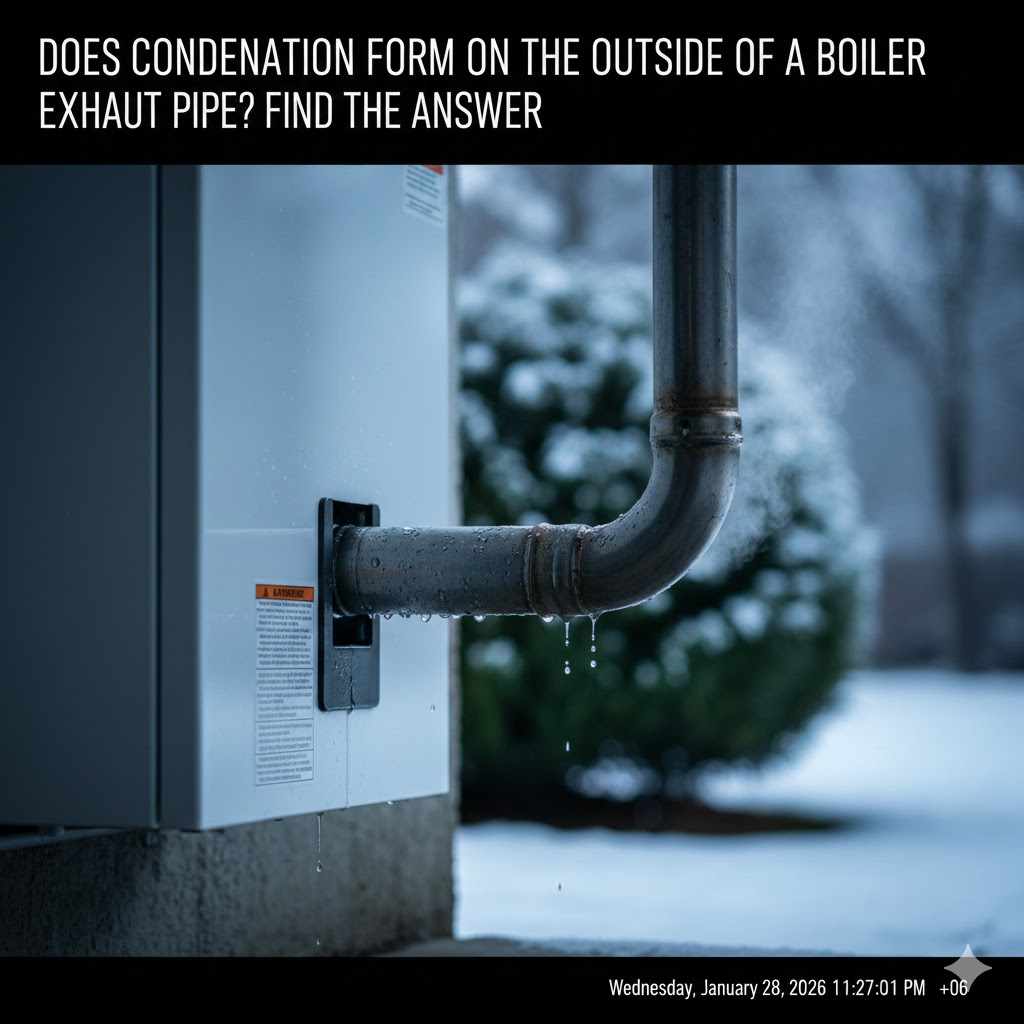
Does Condensation Form on the Outside of a Boiler Exhaust Pipe?
It’s common to see water dripping from your boiler’s exhaust pipe, and it can be confusing if you don’t know what’s happening. Many people wonder, Does Condensation Form on the Outside of a Boiler Exhaust Pipe? Don’t worry, it’s usually not a major problem, but it’s good to know why it happens. This guide will walk you through the process, helping you figure out what’s normal and what might need some attention. We’ll simplify the whole thing step-by-step, making it easy to see what’s what.

HOLIDYOYO
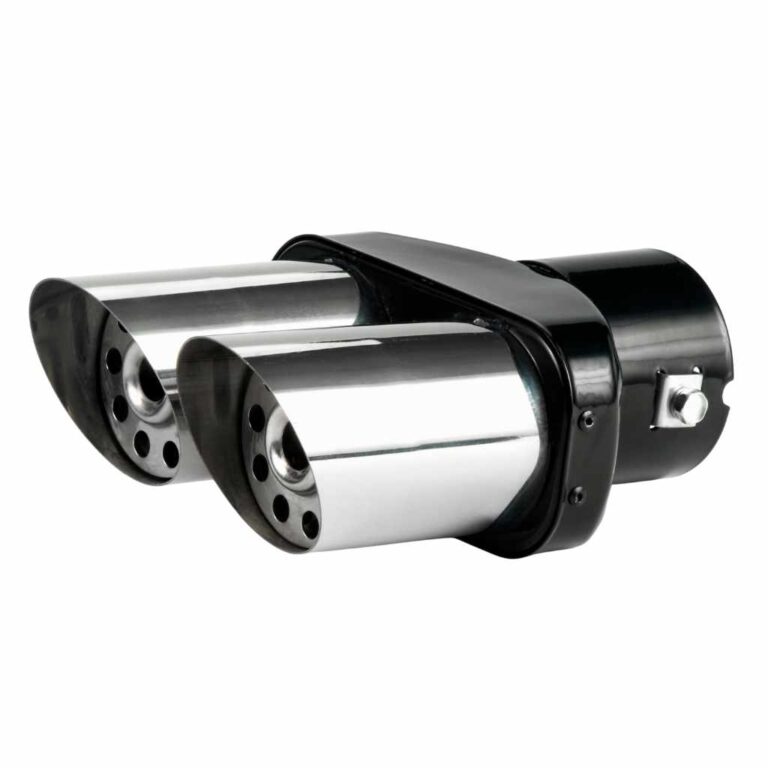
HOLIDYOYO 4 Pack Boiler Condensation Collector Cup…
- Strong Plastic Build: Engineered with premium plastic, this boiler condensation collector resists everyday wear, ensuring its use…
- Effective Condensation Management: Acting as a condensation collector cup drip catcher, it efficiently manages water collection, p…
- Broad Boiler Fit: This fireplace condensate collector accessory is designed to serve as a universal fit for most wall hung boilers…
As an Amazon Associate I earn from qualifying purchases.
The Science Behind Condensation
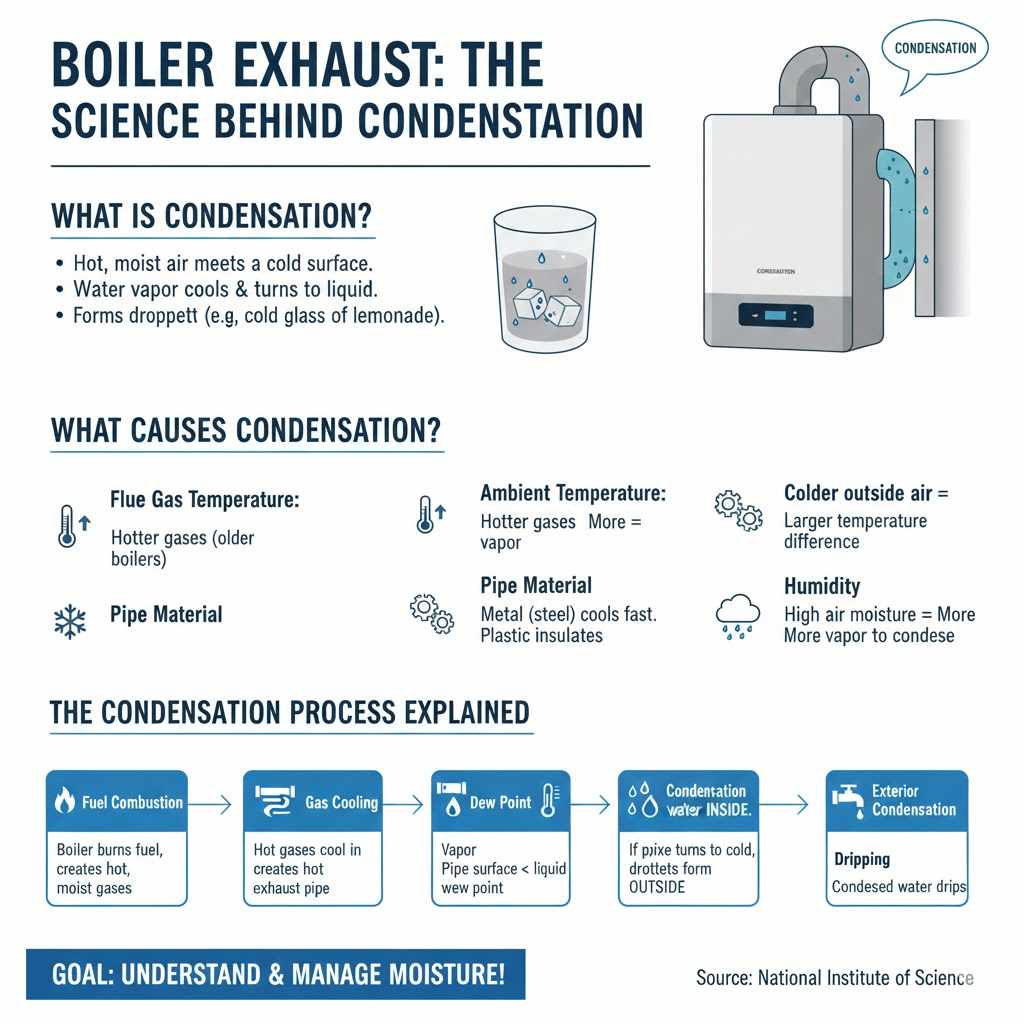
To really explore the question, “Does Condensation Form on the Outside of a Boiler Exhaust Pipe?”, let’s start with the basics of how condensation works. It’s all about how water changes its state, moving from gas to liquid. When hot, moist air meets a cold surface, the water vapor in the air cools down. This cooling causes the water vapor to lose energy and change into liquid water. You’ve probably seen this happen on a cold glass of lemonade on a hot day – water droplets form on the outside.
This same principle applies to your boiler’s exhaust pipe. The flue gases (the exhaust) from a boiler are often hot and contain water vapor, a product of the combustion process. As these hot gases travel through the exhaust pipe and come into contact with the cooler air outside, the water vapor in the exhaust can condense, forming liquid water on the inside of the pipe. If the pipe is cold enough, condensation can also occur on the outside, appearing as water droplets. Understanding this basic scientific principle is the first key step to understanding why you might find water on your exhaust pipe.
What Causes Condensation?
Several factors influence condensation on a boiler exhaust pipe. The temperature of the flue gases, the temperature of the surrounding air, and the materials the exhaust pipe is made from all play a part. Condensation is more likely to happen when the exhaust pipe is made of a metal that readily conducts heat, like stainless steel, and when the external air is colder. In older, less efficient boilers, the flue gases might be significantly hotter, increasing the chances of condensation. High humidity levels in the surrounding air also contribute to condensation formation because there is more water vapor present.
- Flue Gas Temperature: Boilers that do not effectively extract the heat from the combustion process can have higher flue gas temperatures. These hotter gases contain more water vapor and are more likely to condense, creating water droplets. This is a common issue with older boilers, which are not designed to optimize heat transfer.
- Ambient Temperature: Colder external temperatures provide a larger temperature difference, increasing the likelihood of condensation. The greater the temperature difference between the warm flue gases and the cold exhaust pipe, the more the water vapor will condense.
- Pipe Material: The material of the exhaust pipe matters. Metal pipes, especially those made of stainless steel, conduct heat well. This means they cool down quickly, making condensation more likely. Plastic pipes, on the other hand, often do a better job of insulating and preventing condensation.
- Humidity: High humidity in the surrounding air increases the amount of water vapor available to condense on the outside of the pipe. If the air is already saturated with water, any cooling of the pipe surface will likely result in condensation.
The Condensation Process Explained
Let’s break down the actual process. It starts when the boiler burns fuel, creating hot gases filled with water vapor. These gases travel through the exhaust pipe. As the hot gases move toward the outside, the metal of the exhaust pipe cools them down. If the pipe’s surface temperature is below the dew point (the temperature at which water vapor condenses), then condensation occurs. This means water droplets will form on the inside of the pipe. If the pipe is also cold enough, and the surrounding air has moisture, then condensation can happen on the outside of the pipe as well. The condensed water can sometimes drip down the pipe and may appear as if the pipe is leaking, giving the appearance of water.
- Fuel Combustion: The boiler burns fuel (like natural gas or propane), creating hot flue gases that contain water vapor.
- Gas Cooling: The hot gases travel through the exhaust pipe, and the metal pipe absorbs some of their heat, cooling the gases.
- Dew Point: If the pipe’s surface temperature falls below the dew point, the water vapor in the flue gases begins to condense.
- Condensation: Water vapor changes into liquid water droplets on the inside of the exhaust pipe.
- Exterior Condensation: If the exhaust pipe is cold enough, condensation also happens on the outside.
- Dripping: The condensed water drips down the pipe and may exit at a joint or the pipe’s end.
Identifying Condensation on Your Boiler Exhaust Pipe
Finding water on or around your boiler’s exhaust pipe is the first sign that you may have condensation. However, it’s essential to figure out whether it’s normal or signals a more serious issue. The appearance of the water, where it’s located, and the amount of water are all key clues. Taking a good look at the system can help you decide what to do next.
The next thing to ask is, “Does Condensation Form on the Outside of a Boiler Exhaust Pipe?”, frequently, or is it a one-time thing? It’s important to differentiate between typical condensation and a more serious problem. A small amount of water may be normal, especially during certain weather conditions, such as cool, humid days. However, large amounts of water or water that seems to be continuous, may suggest a problem.
Visual Inspection Checklist
Here’s a simple checklist to follow when inspecting your boiler’s exhaust pipe:
- Examine the Pipe: Look closely at the outside of the pipe. Note any water droplets, stains, or signs of rust. Rust could suggest that the condensation is persistent and damaging the pipe.
- Check the Joints: Examine all joints and connections along the exhaust pipe. These are often the places where water leaks are visible, and condensation can accumulate. Make sure everything is tightly connected.
- Look at the Ground: Check the area around the base of the exhaust pipe. Look for water stains or puddles that suggest water is dripping consistently from the pipe.
- Feel the Pipe: Gently touch the exhaust pipe (when it’s not hot). If it feels cold and wet, that’s a good sign of condensation. This can also indicate that the pipe is not insulated.
- Consider the Weather: Observe the weather conditions. Is it cool and humid? Condensation is more common in these conditions. Note when you see the water.
Differentiating Between Condensation and Leaks
It can sometimes be challenging to distinguish between condensation and a leak. A condensation problem often results in water droplets, while a leak may appear as a continuous flow or a larger amount of water. Check to see where the water is coming from. Condensation will typically be spread across the pipe, while a leak might originate from a specific spot. Also, consider the smell. A leak involving combustion byproducts may smell different, while condensation will usually be odorless.
- Water Appearance: Condensation typically appears as droplets or a thin film of water on the pipe’s surface, while a leak might show as a constant stream or a pool of water.
- Water Amount: Small amounts of water, especially during specific weather conditions, are often condensation. A significant and continuous amount of water could indicate a leak.
- Location: Condensation usually covers a wider area on the pipe, while leaks often originate from a specific spot, such as a joint or a crack.
- Smell: Condensation is often odorless. Leaks from the combustion chamber could have an unusual smell.
- Observation: Watch the pipe when the boiler is running. If water appears quickly, or increases over time, it’s likely a leak.
Causes and Potential Issues
While some condensation is normal, excessive condensation or condensation accompanied by other issues could indicate a problem. Factors like boiler inefficiency, improper venting, and the pipe’s condition play a role. If you are regularly seeing condensation, it’s a good idea to explore the potential causes and potential problems to protect your home and yourself.
Understanding “Does Condensation Form on the Outside of a Boiler Exhaust Pipe?” also means considering the possible downsides. Condensation, if left unchecked, can lead to corrosion on metal pipes, reducing their lifespan and potentially causing dangerous gas leaks. Inefficient boilers may produce more condensation because they are not properly extracting heat. Additionally, any blockage in the exhaust system can affect the boiler’s performance and increase condensation.
Boiler Efficiency and Condensation
Boiler efficiency is directly related to condensation. In highly efficient condensing boilers, the flue gases are cooled to the point where they condense within the boiler itself, extracting extra heat and increasing efficiency. These boilers often have a drain to handle this condensation. Less efficient boilers may not cool the flue gases enough, which could lead to condensation outside the boiler. If you are experiencing excessive condensation, your boiler’s efficiency may be something to check.
- Condensing Boilers: These boilers are designed to recover heat from flue gases, condensing water vapor within the unit. The resulting condensate is then safely removed via a drain. This process maximizes the boiler’s efficiency.
- Non-Condensing Boilers: Older and less efficient boilers often do not condense the water vapor within the unit. Their flue gases are discharged at higher temperatures. This may lead to condensation inside the exhaust pipe, and in some cases, outside.
- Efficiency Impact: A more efficient boiler typically produces cooler flue gases. This lowers the chance of condensation, making the system healthier.
- Inspection: If you have excessive condensation, consider checking your boiler’s efficiency. A professional can test your unit and offer suggestions to improve performance.
Ventilation Issues and Their Impact
Problems with ventilation, such as blockages or incorrect venting, can also lead to condensation problems. If the exhaust gases cannot properly escape, they may cool inside the exhaust pipe, forming condensation. Restricted airflow can also affect the boiler’s combustion process, potentially leading to more water vapor. Checking the ventilation system is necessary to ensure the safe and efficient operation of your boiler. Poor ventilation affects the boiler’s performance and significantly increases the chances of condensation.
- Blockages: Any blockage in the exhaust pipe, such as debris or animal nests, can restrict the flow of flue gases. This forces the gases to cool within the pipe, increasing condensation.
- Improper Venting: The exhaust pipe needs to be correctly installed and sized for the boiler. Incorrect venting can cause inefficient airflow and condensation.
- Draft Issues: Insufficient or excessive draft (the flow of air through the boiler) can negatively affect combustion and result in more water vapor. This can also lead to more condensation.
- Inspection: Get your venting system inspected regularly by a qualified technician to ensure correct operation. The inspection can spot and address any issues early.
Corrosion and Pipe Damage
Constant condensation on the exhaust pipe can lead to corrosion, especially if the pipe is made of metal. Over time, the repeated exposure to water can rust the pipe from the inside out, weakening it and potentially creating leaks. Leaks in the exhaust pipe are dangerous because they could release combustion byproducts, like carbon monoxide, into your home. It’s important to address any issues quickly to prevent or stop any damage to the pipes. Corroded pipes can reduce the system’s ability to exhaust fumes, affecting performance.
- Material Matters: Metal exhaust pipes are more susceptible to corrosion than those made from materials like polypropylene. The constant contact with water can slowly wear down the metal.
- Leaks: Corrosion can lead to holes or cracks in the exhaust pipe. These can release dangerous gases, posing a health hazard.
- Reduced Lifespan: Corrosion will shorten the life of the exhaust pipe, meaning you’ll need to replace it sooner. The sooner you see problems, the sooner you’ll need to replace the part.
- Inspection: Look at the pipe for signs of rust. If you see it, then you should consider getting the system looked at by an expert.
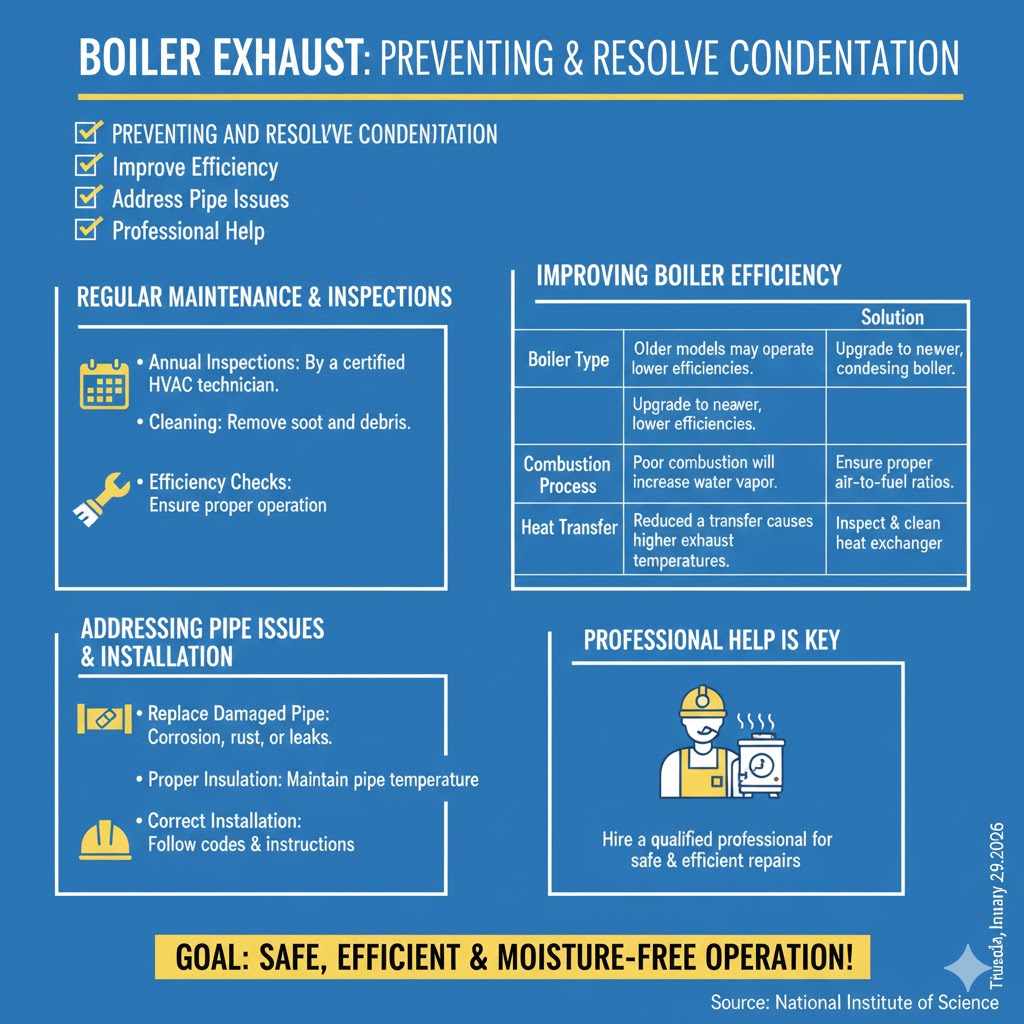
Preventing and Resolving Condensation
If you’ve noticed condensation, it is important to take steps to address the issue. You can take some steps on your own. You may also want to call in an expert. The key is to address the underlying causes, and by doing so, you can greatly lower the chances of condensation and extend the life of your system. You can also minimize potential problems.
So, “Does Condensation Form on the Outside of a Boiler Exhaust Pipe?” and how can you stop it? There are several things you can do to address the issue, beginning with ensuring that your system operates safely. Regular maintenance is key, as is taking steps to increase efficiency and avoid any potential health problems. Remember, the best approach often depends on the specific cause and severity of the condensation.
Regular Maintenance and Inspections
Regular maintenance and routine inspections are essential for maintaining your boiler’s performance and minimizing condensation issues. It’s best to have your boiler inspected annually by a certified technician. Routine maintenance will keep the system running efficiently, lower the chances of issues, and extend the lifespan of your unit. Regular upkeep prevents serious problems from developing. Regular maintenance will also help catch problems early.
- Annual Inspections: Get your boiler and exhaust system inspected every year by a qualified HVAC technician. The technician can look for any problems, such as leaks, blockages, or corrosion.
- Cleaning: Boilers and their components should be cleaned regularly to remove any soot or debris that could affect efficiency. This will help reduce the chance of condensation.
- Efficiency Checks: The technician should measure the boiler’s efficiency to make sure it’s running correctly. A less efficient boiler may produce more water vapor, so checking this is key.
- Ventilation Checks: Ensure the venting system is clear of blockages and is correctly installed. Ventilation problems are a significant cause of condensation.
Improving Boiler Efficiency
Improving your boiler’s efficiency can reduce the chances of condensation. A boiler that works well uses less fuel, generates less water vapor, and exhausts the gases at a cooler temperature. If your boiler is old, a more efficient unit may be the best move. It could also save you on fuel bills. Making sure your boiler is operating as efficiently as possible is a key step in reducing the likelihood of condensation. Making changes to your system and regularly maintaining it will also pay off.
| Factor | Impact on Condensation | Solution |
|---|---|---|
| Boiler Type | Older models may operate at lower efficiencies. | Consider upgrading to a newer, condensing boiler. |
| Combustion Process | Poor combustion will increase water vapor. | Ensure proper air-to-fuel ratios and regular cleaning. |
| Heat Transfer | Reduced heat transfer causes higher exhaust temperatures. | Have your boiler’s heat exchanger inspected and cleaned. |
Addressing Pipe Issues and Installation
If you have identified problems with your exhaust pipe, such as corrosion or leaks, you should address those issues quickly. Sometimes, the solution is to replace a section of pipe or the whole system. Proper installation practices, using the right materials, and making sure all connections are tight, are critical for a safe and efficient system. Getting the help of a professional will ensure the job is done correctly.
- Replace Damaged Pipe: If you notice corrosion, rust, or leaks, replace the damaged sections or the entire exhaust pipe. A licensed HVAC technician can handle this job.
- Proper Insulation: Insulate your exhaust pipe to maintain its temperature and reduce the chance of condensation. Insulation is particularly useful in colder climates or in areas where the pipe is exposed to the outside.
- Correct Installation: Make sure your exhaust pipe is properly installed, following the manufacturer’s instructions and local building codes. Poor installation can lead to a lot of problems.
- Professional Help: When in doubt, hire a qualified professional to assess your system and make any needed repairs. This will ensure your system is safe and efficient.
Frequently Asked Questions
Question: Is condensation on the exhaust pipe always a problem?
Answer: Not necessarily. Some condensation is normal, particularly during cool, humid weather. However, excessive or constant condensation could signal a more significant problem.
Question: How can I tell if the condensation is excessive?
Answer: Look for large amounts of water, rust, or water dripping continuously. If you see these signs, it’s best to have your system checked by a professional.
Question: Can I fix the condensation myself?
Answer: Some basic maintenance tasks, such as cleaning the pipe and checking for obvious blockages, are things you can do. However, any major repairs or issues should be handled by a professional.
Question: What’s the best way to prevent condensation?
Answer: Regular maintenance, inspections, and keeping your boiler running efficiently will help prevent condensation. Also, ensure that the venting is correct.
Question: Will the condensation cause problems in the future?
Answer: If left untreated, excessive condensation can cause corrosion and pipe damage. This can lead to decreased efficiency and potential health hazards.
Final Thoughts
So, we’ve explored the question: “Does Condensation Form on the Outside of a Boiler Exhaust Pipe?” and now you have a good handle on what to watch for. Remember that some condensation is normal. However, if you see constant dripping, rust, or a lot of water, it’s time to take action. Regular inspections and keeping up with maintenance will help keep your system working well. If you suspect any problems, it is important to have your boiler and exhaust system checked by a professional to ensure your comfort and safety. Taking these steps will keep your home comfortable and safe.
Related pick: Check today's price on Amazon