Do Exhaust Pipes Have to Be Round? Essential Answers
FGJQEFG
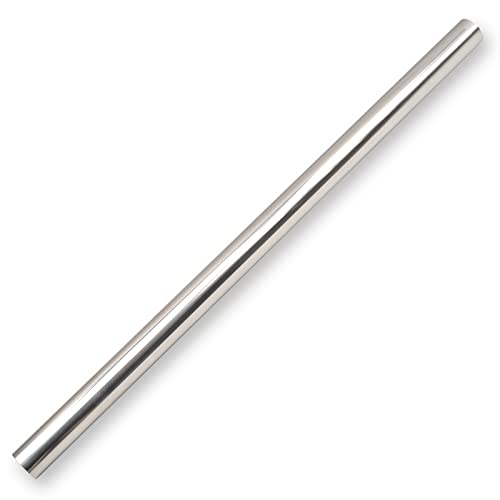
FGJQEFG 2 Inch Straight DIY Custom Mandrel…
- 【Material】Universal Straight DIY Custom Mandrel Exhaust Tube Pipe Made of High-Quality T-304 Stainless Steel, Strength and longer…
- 【Size】Outside Diameter: 2 Inch / 2'', Straight Pipes Length: 40"Inch, Bending Angle: Straight.
- 【Easy To Use】Construction to maintain OD/ID size integrity for easier installation, Polished pipe is great for DIY project.
As an Amazon Associate I earn from qualifying purchases.
Do exhaust pipes have to be round? Not always! While round is the most common shape for exhaust pipes due to its efficiency and ease of manufacturing, other shapes exist and can be used, though they often come with trade-offs. This article explores why round is standard and what alternatives might mean for your car.
Have you ever noticed the exhaust pipe on your car and wondered if it’s always been that way? Or maybe you’ve seen a different shape and thought, “Huh, does that matter?” It’s a common question for many car owners, and it’s perfectly natural to be curious about the parts that keep your vehicle running smoothly and quietly. The round shape is by far the most popular for exhaust pipes, and there’s good reason for that. But does that mean it’s the only shape that works? The answer might surprise you! Don’t worry if you’re not a car expert; we’re going to break down why exhaust pipes are usually round and explore if there are other options out there. Stick around to get all your questions answered about exhaust pipe shapes.
Why Are Most Exhaust Pipes Round?
The simple fact is, a round pipe is often the best pipe. It’s the go-to shape for engineers and manufacturers for several excellent reasons, primarily centering around how gases flow and how the pipe itself is made and how it holds up. Let’s dive into why round is king in the world of exhaust.
1. Optimal Gas Flow and Efficiency
Think about water flowing through a hose. A perfectly round opening allows the water to move smoothly and without much resistance. Exhaust gases, while hotter and more complex than water, behave in a similar way. A round cross-section provides the most efficient path for these gases to travel from the engine all the way to the back of your vehicle.
Less Turbulence: Round pipes minimize sharp edges or corners where exhaust gases could get disrupted. This smoother flow means less backpressure.
Reduced Backpressure: Backpressure is the resistance the exhaust gases face as they try to exit the engine. Too much backpressure can make your engine work harder than it needs to, reducing power and fuel efficiency. A round pipe helps keep this pressure as low as possible.
Uniform Heat Distribution: The round shape helps distribute heat more evenly across the pipe’s surface. This can prevent hot spots and improve the overall durability of the exhaust system.
2. Strength and Durability
Push on a cardboard tube. It’s pretty sturdy, right? Now try pushing the same amount of pressure on a flat piece of cardboard of the same material. It bends easily. That’s because round shapes are naturally stronger under pressure.
Resistance to Crushing: Exhaust systems are exposed to bumps, vibrations, and even potential impacts from road debris. The round shape makes the pipe much more resistant to being crushed or deformed. This is crucial for maintaining its integrity and preventing leaks.
Structural Integrity: The uniform curvature of a round pipe distributes stress evenly. This means it can withstand the stress of being mounted, the heat cycles it goes through, and the exhaust pressure without significant structural compromise.
3. Ease of Manufacturing and Installation
When car parts are designed, engineers also consider how easy and cost-effective they are to produce. Round pipes are significantly simpler and cheaper to manufacture than other shapes.
Tube Bending: Most exhaust pipes are made from metal tubing, which is then bent into the complex shapes needed to fit under a vehicle. Round tubing is far easier to bend precisely and consistently using standard machinery. Tools like tube benders are designed primarily for round or oval profiles.
Joining and Sealing: Connecting exhaust components, like pipes to mufflers or catalytic converters, is often done using clamps or welding. Round pipes create a consistent surface for these connections, making them easier to seal effectively and prevent leaks.
Clamping and Hanging: Exhaust systems are held in place by hangers and clamps. Round pipes are straightforward to grip and hang securely.
4. Material Efficiency
For a given cross-sectional area, a circle encloses that area with the shortest perimeter. This means that to achieve a certain flow capacity, a round pipe uses less material compared to pipes with sharper corners, which might have longer internal walls or extrusions. Less material often translates to lower production costs.
Let’s look at a quick comparison of how different shapes might perform conceptually.
| Shape | Pros | Cons | Common Use in Exhaust |
|---|---|---|---|
| Round | Most efficient gas flow, highest structural strength, easiest to manufacture, most material efficient. | Can be less visually distinct or “aggressive” in appearance for custom builds. | Standard for OE (Original Equipment) and most aftermarket exhaust systems due to balanced performance and cost. |
| Oval (or Elliptical) | Can offer a slightly flatter profile, allowing for more ground clearance in tight spaces. Can be visually appealing for some custom builds. | Slightly less efficient gas flow due to edges, slightly weaker than perfect round under extreme pressure, more complex to bend precisely. | Sometimes found in aftermarket systems for space-saving (e.g., under trannys or low-slung sports cars) or specific aesthetic looks. |
| Rectangular or Square | Can offer a very distinct and aggressive aesthetic, can be easier to fabricate from flat sheets for a custom look. | Significantly less efficient gas flow, higher turbulence, increased backpressure, weaker structurally where corners meet, harder to seal. | Extremely rare for functional exhaust systems. Primarily used for extreme custom aesthetics, often with significant performance compromises or requiring elaborate internal baffling to overcome flow issues. |
Are There Other Exhaust Pipe Shapes? Yes, But With Caveats
While round is standard, you might see or hear about other shapes. These are most commonly found in the aftermarket or custom exhaust world rather than on factory-fitted vehicles.
1. Oval or Elliptical Pipes
Oval pipes (sometimes called hi-flow oval or elliptical pipes) are a common variation, though still less common than round. They maintain a generally curved profile but are flattened to be wider than they are tall, or vice versa.
Why use them? The main reason for an oval shape is space constraints. Sometimes, under a vehicle, there’s not enough vertical clearance for a round pipe, especially around the transmission or a low-slung chassis. An oval pipe can be tucked up higher and closer to the vehicle’s floor, providing better ground clearance. This is a significant advantage for performance vehicles or off-roaders where clearance is critical.
Performance implications: While not as ideal as a perfect circle for gas flow, a well-designed oval pipe maintains a high degree of efficiency. The flow characteristics are generally good because the “corners” are still rounded, minimizing turbulence compared to a sharp-edged shape. It’s a compromise between space-saving and performance. Many high-performance aftermarket mufflers, for example, use oval bodies to house larger silencing internals while maintaining a manageable external size.
2. Rectangular or Square Pipes
These are much rarer and are almost exclusively for show cars or extreme custom builds where aesthetics are the absolute priority over performance.
Why use them? The look. A square or rectangular tip can give a car a very aggressive, beefy, or unique appearance that a round pipe simply can’t replicate.
Performance implications: This is where the biggest compromises lie. Rectangular and square pipes are inherently poor for exhaust flow. The sharp 90-degree angles create significant turbulence and dramatically increase backpressure. Imagine trying to push thick liquid through a pipe with sharp corners versus a smooth, curved one – it’s much harder in the latter. For these to function even minimally, they often employ internal baffles or are paired with highly restrictive mufflers, which further hinders performance. If you see a car with square exhaust tips that doesn’t sound or perform like a lawnmower, it’s likely that the internal piping that carries the exhaust gases away from the engine is still round, and only the outer tip is shaped differently.
What About Exhaust Tips?
It’s important to distinguish between the exhaust pipe itself and the exhaust tip.
The exhaust pipe is the tubing that carries the hot gases from the engine, through the catalytic converter, muffler, and resonator, to the rear of the vehicle. The shape of this internal piping is critical for performance and efficiency.
The exhaust tip is the very end piece of the exhaust system that you see sticking out the back. This is purely cosmetic.
Many aftermarket exhaust tips come in a vast array of shapes and sizes – round, oval, square, trapezoidal, and even some wilder designs. Changing just the tip will have little to no impact on your car’s performance or sound, other than potentially a very minor aesthetic or acoustic change. The gases have already passed through the main part of the exhaust system. So, if you like the look of square tips, you can often fit them without much worry about hurting your car’s performance, as long as the underlying pipe is still functional.
Factors Affecting Exhaust Pipe Shape Choices
When manufacturers or customizers decide on an exhaust pipe shape, several factors come into play:
1. Performance Goals
For standard vehicles, the goal is a balance of good flow, reasonable cost, and quiet operation. Round pipes excel here. For performance builds, maximizing flow is key, which usually means larger diameter round pipes.
2. Space and Clearance
As mentioned, ground clearance is a major concern, especially for sports cars, trucks, and SUVs. Oval pipes become very attractive when space is tight.
3. Manufacturing Costs
Round pipes are simply cheaper and easier to make in large quantities. Any deviation from round will increase production complexity and cost.
4. Aesthetics
This is where customization really shines. While performance is king for many, others prioritize a unique look. Rectangular and some custom-shaped tips are purely for aesthetics.
5. Durability and Longevity
The ability to withstand road hazards and hot gases is paramount. Round pipes offer the best inherent strength.
Finding out more about metal fabrication, including tube bending and shaping, can give you a deeper appreciation for how these parts are made. Reputable sources like the John of Mining, Metallurgy, and Materials Societies (JOM) often publish research that touches on material properties and forming processes relevant to automotive components.
Upgrading Your Exhaust System: What Shape Means for You
If you’re thinking about upgrading your exhaust system, understanding pipe shapes can help you make informed decisions.
Replacing a damaged pipe: If a section of your factory exhaust is rusted or damaged, a direct replacement will almost always be round.
Performance upgrades: Most performance exhaust kits will use larger diameter round pipes to improve flow. Some might offer specific kits with oval sections if they’re designed for vehicles with tight undercarriage space.
Custom builds: If you’re going for a custom look, you might be able to find shops that can fabricate non-round internal piping, but be prepared for the potential performance impact and higher costs. Always discuss these trade-offs with your custom exhaust specialist. They can advise on how to minimize negative effects, perhaps by using internal baffles or ensuring the rest of the system is optimized.
Tips for Inspecting Your Exhaust Pipes
As a car owner, it’s a good idea to occasionally give your exhaust system a quick look.
Safety First: Always inspect your exhaust when the vehicle is cold and safely parked on a level surface. Never get under a car supported only by a jack; use jack stands.
Look for Rust and Holes: Check the entire length of the exhaust pipe for any signs of excessive rust, holes, or cracks.
Check for Damage: Ensure pipes aren’t dented or bent out of shape, which can restrict flow.
Listen for Leaks: Any hissing or loud, unusual noises from the exhaust could indicate a leak.
Inspect Hangers and Mounts: Make sure the exhaust is hanging securely and not sagging.
Frequently Asked Questions (FAQ)
Q1: Can I cut off my old exhaust pipe and weld on a new, different-shaped pipe myself?
A1: While welding is a common method for exhaust work, changing the shape of your exhaust pipe significantly (like going from round to square for the internal flow path) is generally not recommended for beginners. It requires specific skills, tools, and an understanding of how exhaust gases flow to avoid negatively impacting your car’s performance and emissions. It’s best to consult a professional for such modifications.
Q2: Will changing my exhaust tip shape make my car sound louder or faster?
A2: Typically, no. The exhaust tip is mainly for aesthetics. The sound and performance of your exhaust system are determined by the piping diameter, the muffler, the catalytic converter, and the engine’s overall exhaust design. Changing only the tip usually won’t change the sound or speed of your car.
Q3: Are oval exhaust pipes as good as round ones for performance?
A3: For most applications, round pipes offer slightly better gas flow efficiency and structural strength than oval pipes. However, oval pipes are often used when space is limited, and a well-designed oval pipe can still provide excellent performance, especially in aftermarket systems where efficiency is prioritized. The difference is often minor for daily driving.
Q4: What happens if my exhaust pipe is dented or bent?
A4: A dent or bend in your exhaust pipe can restrict the flow of exhaust gases, creating backpressure. This can lead to reduced engine performance, decreased fuel efficiency, and potentially even make your engine run hotter. It’s advisable to get any significant dents or bends repaired or replaced.
Q5: Are exhaust pipes made of special metal?
A5: Yes, most exhaust pipes are made from stainless steel or aluminized steel. Stainless steel is more corrosion-resistant and durable, especially in colder climates with road salt. Aluminized steel provides good corrosion resistance at a lower cost. The specific material is chosen for its ability to withstand high temperatures and corrosive exhaust gases.
Q6: How do I know if my exhaust pipe needs replacing?
A6: You might need to replace your exhaust pipe if you notice loud noises (indicating a leak or hole), a rotten egg smell (a sign of a failing catalytic converter, often attached to the pipe), visible rust or holes, or a significant decrease in engine performance and fuel economy.
Q7: Can I use copper pipe for my exhaust?
A7: No, copper is not suitable for exhaust pipes. It cannot withstand the high temperatures of exhaust gases and would quickly fail. Exhaust pipes need to be made from materials that can handle extreme heat and corrosive conditions, like specific grades of steel.
Conclusion
So, the next time you look at your car’s exhaust, you’ll know there’s a good reason behind that familiar round shape. It’s a design that perfectly balances efficient gas flow, structural integrity, and cost-effectiveness for everyday driving. While other shapes like oval pipes have their place, especially when fitting into tight spots, and truly custom shapes are mostly for show, the round exhaust pipe remains the champion for a reason. It’s engineered to do its job quietly and effectively, keeping your engine happy and the air cleaner. Whether you’re performing routine checks or considering an upgrade, understanding the basics of exhaust pipe design will help you keep your vehicle running at its best.
Related pick: Check today's price on Amazon