Are Suzuki TS 50 Exhaust Pipe Rings Essential?
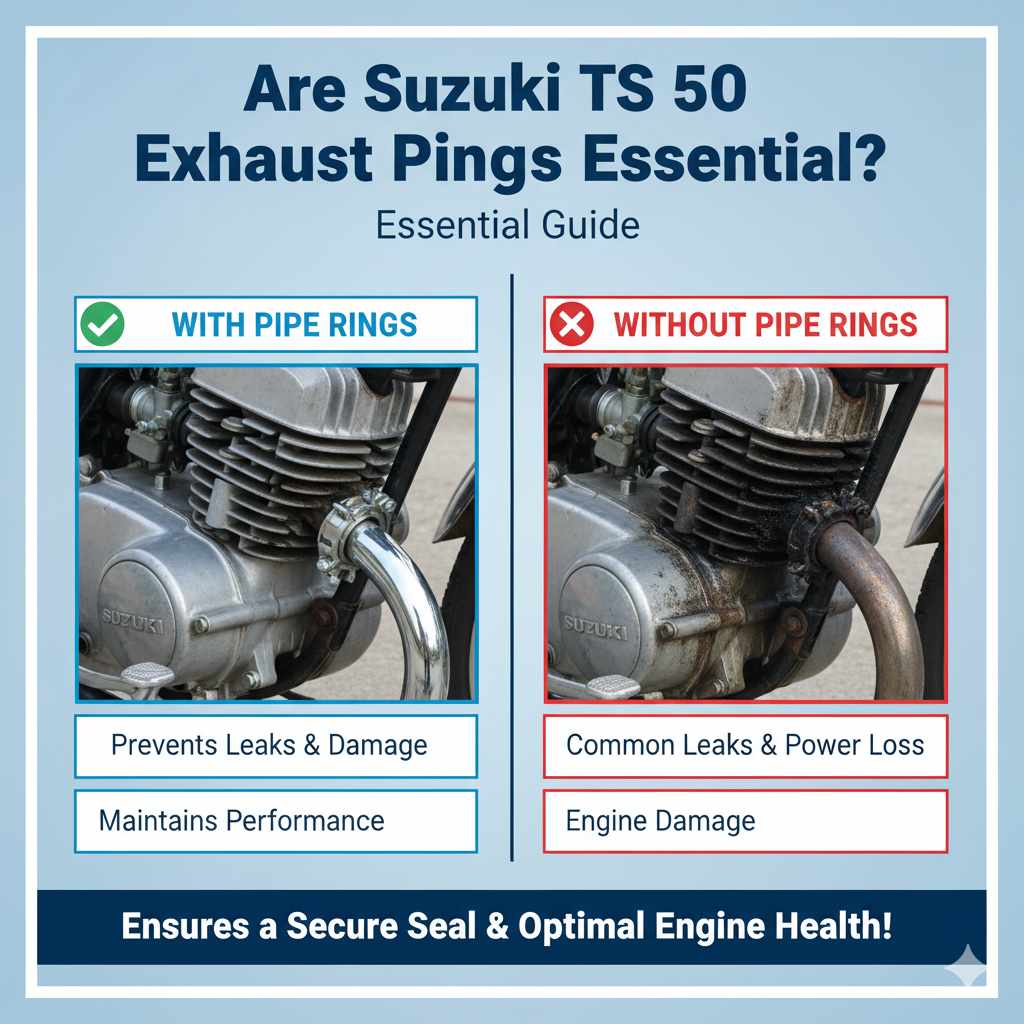
Yes, the exhaust pipe rings on your Suzuki TS 50 are often essential for a proper seal and efficient performance. These small but mighty components prevent leaks, keep exhaust gases flowing correctly, and maintain the integrity of your exhaust system, directly impacting your bike’s power and sound.
Riding your Suzuki TS 50 should be an absolute joy, a feeling of freedom with every twist of the throttle. Sometimes, though, we encounter little issues that can make a big difference. One of those things that might seem small but can cause headaches is the exhaust system. Specifically, you might be wondering about those rings on your exhaust. What are they for? Are they really that important? If you’ve noticed a change in your bike’s sound or performance, or if you’re getting ready for some maintenance, understanding these exhaust pipe rings is a great step. Don’t worry, it’s not as complicated as it sounds. We’ll break down exactly what these rings do and why they are crucial for your Suzuki TS 50. We’ll walk through what makes them tick and how to keep them in top shape for the best ride possible.
What Exactly Are Suzuki TS 50 Exhaust Pipe Rings?
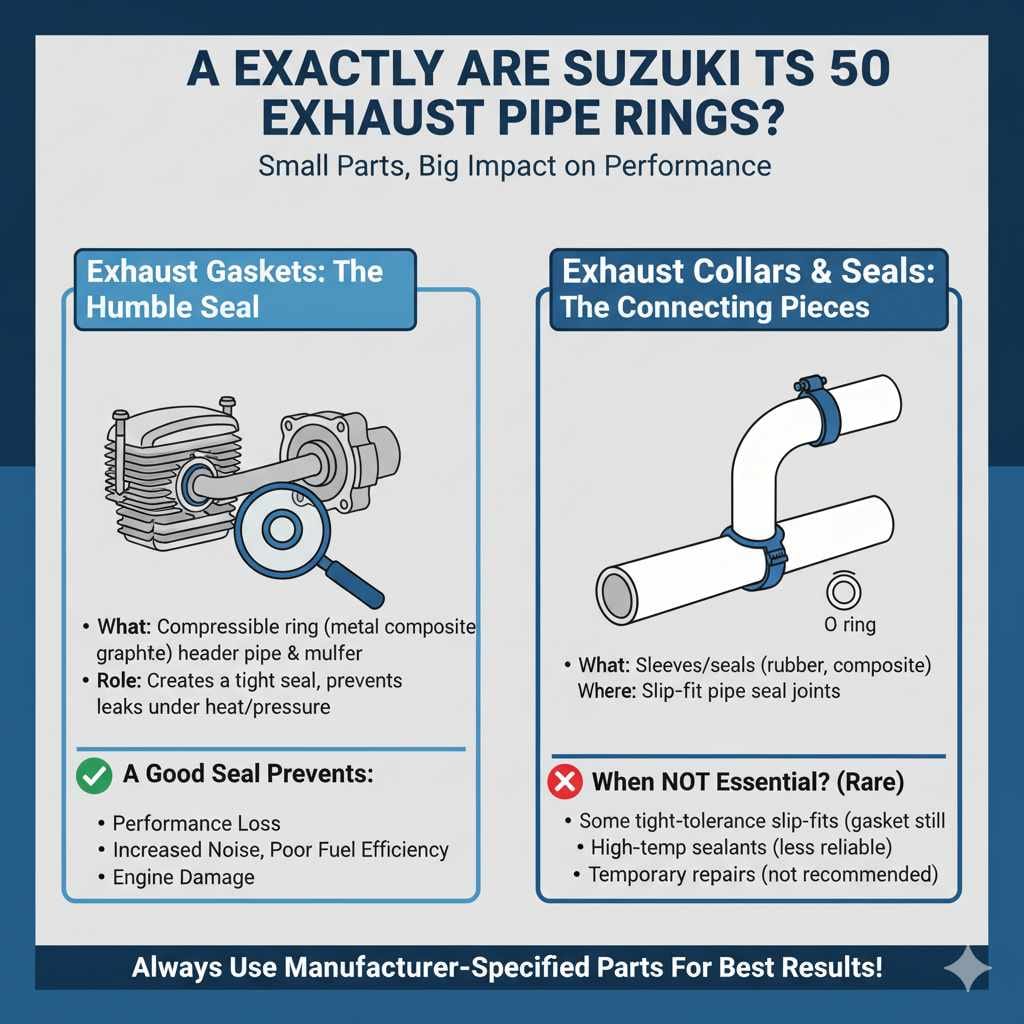
Let’s clear the air right away. When we talk about “exhaust pipe rings” on a Suzuki TS 50, we’re usually referring to two main types of components: exhaust gaskets and exhaust collars or seals. These are small, often overlooked parts, but they play a vital role in your motorcycle’s performance and emissions.
Exhaust Gaskets: The Humble Seal
The most common “rings” you’ll encounter are the exhaust gaskets. These are typically made of a compressible material, such as a metal composite, graphite, or fiber, designed to create a tight seal between two mating surfaces. On a Suzuki TS 50, the primary place you’ll find these is where the exhaust header pipe (the one that comes directly from the engine cylinder) connects to the muffler or silencer (the part that quiets the sound).
Think of them like a washer, but specifically made to handle the intense heat, pressure, and vibrations coming from your engine’s exhaust. When the header pipe is bolted or clamped to the next section of the exhaust, the gasket is squeezed between them. This squeeze crushes the gasket material, filling in any microscopic gaps or imperfections on the surfaces of the pipes. This ensures that all the burnt gases are pushed out through the exhaust system and not leaked out into the atmosphere where they shouldn’t be. A good seal prevents:
- Exhaust Leaks: Unwanted escape of hot gases.
- Performance Loss: Leaks can disrupt the exhaust flow, reducing engine power and responsiveness.
- Increased Noise: Leaks often result in a louder, raspier exhaust note.
- Poor Fuel Efficiency: Incorrect exhaust flow can negatively affect how efficiently the engine burns fuel.
- Potential Engine Damage: In severe cases, exhaust leaks can lead to overheating of engine components.
Exhaust Collars and Seals: The Connecting Pieces
Sometimes, the term “rings” might also refer to the collars or sleeves that help connect sections of the exhaust system, especially if there’s a slip-fit connection. For example, the header pipe might slide into the muffler. In this scenario, there’s often a separate seal (like a rubber or silicone O-ring, though less common in high-heat exhaust applications, or a composite seal) that fits into a groove or around the pipe to provide that crucial seal. These are less common on simple TS 50 setups but can be found on more complex systems or aftermarket parts.
Why Sealing Matters: The Science Behind the Rings
Your Suzuki TS 50’s exhaust system isn’t just a pipe to let smoke out. It’s a carefully designed part of your engine’s breathing apparatus. The way exhaust gases exit the engine has a significant impact on how efficiently the engine can take in its next breath of fresh air and fuel.
Backpressure: A Sensitive Balance
The exhaust system is engineered to create a certain level of “backpressure.” This isn’t a bad thing; it’s a controlled resistance that helps to scavenge exhaust gases out of the combustion chamber more effectively. When the exhaust gases are pushed out, they create a low-pressure wave that helps pull the next batch of spent gases out. If there are leaks, this pressure wave is disrupted.
Imagine trying to drink a milkshake through a straw with a hole in it. You’re not getting all that delicious shake, and you have to work harder. It’s similar with your TS 50; exhaust leaks mean less efficient scavenging, leading to reduced power.
Performance Impact: More Than Just Noise
A proper seal is directly tied to your bike’s performance. When exhaust gases escape before they reach the muffler or exit the tailpipe, several things go wrong:
- Loss of Power: The engine struggles to push gases out, meaning it needs more effort, and you feel a direct drop in acceleration and top speed.
- Poor Idle: An uneven exhaust flow can lead to a rough or unstable idle, making your bike difficult to manage at low speeds.
- Increased Emissions: Leaked, unburnt fuel and gases can escape, contributing to pollution and failing emissions tests if your local regulations require them for motorcycles.
- Fuel Economy: An engine working harder due to exhaust leaks will consume more fuel for the same performance.
Sound Matters: The Roar or the Whisper
The exhaust system is also responsible for the distinctive sound of your Suzuki TS 50. The muffler is designed to reduce noise by reflecting and absorbing sound waves. Leaks bypass the muffler, allowing the raw, noisy exhaust gases directly into the environment. This can turn a pleasant thrum into an obnoxious roar, and it’s often the first sign that something is wrong with your exhaust system.
Are Suzuki TS 50 Exhaust Pipe Rings Essential for a Reverse Thread Application?
This is a common point of confusion, and it’s important to clarify. The term “reverse threaded” usually refers to a bolt or nut that needs to be turned in the opposite direction (lefty-loosey, righty-tighty) to loosen or tighten. This is typically done to prevent the fastener from vibrating loose, especially on rotating parts or in high-vibration environments like exhaust systems.
While some specialized exhaust components or fasteners might incorporate reverse threads, the exhaust pipe rings themselves (gaskets or seals) are not threaded. They are crushable or compressible materials designed to fit into a specific space between two non-threaded parts of the exhaust system. For example, the header pipe might have a flange that slides into the muffler, and a crushable gasket sits between these two non-threaded surfaces. The clamping force or bolts holding them together provide the pressure to seal the gasket.
What might be happening is that the fasteners holding your exhaust sections together could be reverse-threaded, especially on older or custom systems, to prevent them from backing out due to vibrations. However, the rings (gaskets or seals) themselves are not threaded. Their function is purely sealing, not fastening.
So, if you’re encountering reverse-threaded fasteners when dealing with your exhaust, that’s a separate issue related to how the exhaust components are secured, not how the rings themselves function. Always confirm the type of threads on any bolts or nuts you’re working with. For instance, Engineering Toolbox offers a good overview of various thread types used in engineering.
Signs Your Suzuki TS 50 Exhaust Pipe Rings Aren’t Doing Their Job
Your Suzuki TS 50 will often tell you when something isn’t right with its exhaust system. Pay attention to these common symptoms, which often point to failing or missing exhaust pipe rings:
- Unusual Noises: A puffing, hissing, or loud roaring sound coming from the exhaust, especially under acceleration. This is often the most obvious clue.
- Black Soot or Residue: You might see black, sooty marks around the connection points of the exhaust pipes. This is burnt fuel and gases escaping from the leak.
- Reduced Engine Power: A noticeable lack of acceleration, sluggishness, or feeling like the engine isn’t pulling as strong as it used to.
- Poor Fuel Economy: If you’re finding yourself filling up the gas tank more often than usual without a change in riding habits, an exhaust leak could be the culprit.
- Check Engine Light (Less Common on Older Bikes): While less probable on a TS 50, modern vehicles use O2 sensors that can detect exhaust leaks, triggering a fault light.
- Smell of Exhaust Fumes Inside the Rider’s Area: While some exhaust smell is normal, a strong, persistent smell suggests gases are escaping closer to the bike.
If you experience any of these, it’s a good time to inspect your exhaust system for leaks, which often starts with checking the gaskets and seals.
How to Inspect and Replace Suzuki TS 50 Exhaust Pipe Rings
Replacing exhaust gaskets or seals on your Suzuki TS 50 is a manageable task for a beginner, provided you have the right tools and a bit of patience. Safety first! Always ensure your motorcycle is on a stable surface, the engine is completely cool, and wear appropriate safety gear.
Tools You’ll Likely Need:
- New exhaust gasket(s) specific to your Suzuki TS 50 model.
- Basic socket set or wrenches (sizes will vary by your bike).
- Screwdrivers (flathead and Phillips, depending on fasteners).
- Penetrating oil (like WD-40 or PB Blaster) for stubborn bolts.
- Pliers (needle-nose and standard).
- Wire brush for cleaning mating surfaces.
- Torque wrench (recommended for proper reassembly).
- Rag or shop towels.
- Safety glasses and gloves.
Step-by-Step Replacement Guide:
- Prepare Your Workspace: Park your Suzuki TS 50 on a level surface. Ensure the engine and exhaust are completely cool to the touch. This can take several hours after riding.
- Locate the Connection Point: Identify where the exhaust header pipe connects to the muffler or mid-pipe. This is where the gasket is typically located.
- Remove Fasteners: You’ll need to loosen or remove the bolts or clamps securing the two exhaust sections together. Spray penetrating oil on any rusty or stubborn fasteners and let it sit for a while. Carefully loosen and remove the bolts or clamps. If you find reverse-threaded fasteners, remember to turn them the opposite way to loosen.
- Separate the Exhaust Sections: Gently twist and pull the exhaust sections apart. They might be a bit stuck due to carbon buildup or corrosion. If they are difficult to separate, a gentle tap with a rubber mallet or carefully prying with a screwdriver (being careful not to damage the pipes) might help. Be mindful of any dowel pins or alignment features.
- Remove the Old Gasket: Once the pipes are separated, the old gasket should be visible. It might be stuck to one pipe or crumbled. Use pliers or a screwdriver to carefully remove all remnants of the old gasket material. Ensure the mating surfaces on both pipes are clean.
- Clean the Mating Surfaces: This is a critical step! Use a wire brush to thoroughly clean the inside of the pipe you’re reattaching and the flange on the pipe it connects to. Remove all carbon deposits, rust, and old gasket material. A clean, flat surface is essential for a good seal. You can also use a rag with a mild solvent for a final clean. A perfectly flat surface is more important than a perfectly smooth one; minor imperfections will be sealed by the new gasket.
- Install the New Gasket: Place the new exhaust gasket into its correct position. It should fit snugly into the recess or around the pipe. Sometimes, a very thin smear of high-temperature silicone sealant (specifically designed for exhaust systems) can help hold the gasket in place, but this must be done sparingly and according to the sealant manufacturer’s instructions. Check your Suzuki TS 50 service manual for any specific gasket installation notes.
- Reassemble the Exhaust: Carefully slide the exhaust sections back together, ensuring the new gasket is properly seated. Reinstall the clamps or bolts. If you are using stock clamps, tighten them evenly.
- Tighten Securely: If using bolts, start them by hand to avoid cross-threading. Tighten them gradually and evenly in a criss-cross pattern. For critical connections, use a torque wrench to tighten the bolts to the manufacturer’s specified torque. This ensures the gasket is compressed correctly without being over-tightened, which can damage it. You can find torque specifications in your Suzuki TS 50 service manual or reputable online forums. For example, SuzukiCycles.org is a great resource for model-specific information.
- Test for Leaks: Start the engine and let it idle. Listen carefully for any unusual noises. You can also carefully feel around the exhaust connection point (it will be hot!) for any escaping gases. If you hear or feel leaks, shut off the engine and re-check your work, ensuring the surfaces were clean and the fasteners are adequately tightened.
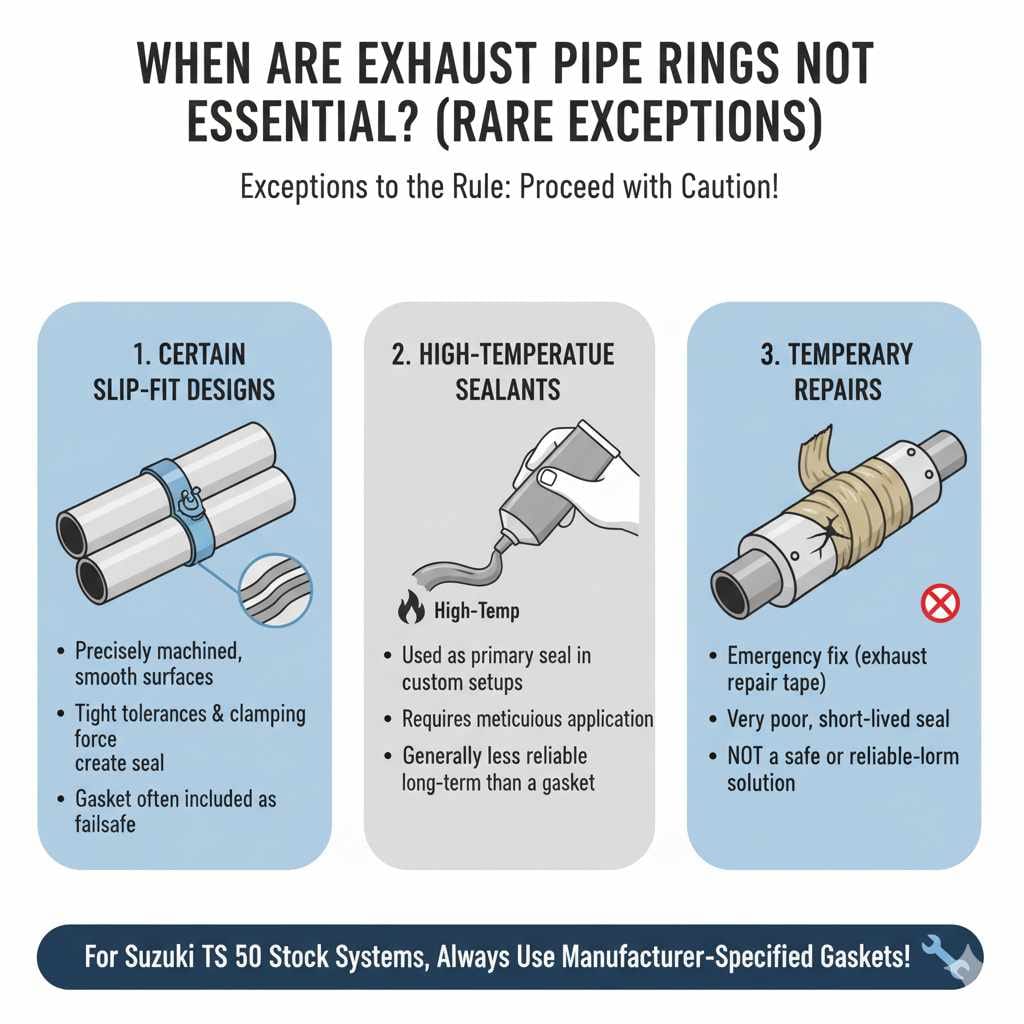
When Are They Not Essential? (Rare Exceptions)
While generally essential, there might be rare instances where an exhaust pipe ring is not technically required by design, but these are exceptions rather than the rule:
- Certain Slip-Fit Designs: Some exhaust systems utilize precisely machined, perfectly smooth mating surfaces that rely on tight tolerances and clamping force alone to create a seal. However, even in these cases, a gasket is often included as a failsafe or to account for minor imperfections from manufacturing or wear.
- High-Temperature Sealants as Primary Seal: In some aftermarket or custom applications, a high-temperature exhaust sealant might be used as the primary sealing agent in place of a gasket. However, this process requires meticulous preparation and application, and it’s generally less reliable long-term than a properly installed gasket.
- Temporary Repairs: In an absolute emergency, a temporary wrap with exhaust repair tape might provide a very poor, short-lived seal, but this is not a safe or reliable long-term solution.
For your Suzuki TS 50, especially the stock system, sticking to manufacturer-specified gaskets is always the best approach. They are designed with specific materials and dimensions to work optimally with your engine.
Comparing Gasket Materials and Their Benefits
Exhaust gaskets come in various materials, each offering different properties. Understanding these can help you choose the right replacement.
| Material | Pros | Cons | Best For |
|---|---|---|---|
| Compressed Fiber/Composite | Good sealing ability, affordable, widely available. Adapts well to moderate imperfections. | Can degrade over time with extreme heat or vibration. Might not be suitable for very high-performance applications. | Standard street use, general maintenance on bikes like the TS 50. |
| Graphite Composite | Excellent heat resistance (up to 1000°F+), remains flexible, good sealing properties, durable. | Can be more expensive than fiber. Requires relatively clean and flat mating surfaces for best results. | Higher performance needs, bikes that run hotter, or riders seeking maximum durability. |
| Multi-Layer Steel (MLS) / Metal Crush Gaskets | Extremely durable, high-temperature resistance, excellent sealing under high pressure. Often used in high-performance engines. | Requires very precise, smooth, and flat mating surfaces. Can be more rigid and less forgiving of imperfections. Costly. | Racing applications, very high-performance engines where absolutely no leaks are tolerated. Less common for stock TS50 replacements. |
For most Suzuki TS 50 owners, a good quality compressed fiber or graphite composite gasket will be the ideal choice. They offer the best balance of performance, durability, and cost. Always check if your specific TS 50 model has a specific OEM gasket recommendation.
Frequently Asked Questions (FAQ)
- Q1: How often should I check my exhaust pipe rings?
- It’s a good practice to check them whenever you perform other maintenance on your exhaust, such as cleaning or inspecting. Visually inspect them annually for signs of wear or damage, or if you notice any of the symptomss mentioned earlier.
- Q2: Can I reuse an old exhaust gasket?
- No, it’s generally not recommended. Once a gasket is compressed and has sealed a connection, it deforms. Reusing it will likely result in a poor seal and an exhaust leak.
- Q3: What happens if I don’t have an exhaust pipe ring?
- You will experience exhaust leaks, leading to reduced engine performance, increased noise, lower fuel efficiency, and potentially damage to nearby components from escaping hot gases.