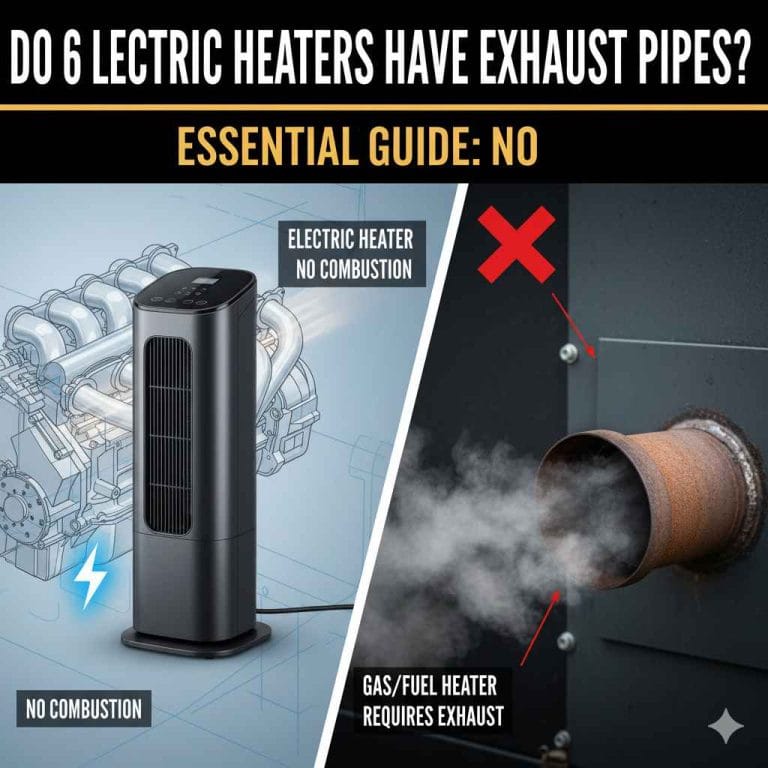
Do EVs Have Exhaust Pipes: Essential Buyer’s Guide
Do EVs Have Exhaust Pipes? Yes, but it’s complicated. This guide breaks down why, what to expect, and what it means for you as a car owner, especially if you’re new to electric vehicles. We’ll make it simple!
Thinking about an electric car but wondering about the classic rumble and visible exhaust pipe? You’re not alone! Many folks picture a car’s exhaust as a key part of its identity, so the idea of an EV without one can be confusing. But where does all that… well, nothing… go? It’s a common question that pops up when people are considering making the switch to electric. Don’t worry, understanding this is easier than you think. We’ll clear up the mystery and help you feel confident about EVs and their unique design. Let’s dive in and uncover the truth about EV exhaust systems.
The Simple Answer: Mostly No, But Sometimes Yes (Sort Of!)
For the vast majority of electric vehicles (EVs) on the road today, the answer is a resounding no, they do not have traditional exhaust pipes. Why? Because EVs don’t burn fuel like gasoline or diesel cars do. They run on electricity stored in a battery, which powers an electric motor. This means there are no combustion byproducts like carbon monoxide or nitrogen oxides that need to be vented out. It’s a fundamental difference that leads to a much cleaner and quieter driving experience!
However, you might spot some EVs that do have visible “exhaust” tips. This is usually a design choice by the manufacturer. These are often called fake exhaust tips or decorative exhaust outlets. They are added to give the car a more traditional, sporty look that some buyers are accustomed to or find appealing. These aren’t functional like the exhaust pipes on a gas car; they don’t carry any gases or affect performance. They are purely cosmetic!
This distinction is important for anyone new to EVs. It highlights the core difference: EVs are powered by electricity, not internal combustion. This simplicity is a big part of their appeal.

Why EVs Don’t Need Traditional Exhaust Pipes
Let’s break down why EVs operate differently and what this means for their exhaust systems. It all comes down to how they generate power.
How Traditional Cars Work (and Need Exhaust)
Gasoline and diesel cars rely on internal combustion engines (ICE). Here’s a simplified look:
- Fuel Combustion: Gasoline or diesel is mixed with air and ignited inside the engine’s cylinders.
- Power Generation: This controlled explosion pushes pistons, which turn a crankshaft, ultimately providing power to the wheels.
- Waste Products: The combustion process creates hot gases, including carbon dioxide (CO2), carbon monoxide (CO), nitrogen oxides (NOx), and particulate matter.
- Exhaust System’s Job: The exhaust system is crucial for these cars. It captures these harmful gases, quiets the engine noise, and safely directs the exhaust fumes away from the vehicle’s cabin and out into the atmosphere through the tailpipe.
Think of the exhaust pipe on a gas car as the car’s lungs, expelling what it doesn’t need after breathing in fuel and air.
How Electric Cars (EVs) Work
EVs, on the other hand, use a completely different power source:
- Electric Motor: An electric motor uses electricity to create rotational force, powering the wheels.
- Battery Power: The electricity comes from a large battery pack charged by plugging into an external power source.
- No Combustion: There is no burning of fuel, no explosions inside cylinders, and therefore, no combustion byproducts.
- Zero Tailpipe Emissions: Because there are no waste gases from combustion, EVs produce zero tailpipe emissions. This is a major environmental benefit!
So, if there’s no burning fuel, there’s no need to expel gases. This is the primary reason why most EVs lack exhaust pipes.
The Purpose of “Exhaust Pipes” on Some EVs
As we touched on, some electric cars do feature what look like exhaust pipes. It’s worth understanding why manufacturers do this and what it signifies.
Aesthetic Design Choices
Automotive design plays a huge role in consumer perception. For decades, prominent exhaust tips on the rear of a car have been associated with power, performance, and a sportier look. Manufacturers understand this association. To:
- Appeal to traditional buyers: Some drivers are used to seeing exhaust pipes and might feel an EV looks incomplete without them.
- Enhance sporty appearance: Adding fake tips can make an EV look more aggressive or performance-oriented, even though the performance comes from its electric powertrain.
- Maintain design lineage: If a manufacturer has a line of sporty gasoline cars, they might add fake tips to their EV counterparts to maintain a consistent design language.
These decorative elements are usually made of plastic or metal and are simply attached to the bumper or bodywork. They don’t connect to any engine or exhaust system.
Hybrid Vehicles vs. Full EVs
It’s crucial to distinguish between a fully electric vehicle (EV) and a hybrid electric vehicle (HEV) or plug-in hybrid electric vehicle (PHEV).
Hybrid Vehicles (HEVs and PHEVs) still have a gasoline engine that runs alongside an electric motor. Because they have a combustion engine, they do produce exhaust fumes and therefore will have a functional exhaust pipe, just like a conventional car. The exhaust pipe might be smaller or positioned differently, but it’s there to vent the engine’s exhaust.
Here’s a quick comparison:
| Vehicle Type | Power Source | Combustion Engine? | Traditional Exhaust Pipe? | Tailpipe Emissions? |
|---|---|---|---|---|
| Full EV (e.g., Tesla Model 3) | Battery & Electric Motor | No | No (or decorative only) | Zero |
| Hybrid (HEV) (e.g., Toyota Prius) | Gasoline Engine & Electric Motor | Yes | Yes | Yes (but less than gasoline-only) |
| Plug-in Hybrid (PHEV) (e.g., Chevy Volt) | Gasoline Engine & Electric Motor (with larger battery) | Yes | Yes | Yes (less when running on battery) |
So, if you see exhaust pipes on a vehicle that’s marketed as electric, double-check if it’s a full EV or a hybrid variant.
Benefits of EVs Not Having Exhaust Pipes
The absence of a traditional exhaust system on EVs brings a host of advantages for owners and the environment. These aren’t just minor perks; they contribute to a better driving and living experience.
Environmental Advantages
This is perhaps the most significant benefit. By eliminating tailpipe emissions, EVs directly contribute to:
- Cleaner Air: Reduced levels of pollutants like NOx and particulate matter improve air quality, especially in urban areas. This is crucial for public health, reducing respiratory issues. For more on air quality standards, you can check resources from the U.S. Environmental Protection Agency (EPA).
- Reduced Greenhouse Gases: While the electricity generation has its own footprint, eliminating direct carbon emissions from vehicles is a vital step in combating climate change.
- Quieter Cities: The lack of engine noise contributes to a more peaceful urban environment, reducing noise pollution.
Lower Maintenance Costs
The exhaust system on a gasoline car is complex, with components like mufflers, catalytic converters, oxygen sensors, and pipes that can rust, corrode, or fail over time. These repairs can be costly. EVs, by definition, skip this entire system:
- Fewer Parts to Fail: No mufflers, catalytic converters, exhaust manifolds, or tailpipes mean fewer things to break down.
- Reduced Repair Bills: Owners save money on potential exhaust system repairs and replacements.
- No More Exhaust-Related Inspections: In many regions, your vehicle needs to pass an emissions test. EVs are exempt from these, saving you time and money on annual inspections.
This simplicity translates to less time in the repair shop and more money in your pocket.
Improved Driving Experience
The lack of an exhaust system contributes to a noticeably different and often preferred driving experience:
- Quiet Operation: The near-silent operation of an EV is a welcome change for many. It makes for a more relaxing commute and cabin experience.
- Smoother Ride: Without the vibrations and sounds associated with a combustion engine and exhaust, the ride can feel smoother and more refined.
- Instant Torque: While not directly related to the exhaust (or lack thereof), the electric powertrain delivers instant torque, providing quick acceleration that can be very engaging.
What to Look for When Buying an EV (Buyer’s Guide Checklist)
As you consider an EV, keep these points in mind. Understanding the basics of their design, including the exhaust situation, will help you make the best choice.
1. Identify the Vehicle Type
- Full Battery Electric Vehicle (BEV): Runs purely on electricity. No exhaust pipes (or fake ones).
- Plug-in Hybrid Electric Vehicle (PHEV): Has both a gas engine and an electric motor. Will have functional exhaust pipes. Can be plugged in to charge.
- Hybrid Electric Vehicle (HEV): Has both a gas engine and an electric motor, but cannot be plugged in to charge. Relies on regenerative braking and the gas engine to charge the battery. Will have functional exhaust pipes.
Action: Always confirm if a vehicle is a BEV, PHEV, or HEV during your research and test drive. The sales representative should be able to clearly state this. Look at the manufacturer’s specs.
2. Inspect the Rear of the Vehicle
- No visible pipes: This often indicates a pure BEV where exhaust is not needed.
- Visible pipes (usually two): This could mean it’s a PHEV or HEV that still uses a gasoline engine.
- Decorative tips: Look closely. Are they integrated cleanly into the bumper, or do they look like add-ons? Sometimes manufacturers are transparent about these being decorative.
Action: Don’t be afraid to get out and look at the car from all angles. A quick look at the rear is often a good visual clue.
3. Check the Fuel Cap and Charging Port
- Charging Port Only: If you only see a port for plugging in electricity, it’s likely a BEV.
- Fuel Cap AND Charging Port: If you see both a traditional gas tank filler cap and an electric charging port side-by-side or in similar locations, it’s a PHEV.
- Fuel Cap Only: If you only see a fuel cap, it’s either a traditional gasoline car or a standard hybrid (HEV).
Action: This is a reliable way to distinguish between pure EVs and hybrids. Consider the location of these ports on models you’re interested in.
4. Understand the “Why” Behind the Design
- Performance Branding: Some EV makers add fake exhaust tips to signal performance. It’s marketing.
- Manufacturer Choice: Some brands choose to go all-in on the EV look, while others prefer a more familiar EV appearance.
Action: Read reviews and manufacturer descriptions. They usually highlight unique design decisions. Understand that these tips have no impact on the car’s efficiency or emissions.
5. Consider Charging Infrastructure and Range
While not directly related to exhaust pipes, these are critical EV buying considerations:
- Range: How far can the EV go on a single charge? This is crucial for your daily driving needs.
- Charging Speed: How quickly can you recharge the battery? Look at Level 1, Level 2, and DC fast charging capabilities.
- Public Charging Availability: Research charging stations in your area and along common routes. Resources like AFDC’s Alternative Fueling Station Locator can be very helpful across the US.
- Home Charging: Consider if you can install a charging station at home.
Action: Match the EV’s capabilities to your lifestyle. Don’t buy an EV with a low range if you frequently take long road trips without planning charging stops.
6. Look at Total Cost of Ownership
Beyond the purchase price, factor in:
- Electricity costs vs. Gas costs.
- Maintenance savings (fewer moving parts in EVs).
- Government incentives and tax credits.
Action: Use online calculators or talk to dealership finance experts to estimate the long-term cost savings of an EV compared to a traditional car.

Frequently Asked Questions (FAQs)
Q1: Do all electric cars have exhaust pipes?
A: No, most fully electric vehicles (BEVs) do not have exhaust pipes because they don’t burn fuel and produce no tailpipe emissions. Some EVs might have decorative exhaust tips for styling, but these are not functional.
Q2: Why do some EVs have what looks like an exhaust pipe?
A: These are usually purely decorative elements designed to give the car a more traditional or sporty appearance that some buyers prefer. They do not carry any exhaust gases.
Q3: What’s the difference between an EV and a hybrid regarding exhaust?
A: Full EVs (BEVs) have no engine, so they have no need for an exhaust system. Hybrid vehicles (HEVs and PHEVs) have a gasoline engine in addition to an electric motor, so they do have functional exhaust pipes to vent exhaust fumes.
Q4: If an EV doesn’t have an exhaust pipe, where do the emissions go?
A: EVs produce zero tailpipe emissions. They run on electricity stored in batteries and don’t burn gasoline or diesel. Therefore, there are no emissions to vent.
Q5: Can I notice a difference in sound if an EV has fake exhaust tips?
A: No, the sound of an EV is determined by its electric motor, not by any exhaust components. EVs are naturally very quiet. Fake exhaust tips have no impact on the car’s sound.
Q6: Are fake exhaust tips hard to maintain?
A: Generally, no. Since they are just cosmetic pieces, they require the same cleaning as the rest of the car’s exterior. They won’t rust or clog like genuine exhaust pipes.
Q7: How can I be sure if a car is a full EV or a hybrid?
A: Look for a charging port to plug into electricity. Full EVs only have a charging port. Hybrids and Plug-in Hybrids will typically have both a fuel filler cap for gasoline and a charging port.
Conclusion: Embracing the Electric Future
As you can see, the question of “do EVs have exhaust pipes?” leads to a fascinating insight into how electric vehicles fundamentally differ from their gasoline-powered ancestors. For most pure EVs, the answer is a clear no, and this absence is a key part of their appeal. It signifies cleaner air, quieter streets, and a simpler, often more efficient, driving experience with fewer maintenance worries.
While some manufacturers add decorative tips for aesthetic continuity with traditional car designs, these are purely for show. Understanding the difference between a full EV and its hybrid cousins is essential when you’re shopping. By looking for charging ports, distinguishing between decorative and functional elements, and knowing the type of vehicle you’re interested in, you can confidently navigate the world of electric cars.
Making the transition to an EV is an exciting step towards a more sustainable future. With this knowledge, you’re well-equipped to understand the technology, appreciate its benefits, and choose the electric vehicle that best suits your needs. Happy driving!