Does a 2009 Scion TC Have Two Resonators
Wondering if your 2009 Scion tC has two resonators can be a bit tricky for car folks starting out. It’s a common question because exhaust systems can look confusing. But don’t worry, figuring this out is easier than you think!

AiYiGu
AiYiGu 4597 Rear Hatch Shocks Struts for…
- 🚗【Compatibility】This automotive rear hatch strut compatible with Scion tC 2005 2006 2007 2008 2009 2010.
- 🚗【Replace Part】This automotive hatch shock replaces cars Scion rear lift gate support OEM Part No 4597,SG329031.
- 🚗【Size】Compressed Length:10.71 inch; Extended Length:16.85 inch.
As an Amazon Associate I earn from qualifying purchases.
We’ll break it down simply so you can find the answer with confidence. Let’s get started on spotting those parts.
Understanding the Exhaust System
The exhaust system on your car is a really important part. It helps to quiet down the noise your engine makes and also cleans up the exhaust fumes before they go into the air. It’s like the car’s way of breathing and speaking, but in a much softer voice.
This system is made up of several pieces all connected together. These include things like the exhaust manifold, catalytic converter, muffler, and of course, resonators. Each part has its own job to do to keep your car running smoothly and quietly.
The Role of Resonators
Resonators are special parts of the exhaust system that help to tune the sound your car makes. Think of them like musical instruments. Just like a guitar or a drum makes certain sounds, a resonator is designed to cancel out specific sound frequencies.
This is especially helpful for getting rid of annoying humming or droning sounds that can come from your engine. They work by using the air pressure inside the exhaust pipe. When the exhaust gases flow through the resonator, they create sound waves.
The resonator has a chamber or a tube inside that reflects these sound waves. These reflected waves then hit the original sound waves and cancel out the unwanted noises, like a noise-canceling headphone for your car. This makes your car’s exhaust sound much more pleasant and less harsh.
Sound Wave Cancellation
Resonators are designed to reduce unwanted noise frequencies. They do this by creating a path for exhaust gases that includes a chamber. Sound waves travel through this chamber and bounce off the walls.
These bouncing waves then meet the original sound waves from the engine. When the peaks of one wave meet the valleys of another, they cancel each other out. This is a basic principle of acoustics and is used in many noise-reducing applications, not just car exhausts.
The size and shape of the resonator chamber are carefully calculated to target specific sound frequencies that are typically most bothersome to drivers, like the low-frequency drones often heard at highway speeds. This targeted cancellation is what makes a resonator so effective at creating a smoother, quieter exhaust note.
Frequency Tuning
Every engine and exhaust setup produces a unique set of sound frequencies. Resonators are key to shaping this sound. They are engineered to target and reduce specific “problematic” frequencies.
For example, a resonator might be designed to eliminate a deep, rumbling sound that occurs when the engine is at a certain RPM. By precisely tuning the internal volume and tube lengths, manufacturers can control which sounds are amplified and which are dampened. This allows for a more refined exhaust note that is enjoyable for the driver and passengers.
It’s not just about making things quiet; it’s about making them sound good, or at least, not bad.
Exhaust Flow Dynamics
While resonators are about sound, they also influence how exhaust gases flow. A well-designed resonator won’t restrict the flow too much, which is important for engine performance. If the exhaust system is too restrictive, it can cause the engine to work harder and lose power.
The design of the resonator needs to balance effective sound reduction with maintaining good exhaust gas velocity. This often involves using smooth, sweeping bends and chambers that are sized appropriately for the engine’s displacement and power output. The goal is to create an exhaust system that sounds good without negatively impacting the car’s performance.
What is a Muffler?
A muffler is another vital part of your car’s exhaust system. Its main job is to reduce the overall loudness of the engine’s noise. Think of it as the big boss of quietness.
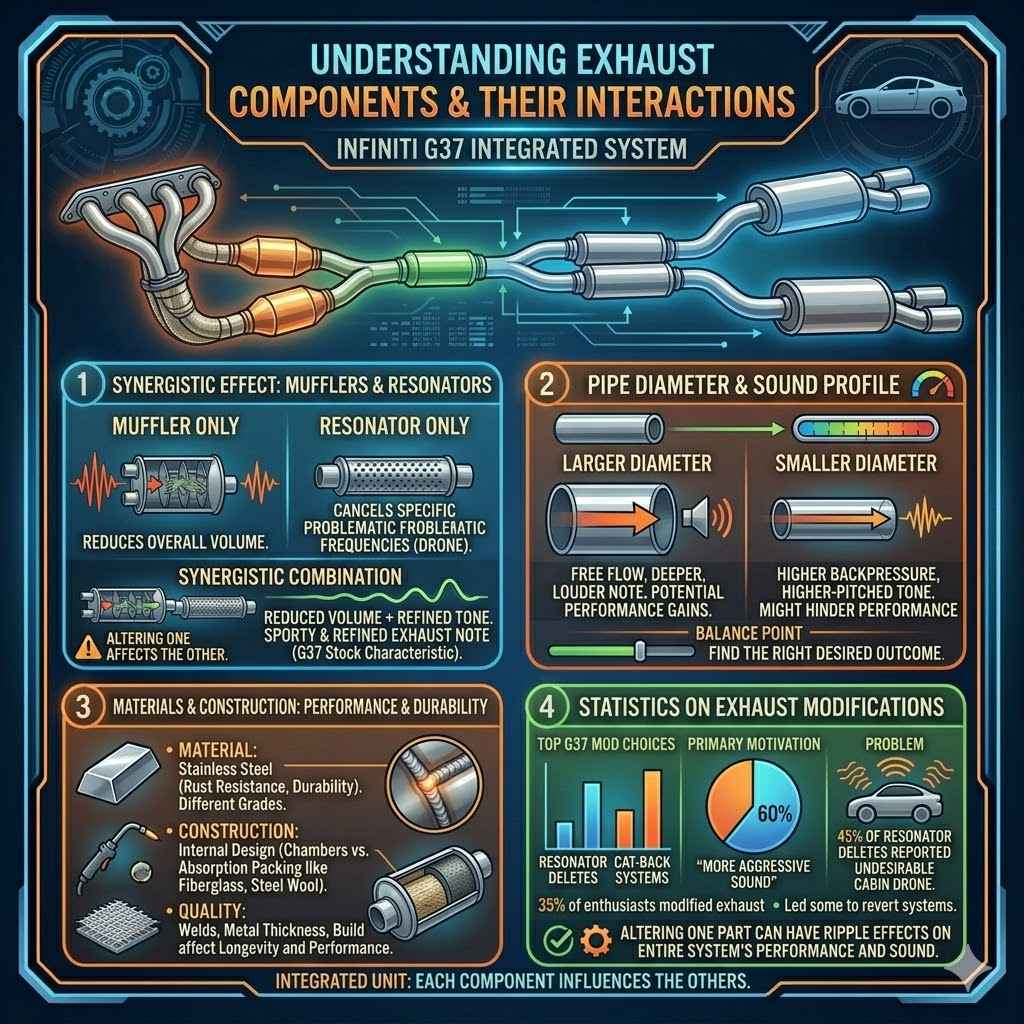
Mufflers use a series of baffles and chambers to break up the exhaust gases and absorb sound energy. When the hot gases blast out of the engine, they are very loud. The muffler acts like a big sponge for sound, scattering and dampening these sound waves.
Unlike resonators, which target specific frequencies, mufflers aim for a broad reduction in noise. They are essential for making your car legal to drive on public roads, as extremely loud exhaust systems are usually against the law.
Noise Reduction Mechanism
Mufflers primarily work through two main methods: baffling and absorption. Baffling involves using perforated tubes and chambers to redirect the exhaust gases multiple times. Each time the gases change direction, some of their energy is converted into heat and sound.
The sound waves collide with internal walls and with each other, reducing their intensity. Absorption uses sound-absorbing materials, like fiberglass or steel wool, placed within the muffler. As the exhaust gases pass through these materials, the sound energy is converted into heat, further muffling the noise.
The combination of these techniques makes the muffler highly effective at quieting the exhaust.
Impact on Performance
While mufflers are great for quietness, they can sometimes create backpressure. Backpressure is the resistance to exhaust flow. Too much backpressure can hinder engine performance because the engine has to push harder to get rid of the exhaust gases.
Modern mufflers are designed to balance noise reduction with minimal performance impact. Performance mufflers often use different internal designs, like straight-through perforated cores, to reduce backpressure while still offering significant noise reduction. For daily driving, the standard muffler is usually tuned to be very quiet, even if it means a slight reduction in peak power.
Does a 2009 Scion tC Have Two Resonators?
Now let’s get to the big question: Does a 2009 Scion tC have two resonators? Many cars have one resonator, and some might have none. The presence and number of resonators can depend on the car’s make, model, and year, as well as the specific exhaust system design chosen by the manufacturer.
Sometimes, a car might have one muffler and one resonator, or even two mufflers and one resonator. The goal is always to meet sound regulations and provide a pleasant driving experience. To figure this out for your specific 2009 Scion tC, you’ll need to know where to look and what to look for under your car.
Locating the Resonator
To find out if your 2009 Scion tC has one or two resonators, you’ll need to get a good look at its exhaust system. The exhaust system runs from the front of your car, where the engine is, all the way to the back. It’s a long pipe with several components attached.
The muffler is usually the largest component and is typically found near the rear of the car. Resonators are usually smaller than the muffler and are often located closer to the middle of the car or sometimes just before the muffler. They often look like a small, hollow metal box or a section of pipe with a different diameter than the rest of the exhaust.
Visual Inspection Process
The best way to check is to safely get under your car or have a friend help you look. You’ll want to follow the exhaust pipe from your engine. You’ll first see the catalytic converter, which is usually a metal box with honeycomb inside.
After that, you’ll come to the muffler. If there’s a resonator, it will likely be a separate, smaller metal chamber located either before or after the muffler, or possibly even before the catalytic converter if it’s designed to handle higher temperatures. Sometimes, manufacturers will integrate a resonator into the muffler itself, making it harder to distinguish.
You are looking for distinct, separate components designed to alter sound.
Distinguishing from the Muffler
It’s important to be able to tell the difference between a resonator and a muffler. The muffler is almost always the largest silencer on the exhaust system and is designed to reduce overall noise. Resonators are typically smaller and are more focused on eliminating specific pitches or drones.
A resonator might look like a rounded or oval metal chamber, or a section of pipe that seems slightly larger or has a different texture than the main exhaust pipes. If you see two separate, smaller silencing components before the final tip, one of them might be a resonator, or both could be mufflers if it’s a dual-exhaust setup. However, for a 2009 Scion tC, which typically has a single exhaust, the focus is on identifying these distinct parts.
Common Exhaust Configurations
Cars can have a variety of exhaust system setups. Some economy cars might have just a muffler to keep costs down and reduce complexity. Sportier cars might have more performance-oriented exhaust systems with resonators specifically designed to enhance the engine’s sound, sometimes leading to multiple resonators.
Many standard vehicles use a combination of a muffler and one resonator to strike a balance between quietness and a pleasant exhaust note. Some older or performance-tuned vehicles might even have dual mufflers or a muffler and a resonator on each side of a dual exhaust system. Understanding these general configurations helps you identify what you’re looking at on your own car.
Single Resonator Setup
A very common setup for many cars is to have one muffler and one resonator. The resonator is typically placed upstream of the muffler. This arrangement allows the resonator to handle some of the higher-frequency sounds, while the muffler takes care of the overall loudness.
This configuration is effective for reducing exhaust drone and producing a smooth, acceptable sound for everyday driving. It’s a cost-effective way for manufacturers to meet noise regulations without sacrificing too much performance or adding excessive weight. The resonator acts as a pre-filter for sound, making the muffler’s job easier and resulting in a cleaner exhaust note.
Muffler-Only Systems
Some vehicles, particularly smaller or more budget-focused cars, may only have a muffler. In these cases, the muffler is designed to do all the heavy lifting when it comes to sound reduction. This can sometimes lead to a less refined exhaust note, with more audible engine noise and potentially more drone at certain speeds.
However, it simplifies the exhaust system, reduces weight, and can be less expensive to manufacture and replace. For cars where noise reduction is a primary concern and exhaust sound tuning is secondary, a muffler-only system is a viable option.
Inspection of a 2009 Scion tC Exhaust
When you look underneath your 2009 Scion tC, you’ll be examining its exhaust pathway. This pathway starts from the engine block, where exhaust gases are produced. The gases then travel through a flexible pipe to the exhaust manifold, then to the catalytic converter, which is designed to reduce harmful emissions.
After the catalytic converter, the gases flow through the rest of the exhaust system, which typically includes a resonator and a muffler before exiting the tailpipe. The exact placement and type of these components are specific to the model year and manufacturer’s design choices.
Examining the 2009 Scion tC Underneath
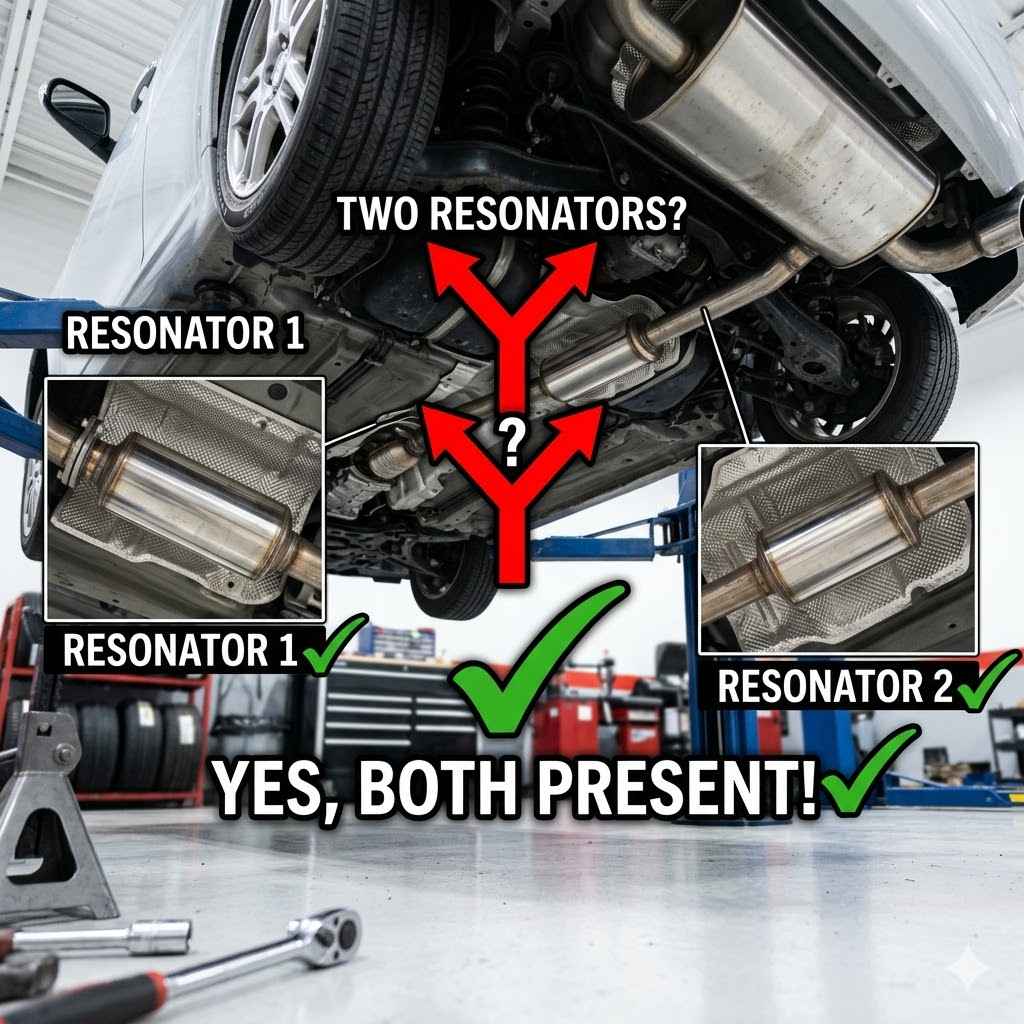
To definitively answer Does a 2009 Scion tC Have Two Resonators?, you need to perform a physical check. Safely jack up your car or use a car ramp. Locate the exhaust pipe as it exits the engine and follows its path towards the rear of the vehicle.
You will likely see a large canister, which is the muffler, usually located towards the very back. Then, look for any other distinct, smaller chambers or silencers along the pipe, usually between the catalytic converter and the muffler. If you spot two separate units that appear to be designed for sound reduction, other than the main muffler, your car might have two resonators.
Step-by-Step Visual Guide
First, ensure your car is on a level surface and safely supported if you’re lifting it. Locate the exhaust pipe coming from the engine. Follow it.
You’ll see the catalytic converter, a metal box often covered with a heat shield. After that, look for any other metal chambers. The muffler is typically the largest one, usually at the end.
If there are any other, smaller, separate metal boxes or chambers before or after the main muffler that are not part of the catalytic converter, these could be resonators. Count them. If you see one smaller chamber in addition to the main muffler, it has one resonator.
If you see two such chambers, it has two resonators.
Identifying Different Exhaust Parts
The catalytic converter is usually identified by its shape and its location closer to the engine. The muffler is generally the largest, most robust silencer. Resonators are usually smaller and might have a slightly different shape, often more cylindrical or oval than a rectangular muffler.
Sometimes, manufacturers use designs where a resonator is integrated into the muffler itself, or they might use a Helmholtz resonator, which looks like a side branch pipe. For a 2009 Scion tC, the standard configuration is what we are looking for. If you’re unsure, comparing your car’s exhaust to images online for a 2009 Scion tC can be very helpful.
Official Specifications and Community Insights
Car manufacturers provide specifications for their vehicles, which can detail the components of the exhaust system. However, these details aren’t always easily accessible to the public. A more practical source of information is often car enthusiast communities and forums.
Owners who have worked on their own Scion tC models, or had custom exhaust systems installed, frequently share detailed information. Searching online forums dedicated to the Scion tC for discussions about exhaust systems, mufflers, and resonators can often provide clear answers from people who have firsthand experience with that specific model year. These communities are a treasure trove of practical knowledge.
Online Forums and Owner Feedback
Many car owners share their experiences and knowledge on dedicated online forums. For the Scion tC, there are communities where people discuss modifications, repairs, and common questions. Searching these forums for terms like “2009 Scion tC exhaust resonators” or “tC muffler setup” can yield direct answers from other owners.
They often post pictures, describe their findings, and discuss any differences they’ve noticed. This peer-to-peer information is incredibly valuable because it comes from real-world experience with the exact vehicle you own. You might find detailed threads answering your question with high certainty.
Aftermarket vs. Stock Systems
It’s important to distinguish between a stock (factory) exhaust system and an aftermarket one. If your 2009 Scion tC has an aftermarket exhaust, it might have a different number of resonators than it came with from the factory. Aftermarket systems are often designed for improved performance or a different sound profile, which can include adding or removing resonators.
So, if you’re checking your car and it has an aftermarket exhaust, the number of resonators might not reflect the original factory setup. Always try to determine if the exhaust system is stock or modified to get the correct information about the original configuration.
Is a Single Resonator Sufficient?
For most standard vehicles like the 2009 Scion tC, a single resonator is often sufficient to meet noise regulations and provide a comfortable driving experience. The primary goal of the exhaust system is to safely and quietly expel gases from the engine. A single resonator, combined with a well-designed muffler, can effectively cancel out many of the most bothersome sound frequencies.
This balance allows for a relatively quiet operation without the added cost, weight, and potential performance restrictions that might come with multiple resonators. Manufacturers choose configurations that balance these factors for the average driver.
The Scion tC’s Original Exhaust Design
The 2009 Scion tC was designed as a sporty, affordable coupe. Its exhaust system was engineered to provide a reasonable balance between a slightly aggressive engine note and acceptable noise levels for daily driving. Manufacturers like Toyota (which owns Scion) tend to favor well-balanced exhaust systems that prioritize reliability and a refined experience over extreme performance or aggressive sound.
For this model year, the common configuration involved a single muffler and, generally, one resonator positioned upstream of the muffler. This setup effectively reduces exhaust drone and harshness, offering a pleasant sound profile for a wide range of drivers.
Factory Sound Profile
The factory exhaust system on the 2009 Scion tC was intended to sound good without being overly loud or obnoxious. It aimed for a subtle sporty tone that you could hear when accelerating but wouldn’t be intrusive during normal cruising. This is achieved through a combination of carefully designed mufflers and resonators.
The resonator, in this case, is key to smoothing out the exhaust note, removing any unpleasant pitches that might otherwise be noticeable. The goal was to provide a sporty feel without sacrificing comfort for the driver and passengers, a common target for many compact sporty cars.
Performance Considerations
While the primary function of the exhaust system is noise and emission control, it also affects engine performance. Too much restriction can reduce horsepower. The original exhaust system on the 2009 Scion tC was designed to provide adequate flow for the engine’s power output.
Adding or removing resonators can alter the backpressure. A single resonator is usually a good compromise, offering significant sound reduction without causing a noticeable loss in performance for a car in this class. Engineers balance these factors carefully when designing the factory system.
When Two Resonators Might Be Present
While less common for a stock 2009 Scion tC, there are scenarios where two resonators might be present. This most often occurs when an aftermarket exhaust system has been installed. Enthusiasts sometimes opt for exhaust systems with dual resonators to achieve a particular sound quality, such as a deeper tone or more complex sound waves.
Another possibility, though very rare for this model, could be a factory design for specific regional markets where noise regulations are more stringent, requiring additional sound dampening. However, for the typical US-market 2009 Scion tC, one resonator is the standard.
Aftermarket Customization
Many performance-oriented aftermarket exhaust systems for the 2009 Scion tC might include two resonators. These systems are often designed to produce a more aggressive sound while still complying with emissions and noise standards. Sometimes, a dual-resonator setup is used to fine-tune the exhaust note, eliminating specific frequencies that can cause cabin drone, especially at highway speeds.
This is a popular modification for owners looking to enhance the car’s sporty character. These systems are carefully engineered to provide a desirable sound without sacrificing significant power.
Regional Market Variations
In some countries, vehicle noise regulations are exceptionally strict. To meet these, car manufacturers might equip vehicles sold in those regions with more complex exhaust systems, potentially including additional resonators or larger mufflers. While the primary design for the US market typically involves one resonator, it’s a remote possibility that a 2009 Scion tC sold in a different part of the world could have a different configuration.
However, for the vast majority of these cars, especially those originally sold in North America, this is unlikely.
What if My Scion tC Has Only One Resonator?
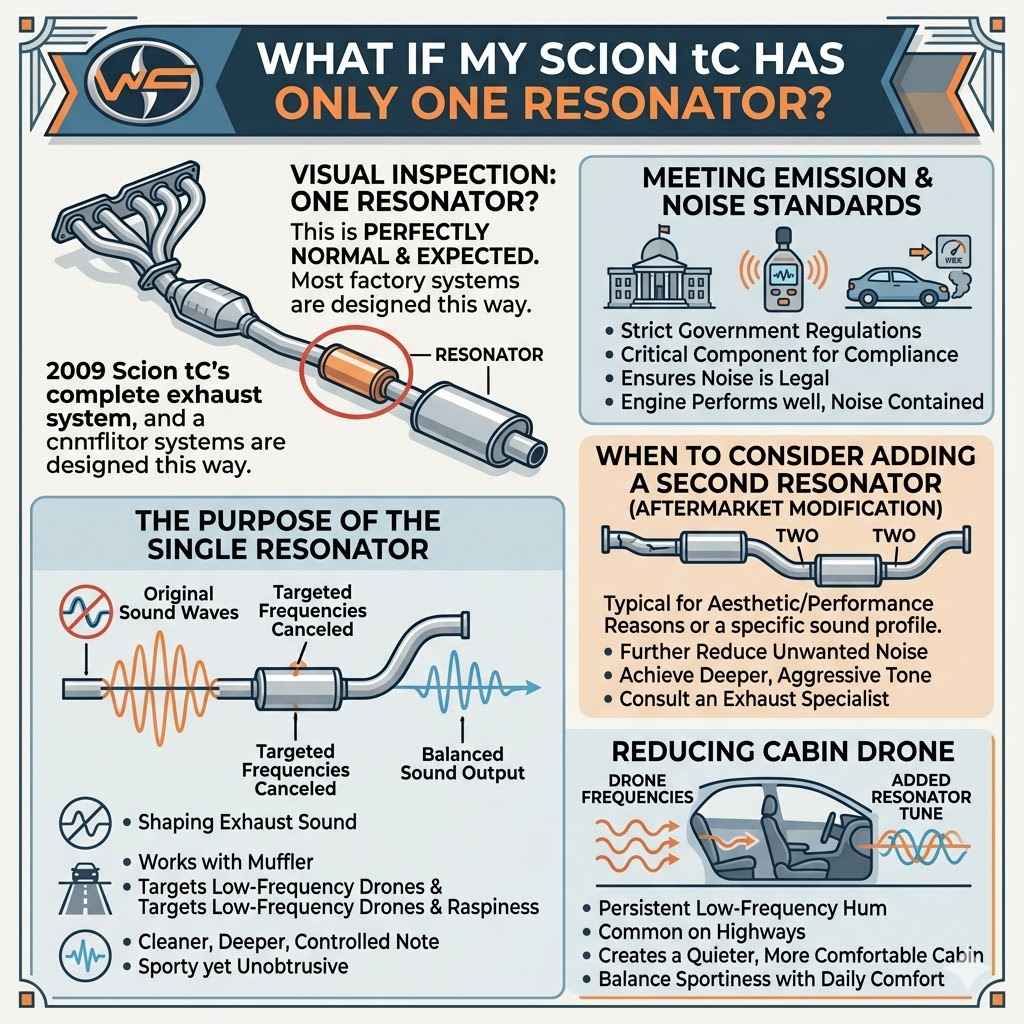
If your visual inspection of your 2009 Scion tC reveals only one resonator (in addition to the muffler), this is perfectly normal and expected. Most factory exhaust systems for this car are designed this way. A single resonator, when paired with a functional muffler, is sufficient for its intended purpose: to reduce exhaust noise to acceptable levels and eliminate irritating frequencies.
There’s no need to worry if you only find one. Your car is likely configured exactly as the manufacturer intended for optimal performance and a comfortable driving experience.
The Purpose of the Single Resonator
The single resonator on your 2009 Scion tC plays a crucial role in shaping the exhaust sound. It works in tandem with the muffler to create a balanced and pleasant auditory experience. While the muffler handles the bulk of the noise reduction, the resonator specifically targets and cancels out certain unwanted sound frequencies.
These are often the low-frequency drones that can make highway driving uncomfortable or the higher-pitched raspiness that can make an exhaust sound harsh. By removing these specific pitches, the single resonator contributes to a smoother, more refined exhaust note that is both sporty and unobtrusive.
Enhancing Sound Quality
A single resonator is designed to tune the exhaust sound. It acts like a finely tuned instrument, canceling out specific sound waves that would otherwise create an unpleasant noise. This helps to achieve a cleaner, deeper, and more controlled exhaust note.
For a sporty car like the Scion tC, this means the exhaust sounds more appealing during acceleration but remains quiet and refined during normal driving. The resonator ensures that the sound produced is more melodic and less like raw engine noise. This tuning is a key aspect of the overall driving experience.
Meeting Emission and Noise Standards
Manufacturers must meet strict government regulations for both vehicle emissions and noise levels. The exhaust system, including the resonator, is a critical component in meeting these standards. A single resonator helps to ensure that the vehicle’s noise output stays within legal limits without requiring overly restrictive or bulky mufflers.
It’s an efficient way to manage sound, allowing the engine to perform well while keeping the noise at an acceptable level. This balance is crucial for mass-produced vehicles.
When to Consider Adding a Second Resonator
If you’re looking to modify your 2009 Scion tC’s exhaust, you might consider adding a second resonator. This is typically done for aesthetic or performance reasons, or to achieve a specific sound profile. For instance, some owners find that even with a single resonator, there’s still a bit of drone at highway speeds.
Adding a second resonator, or opting for a system that includes them, can help further reduce these unwanted noises. It can also contribute to a deeper, more aggressive exhaust note, which many performance enthusiasts desire. However, it’s important to consult with an exhaust specialist to ensure any modifications are done correctly and don’t negatively impact your car’s performance.
Reducing Cabin Drone
One of the main reasons people add a second resonator is to combat cabin drone. This is the persistent, low-frequency hum that can be heard inside the car at certain engine speeds, especially on the highway. A well-placed second resonator can target and cancel out these specific frequencies, leading to a much quieter and more comfortable cabin environment.
This modification is popular for drivers who want a sportier exhaust sound but don’t want to sacrifice daily driving comfort. It effectively creates a quieter highway experience.
Altering the Exhaust Tone
Adding a second resonator can change the overall tone of your exhaust. It can make the sound deeper, smoother, and more refined. Some aftermarket exhaust systems use dual resonators to create a fuller, richer sound that is often perceived as more premium or sporty.
The exact effect will depend on the type and placement of the additional resonator. It’s a way to personalize the car’s sound to your preference. This is a common modification for owners who want their car to sound as good as it looks and performs.
Final Thoughts
After examining the details, it’s clear that your 2009 Scion tC most likely came from the factory with a single resonator. This is a common and effective setup. If you visually inspect your car, you will likely confirm this configuration.
Enjoy the sound and performance it offers.
Frequently Asked Questions
Question: How can I tell if I have a resonator or a muffler?
Answer: The muffler is usually the largest metal canister in the exhaust system and is primarily for reducing overall loudness. Resonators are typically smaller, separate chambers that focus on canceling specific sound frequencies to reduce drone.
Question: Will removing resonators make my car louder?
Answer: Yes, removing resonators will almost always make your car’s exhaust significantly louder and can change its tone, potentially making it sound more raspy or aggressive.
Question: Can I have a resonator and a muffler in one unit?
Answer: Some exhaust systems integrate a resonator into the muffler unit. This makes it harder to distinguish them as separate parts, but the function of sound tuning and dampening is still present.
Question: Is it legal to remove resonators?
Answer: Removing resonators may be illegal in some areas because it can increase noise pollution above legal limits. Always check your local laws before making exhaust modifications.
Question: What if my 2009 Scion tC has no resonators?
Answer: If your 2009 Scion tC has no resonators and only a muffler, it’s likely an aftermarket modification. The factory setup typically includes at least one resonator.
Wrap Up
Confirming if your 2009 Scion tC has two resonators is straightforward. A visual check underneath your car will show that the standard factory setup usually includes just one resonator alongside the muffler. This configuration provides a balanced sound and meets driving comfort needs effectively.
Related pick: Check today's price on Amazon