Do Resonators Do Anything On Hellcats: Essential Truth
Yes, resonators on a Hellcat do something important: they eliminate exhaust drone. While they don’t quiet the car’s overall roar, they are specifically designed to cancel out the annoying, low-frequency humming sound that occurs at steady cruising speeds, making highway driving much more comfortable and enjoyable without sacrificing that classic Hellcat growl.
Hello there! I’m Monowar Shohag, and I’m here to help you understand your car’s exhaust system, one simple step at a time. If you own a Hellcat, you already love its incredible sound. But you might have heard other owners talking about “resonator deletes” to make it even louder. It’s a super common topic, and it can be confusing to know if it’s the right move for you.
Don’t worry, we’re going to clear it all up. This guide will walk you through exactly what resonators do on your Hellcat, what happens when you remove them, and if it’s a good idea. By the end, you’ll feel confident about making the best choice for your car’s sound and your driving experience. Let’s dive in!
What Exactly Is a Resonator? Let’s Break It Down
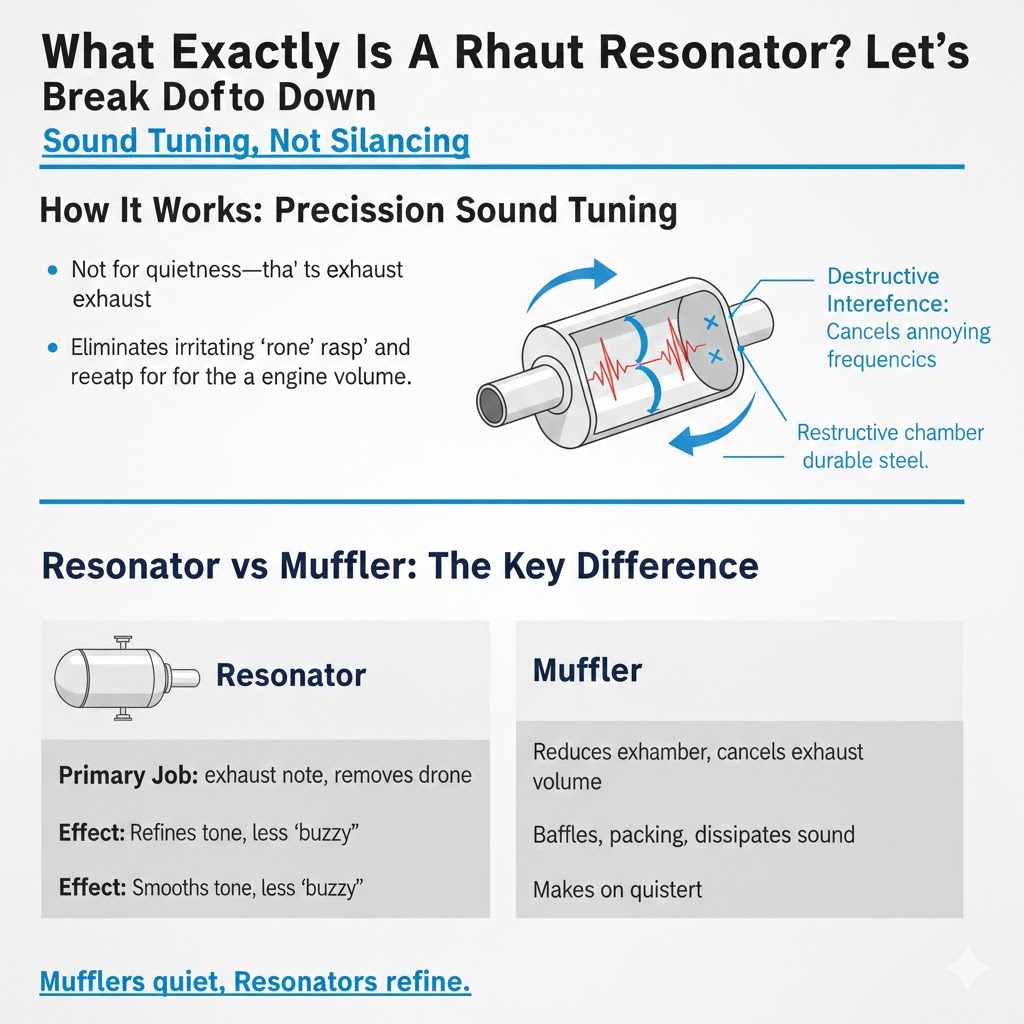
Before we talk specifically about the Hellcat, let’s get a clear picture of what a resonator is. Think of it as a sound-tuner for your exhaust system. It’s basically a small, hollow chamber that your exhaust gases pass through.
Its only job is to target and cancel out very specific sound frequencies. Imagine you have an annoying hum in a room. A resonator is like a special device that creates an opposite sound wave to cancel out just that one hum, leaving all the other sounds alone. It’s not a muffler, which is designed to reduce the overall volume of the exhaust across a wide range of sounds.
Resonator vs. Muffler: What’s the Difference?
This is a point of confusion for many new enthusiasts, but it’s actually quite simple. Both are parts of your exhaust, but they have very different jobs.
| Feature | Resonator | Muffler |
|---|---|---|
| Primary Job | Tunes exhaust note, removes specific frequencies (like drone). | Reduces overall exhaust volume and noise. |
| How It Works | Cancels out specific sound waves in a resonating chamber. | Uses baffles and perforated tubes to slow down and quiet exhaust gases. |
| Effect on Sound | Changes the tone, making it cleaner and less “buzzy.” | Makes the entire system quieter. |
In short: a muffler is for volume control, while a resonator is for tone control.
The Specific Role of Resonators on Your Dodge Hellcat
So, why did the engineers at Dodge decide to put resonators on a fire-breathing, 700+ horsepower machine like the Hellcat? The answer is one word: drone.
Exhaust drone is that low-pitched, vibrating hum you hear inside the car when you’re cruising at a steady speed, usually between 1,500 and 2,500 RPM. It’s a common side effect of high-performance exhaust systems. While the roar of the supercharged V8 is thrilling when you step on the gas, that constant droning noise on a long highway trip can be incredibly annoying and fatiguing.
The resonators on your Hellcat are precisely tuned to target and eliminate that exact drone frequency. They allow the car to be outrageously loud when you want it to be (under acceleration) but comfortable and civilized when you’re just cruising down the interstate. It’s the best of both worlds, straight from the factory.
The Popular “Resonator Delete”: What It Means and Why People Do It
A “resonator delete” is one of the most common exhaust modifications for Hellcat owners. The process is exactly what it sounds like: a technician physically cuts the factory resonators out of the exhaust pipes and welds in a straight piece of pipe in their place.
Why would anyone remove a part designed to make the car more comfortable?
- Increased Volume: The primary reason is to make the exhaust louder. Removing the resonators uncorks a bit more of the raw V8 sound.
- More Aggressive Tone: Many drivers feel it gives the exhaust a more aggressive, raspy, and racecar-like sound.
- Low Cost: Compared to a full exhaust system, a resonator delete is a very affordable modification.
Essentially, people perform a resonator delete because they are willing to trade some highway comfort for a louder, more aggressive sound all the time.
Pros and Cons of a Hellcat Resonator Delete
Before you call your local exhaust shop, it’s crucial to weigh the good against the bad. This modification is not for everyone, and it’s important to know what you’re getting into.
The Good Stuff (Pros)
- Enhanced Sound: Your Hellcat will sound louder and more menacing, especially during acceleration and deceleration. Many owners love the extra pops and gurgles it produces.
- Affordable Mod: This is one of the cheapest ways to change your car’s sound. It typically costs just a few hundred dollars at an exhaust shop.
- Simple Procedure: For a professional, it’s a quick and easy job, often taking less than an hour.
The Not-So-Good Stuff (Cons)
- The Return of Drone: This is the biggest drawback. The drone that the factory resonators were designed to eliminate will come back. This can make long drives unpleasant for you and your passengers.
- Can Sound Raspy: Some people find the resulting sound to be less “clean” and more “raspy” or “tinny,” especially at higher RPMs. Sound is subjective, so what one person loves, another might not.
- Potentially Too Loud: Your neighbors might not appreciate your new, louder cold starts in the morning. It can also attract unwanted attention.
- It’s Permanent (Sort of): Once you cut the resonators off, you can’t just bolt them back on. You would need to have them welded back in, which means more time and money. Always ask the shop to give you the old parts back just in case!
Resonator Delete vs. Other Common Hellcat Exhaust Mods
A resonator delete isn’t your only option for changing your Hellcat’s sound. Let’s compare it to two other popular choices: a mid-muffler delete and a full cat-back exhaust system.
| Modification | Typical Cost | Sound Change | Drone Level | Installation Difficulty |
|---|---|---|---|---|
| Resonator Delete | $150 – $300 | Moderately louder, more aggressive, adds pops/gurgles. | High (Drone is very likely to return). | Easy |
| Mid-Muffler Delete | $200 – $400 | Significantly louder, deeper tone. Many prefer this sound. | Moderate (Less drone than a res-delete, but still present). | Easy |
| Full Cat-Back System | $1,500 – $4,000+ | Engineered sound, often deep and refined. Varies by brand. | Low (Most quality systems are designed to prevent drone). | Moderate |
As you can see, the “mid-muffler delete” (removing the larger mufflers in the middle of the car) is another popular option that makes the car even louder than a resonator delete, often with a deeper tone. A full cat-back system is the most expensive option but offers a professionally engineered sound profile, often with high-quality materials like stainless steel and no drone.
Will Removing Resonators Hurt My Hellcat’s Performance or MPG?
This is a fantastic question and a common myth we need to bust. The short answer is: no, a resonator delete will not noticeably increase horsepower or hurt your gas mileage.
Here’s why: Resonators are designed for sound tuning, not for restricting exhaust flow. They are essentially straight-through chambers. The real performance restrictions in an exhaust system are typically the catalytic converters and, to a lesser extent, the mufflers. Removing the resonators doesn’t free up any significant airflow, so you won’t see any gains on a dynamometer.
The car might feel faster because it’s louder—this is a very common psychological effect! But in terms of actual power output, the change is negligible. Your fuel economy will also remain unchanged, unless the louder sound encourages you to press the gas pedal a little harder!
How a Resonator Delete Is Done (A Quick Overview)
While I always recommend having this work done by a trusted professional exhaust shop, it’s helpful to understand what the process involves. It gives you the confidence to talk to the technician and know the job is being done right.
Disclaimer: This is for informational purposes only. Cutting and welding on your vehicle should be performed by a qualified professional with the proper safety equipment.
Tools & Materials Needed:
- Vehicle lift or jack stands
- Safety glasses and gloves
- Exhaust pipe cutter or reciprocating saw
- Measuring tape
- Welder (MIG is common for exhaust work)
- Replacement straight pipe of the correct diameter
The Step-by-Step Process:
- Safely Lift the Vehicle: The car is raised on a lift to provide clear access to the exhaust system underneath.
- Locate the Resonators: The technician will identify the two resonators, which are located towards the rear of the car, before the exhaust tips.
- Measure and Cut: Precise measurements are taken. The technician then carefully cuts the resonators out of the stock exhaust piping.
- Prepare the New Pipe: A new section of straight pipe is cut to the exact length of the removed resonator. The ends are cleaned and prepped for a strong weld.
- Weld the Straight Pipe: The new pipe is fitted into place and expertly welded at both ends, ensuring a complete seal with no leaks.
- Inspect the Work: The welds are checked for quality. The car is then started to listen for any exhaust leaks around the new connections.
- Lower and Test Drive: Once everything checks out, the car is lowered, and you get to enjoy your new, louder exhaust note!
Legal and Warranty Concerns to Keep in Mind
Before making any modifications, it’s wise to consider the potential impact on your car’s warranty and its legal status.
Exhaust Noise Laws
Most states and local municipalities have laws regulating vehicle noise levels. A resonator delete will make your Hellcat significantly louder, which could potentially violate these ordinances. While it’s rare to be pulled over solely for noise, it’s something to be aware of. This modification does not typically affect emissions, so it shouldn’t cause a problem with smog checks. For more on federal guidelines, you can review the EPA’s standards on transportation and air pollution, but remember that local noise laws are what usually apply here.
Your Factory Warranty
This is a big concern for many owners. Will a simple resonator delete void your Dodge warranty? According to the Magnuson-Moss Warranty Act, a dealer cannot void your entire warranty just because you installed an aftermarket part.
However, if a problem arises, they can deny a warranty claim if they can prove that your modification caused the failure. For example, if a poor welding job on your resonator delete causes an exhaust hanger to break, they could deny the claim for that specific repair. It is highly unlikely that a resonator delete would cause an engine or transmission failure, but it’s always best to understand the rules.

Frequently Asked Questions (FAQ)
Is a resonator delete bad for my Hellcat’s engine?
No, not at all. A resonator delete is a sound modification that does not negatively impact engine health, performance, or reliability. It simply changes the exhaust note.
How much does a Hellcat resonator delete cost?
Typically, you can expect to pay between $150 and $300 at a professional exhaust shop. The cost depends on local labor rates and the materials used.
Will a resonator delete cause a check engine light?
No. Resonators are located “downstream” from all the important sensors in your exhaust system. Removing them will not trigger any sensor faults or cause a check engine light to come on.
What’s the difference between a mid-muffler delete and a resonator delete on a Hellcat?
A mid-muffler delete removes the larger mufflers located in the middle of the car, resulting in a much louder and deeper sound than a resonator delete. A resonator delete removes the smaller sound-tuning chambers near the back of the car, which primarily targets highway drone and adds a moderate amount of volume and rasp.
Can I reverse a resonator delete?
Yes, but it requires more work. You would need to have an exhaust shop weld the original resonators (or new ones) back into place. This is why it’s always a good idea to keep your original parts after the modification.
Which is louder: a muffler delete or a resonator delete?
A muffler delete is significantly louder than a resonator delete. Mufflers are the primary component responsible for reducing overall exhaust volume, so removing them makes a much bigger impact on loudness.
A Final Word on Your Hellcat’s Roar
So, do resonators do anything on a Hellcat? Absolutely. They are the unsung heroes that tame the beast on the highway, allowing you to enjoy long drives without a headache-inducing drone. Removing them is a very personal choice that comes down to a simple trade-off: Are you willing to sacrifice some cruising comfort for a louder, more aggressive sound all the time?
There is no right or wrong answer. Some owners love the raw, untamed sound of a resonator delete and don’t mind the drone. Others prefer the factory’s refined balance of aggression and comfort. By understanding what resonators do and what happens when they’re gone, you now have the power to make an informed decision that’s perfect for you and your amazing car. Happy driving!