What Size Exhaust Is Best for a Diesel Truck?
For many diesel trucks, 4-inch exhaust is often treated as a practical all-around size; 3 to 3.5 inches is commonly used for stock or towing-focused setups, and 5 inches is generally reserved for higher-horsepower, heavily tuned trucks. Pick the wrong diameter and you can give up towing response, cab comfort, and emissions compliance for little gain. This guide breaks down exhaust diameter by stock, towing, tuned, and modified diesel use.
Diesel exhaust size basics
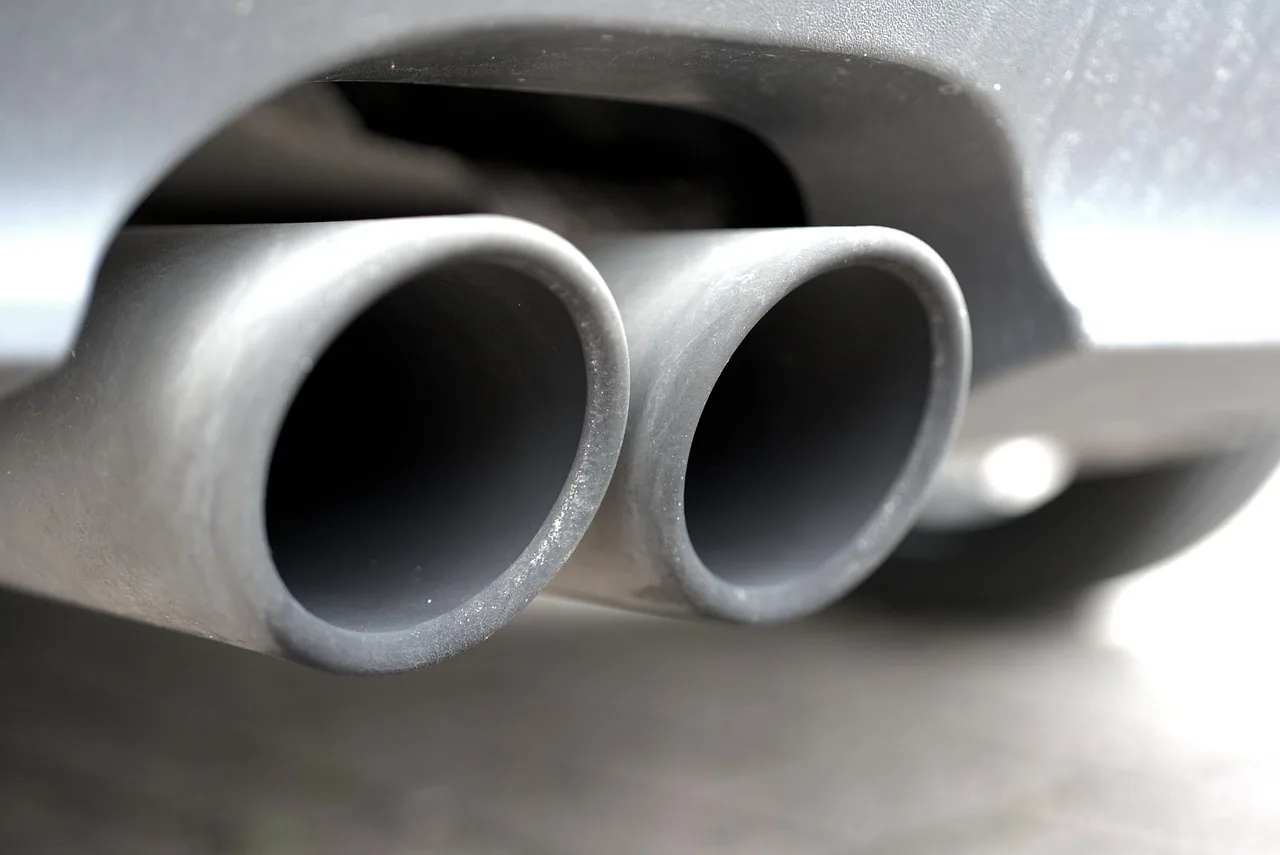


On a diesel, pipe diameter changes how easily exhaust leaves the turbo, how loud the truck sounds, and how much room you have around the frame, axle, and aftertreatment. Bigger is not automatically better. The right size matches flow demand without creating packaging or compliance problems.
What changes the decision most is whether your truck is stock, tuned, towing hard, or deleted for off-road-only use. A factory-calibrated truck with a DPF and SCR system usually does not need the same diameter as a high-output setup with freer flow.
What 4 inch and 5 inch mean on diesel trucks
In diesel exhaust talk, the number refers to pipe diameter, not tip size. A 4-inch system has less cross-sectional area than a 5-inch system, so it tends to be easier to fit and usually sounds more restrained. A 5-inch system moves more gas with less restriction, but it takes more space and often costs more.
That difference matters most after the turbo. Turbocharged diesels depend on exhaust energy to spool, but they do not need a choked outlet. The goal is low restriction through the post-turbo piping, muffler, and tail section while keeping the system legal and correctly matched to the truck.
Why pipe diameter changes flow and sound
Pipe size affects exhaust velocity and resistance. A smaller pipe can be adequate when flow demand is modest, but once the truck is tuned harder or asked to move more gas for long pulls, the smaller pipe may become the limiting section. Larger diameter usually lowers restriction and shifts tone toward a deeper, less sharp sound.
Sound changes often get more attention than flow. That is where mistakes start. A louder system is not the same thing as a better flowing one, and a bigger pipe can be a poor use of money if the factory system is not the bottleneck.
Why tip size is not the same as pipe size
Exhaust tips are mostly cosmetic and acoustic. A large rolled tip can make a diesel look more aggressive, but it does not turn a 3.5-inch or 4-inch system into a 5-inch system. Buyers often confuse the tip opening with the actual pipe diameter, then order the wrong kit.
When you compare systems, look for the true pipe OD or the kit’s stated diameter from the turbo outlet back or from the aftertreatment outlet back, depending on the truck layout. A big tip does not fix a restrictive midpipe, clogged DPF, or crushed section under the cab.
What size exhaust is best for a stock diesel truck?
For a stock diesel truck, 3 to 3.5 inches is often enough, and the factory system is commonly the better call if the truck still runs DPF and SCR equipment. A move to 4 inches can make sense when the factory system is the tightest point or when you want a little more room without chasing maximum sound.
When the factory system is still the limit
Many stock trucks are limited more by calibration, aftertreatment, or turbo sizing than by the tailpipe diameter. If the truck is untouched, the factory exhaust may already match the engine’s flow needs well enough that a bigger pipe changes little beyond tone. That is why an upsized system can be wasted money on a stock daily driver.
Suppose a stock truck with intact DPF and SCR starts feeling lazy, but the real issue is a clogged filter or a DEF fault. In that case, a larger exhaust will not solve the root problem. Fix the restriction or the fault first, then size the system.
When 4 inch is enough
Four inches is often described as a common all-around diesel size because it offers more flow capacity than stock without moving straight to a larger, louder 5-inch system. It is usually the safe middle ground for mildly tuned trucks, most daily drivers, and many tow rigs that still keep emissions hardware.
If your goal is a modest sound change plus a little breathing room for a future tune, 4 inches is often the practical choice. It keeps fitment simpler than 5 inches on many chassis, especially where spare tire space, cab mounts, and axle clearance are tight.
When 5 inch exhaust makes sense
Five inches makes sense when flow demand is genuinely higher than a 4-inch system can carry comfortably, such as with stronger tuning, a freer-flowing setup, or a deleted truck used off-road only. It is not an automatic upgrade for every diesel. The benefit rises as output rises.
A common rule of thumb is that 4 inches is usually enough for mild to moderate setups, while 5 inches becomes more worthwhile once the truck is built for higher output and longer high-load pulls. The more your setup departs from stock, the more likely the larger pipe pays off.
Higher-output tunes and freer-flowing setups
When a tune asks the turbo to move more exhaust mass, the post-turbo side needs to keep up. If the system includes a freer exhaust path, the turbo can push spent gas out with less resistance. That can help efficiency and can reduce the chance that the exhaust side becomes the bottleneck.
Five inches is most defensible when the rest of the setup is already aiming at higher output: larger turbo hardware, more fueling, and less concern about factory noise targets. In that case, the bigger pipe is chosen for flow headroom, not for sound alone.
Deleted or off-road-only trucks
Deleted trucks and off-road-only builds are the place where 5 inches most often enters the conversation, because the aftertreatment sections that create extra restriction are no longer part of the system. That does not make 5 inches mandatory, but it does remove one major reason to stay smaller.
Do not confuse this with a street-driven emissions-equipped truck. On a truck with DPF and SCR intact, the aftertreatment design is part of the exhaust strategy, and changing pipe size upstream or around it can create compatibility and legal problems.
When 4 inch can become a restriction
Four inches can start to feel limiting when the truck is asking for a lot more exhaust flow for long periods, especially if the setup already includes a higher-heat tune and freer intake and turbo path. The more sustained the load, the more important it is that the post-turbo exhaust is not the choke point.
Picture a tuned truck that tows hard in hot weather and runs long grades. If the system is small, exhaust heat and restriction can pile up where the truck needs the easiest exit path. A larger pipe gives more margin, but only if the rest of the setup can use it.
Diesel exhaust size decision table
| Truck setup | Towing priority | Noise level | DPF/SCR compatibility | Likely outcome for 4 inch | Likely outcome for 5 inch |
|---|---|---|---|---|---|
| Stock, emissions intact | High | Low to moderate | Best match | Usually enough, but often more than needed | Usually unnecessary and may be poor fitment value |
| Stock with frequent towing | High | Low | Best match | Good choice if the factory system is the bottleneck | Rarely justified unless the truck is later tuned |
| Mild tune, emissions intact | Medium | Moderate | Usually compatible only with correctly matched parts | Best all-around choice for most owners | Usually more pipe than needed |
| Heavy tune, emissions intact | Medium | Moderate to higher | Compatibility depends on system design | Can work, but may be the limiting size | Can make sense if the truck’s flow demand is truly higher |
| Deleted or off-road-only, moderate power | Medium | Higher | Not for street-compliant use | Often enough for many builds | Useful when the build is moving more exhaust gas than a 4-inch system can carry cleanly |
| Deleted or off-road-only, high output | Low to medium | Higher | Not for street-compliant use | May be restrictive | Usually the better match for flow headroom |
Does bigger exhaust always mean more power on a diesel truck?
No. Bigger exhaust lowers restriction, but power gains only appear when the old system was actually holding the engine back. If the factory pipe, muffler, and aftertreatment were already adequate for the truck’s output, a larger system may change sound more than performance.
That is why “bigger is better” fails on many stock trucks. You can spend money on diameter the engine never needs, then hear more exhaust without getting meaningful towing or acceleration gains.
How restriction affects turbo flow
Diesel turbos depend on exhaust energy to drive the turbine, then need a clear path for spent gas to leave the housing. Excess restriction after the turbo raises exhaust pressure on the outlet side and can make the system work harder than it should. Lower restriction helps the turbo expel gas more easily.
That matters for efficiency and response, but only within a complete system that still fits the truck and meets emissions rules. The exhaust is one part of the airflow path, not a stand-alone power adder.
Why sound gains can outpace power gains
On many trucks, the first thing you notice after going to a larger exhaust is sound, not acceleration. The tone gets deeper, throttle noise changes, and idle may be louder in the cab. That can feel like a performance gain even when the actual output change is small.
Noise can also tempt owners toward oversized pipe or an aggressive muffler delete when a milder setup would do the job. A diesel can sound stronger without making meaningfully more power.
Where fitment matters more than diameter
Fitment problems can erase the value of a large system. A pipe that drags, rattles, or forces bad hanger angles is worse than a slightly smaller system that fits cleanly and keeps its seals. On modern trucks, packaging around the DPF, SCR canister, crossmembers, and rear axle can matter as much as flow.
Leaky, cracked, or crushed sections cause more trouble than diameter choice ever will. Visual inspection, soot checks, and pressure tests are still part of good exhaust maintenance.
What exhaust size should I run on a towing diesel?
A towing diesel usually does best with a conservative size choice: 3 to 3.5 inches on a stock truck, or 4 inches if the factory exhaust is the main restriction and you want more room. For most tow rigs, the right answer is the size that keeps flow steady without turning the cab into a drone box.
If the truck is tuned and does real work, 4 inches is the safer starting point than 5 inches. Move to 5 inches only when the added flow is clearly needed for the build, not because you want a louder truck.
Towing with stock emissions equipment
On a towing diesel with DPF and SCR intact, compatibility matters as much as diameter. The aftertreatment system already affects restriction, regeneration, and maintenance needs, so a pipe size decision has to fit the whole emissions layout. A properly sized exhaust should not interfere with those functions.
Heavy-truck exhaust systems are built around core functions such as manifold collection, turbocharger boost, EGR recirculation, aftertreatment process, and noise suppression. Towing use keeps those functions in play, which is why the factory layout often remains the simplest and safest answer.
Towing after tuning
After tuning, exhaust demand rises. A 4-inch system is usually the first upgrade that makes sense because it gives more flow room without going to an oversized pipe that may add cost and noise you do not want in a tow vehicle. For many owners, 4 inches is the practical balance point.
If the tune is more aggressive and the truck spends long periods under load, 5 inches can be justified. Even then, the bigger pipe should be chosen because the setup needs it, not because it looks better in the driveway.
What to avoid on a tow rig
Avoid choosing pipe size from sound clips alone. A loud exhaust can be tiring on a long trip, and the wrong muffler can make a tow vehicle unpleasant even if the diameter is technically acceptable. Also avoid mixing up a large polished tip with a true large-diameter system.
Another mistake is ignoring DPF and DEF faults. DPFs and SCR systems require timely regeneration and DEF top-ups, and a warning light or degraded aftertreatment condition can change exhaust behavior enough that sizing decisions stop making sense until the fault is fixed.
How DPF, SCR, and DEF affect sizing
DPF and SCR systems change exhaust sizing because they are part of the flow path. A clogged DPF raises restriction. An SCR system with a DEF issue can trigger warning lights and derate behavior that has nothing to do with the tailpipe diameter. You need the emissions system healthy before judging whether the exhaust is truly too small.
Do not size around a fault. If the truck has a DPF that needs service, an SCR fault, or DEF warnings, the first job is diagnosis, not a larger exhaust.
Why aftertreatment changes flow
Aftertreatment is not just a muffler substitute. It adds restriction by design, and its condition changes over time as soot loads, regeneration events, and sensor readings shift. That means the same pipe size can behave differently on a clean truck versus one that needs service.
If a truck feels restricted, the cause may be a clogged filter or a failing sensor, not an undersized exhaust pipe. A pressure test can help separate real exhaust restriction from an emissions-system fault.
What warning lights and faults mean for exhaust choice
DEF warnings, regen faults, and SCR lights point to an emissions problem, not a pipe-diameter problem. If those lights are on, exhaust sizing should wait until the system is repaired. Otherwise you may spend money on a part that does not fix the symptom.
For legal street use, emissions compliance is part of the sizing decision. Diesel exhaust can be associated with illegal smoke modifications called rolling coal, and the World Health Organization classifies diesel exhaust as a carcinogen. Coal-rolling enforcement has also been handled under local and federal rules in some cases, so compliance cannot be treated as a side note.
Compatibility and legal limits
On a modern emissions-equipped truck, the safest path is to keep parts compatible with the factory DPF and SCR layout. On deleted or off-road-only trucks, the sizing choice changes because the aftertreatment sections are no longer in the equation, but street legality still does not follow from pipe size alone.
Owners who want a legal daily driver should treat 4 inches as a possible upgrade, not an excuse to strip emissions gear or chase black smoke. Rolling coal and smokestack-style smoke mods may get attention, but they do not help a tow truck choose the correct exhaust size.
How to choose between 4 inch and 5 inch
- Confirm whether the truck is stock, mildly tuned, heavily tuned, or deleted for off-road use.
- Check whether DPF, SCR, and DEF systems are intact and working.
- Decide whether your main goal is towing, daily driving, added power headroom, or sound.
- Start with 3 to 3.5 inches on stock or mostly stock tow rigs.
- Choose 4 inches for most tuned daily drivers and many tow setups.
- Choose 5 inches only when higher flow demand makes the larger pipe worthwhile.
- Verify muffler choice, hangers, and clearance before ordering tips or cosmetic parts.
Frequently asked questions
What size exhaust is best for a diesel truck?
For most diesel trucks, 4 inches is the best all-around size because it balances flow, sound, and fitment. Stock or towing-focused trucks often do fine with 3 to 3.5 inches, while 5 inches is usually reserved for higher-output or deleted setups that need more flow headroom.
Is a 4 inch or 5 inch exhaust better on a diesel?
Neither is always better. Four inches suits most stock-plus and mildly tuned trucks, especially tow rigs and daily drivers. Five inches makes more sense when the engine setup moves more exhaust gas and the smaller system becomes the limit. Sound alone is not a good reason to move up.
Will a larger exhaust hurt backpressure on my diesel?
A larger post-turbo exhaust lowers restriction, which is generally beneficial on a turbo diesel. The goal is not to preserve backpressure; it is to avoid unnecessary exhaust-side resistance. The real concern is choosing a size that fits the truck and remains compatible with its emissions equipment.
What size exhaust should I choose after a tune or delete?
After a mild tune, 4 inches is usually the best starting point. After a more aggressive tune or a deleted off-road-only build, 5 inches can make sense if the truck is moving enough exhaust to justify it. If the truck is still stock in other respects, the larger size may be wasted.