
Are Muffler Deletes Illegal? What Drivers Need to Know
A muffler delete is often illegal where state law requires a muffler or local noise limits are exceeded. That can lead to a traffic stop, a citation, or a failed inspection. This guide explains the decision tree, common exemptions, and how to check your state or local rule, using the actual vehicle code, inspection manual, and local ordinance text that applies in your area.
How state and local laws apply
Often, yes. A muffler delete removes the muffler from the exhaust system, which changes sound level and can trigger either an equipment violation or a noise-based citation. The answer depends on state law, county ordinances, and city codes, because local noise rules can be stricter than state guidance. For example, California requires an exhaust system that prevents excessive or unusual noise under Vehicle Code section 27150 and separately regulates exhaust noise in section 27151; New York Vehicle and Traffic Law section 375 also covers exhaust equipment, while many cities publish local noise rules in ordinance databases such as Municode.
Start by separating two questions. First, does your state require a muffler or other exhaust equipment? Second, does your city or county set a sound rule that your car can exceed even if the equipment looks acceptable? Those are different legal paths, and either one can create risk.
What a muffler delete changes
A muffler delete removes the muffler itself, so the vehicle exhaust is no longer using that sound-control component. That can make the car louder, and loudness is where local noise enforcement often starts. In some places, the equipment issue alone is enough for a citation. Texas, for example, requires a muffler or exhaust device that prevents excessive or unusual noise under Transportation Code section 547.604, so a straight-pipe setup can create an equipment issue even before a decibel complaint is raised.
A broken muffler is different. It is damaged or missing by failure, not design. A straight pipe is different again because it replaces the muffler with a direct exhaust path. A legal aftermarket muffler keeps a muffler in the system, but it still may not pass if it is too loud or does not match the vehicle well.
How equipment rules differ from noise rules
Equipment-required violations focus on whether the vehicle has the parts the law demands. Noise-based violations focus on how loud the vehicle is in operation. A car may be cited for one, the other, or both, depending on the state code and local ordinance.
That distinction matters after a stop and after an inspection. If the problem is equipment, the fix is usually replacing the missing part. If the problem is noise, the fix may be a compliant muffler, a different exhaust configuration, or proof that an exemption applies.
Muffler legality decision table
| Scenario | Likely enforcement trigger | Inspection risk | Proof or repair step |
|---|---|---|---|
| Missing muffler | Equipment-required violation; may also draw noise attention | High for safety or state inspection | Install a compliant muffler and keep the repair receipt |
| Muffler delete | Noise citation or equipment citation, depending on jurisdiction | High if the inspection checks exhaust compliance | Restore the muffler or document a valid exemption |
| Straight pipe | Usually the strongest noise and equipment risk | High if the state inspection checks exhaust equipment | Reinstall a muffler that fits the vehicle and meets the rule |
| Loud aftermarket muffler | Noise rule if sound exceeds local limits; equipment issue if the part is not compliant | Moderate to high, depending on inspection type | Confirm the correct type and diameter for the vehicle, then verify compliance |
| Exempt vehicle | Usually depends on showing the exemption status | Varies by state program and inspection class | Carry registration, program paperwork, or exemption proof |
Can you get pulled over for a muffler delete?
A muffler delete can draw a stop if the vehicle sounds unusually loud, if an officer notices missing exhaust equipment, or if the car otherwise appears noncompliant. After the stop, the officer may cite an excessive noise issue, an equipment issue, or both.
If the officer says the vehicle is unsafe or illegal to drive, the article advises towing or roadside assistance. That is not automatic everywhere, but it is a real possibility when the exhaust problem is tied to broader safety concerns.
What usually triggers a traffic stop
Most stops begin with what the vehicle sounds like or what the officer sees. A loud idle, popping on acceleration, or an obvious missing muffler can all attract attention. A stop can also happen after a complaint from nearby drivers or neighbors.
Say your coupe leaves a parking lot with a straight pipe and a deep, sharp exhaust note. If an officer stops the car, the driver should ask what the specific violation is: excessive noise, missing exhaust, or both. That question matters because it tells you what must be fixed.
State examples that show how enforcement varies
California is a good example of a state that separates equipment and sound rules: Vehicle Code section 27150 requires a muffler, while section 27151 addresses noise and modified exhaust sound. New York’s Vehicle and Traffic Law section 375 includes exhaust-equipment requirements, and local enforcement can layer on city noise rules. Florida also regulates exhaust systems in section 316.272, which is why a car can be legal in one place and still be risky in another.
What to show if you claim an exemption
If you believe the vehicle is exempt, show the paperwork that proves it. That can include historic vehicle registration, a special program card, or other state-approved documentation. A verbal claim rarely helps unless it matches the registration class or inspection rules in that jurisdiction.
Off-road or track-only status does not excuse public-road use. A vehicle that is not street-legal should stay out of normal road use. If it is being moved legally for transport, keep the documents that explain why it is on the road that day.
Do muffler deletes fail inspection?
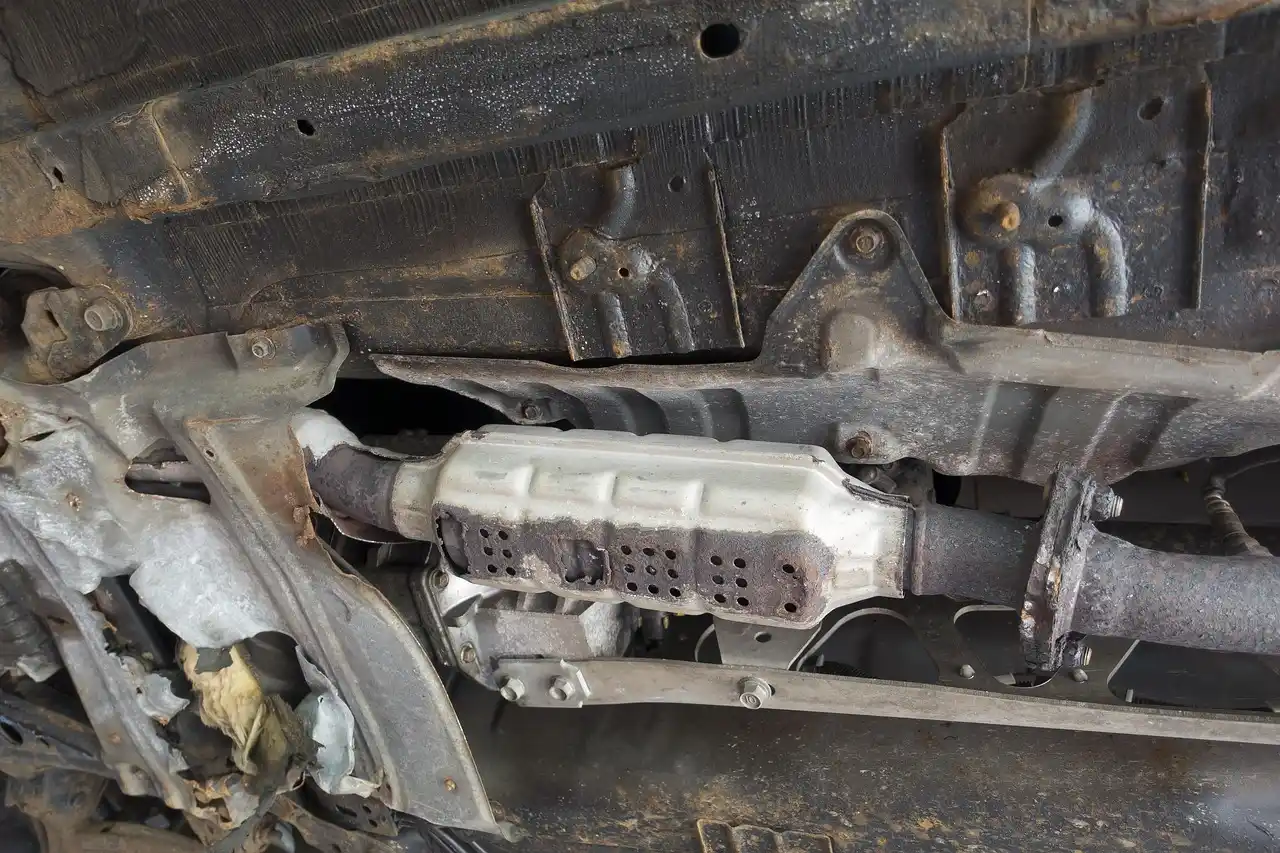
A vehicle may fail an inspection for exhaust-related problems, depending on the inspection type. Vehicle inspection may fail for exhaust problems, but the exact failure depends on the inspection type. Safety inspection, emissions inspection, and noise enforcement are separate categories, and a vehicle may pass one while failing another.
A missing muffler is especially likely to fail a safety or equipment inspection. A loud exhaust can also create trouble during a state inspection if the manual checks exhaust condition or compliance. Noise enforcement outside the inspection lane is still separate from the inspection itself.
Safety inspection vs. emissions inspection vs. noise enforcement
A safety inspection looks at whether the vehicle is roadworthy under that state’s rules. An emissions inspection checks emissions-related compliance. Noise enforcement is a roadside or complaint-driven issue. Do not assume a passing emissions result means the muffler setup is legal. In Virginia, for instance, the state inspection materials focus on equipment compliance and safety items, so the inspector’s checklist can matter more than the owner’s assumption about “quiet enough.”
Some states require a repair order after a failure, then a re-inspection within the allowed window. The repair paperwork becomes part of the record that shows the issue was fixed. Keep the receipt with the vehicle documents until the matter is closed.
What inspectors often look
Inspectors often check whether the exhaust system is complete, whether parts are secure, and whether the vehicle seems to meet the state’s equipment rule. They may also note aftermarket exhaust modifications if the state inspection manual calls for that review. Local inspection rules can be more specific than general traffic law, so the manual matters. For example, inspection programs published by state DMV or transportation agencies often spell out whether a missing muffler, a cut exhaust, or a visible leak is an automatic failure.
Aftermarket or performance mufflers may alter sound levels. That alone is not proof of illegality, but it means you should confirm the part matches the vehicle model and diameter and still meets the local standard. Installation quality matters too.
What exemptions can apply?
Some vehicles may be grandfathered or legally exempt in certain contexts, but exemptions are not automatic. Classic cars, motorcycles, or off-road vehicles could have different requirements, and some states offer historic vehicle programs or street-legal exemptions. The key is to verify the exact statutory language or DMV rule before assuming the vehicle qualifies.
Temporary exemptions may be granted in some rural areas or during certain events, but they are not universal and typically require prior approvals. If an exemption applies, carry the proof in the car. Without proof, the vehicle can still be treated like any other noncompliant car at a stop or inspection.
Historic vehicle exemption
A historic vehicle exemption usually depends on special registration or a program rule. It may allow a classic car to keep equipment that would not be accepted on a newer daily driver. The exemption is state-specific, so the registration class matters as much as the car itself. Some states tie this to limited-use registration rather than age alone, which is why the plate type matters in a traffic stop.
Off-road vehicle exemption
An off-road vehicle exemption may apply when the vehicle is not meant for normal street use. That can change the exhaust rule, but only in the context covered by the exemption. If the vehicle is on public roads, the normal road-use rules can still apply unless the paperwork says otherwise. Local ordinance databases may also classify off-road machines differently from passenger vehicles.
How to prove exemption status during a stop or inspection
Keep the proof where you can reach it fast: registration, inspection papers, exemption card, or special permit. If the officer or inspector asks, show the exact document that matches the vehicle and the exemption. A printed screenshot may help if the state accepts it, but the official paperwork is better.
A common first-timer mistake is assuming “classic” or “off-road” on its own is enough. It usually is not. The vehicle must fit the state’s program or registration rules, and the driver should be able to show that immediately.
How to verify your local rule
Use a simple three-step check. First, read the state vehicle code or transportation code section that covers exhaust equipment and noise. Second, check the local noise ordinance database for the city or county where the car is driven. Third, read the state inspection manual and any exemption rules that apply to your plate class. That is the fastest way to move from guesswork to a rule you can actually rely on.
- Look up the state code for exhaust equipment and noise requirements.
- Check the city or county noise ordinance database for stricter sound rules.
- Read the state inspection manual to see whether exhaust issues fail inspection.
- Review exemption rules for historic, special-use, motorcycle, or off-road vehicles.
- If you are unsure, bring the exact section number or printed rule to the shop or inspection lane.
What to compare while you check
Do not stop at one source. A state rule may allow something that a city ordinance still limits. An inspection manual may reject a part that a noise ordinance does not target. The legal answer is the strictest rule that applies to the place where you drive.
What should I do if I was cited for a loud exhaust?
Start by reading the citation carefully and matching it to the violation named on the stop. If it says excessive noise, the fix may be different from a missing-exhaust or equipment citation. Get a repair estimate, keep the receipt, and document the work before re-inspection or court dates.
If the citation names both noise and equipment issues, address both. That may mean reinstalling a muffler, replacing a damaged part, or proving an exemption. If the officer or inspector said the vehicle was unsafe, do not drive it again until the issue is corrected or the vehicle is towed.
Repair and re-inspection basics
Professional repair or replacement of a missing muffler is generally advised. After a failed inspection, drivers may need an official repair estimate and a re-inspection within the allowed window. Keep the estimate, invoice, and final receipt together.
Those documents help show that the vehicle was brought back into compliance. If the inspection station wants proof, bring the paperwork from the repair shop. If the state requires a sign-off form, make sure the mechanic fills it out completely.
Choosing the right fix
Reinstalling a muffler is often the safest path for a street-driven car. A legal aftermarket muffler can be a better fit if the owner wants a different tone but still needs road compliance. A straight pipe or deleted muffler is a poor choice for a vehicle that must pass street inspection.
Keep the tradeoff simple. Reinstalling the factory-style part usually gives the cleanest compliance path. A compliant performance muffler may cost more upfront but can reduce the chance of another stop. Keeping the car track-only avoids the street-law problem, but only if it stays off public roads.
Frequently asked questions
Are muffler deletes illegal in the US?
There is not a single national answer on muffler-delete legality. Federal law does not create one universal muffler-delete rule for every passenger vehicle, so the real answer comes from state vehicle code and local ordinances. In practice, that means a deleted muffler may be treated as an equipment violation in one state and as a noise citation in another, especially where the code uses phrases like “excessive,” “unusual,” or “loud and raucous.”
Are there any vehicles exempt from muffler laws?
Some vehicles may be grandfathered or legally exempt in certain contexts. Historic vehicles, some motorcycles, and some off-road vehicles can have different requirements, but the exemption is state-specific and may depend on special registration or program rules. Proof matters as much as the vehicle type, and the exemption can disappear once the vehicle is used on a public road outside the program’s limits.
What is the difference between missing a muffler and a legal aftermarket exhaust?
A missing muffler means the exhaust system no longer has the required component. A legal aftermarket exhaust still has a muffler, but it may change sound level and still have to meet state or local noise rules. The correct type and diameter matter, and so does installation quality. A compliant part can still fail if it causes leaks, hangs too low, or violates a local sound ordinance.