How to Tell If Motorcycle Exhaust Is Too Rich
A motorcycle is probably running too rich if spark plugs come out black and sooty, fuel mileage drops, and the exhaust smells strongly of raw gasoline after warm-up. If you ignore that pattern, plugs can foul, cylinder walls can get washed, oil can thin, and ignition or exhaust faults can stay hidden while you chase the wrong fix. This guide shows a step-by-step decision tree to separate true rich fueling from exhaust, ignition, and oil-burning lookalikes.
What rich exhaust looks like


True richness means the engine is getting more fuel than the air entering it can burn cleanly. Usual signs include dry black soot at the tailpipe, a fuel smell after the engine is hot, rough idle, poor mpg, and spark plugs that read black instead of tan or gray. The job is to separate those signs from oil residue, condensation, and exhaust leaks.
Dry soot versus oily residue
Dry black carbon wipes off as a fine, dusty film. Oily residue feels sticky, may smear brown or dark gray, and often comes with a blue smoke trail or rising oil use. A short-trip bike can also leave damp condensation in the muffler, which is usually light-colored water spotting rather than black carbon.
Fuel smell, poor mileage, and rough idle
A fuel smell after warm-up can matter more than a cold-start smell. Many bikes run richer during enrichment, then settle down. If the smell stays strong once the choke or cold-start enrichment is off, and mileage falls at the same time, check fueling, choke position, air filter restriction, or an EFI control fault.
What a rich spark plug looks like
A rich plug usually has dry black soot on the insulator and electrodes. Tan to light gray is more typical of normal combustion. Also check gap and fouling: a plug that is heavily carboned may misfire under load, and a plug that differs from the others on a multi-cylinder bike can point to a cylinder-specific issue such as an injector, jet, or ignition fault.
How do you confirm richness?
Confirm richness by checking the plugs, then checking air and fuel control data, then using tailpipe clues as support. Do not stop at black soot alone. A bike can look rich because of oil burning, a weak spark, a stuck enricher, or a leaking exhaust joint that changes how the engine runs.
Read plugs cylinder by cylinder
- Remove and label plugs. Keep each plug matched to its cylinder so you can compare one hole against the next. That matters on multi-cylinder engines, where one black plug can point to a cylinder-specific injector, carb circuit, or ignition fault.
- Inspect the color. Look for dry black soot on the insulator nose and ground strap. Tan or light gray is closer to normal; wet fuel, oily shine, or heavy crust points to a different problem.
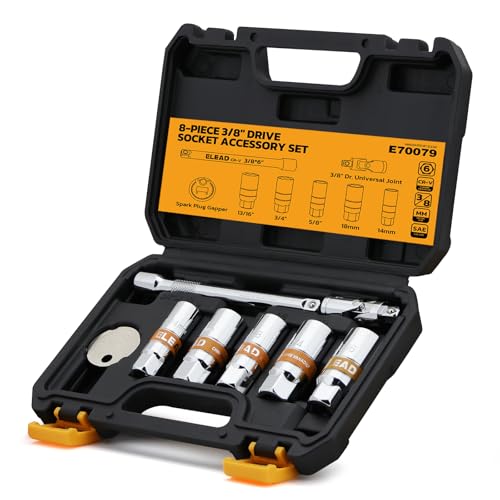
- Check the gap. A plug that is badly fouled can misfire even if the gap started in spec. If the gap is rounded off or the plug is caked, replace it before deeper diagnosis, because a bad plug can mimic rich running.
Check air-fuel ratio and fuel trims
For gasoline, stoichiometric air-fuel ratio is commonly cited as about 14.7:1. Rich means less air or more fuel than that ideal. On EFI motorcycles, a wideband O2 sensor or scan data can show whether the engine is running rich in closed loop or whether fuel trims are being pushed high or low to compensate.
Use exhaust and tailpipe clues
Black soot at the outlet supports rich combustion, but it is not proof on its own. Exhaust leaks can leave carbon near a joint, and an oil-burning engine can coat the outlet too. A clean, dry pipe with a strong fuel smell points more toward active overfueling than a simple soot stain from old running.
Suppose a twin-cylinder bike has one plug black and the other tan, plus a strong gas smell only on the black-plug side. That pattern points away from a global exhaust problem and toward one cylinder, where a stuck float, leaking injector, or weak spark deserves first attention.
Carbureted motorcycle checks
On carbureted motorcycles, rich symptoms usually trace to jetting, float level, or a choke or enricher that is not fully returning. Exhaust changes can matter, but a slip-on alone rarely creates true richness by itself. Start with the air filter, then the enrichener, then the carb circuits.
Choke or enricher stuck
A choke plate or enricher circuit that stays on can mimic a rich engine at idle and low throttle. Make sure the control fully returns and the cable has free play. If the bike runs better once the control is physically verified off, the fault is upstream of jetting.
Pilot jet, main jet, and needle position
The pilot jet typically affects idle and just-off-idle response. The needle position affects midrange. The main jet matters most near wide-open throttle. A richer exhaust note after intake or exhaust changes often follows jetting that is too large for the new airflow, especially when the bike stumbles, loads up, or soots plugs at the rpm range tied to that circuit.
Float level, flooding, and air filter restriction
A fuel level that is too high can flood the bowl and enrich the mixture across the range. A dirty or over-oiled air filter does the same by reducing intake air. Check the filter for dirt loading, oil saturation, or collapse, and inspect float height if the bike smells of fuel, idles roughly, and leaves wet or black deposits.
- Inspect the air filter. Hold it to light if the design allows, and replace or clean it if dirt blocks airflow or if foam/oil is heavy. A restricted filter is one of the fastest ways to create rich-looking symptoms.
- Verify choke return. Move the control from full on to fully off and confirm cable motion at the carb. If idle changes sharply, that control is part of the fault.
- Check fuel level. Look for overflow, bowl seepage, or flooding after shutdown. If fuel sits too high in the bowl, the carb can feed excess fuel even with correct jets.
EFI motorcycle checks
EFI motorcycles need a different branch because the ECU can add or subtract fuel based on sensor feedback. Closed-loop operation uses oxygen sensor input to aim near stoichiometric conditions in many steady-state situations, often near 14.7:1 for gasoline. Open-loop fueling, high load, cold running, or calibration changes can shift that target, so the diagnosis needs scan data and sensor checks.
Closed loop versus open loop fueling
In closed loop, the ECU watches the oxygen sensor and trims fuel to stay near target. In open loop, it follows a map without live correction. If richness appears only at cold start, full throttle, or during warm-up, that may be normal enrichment rather than a fault. If it stays rich after warm-up, dig deeper.
Oxygen sensor faults and trouble codes
The oxygen sensor sits in the exhaust stream where it can read oxygen content. If it is contaminated, slow, or failed, it can bias fueling and set fault codes. On many bikes, the symptom is poor trim control, surging, or a steady rich or lean shift rather than an outright no-start.
Injector, fuel trim, and remap checks
Faulty injectors can dribble or stick open, which creates a rich cylinder and black plugs. A rich trend after a full exhaust or intake change may need a remap or piggyback module, especially when fuel trims are at their limit. A slip-on alone is less likely to demand that work than a full system with intake changes.
- Read fault codes first. Scan for oxygen sensor, injector, and intake air temperature codes before swapping parts. A stored code often narrows the branch faster than any guess.
- Watch live fuel trims. Look for trims pegged near their limit in closed loop. That shows the ECU is fighting a mismatch, not simply running a normal cold-start table.
- Confirm sensor response. A slow or stuck O2 signal, especially after contamination or exhaust leaks, can push fueling the wrong way. If the sensor output is lazy or flat, replace or test it before changing maps.
Rich exhaust diagnostic matrix
This matrix keeps the branches separate. Use the symptom that matches what you see, then follow the quick test before changing jets, injectors, or exhaust parts. If the quick test points to hardware, fix that first. If it points to fuel control, move to calibration or sensor work.
| Symptom | Likely cause | Quick test | Next action |
|---|---|---|---|
| Dry black soot at muffler outlet | True rich combustion, overfueling, dirty filter | Wipe the outlet and inspect plugs | Check filter, choke, jets, injectors, or trims |
| Fuel smell after warm-up | Open-loop overfueling, stuck enricher, leaking injector | Compare cold start smell to hot idle smell | Branch to carb or EFI checks |
| One plug black, others normal | Single-cylinder injector, jet, coil, or plug fault | Swap plug or coil if the layout allows | Follow the fault to that cylinder |
| Black soot plus oily residue | Oil burning or blow-by | Check oil level and exhaust sheen | Inspect rings, guides, and breather system |
| Decel popping after exhaust mods | Lean condition, exhaust leak, or tune mismatch | Check joints and leak points first | Do not read popping as rich by itself |
| Rough idle with no soot | Misfire, weak spark, or cold running | Check plug gap and ignition output | Repair ignition before changing fueling |
What else can look rich?
Oil burning, weak ignition, and a cold engine can all look like rich running. Short trips also leave condensation and can keep the engine in enrichment longer than expected. The fix depends on which clue is real: soot, oil, spark, or temperature.
Oil burning and blow-by
Oil burning leaves an oily film, blue smoke, and rising oil use. Blow-by from worn rings can push oil vapor into the intake or exhaust and darken plugs. Check the dipstick or sight glass level against the maker’s procedure before judging the exhaust, because low oil and oily smoke point to different failures.
Weak ignition and misfire
A weak spark can leave unburned fuel in the pipe, which smells rich even when the mixture is not overly rich. Black plugs can come from misfire, not excess fuel alone. If one cylinder lags, focus on plug, cap, coil, and wiring before changing jetting or maps.
Cold engine, short trips, and condensation
A bike that never fully warms up can stay in enrichment longer and leave water in the exhaust. That often makes the outlet look dirty without proving an actual rich fault. If the exhaust clears after a sustained ride and the plugs stay tan, the engine may be fine.
A common first-timer mistake is seeing soot after a short commute and assuming the carb is too large. If the bike is run for five minutes, shut off, and stored, condensation and cold enrichment can leave a dark outlet without any true fuel problem.
When exhaust changes need retuning
A slip-on alone usually does not create a rich condition on its own, though it can change sound and sometimes decel behavior. A full system, intake change, or major flow change can move fueling enough to justify jetting changes on carburetors or a remap on EFI. Let the symptoms guide the fix, not the noise level.
Slip-on versus full system
A slip-on mainly changes muffler volume and backpressure a little. A full header and muffler system changes flow more, so it is more likely to require retuning. If the bike only got louder but still reads clean plugs and normal trims, a rich diagnosis is less likely.
Aftermarket exhaust and decel popping
Decel popping is often a lean or leak clue, not a rich one. Exhaust leaks pull fresh air into the pipe and can cause popping on overrun. If the bike pops after a pipe change, inspect joints and map quality before assuming the new exhaust made it rich.
When to stop guessing
If the air filter is clean, plugs are healthy, the choke or enrichment is off, and EFI trims or codes still point to a fault, move to hard data. Carb bikes need jet and float checks. EFI bikes need sensor and injector checks. Do not keep changing exhaust parts to chase a fuel problem.
Frequently asked questions
What are the signs of a rich motorcycle engine?
Common signs include black soot, poor fuel economy, rough idle, black plugs, and sometimes a stumble off idle or at wide-open throttle. The pattern matters. One black cylinder points to a local fault. Every cylinder black points to a system-wide fueling issue or a blocked air supply.
Why is there black soot in my motorcycle exhaust?
Black soot is dry carbon from incomplete burn, usually tied to too much fuel, too little air, or misfire. A dirty air filter, oversized jets, faulty injectors, or a stuck enricher can all do it. Oily residue or blue smoke suggests oil burning rather than richness.
What causes popping and fouling after exhaust mods
After exhaust changes, popping often comes from a lean condition, an exhaust leak, or a tune that no longer matches the airflow. Fouling can follow if the calibration is too far off or if the engine is still cold. A full system is more likely than a slip-on to need retuning.