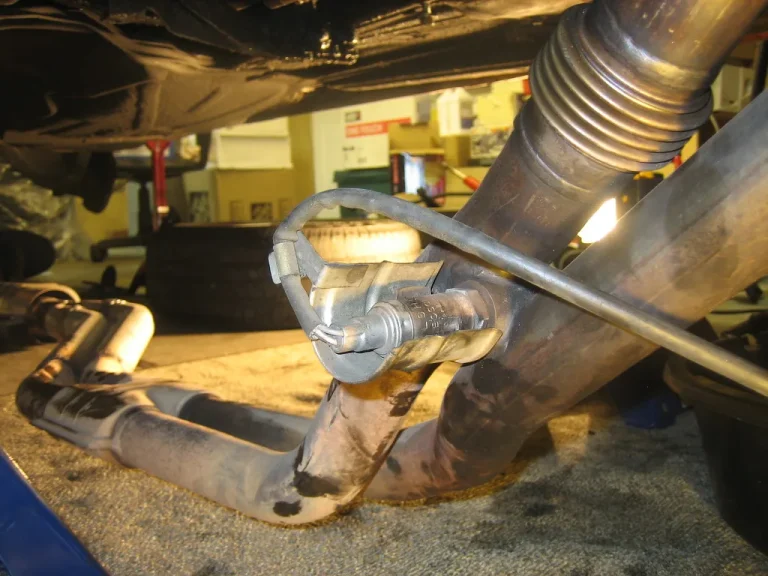
Oxygen Sensor vs Mass Air Flow Sensor
Suspect the mass air flow sensor first when trims are off on both banks, idle is rough, and you see P0100-series codes; suspect an oxygen sensor first when the fault is bank-specific or limited to post-catalyst O2 codes. Replacing the wrong sensor wastes money and can leave the driveability problem unchanged. This guide shows how symptoms, sensor location, and code patterns separate O2 faults from MAF faults.
| Decision factor | oxygen sensor | mass air flow sensor | Winner |
|---|---|---|---|
| What it reads | Measures exhaust oxygen in the exhaust stream after combustion | Measures incoming air in the intake air stream, often near the air filter box or intake tube | mass air flow sensor |
| Code pattern | Often points to one bank, one sensor, or catalyst-efficiency behavior | Often creates P0100-series airflow codes or trims that drift on both banks | mass air flow sensor |
| Common drivability clue | Fuel control may be skewed after warm-up or in closed loop | Idle, tip-in, hesitation, and low-speed stumble are common | mass air flow sensor |
| Repair risk | Replacement is often the correct fix when codes match and no leak is present | Cleaning may help if the sensor is dirty; leaks can imitate failure | mass air flow sensor |
| Best-fit diagnosis | Exhaust-side fault, bank-specific trim issue, or O2/AFR code behavior | Intake-side fault, both-bank trim issue, or dirty filter and leak behavior | tie |
What each sensor measures
The two sensors feed the engine control unit, or ECU, but they do different jobs. The mass air flow sensor measures how much air enters the engine, then sends airflow data so the ECU can calculate fuel quantity. The oxygen sensor measures oxygen in the exhaust stream, which is the end result the ECU compares against its fuel target.
Mass air flow sensor
The mass air flow sensor, also called an air meter, sits in the intake air stream and usually lives in or near the air filter box or the intake tube before the throttle body. Its job is direct: measure incoming air so the ECU can estimate fuel injection quantity. If that signal is wrong, the ECU starts with the wrong air count.
Oxygen sensor
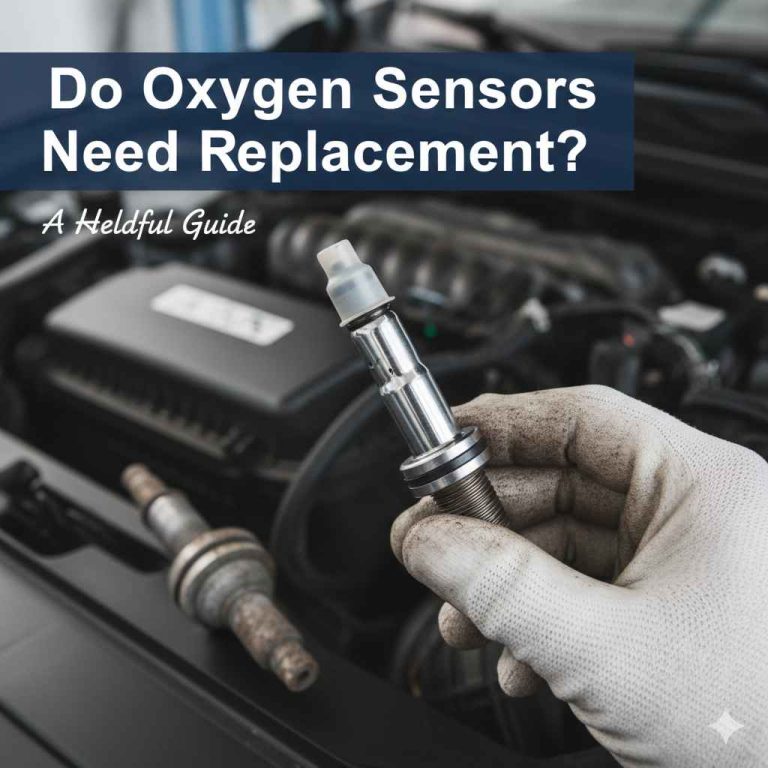
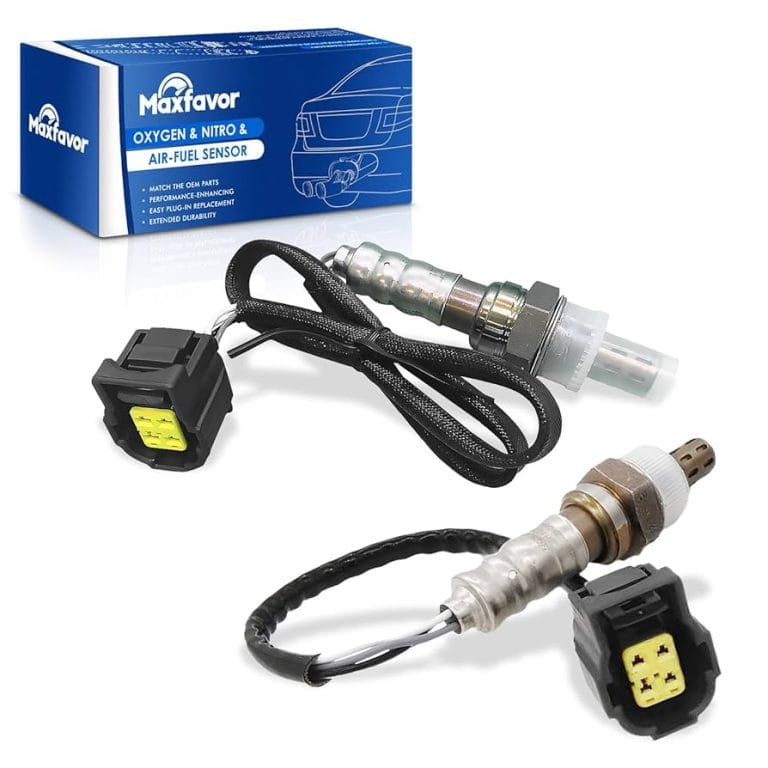
The oxygen sensor reads the exhaust stream after combustion. It feeds the engine control system with oxygen content data so the ECU can make air-fuel ratio decisions in emissions and closed-loop fueling. Many applications use a heated sensor, and a wideband or AFR sensor is the related version used when the engine needs more precise air-fuel measurement.
Exhaust oxygen is oxygen, the element with atomic number 8 and relative atomic mass 15.999, and under normal conditions it is O2, a colorless gas. Oxygen makes up 21% of Earth’s atmosphere by volume. That matters here because the sensor is not reading fuel directly; it is reading what remains after combustion. (UCAR)
How the ECU uses both signals
The ECU does not compare these sensors in a simple one-to-one way. It uses the mass air flow sensor as an airflow input and the oxygen sensor as feedback from the exhaust, then adjusts fuel delivery to hold the air-fuel ratio near target. A fault on either side can pull the mixture off course, but the pattern of the error usually points to the source.
📊 Oxygen makes up 21% of Earth’s atmosphere by volume. Source: Oxygen.
How can you tell which sensor is bad?
Start with the pattern, then check the part number. A MAF problem usually looks like a global airflow error, with rough idle, hesitation, both banks moving the wrong way, and airflow-related codes. An oxygen sensor problem more often looks local to one bank or one sensor, especially after the engine has warmed up.
Symptom patterns that lean toward MAF
Think intake-side first if the engine stumbles at idle, hesitates on light throttle, or recovers when the sensor is unplugged on some vehicles. If the short-term and long-term fuel trims are off on both banks, the ECU may be reacting to bad airflow data rather than an exhaust sensor complaint. Dirty air filters, oiled filter residue, cracked intake tubes, and vacuum leaks can create that pattern.
Symptom patterns that lean toward O2
Think exhaust-side first when the fault is bank-specific, when the code names a specific O2 or AFR sensor, or when the problem appears after closed loop begins. A bad oxygen sensor can push the ECU into the wrong correction even when the intake side is sound. Exhaust leaks upstream of the sensor can also fool the reading.
Scan-code clues and short fuel-trim clues
Codes matter because they show where the ECU saw the mismatch. P0100-series codes point toward MAF circuit or airflow faults, while P0130-series and P0150-series codes usually point toward oxygen sensor circuits or response issues. If trims are skewed on both banks, suspect airflow or a shared intake problem first; if only one bank is off, suspect the exhaust side or a bank-specific leak.
This comparison comes down to where the signal starts, what the ECU does with it, and how often the real fault sits somewhere else. The mass air flow sensor is usually the first suspect for broad trim errors and intake-side drivability complaints. The oxygen sensor is usually the first suspect for bank-specific codes, post-catalyst O2 faults, and exhaust-side leaks.
Location and signal source
The mass air flow sensor sits in the intake stream, usually between the air filter box and the throttle body. The oxygen sensor sits in the exhaust stream, where it can see combustion results after they leave the engine. That location difference is the easiest way to separate them before you spend money.
Common codes and drivability effects
MAF faults often show up as airflow codes and broad fuel-trim corrections. Oxygen sensor faults often show up as sensor-specific codes or catalyst-efficiency complaints, because the ECU is judging exhaust feedback. Both can cause rough running and poor performance, but the code shape is usually different.
Cleaning, testing, and replacement risk
The mass air flow sensor has a lower replacement risk because cleaning may help if contamination is the problem, but cleaning is not a fix for a torn intake boot or vacuum leak. Oxygen sensors are less often “cleanable” in a meaningful way; if the heater, response, or signal is bad and the exhaust is sealed, replacement is usually the path. The key is to test before replacing when the code could come from a leak.
MAF O2 matrix
Use this matrix when the symptoms overlap. It separates the likely fault by code shape, location, and what the ECU is reacting to. The quick-replace note is conservative; if a leak, contamination, or wiring fault could explain the code, test first.
| Symptom or code pattern | more likely MAF | more likely O2 | ambiguous | Quick-replace vs test-first |
|---|---|---|---|---|
| Rough idle, hesitation off idle, P0100-series code | Yes | Test first if the air filter box, intake tube, or connector looks damaged; quick-replace only after inspection | ||
| Bank-specific code, post-catalyst O2 or AFR code, normal intake parts | Yes | Test first if exhaust leaks are possible; quick-replace only after confirming circuit and leak status | ||
| Fuel trims off on both banks, no sensor-specific code yet | Yes | Yes | Test first; shared intake leaks and dirty MAF contamination are common lookalikes | |
| One bank lean, one bank normal, no intake leak found | Yes | Yes | Test first; exhaust leak or sensor response issue is more likely than a global airflow fault | |
| Dirty filter, oiled filter, or debris near the sensor | Yes | Clean and recheck before replacing if the sensor element is contaminated | ||
| Turbo engine with hose leak before the throttle body | Yes | Yes | Test first; the leak can mimic a bad MAF and skew trims under boost |
Could a dirty filter or leak be the real fault?
Yes. Intake leaks and exhaust leaks are the two common mistakes that send people toward the wrong sensor. A dirty air filter can contaminate the MAF sensor, while a vacuum leak can make the ECU think less air entered than actually did. On the exhaust side, a leak before the O2 sensor can pull fresh air into the exhaust stream and distort the reading.
Dirty air filter and MAF contamination
A dirty air filter can restrict flow, but the bigger issue is contamination. Dust, oil from an over-oiled aftermarket filter, or debris in the air filter box can coat the sensing element and make the mass air flow sensor read wrong. If the filter is visibly loaded or the sensor is dirty, clean the sensor carefully and inspect the intake tract before replacing it.
Vacuum leaks and false MAF readings
A vacuum leak downstream of the MAF adds unmetered air after the sensor has already counted the airflow. That makes the ECU fuel too little for the actual air in the cylinders, and trims move positive to compensate. The result can look like a bad MAF even when the sensor itself is fine.
Exhaust leaks and false O2 readings
An exhaust leak ahead of the oxygen sensor can pull in outside air and make the exhaust look leaner than it is. The ECU reacts to that false feedback and shifts fueling. If the sensor is new but the code returns, inspect the exhaust manifold, flex joint, and upstream pipe joints before condemning the sensor again.
Choose oxygen sensor if… / Choose mass air flow sensor if…
Choose the oxygen sensor when the code names a specific O2 or AFR sensor, the problem is bank-specific, or the issue appears after closed-loop operation begins. Choose the mass air flow sensor when the fault starts in the intake stream, trims drift on both banks, or the symptoms are strongest at idle and light throttle.
Choose oxygen sensor if…
- The code points to a specific O2 sensor or wideband / AFR sensor.
- The problem is limited to one bank and the intake side checks out.
- An exhaust leak, heater fault, or slow sensor response fits the pattern.
- The engine runs acceptably cold but goes wrong after warm-up and closed loop.
Choose mass air flow sensor if…
- You see P0100-series airflow codes or broad trim errors on both banks.
- Idle is rough, tip-in is lazy, or the engine stumbles under light acceleration.
- The air filter box, intake tube, or sensor element is dirty or contaminated.
- There is a crack, loose clamp, or vacuum leak in the intake air stream.
Suppose a turbocharged gasoline car idles poorly after an oil change, and the scan tool shows a P0101 code plus both-bank lean trims. That points first to the intake side, because an intake leak or contaminated MAF can affect both banks at once. An O2 sensor would be a weaker first guess there.
Say your sedan shows a single P0136 code for one downstream sensor, but trims are normal and the intake parts are clean. That is the opposite pattern. The oxygen sensor or an exhaust leak near that bank is the stronger first suspect, and a MAF swap would be a poor bet.

- Direct plug-in, no wire cutting
- Zirconia solid electrolyte
- Highly accurate
Frequently asked questions
Is maf sensor same as oxygen sensor?
No. The mass air flow sensor measures incoming air in the intake stream, while the oxygen sensor reads exhaust oxygen after combustion. They both help the ECU manage air-fuel ratio, but they sit in different places and report different data.
Is mass air flow sensor same as o2 sensor?
No. A mass air flow sensor is an intake sensor, and an O2 sensor is an exhaust sensor. If the code points to airflow on both banks, think MAF or intake leak first; if it points to one sensor or one bank, think O2 first.
Mass air flow sensor vs o2 sensor
The MAF tells the ECU how much air entered the engine, and the O2 sensor tells the ECU how the combustion result looks in the exhaust stream. That is why MAF faults often affect both banks, while O2 faults more often stay bank-specific.
Is the mass air flow sensor important?
Yes. The ECU uses it to calculate fuel delivery, so a bad reading can skew the air-fuel ratio quickly. When the MAF is wrong, fuel trim corrections may mask the problem for a while, but drivability and fuel economy usually suffer.
Is oxygen sensor and mass air flow sensor the same?
No. They are separate parts with separate jobs. The oxygen sensor feeds exhaust feedback into emissions and closed-loop fueling decisions, while the mass air flow sensor feeds airflow data into the ECU’s fuel calculation.
How long do mass air flow sensors last?
There is no fixed interval that fits every vehicle. Many last a long time if the air filter is maintained and the intake stays sealed, but contamination, oil from filters, and wiring issues can shorten life. Diagnose the code pattern before replacing one.
Why are mass air flow sensors so expensive?
They can be expensive because the ECU depends on a precise airflow signal, and the sensor sits at a critical point in the intake stream. Replace it only when the code pattern, inspection, and leak checks point there; cleaning or a clamp repair may solve the problem for much less.
Can a dirty air filter affect the mass air flow sensor?
Yes. A dirty or oil-soaked filter can let contamination reach the sensing element, and a badly restricted filter can change airflow behavior enough to confuse diagnosis. Inspect the filter box, the sensor, and the intake tube together, not one at a time.
Which sensor causes bad gas mileage: oxygen sensor or mass air flow sensor?
Either one can. A bad MAF can make the ECU miscalculate fuel quantity, while a bad oxygen sensor can distort closed-loop corrections. If mileage drops along with rough idle and both-bank trims, start with the MAF; if the problem is bank-specific, start with the O2 sensor.
How do I know if my car needs an oxygen sensor or MAF sensor?
Check where the fault appears. Intake-side symptoms, P0100-series codes, and trims off on both banks point toward the mass air flow sensor or an intake leak. Bank-specific O2 or AFR codes, especially after warm-up, point toward the oxygen sensor or an exhaust leak.
How long mass air flow sensor last
Many last for years, but life depends on contamination, air filter condition, and intake leaks. The right question is not the age alone; it is whether the sensor’s code, location, and fuel-trim behavior fit MAF failure better than a leak or wiring fault.