How Oxygen Sensors Work in a Car Engine
An oxygen sensor measures leftover oxygen in exhaust so the ECU can trim fuel around the stoichiometric air-fuel ratio, about 14.7:1 on gasoline; a good sensor typically switches rich-to-lean several times per second once warm. A faulty sensor or heater can cause poor fuel economy, rough running, failed emissions, and misleading trouble codes. This guide explains how the sensor signal works, how closed-loop fuel correction uses it, and how to separate sensing faults from heater faults.
What does an oxygen sensor do?
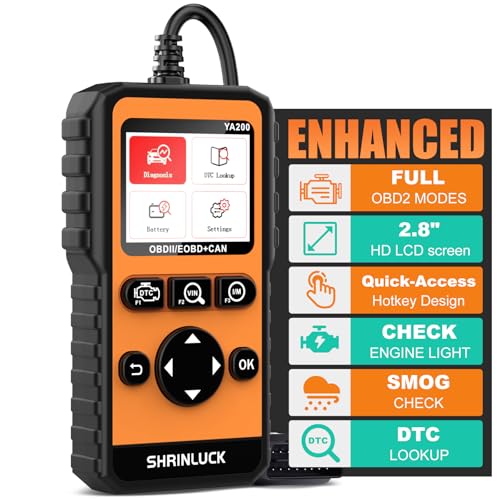
- Reads O2 sensor data
- Shows live data and freeze frame
- Supports code checks and resets
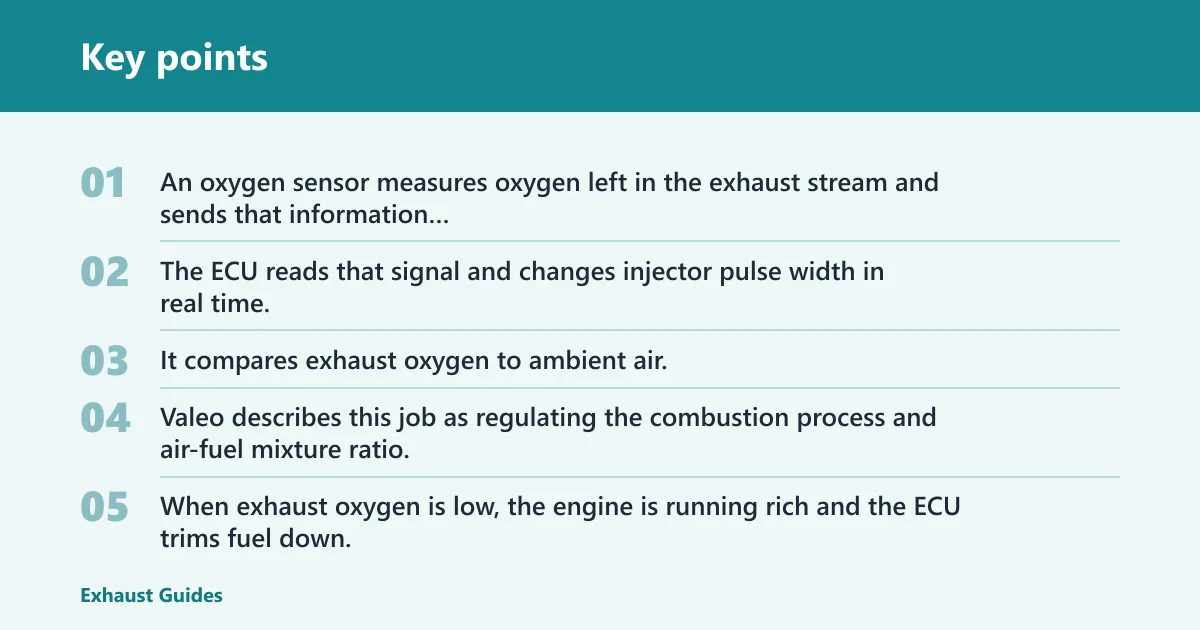
An oxygen sensor measures oxygen left in the exhaust stream and sends that information to the engine control unit. The ECU reads that signal and changes injector pulse width in real time, helping hold the air-fuel mixture near the target needed for clean combustion and emissions control.
The sensor does not measure fuel directly. It compares exhaust oxygen to ambient air, then turns that difference into an electrical signal the ECU can read. Valeo describes this job as regulating the combustion process and air-fuel mixture ratio.
Why the ECU cares about the signal
When exhaust oxygen is low, the engine is running rich and the ECU trims fuel down. When exhaust oxygen is high, the engine is running lean and the ECU adds fuel. That constant correction is closed-loop control.
On a healthy warm engine, the upstream sensor should not sit still. It should move back and forth as the ECU keeps nudging mixture richer and leaner around the target.
How the ECU uses the signal
The ECU reads the sensor, compares the reading to the target mixture, and changes injector pulse width almost immediately. That lets the system correct for small changes in load, temperature, altitude, and engine wear without driver input.
In gasoline engines, the target air-fuel ratio is about 14.7:1. Rich means less oxygen in the exhaust, which means more fuel than needed for that target. Lean means more oxygen in the exhaust, which means less fuel than needed.
What rich and lean mean on the scan tool
AutoExplain notes that low voltage around 0.1V signals a lean mixture, while high voltage around 0.9V indicates a rich mixture on common narrowband sensors. That range helps explain why a scan tool may show the sensor switching rapidly once the engine is warm.
Those numbers are useful as a general guide for many narrowband sensors, but sensor type matters. Wideband sensors report mixture more precisely and use a different control strategy.
How real-time correction looks in driving
Picture steady cruising at 45 mph. The ECU sees the upstream sensor go lean, adds a little fuel, then sees it swing rich and trims back. That back-and-forth keeps the mixture near target instead of letting it drift.
A common first-timer mistake is to expect the oxygen sensor to send the same signal at all times. A warm oxygen sensor in closed loop usually moves, because the ECU uses it as feedback, not as a static gauge.
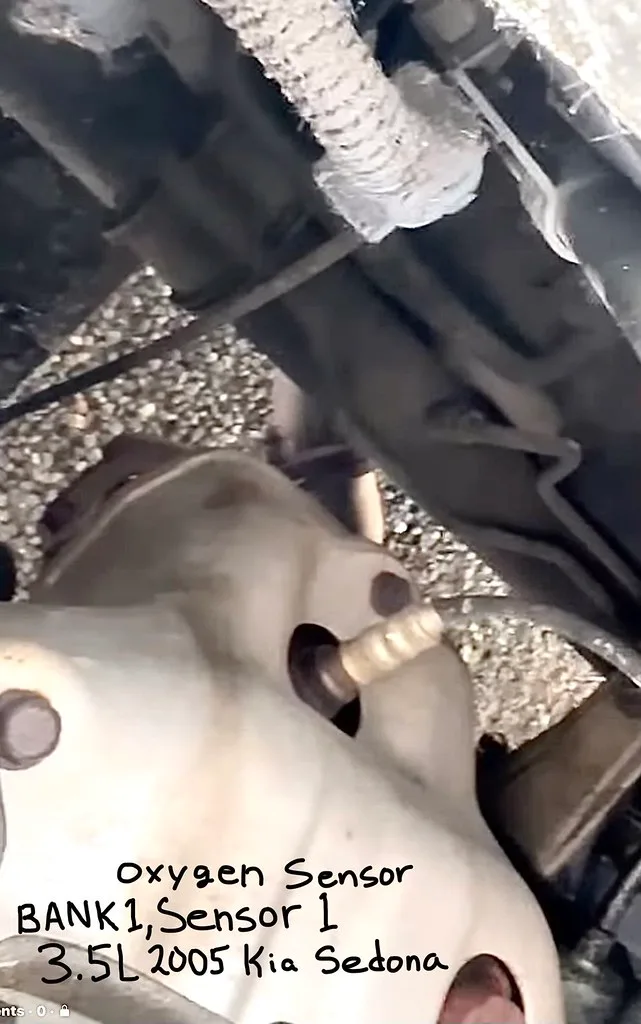
Upstream versus downstream sensors
The upstream oxygen sensor sits before the catalytic converter and feeds mixture feedback to the ECU. The downstream sensor sits after the catalytic converter and mostly monitors catalyst efficiency, rather than driving fuel correction on most systems.
That location changes the diagnosis. An upstream sensor problem can change fuel trim and drivability. A downstream sensor problem more often affects catalyst monitoring and emissions logic than day-to-day mixture control.
What the downstream sensor is watching
The catalytic converter stores and cleans up pollutants when engine mixture and ignition are in range. The downstream sensor compares exhaust before and after the converter. If the post-converter signal begins to mirror the upstream signal too closely, the ECU may judge the catalyst as inefficient.
Bad fueling can also confuse that reading. An engine that runs too rich or too lean can make the converter work harder and can trigger catalyst-related trouble codes even when the converter is not the root cause.
How does a heated oxygen sensor work?
A heated oxygen sensor uses a sensing element plus an internal heater so it can reach operating temperature faster after startup. Most heated designs are commonly 3-4 wire layouts, while unheated sensors are usually 1-2 wire versions.
The heater matters because the sensor needs heat to switch accurately. Before the exhaust itself gets hot enough, the heater speeds the warm-up period and improves response time and accuracy.
Zirconia sensing element basics
Many automotive sensors use a zirconia sensing element. Oxygen concentration difference across the element and ambient air creates a voltage the ECU can read. More oxygen difference means a stronger signal change.
That is why a cold sensor is a problem. If the element is not hot enough, the signal can be slow, flat, or misleading even when the engine itself is running normally.
Heater fault versus sensing fault
A heater fault often shows up as a sensor that is slow to wake up after cold start, then may work better once the exhaust heats the sensor naturally. A sensing-element fault can still misread even after warm-up.
That split matters because the fix is different. A bad heater circuit can set a code and leave the sensor functional later in the drive. A bad sensing element can keep the mixture control wrong all the time.
Oxygen sensor diagnostic table
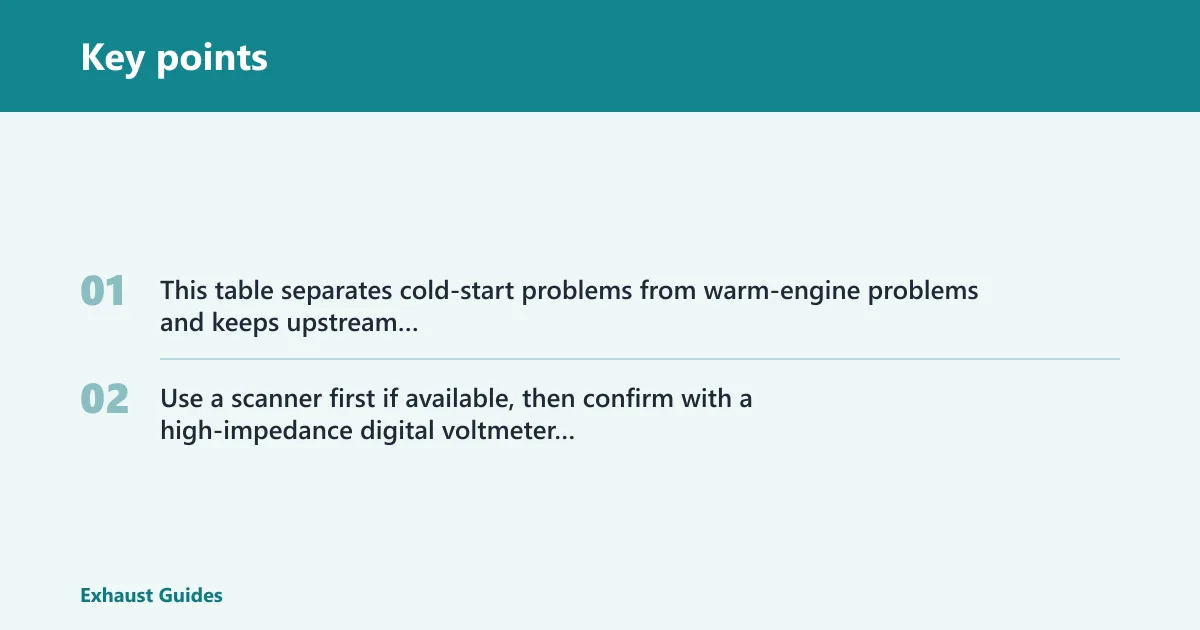
This table separates cold-start problems from warm-engine problems and keeps upstream and downstream diagnosis apart. Use a scanner first if available, then confirm with a high-impedance digital voltmeter and a careful backprobe where the vehicle layout allows it.
| Observed symptom or scan result | Likely oxygen sensor behavior | Next check to confirm it |
|---|---|---|
| Cold start, sensor stays inactive for too long, then wakes up late | Heater fault | Check heater power, ground, and heater circuit resistance; confirm whether the code points to the heater circuit rather than the signal circuit |
| Cold start, upstream sensor begins switching only after several minutes | Lazy sensor or weak heater | Compare live data to coolant temperature and exhaust heat rise; inspect heater circuit before replacing the sensor |
| Warm engine, upstream sensor stays near one voltage and does not switch | Stuck rich or stuck lean sensor | Induce a small mixture change and watch whether the sensor responds; inspect for vacuum leaks, misfire, or fuel delivery issues if it does not |
| Warm engine, upstream sensor switches very slowly | Lazy sensor | Look for aging sensor response, exhaust leaks ahead of the sensor, or fuel control problems that keep forcing the ECU out of normal correction |
| Downstream sensor mirrors upstream switching closely on a warm cruise | Catalyst not storing oxygen well, or downstream sensing fault | Compare catalyst temperature, catalyst efficiency codes, and downstream wiring; confirm whether the converter or the sensor is the weaker link |
| Check engine light with heater-related OBD-II code right after startup | Heater fault | Verify fuse, relay, connector corrosion, and heater circuit continuity before blaming the sensing element |
| Check engine light with fuel trim codes plus rough running | Sensor may be reading correctly while the engine has another fault | Check for vacuum leaks, misfire, fuel pressure problems, or exhaust leaks before replacing the sensor |
How do you test an oxygen sensor?
Start with scan data if the vehicle supports it. Live data shows whether the upstream sensor is switching, whether the downstream sensor is tracking the catalyst, and whether fuel trims point to a mixture problem or a sensor problem.
If you need direct electrical testing, use a high-impedance digital voltmeter and backprobe carefully. A low-impedance meter can load the circuit and distort the reading, so the tool matters.
What a healthy signal should do
On a warm engine in closed loop, an upstream narrowband sensor should switch back and forth rather than sitting fixed. Under cruise and light throttle, that switching should continue as the ECU corrects mixture around target.
On many narrowband systems, the signal will move between lean and rich ranges rapidly. A flat line, slow movement, or a signal that responds only after a long delay points toward trouble.
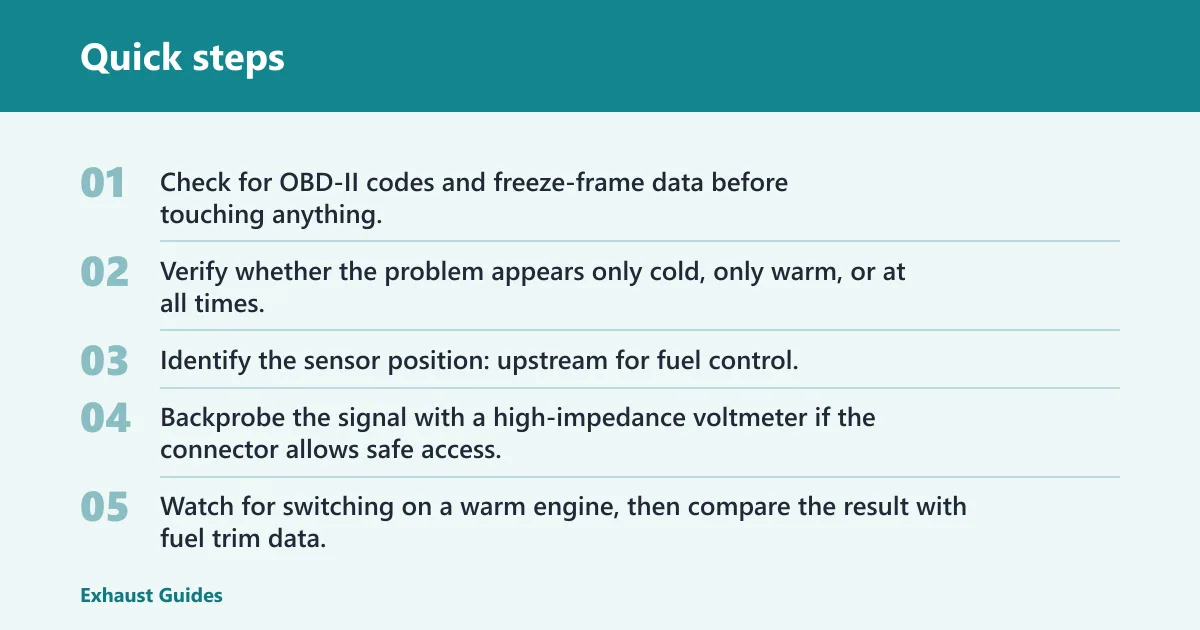
Simple check steps
- Check for OBD-II codes and freeze-frame data before touching anything.
- Verify whether the problem appears only cold, only warm, or at all times.
- Identify the sensor position: upstream for fuel control, downstream for catalyst monitoring.
- Backprobe the signal with a high-impedance voltmeter if the connector allows safe access.
- Watch for switching on a warm engine, then compare the result with fuel trim data.
- Inspect for vacuum leaks, exhaust leaks, misfires, and fuel pressure issues before replacing the sensor.
Common failure lookalikes
Vacuum leaks can make the engine run lean and fool the sensor into reporting a problem that begins elsewhere. Exhaust leaks ahead of the sensor can add outside air and skew the reading. Misfires can dump oxygen into the exhaust and make the signal look lean.
Suppose a 4-cylinder engine sets a lean code after a long idle, then clears on the highway. That pattern can point to a vacuum leak or weak fuel delivery more than a dead sensor, because the sensor is reacting to a real mixture change.
What does a car oxygen sensor do?
A car oxygen sensor helps the ECU keep the air-fuel mixture close to the correct target for combustion and emissions control. It also supports catalyst protection by helping the engine avoid long-term rich or lean operation that can damage emissions hardware.
Most later-model vehicles have four oxygen sensors, and a 2013 Honda Civic 1.8L 4 cylinder and a 2010 Chevrolet Tahoe 6.0 L 8 cylinder are both listed with four. Exact count and layout still depend on the vehicle make and model.
Frequently asked questions
How oxygen sensor works in car
The sensor compares oxygen in the exhaust with ambient air and turns that difference into a signal the ECU can use. Once warm, the ECU watches that signal and changes fuel delivery in real time so the engine stays near the target air-fuel ratio and emissions stay under control.
How does a oxygen sensor work?
Inside many sensors, a zirconia element produces voltage based on oxygen concentration difference. Low oxygen in the exhaust points to a rich condition, while high oxygen points to a lean condition. The ECU reads that change and adjusts injector pulse width to correct the mixture.
What does o2 sensor do in car?
An O2 sensor helps the ECU adjust fuel delivery, control emissions, and monitor the catalytic converter on many systems. The upstream sensor guides mixture correction. The downstream sensor watches how well the converter is cleaning exhaust after the engine has already been brought close to target.