Does Wire Number Matter on Oxygen Sensors
When you’re working on your car, especially when replacing parts like oxygen sensors, you might wonder about the wires. A common question people ask is Does Wire Number Matter on Oxygen Sensors?. It can seem confusing at first, but we’ll make it simple.
This guide will walk you through it step by step so you can get the job done right. We’ll look at why the wires are important and how to connect them correctly without any fuss.
Understanding Oxygen Sensor Wires
Oxygen sensors are vital parts of your car’s exhaust system. They help your engine run efficiently by measuring the amount of oxygen in the exhaust gases. This information is sent to your car’s computer, which then adjusts the fuel mixture.
This helps reduce pollution and improve gas mileage. When you need to
Why Different Wire Numbers Exist
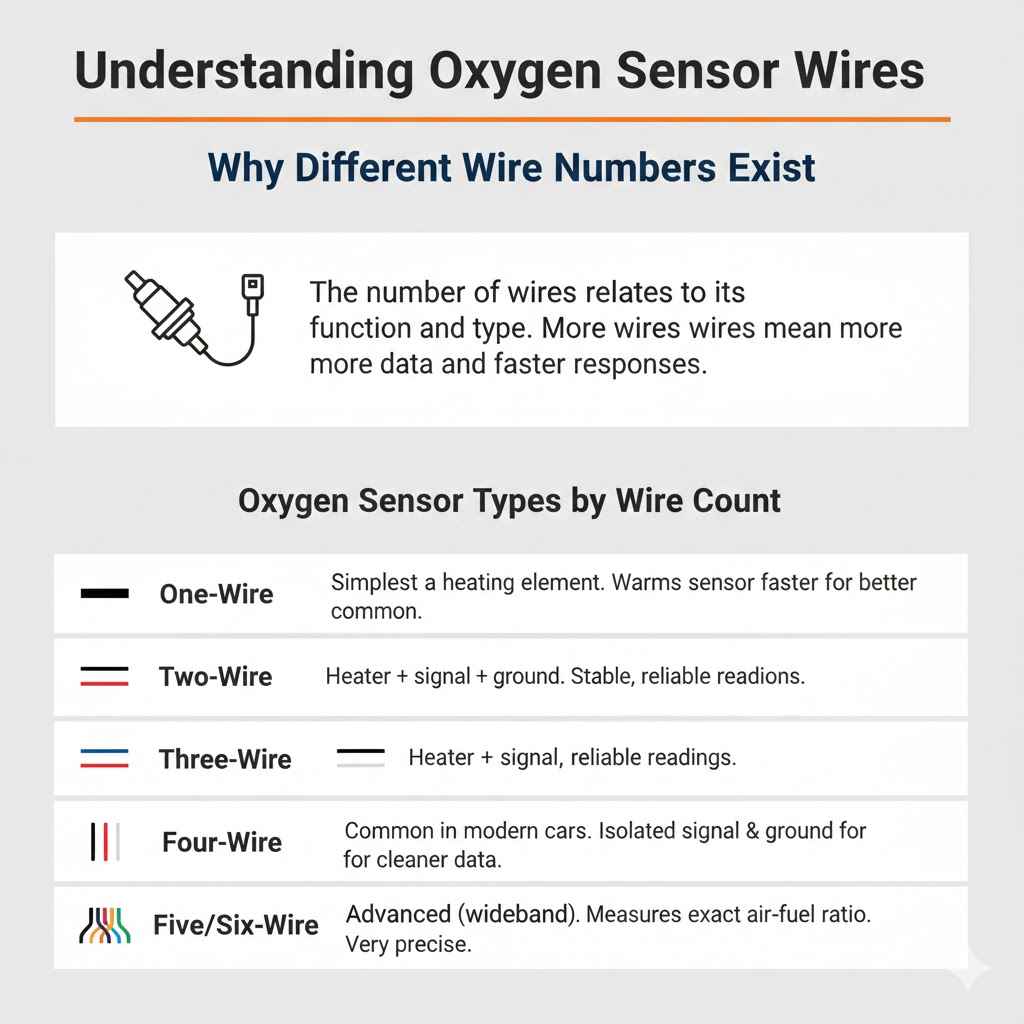
The number of wires on an oxygen sensor is directly related to its function and type. Older sensors had fewer wires, while newer ones have more to provide more data and faster responses.
- One-Wire Sensors These are the simplest and oldest type. They only measure oxygen content and send this basic signal to the engine control unit (ECU). They are less common in modern vehicles.
- Two-Wire Sensors These sensors add a heating element. This heating element helps the sensor reach its optimal operating temperature faster. A warm sensor provides accurate readings sooner after the engine starts. This improves emissions control from the moment you begin driving.
- Three-Wire Sensors These sensors have a heating element like the two-wire sensor, plus a signal wire and a ground wire. The extra ground wire often provides a more stable and direct ground connection, which can lead to more reliable readings.
- Four-Wire Sensors These are very common in modern cars. They have two wires for the heating element and two wires for the signal and ground. The key difference here is that four-wire sensors have both a signal wire and a separate ground wire that is not shared with the heater circuit. This isolation helps prevent interference and ensures a cleaner, more accurate signal to the ECU.
- Five-Wire and Six-Wire Sensors Advanced sensors, often called wideband or air-fuel ratio sensors, can have five or six wires. These sensors provide much more detailed information about the air-fuel mixture, not just whether it’s rich or lean. They measure the exact ratio, allowing the ECU to make very precise adjustments for optimal performance and emissions across a wider range of engine conditions.
So, when you look at an oxygen sensor, the wire count is your first clue to its capabilities.
Connecting the Right Wires
The most crucial part of replacing an oxygen sensor is connecting the wires correctly. If you get this wrong, the sensor won’t work, or worse, it could damage your car’s computer.
Matching the Sensor to Your Vehicle
Before you even buy a new sensor, you need to know what kind your car needs. Your car’s manual or an online parts catalog will tell you this. They will specify the exact sensor type, often by its number of wires or its specific part number.
Never assume a sensor with a different number of wires will work. While some aftermarket sensors might offer universal compatibility, it’s always best to get the one designed for your car. This avoids guesswork and potential problems.
Identifying Wire Functions
Once you have the correct sensor, you need to know what each wire does. While colors can vary between manufacturers, there are common patterns:
- Signal Wire This wire carries the actual data from the sensor to the ECU. It’s usually a different color from the heater wires.
- Ground Wire This wire provides the return path for the electrical signal. It’s essential for the sensor to function.
- Heater Wires Oxygen sensors have built-in heaters. These wires power the heater, allowing the sensor to warm up quickly. They are often the same color.
If you’re replacing a sensor, you can often look at the old wiring harness or consult your vehicle’s repair manual to identify which wire from the car connects to which function on the sensor. Some new sensors come with wiring adapters that plug directly into your car’s existing harness, making the connection straightforward.
The Importance of a Proper Connection
A secure and correct wire connection is vital for several reasons:
- Accurate Readings The ECU relies on precise signals. Any loose connection or incorrect wiring can lead to false readings, causing the engine to run poorly.
- Sensor Longevity Incorrect wiring can overheat or damage the sensor itself, leading to premature failure.
- ECU Protection Connecting a sensor incorrectly can sometimes send the wrong voltage or signals to the ECU, potentially causing expensive damage to the car’s computer.
When in doubt, always refer to the documentation that came with your new oxygen sensor or your vehicle’s service manual. These resources are designed to help you connect the wires correctly and safely.
Common Pitfalls and How to Avoid Them
Working on cars can sometimes be tricky, and oxygen sensors are no exception. Understanding common mistakes can save you time and money.
Mixing Up Wires
The most common error is connecting the wrong wires together. If you have a four-wire sensor and you mix up the signal and ground wires, or incorrectly connect the heater wires, the sensor will not function as intended. This can result in a check engine light, poor fuel economy, and increased emissions.
To avoid this:
- Take pictures of the old sensor’s wiring before you disconnect it.
- Label each wire on the old and new sensors before you begin.
- If using an adapter harness, ensure it’s the correct one for your vehicle and sensor type.
Ignoring Wire Color Codes
While wire colors can vary, some general guidelines often apply: Signal wires are usually black or gray. Heater wires are typically white or sometimes red. Ground wires can be white or black.
However, this is not a universal rule. Always cross-reference with your vehicle’s service manual.
If your new sensor comes with a separate wiring harness or adapter, pay close attention to how it connects. The adapter is designed to match your car’s specific wiring.
Damaging Wires or Connectors
Oxygen sensor wires are often located near hot exhaust components. Be careful not to pinch, cut, or melt the wires during installation. Also, ensure that any connectors are fully seated and locked into place.
A loose connector is just as bad as a miswired connection.
Using the Wrong Sensor Type
This is a big one. If you buy a two-wire sensor for a car that requires a four-wire sensor, it won’t work. The extra wires on modern sensors are for essential functions like heating and separate ground signals.
Using a sensor with fewer wires might seem like a quick fix, but it will lead to diagnostic trouble codes (DTCs) and can affect engine performance.
Always double-check your vehicle’s specifications for the correct oxygen sensor. Parts stores and online retailers have databases that can help you find the exact match by entering your car’s year, make, and model.
Benefits of Correct Installation
Getting the wiring right on your oxygen sensor replacement brings significant advantages.
- Improved Fuel Economy When the oxygen sensor sends accurate data, the engine’s computer can optimize the air-fuel mixture. This means your car uses fuel more efficiently, saving you money at the pump.
- Reduced Emissions A properly functioning oxygen sensor is critical for emissions control. It helps ensure your car is burning fuel cleanly and meeting pollution standards. This is important for the environment and for passing emissions tests.
- Optimal Engine Performance The correct air-fuel mixture also leads to smoother engine operation, better acceleration, and overall improved performance.
- Avoids Check Engine Lights Incorrectly wired or malfunctioning oxygen sensors are common causes of a “Check Engine” light. Correct installation prevents this annoying dashboard warning.
- Prevents Costly Repairs By ensuring the sensor works correctly, you prevent potential damage to other engine components or the ECU, saving you from more expensive repairs down the line.
So, taking the time to understand Does Wire Number Matter on Oxygen Sensors? and connect them properly is well worth the effort.

Frequently Asked Questions
Question: Do all oxygen sensors have the same wire colors?
Answer: No, wire colors can vary between different manufacturers and sensor types. It is always best to consult your vehicle’s service manual or the documentation that came with the new sensor to identify the function of each wire.
Question: Can I use a universal oxygen sensor if I can’t find the exact one for my car?
Answer: Some universal sensors come with adapter harnesses to connect to your vehicle’s wiring. However, it’s generally recommended to use the specific sensor designed for your car for the best performance and compatibility. Always check if the universal sensor is compatible with your vehicle’s system.
Question: What happens if I connect the wires incorrectly?
Answer: Connecting the wires incorrectly can cause the oxygen sensor to malfunction, leading to poor engine performance, reduced fuel economy, increased emissions, and potentially a check engine light. In severe cases, it could damage the sensor or the vehicle’s engine control unit (ECU).
Question: How do I know if my oxygen sensor needs replacing?
Answer: Common signs include a check engine light, poor fuel economy, rough idling, and a failed emissions test. A mechanic can also diagnose a faulty oxygen sensor using diagnostic tools.
Question: Is it okay to cut and splice wires if the connectors don’t match?
Answer: It’s generally best to avoid cutting and splicing unless absolutely necessary and you are experienced with automotive wiring. Many new sensors come with adapter harnesses. If splicing is required, ensure you use proper connectors and seal them well to prevent corrosion and ensure a secure connection.
Final Thoughts
Understanding Does Wire Number Matter on Oxygen Sensors? is about more than just a number. It’s about recognizing the type of sensor and its role in your car’s performance.
By matching the correct sensor for your vehicle and carefully connecting its wires, you ensure accurate readings and proper engine function. This leads to better gas mileage, cleaner emissions, and a healthier car. Take your time, use available resources, and you will get the job done right, keeping your vehicle running smoothly.