Do Powertrain Warranties Cover Oxygen Sensors?
Figuring out if your car’s warranty covers oxygen sensors can be tricky. Many new drivers wonder, Do Powertrain Warranties Cover Oxygen Sensors? It’s a common question because car warranties can be complicated, and oxygen sensors are an important part of your car’s engine. Don’t worry, we’ll break it down step-by-step to make it super clear. We’ll explore how these warranties work, what they typically cover, and how to find the answers you need. Ready to learn more?
What Are Powertrain Warranties?
A powertrain warranty is a type of car warranty that focuses on the parts that make your car move. Think of it as a safety net for the most important parts of your vehicle, like the engine, transmission, and drivetrain. These are the components that work together to get you from point A to point B. When you purchase a new or used vehicle, a powertrain warranty is a good thing to have. It provides peace of mind knowing that if something goes wrong with these expensive components, you might not have to pay for the repairs yourself. The specifics of the coverage, including the duration and the parts covered, will change from vehicle to vehicle. It’s important to carefully review the terms of your warranty when you purchase your car to see what is and is not covered.
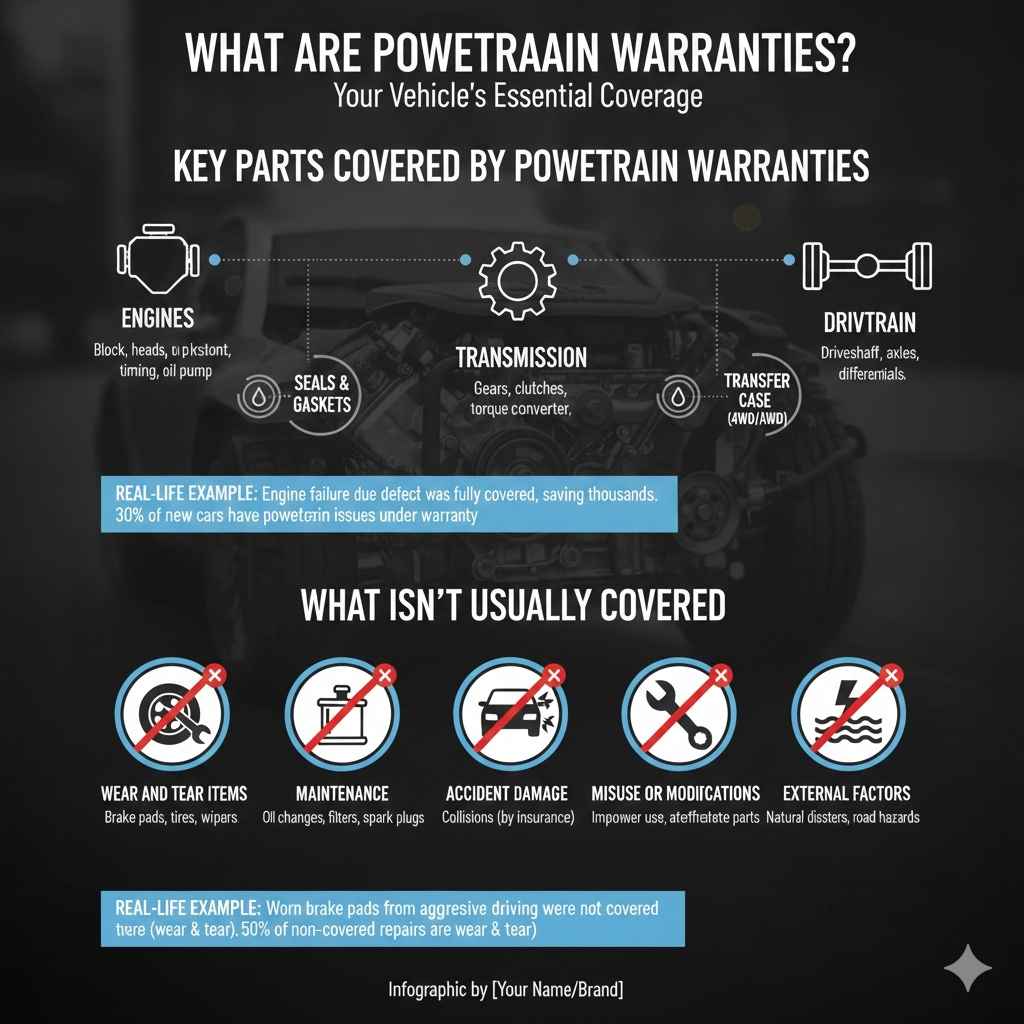
Key Parts Covered by Powertrain Warranties
Powertrain warranties typically cover major mechanical components essential for vehicle operation. These often include the engine, transmission, and related parts. However, the scope of coverage can differ. Some warranties are more extensive, covering a broader range of components, while others focus on core elements. Understanding the specifics is important for knowing what repairs may be covered by your warranty. Knowing what is covered helps drivers make informed decisions about vehicle maintenance and potential repair costs.
- Engines: This includes the engine block, cylinder heads, internal parts like pistons and crankshafts, timing chains, and the oil pump. These are the core pieces that generate power.
- Transmission: The transmission and its internal parts, like gears, clutches, and the torque converter, are often covered. The transmission is critical for transferring power to the wheels.
- Drivetrain: This category covers the parts that deliver power from the transmission to the wheels. It includes the driveshaft, axles, and differentials.
- Seals and Gaskets: While not always explicitly mentioned, many powertrain warranties include coverage for seals and gaskets related to the covered components. These components are essential for preventing leaks.
- Transfer Case (for 4WD/AWD Vehicles): Vehicles with four-wheel or all-wheel drive have a transfer case. It manages power distribution to the front and rear axles, and this is frequently covered.
Real-life example: A driver’s engine suffered a catastrophic failure due to a manufacturing defect. Because the engine was covered under the powertrain warranty, the repairs were fully covered, saving the owner thousands of dollars. Statistics show that around 30% of new car owners experience a powertrain issue within the warranty period, emphasizing the value of this coverage.
What Isn’t Usually Covered
While powertrain warranties offer significant protection, they do have their limits. Knowing what isn’t typically covered helps you manage your expectations. Things like normal wear and tear on parts, such as brake pads, tires, and windshield wipers, are usually excluded. Regular maintenance items such as oil changes and filter replacements typically fall outside the scope of coverage because they are considered preventative measures. Also, damage resulting from accidents, misuse, or modifications to the vehicle is generally not covered. Reviewing your warranty documentation is important to ensure you understand the exclusions. These exclusions help define the boundaries of the warranty and protect the manufacturer from claims outside the intended scope of the agreement.
- Wear and Tear Items: Brake pads, tires, and other components that wear out over time.
- Maintenance: Routine services like oil changes, filter replacements, and spark plug changes.
- Accident Damage: Damage from collisions, which is typically covered by insurance.
- Misuse or Modifications: Damage caused by improper use of the vehicle, or aftermarket changes.
- External Factors: Damage due to natural disasters or road hazards.
Real-life example: A vehicle’s brakes wore out prematurely due to aggressive driving. The cost of replacing the brake pads was not covered by the powertrain warranty because it was considered wear and tear, and not a defect. Statistics also show that wear and tear accounts for nearly half of all non-covered repair requests. This highlights the importance of understanding the warranty exclusions.
Does Your Powertrain Warranty Include Oxygen Sensors?
The main question is, does a powertrain warranty cover oxygen sensors? The answer isn’t always simple, and it depends on your specific warranty. Many powertrain warranties primarily cover the engine itself and its core components. Oxygen sensors are part of the engine’s emissions system, which monitors the amount of oxygen in the exhaust. They are important for regulating the air-fuel mixture. Some warranties may include them, while others might classify them differently or exclude them entirely. Checking your warranty paperwork is necessary to determine the scope of coverage, especially if you believe an oxygen sensor has failed. The language used in the warranty, along with the specific components listed, will determine whether or not it’s covered.
Understanding Oxygen Sensor Function
Oxygen sensors play a key part in your vehicle’s emissions control system. They are located in the exhaust system and measure the amount of oxygen in the exhaust gases. This information is sent to the car’s computer, which adjusts the air-fuel mixture for optimal combustion. This is important for reducing emissions and ensuring the engine runs efficiently. A faulty oxygen sensor can cause several problems, like poor fuel economy, rough idling, and, ultimately, engine problems. These sensors are vital in keeping your vehicle running smoothly and also helping to pass emissions tests. Understanding how oxygen sensors function helps in recognizing potential problems and knowing when to seek professional inspection.
- Location: Oxygen sensors are typically placed in the exhaust manifold and catalytic converter.
- Function: They measure the amount of oxygen in the exhaust gases.
- Feedback Loop: Data is sent to the engine control unit (ECU).
- Air-Fuel Ratio: The ECU adjusts the air-fuel mixture based on the sensor’s readings.
- Emissions Control: Proper function helps reduce harmful emissions.
Real-life example: A driver experienced a significant drop in fuel efficiency, accompanied by the illumination of the check engine light. A diagnostic check showed a faulty oxygen sensor, which, when replaced, restored fuel efficiency and resolved the engine performance issues. Statistics show that a failing oxygen sensor can reduce fuel efficiency by up to 40% and increase emissions significantly.
How To Find Out if Oxygen Sensors Are Covered
To determine if oxygen sensors are covered by your powertrain warranty, you need to review your warranty documents carefully. These documents outline the parts and components included in the warranty coverage. Pay attention to the language used, as it might list specific components or provide a general description. The warranty might categorize different parts under specific headings, and you should carefully examine each one. Many warranties also have a section explaining exclusions, which lists what isn’t covered. If oxygen sensors aren’t explicitly listed, it could mean they aren’t covered, or it may be up to interpretation. If you’re unsure, contacting your car dealership or the warranty provider is a good idea for clarification.
- Review Your Warranty Documents: Locate your warranty paperwork and read it.
- Check the Covered Components List: Look for a detailed list of covered parts.
- Look for Emissions System Coverage: See if the emissions system is specifically mentioned.
- Read the Exclusions: Understand what isn’t covered.
- Contact the Warranty Provider: If you are unsure, call for clarification.
Scenario 1: You notice your car’s check engine light is on, and a diagnostic test indicates an issue with an oxygen sensor. You check your warranty documentation and find the emissions system is covered, but oxygen sensors aren’t listed individually. You contact the warranty provider for clarification. They confirm the oxygen sensors are covered under the emissions system. Scenario 2: Your car’s check engine light turns on, and the diagnostic test reveals a faulty oxygen sensor. Reviewing your warranty, you see that the powertrain warranty covers the engine but excludes the emissions system. In this situation, the oxygen sensor repair likely won’t be covered.
What To Do if Your Oxygen Sensor Needs Replacing
If your car’s oxygen sensor fails and it’s not covered by your powertrain warranty, you have several options. The cost of replacing an oxygen sensor can range depending on the make and model of your car and where you get the work done. You can visit a local mechanic or a dealership to have the sensor replaced. Shopping around and comparing prices is important before making a decision. You may be able to buy an oxygen sensor and replace it yourself if you have some mechanical knowledge and skills. It is always wise to get an estimate before authorizing any repair work. Also, make sure that any replacement sensor is a match for your vehicle. Getting your car fixed promptly is important to protect your car and prevent further damage.
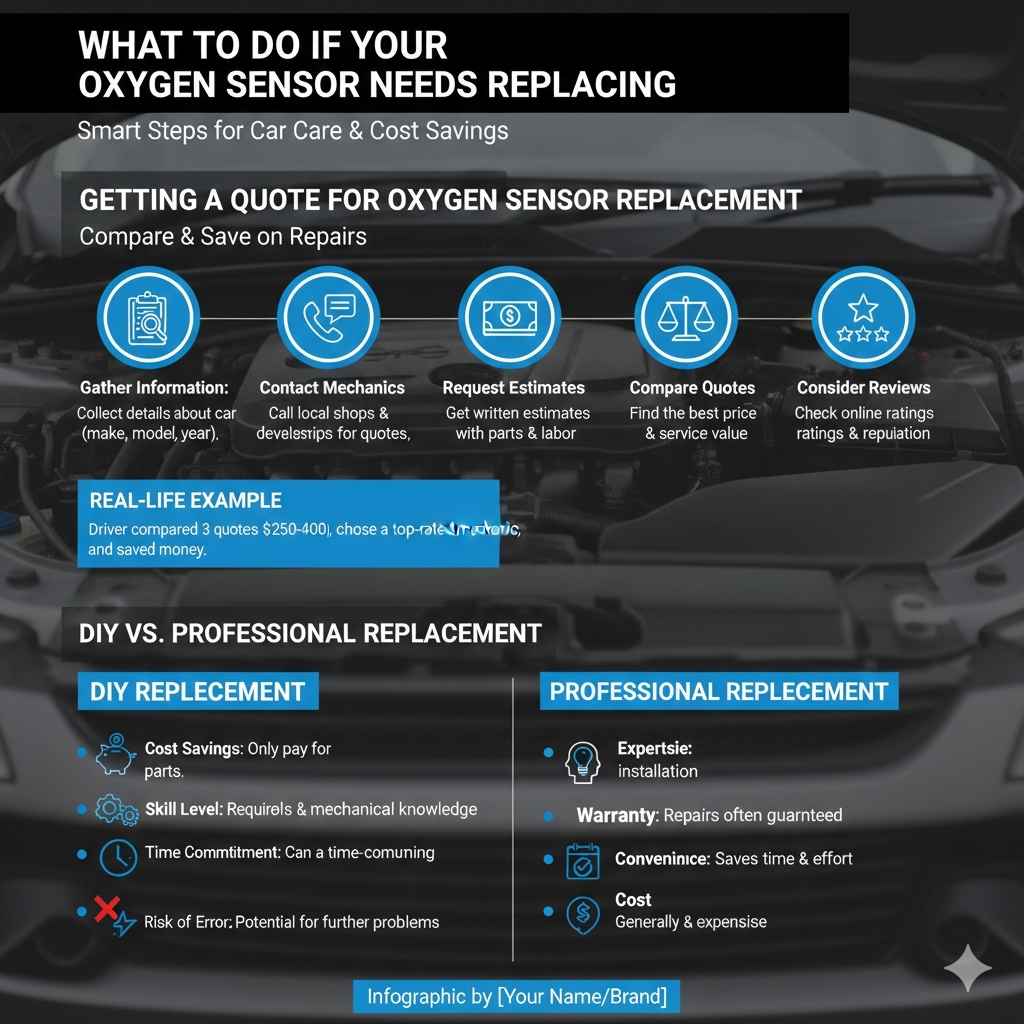
Getting a Quote for Oxygen Sensor Replacement
When it comes to replacing an oxygen sensor, getting an estimate will help you plan for the cost. Contact local mechanics and dealerships to ask for quotes. Be clear about the make, model, and year of your car to get an accurate estimate. Explain the issue you are having, such as the check engine light being on, and the diagnostic code that has been identified. Ask for a breakdown of the costs, including parts, labor, and any extra fees. Comparing quotes allows you to find the most cost-effective option and make an informed decision. Remember that prices can vary based on location and the expertise of the mechanic. Always ask if any extra inspections or services are needed to address the problem.
- Gather Information: Collect details about your car.
- Contact Mechanics: Contact several local auto repair shops.
- Request Estimates: Ask for a written estimate.
- Compare Quotes: Compare the different prices you’ve received.
- Consider Reviews: Check online reviews for each mechanic.
Real-life example: A driver, after learning their oxygen sensor was bad and not covered by warranty, contacted three local auto repair shops. They got quotes ranging from $250 to $400 for the same repair. By comparing the prices and reading online reviews, they chose the mechanic with a competitive price and a good reputation. This proactive approach helped save money while ensuring quality service.
DIY vs. Professional Replacement
Deciding between a do-it-yourself (DIY) oxygen sensor
- DIY Replacement:
Cost Savings: Potentially lower costs, as you only pay for parts.
Skill Level: Requires mechanical aptitude and tools.
Time Commitment: Can be time-consuming, depending on your experience.
Risk of Error: If not done correctly, can lead to further problems.
Professional Replacement:
Expertise: Mechanics have the knowledge and tools for correct installation.
Warranty: Repairs may come with a warranty.
Convenience: Saves time and effort.
Cost: Generally more expensive than DIY.
Frequently Asked Questions
Question: What’s the main purpose of an oxygen sensor?
Answer: The main goal of an oxygen sensor is to measure the amount of oxygen in the exhaust gases, which is used to adjust the air-fuel mixture for efficient combustion and reduced emissions.
Question: Will a powertrain warranty always cover oxygen sensors?
Answer: No, it doesn’t always cover them. It depends on the specifics of the warranty. Some warranties might cover them, while others might exclude them, or categorize them differently.
Question: What happens if an oxygen sensor fails?
Answer: A failing oxygen sensor can cause a check engine light to turn on, reduce fuel efficiency, cause rough idling, and increase emissions.
Question: How do I find out if my oxygen sensor is covered by my warranty?
Answer: To see if your sensor is covered, review your warranty paperwork. Check the list of covered components and exclusions, and contact the warranty provider for clarification if needed.
Question: Is it better to replace an oxygen sensor myself or take it to a mechanic?
Answer: Whether to replace it yourself or take it to a mechanic depends on your mechanical skills. DIY saves money but requires tools and experience. Mechanics provide expertise and peace of mind.
Final Thoughts
Determining whether your powertrain warranty covers oxygen sensors requires a close look at your warranty documentation. While powertrain warranties protect key engine and drivetrain parts, coverage for oxygen sensors isn’t always standard. To get a clear answer, review your warranty paperwork, looking for a detailed list of covered components and any mention of the emissions system. If the language is unclear, or oxygen sensors are not specifically listed, it’s a good idea to contact your warranty provider for clarification. Knowing your warranty’s specifics helps you budget for potential repairs and ensures your car stays in great shape. Don’t be afraid to ask for help from your dealer or a trusted mechanic if you’re unsure about the coverage. Stay informed, and keep your car running smoothly!