Do Diesels Have Oxygen Sensors: Proven Essential
Yes, modern diesel engines absolutely have oxygen sensors (O2 sensors), often called Air-Fuel Ratio sensors or Lambda sensors. These sensors are crucial for controlling emissions, maximizing fuel economy, and ensuring your diesel runs cleanly by measuring the oxygen in the exhaust gas, even though older diesels did not require them.
Buying or maintaining a diesel truck can feel like a mysterious process sometimes. You might hear that diesels don’t need the same complicated emissions gear as gasoline cars. This often leads new owners to ask: Do diesels have oxygen sensors? It’s a common confusion because diesel systems work differently. Not knowing the answer can lead to poor performance and increased repair bills. Don’t worry! I’m Monowar Shohag, and I’m here to show you exactly what these sensors do and why they are essential for your modern diesel. We will break down the mystery into simple steps so you can confidently manage your exhaust system.
Why the Confusion? Gasoline vs. Diesel Sensors
Understanding why people ask “do diesels have oxygen sensors” starts with knowing the difference between the two main engine types. Gasoline engines have used oxygen sensors for decades to manage their air-fuel mixture very precisely.
The Simpler Days of Diesel
In the past, older diesel engines (pre-2000s, generally) ran “lean.” This means they always had extra air left over after burning the fuel. Because they didn’t need to mix fuel and air in a perfect ratio constantly, they often did not require feedback sensors like a standard gasoline O2 sensor. Their primary focus was raw power and durability, not tight emissions control.
The Modern Diesel Reality: Cleaner, Smarter Engines
Today’s diesel engines look very different. Governments around the world, including the Environmental Protection Agency (EPA) in the U.S., require much stricter limits on pollutants like Nitrogen Oxides ($text{NO}_x$) and Particulate Matter (soot). To meet these tough standards, modern diesels have sophisticated exhaust after-treatment systems.
These systems—like the Diesel Oxidation Catalyst (DOC) and the Diesel Particulate Filter (DPF)—need precise data to work correctly. That’s where the oxygen sensor comes back into play.

What is an Oxygen Sensor (O2 Sensor) in a Diesel Context?
While you might think of the classic “three-way catalyst” setup from a gasoline car, the oxygen sensor in a diesel system has a slightly different, yet equally important, job.
Function 1: Monitoring the Diesel Oxidation Catalyst (DOC)
The DOC is the first stage in cleaning up diesel exhaust. It helps convert harmful carbon monoxide (CO) and unburned hydrocarbons (HC) into less harmful gases. The O2 sensor positioned before the DOC tracks how well the engine is running overall.
Function 2: Controlling Regeneration Cycles
This is perhaps the most critical role in modern diesels. To clean the soot buildup on the Diesel Particulate Filter (DPF), the engine needs to run a process called “regeneration.” This process involves injecting extra fuel to raise the exhaust temperature high enough to burn off the soot.
The sensor measures oxygen levels after the DPF. If the oxygen level drops too low, it signals the Engine Control Unit (ECU) that the DPF is getting clogged and regeneration needs to start or stop immediately. This prevents unnecessary fuel use or, worse, damage to the DPF.
Function 3: Air-Fuel Ratio Management
In newer, high-tech diesel systems, especially those using Exhaust Gas Recirculation (EGR), the sensor helps the ECU fine-tune the air-fuel ratio. While diesels are lean-burn engines, knowing the exact $text{O}_2$ level helps the computer optimize power delivery while keeping emissions low, often by managing the amount of exhaust gas recirculated back into the engine.
Do Diesels Have Oxygen Sensors? Sensor Types Explained
When asking “do diesels have oxygen sensors,” it’s helpful to know that they aren’t always the classic Zirconia sensor found in older gasoline cars. Modern diesels often use more advanced technology.
1. Wideband Air-Fuel Ratio (AFR) Sensors
These are the most common type found in modern diesel exhaust systems. They are similar to advanced gasoline O2 sensors but are designed to measure across a much wider range of air and fuel ratios, which is necessary because diesels always run lean.
Purpose: Provide highly accurate, real-time feedback to the ECU about the precise air-fuel ratio.
Location: Often installed upstream (before the DOC).
2. Narrowband Oxygen Sensors (Traditional)
Sometimes, you will find a traditional narrowband sensor used specifically in monitoring the efficiency of the after-treatment system, particularly related to the DPF or Selective Catalytic Reduction (SCR) system (which uses Diesel Exhaust Fluid or DEF).
Purpose: Primarily used to confirm the DPF is working or that the SCR system is correctly dosing DEF.
Location: Typically downstream (after the DPF or SCR catalyst).
To make things clearer, here is a look at the common sensor locations in a typical modern diesel exhaust setup.
| Sensor Type | Typical Location | Primary Responsibility |
|---|---|---|
| Upstream AFR Sensor | Before the Diesel Oxidation Catalyst (DOC) | Regulating overall engine combustion efficiency. |
| Downstream O2 Sensor | After the Diesel Particulate Filter (DPF) | Monitoring DPF functionality and signaling regeneration needs. |
| SCR Sensor (Sometimes a specialized $text{NO}_x$ Sensor) | After the Selective Catalytic Reduction (SCR) system | Checking the effectiveness of the DEF injection system. |
How to Locate the Sensors in Your Diesel Exhaust System
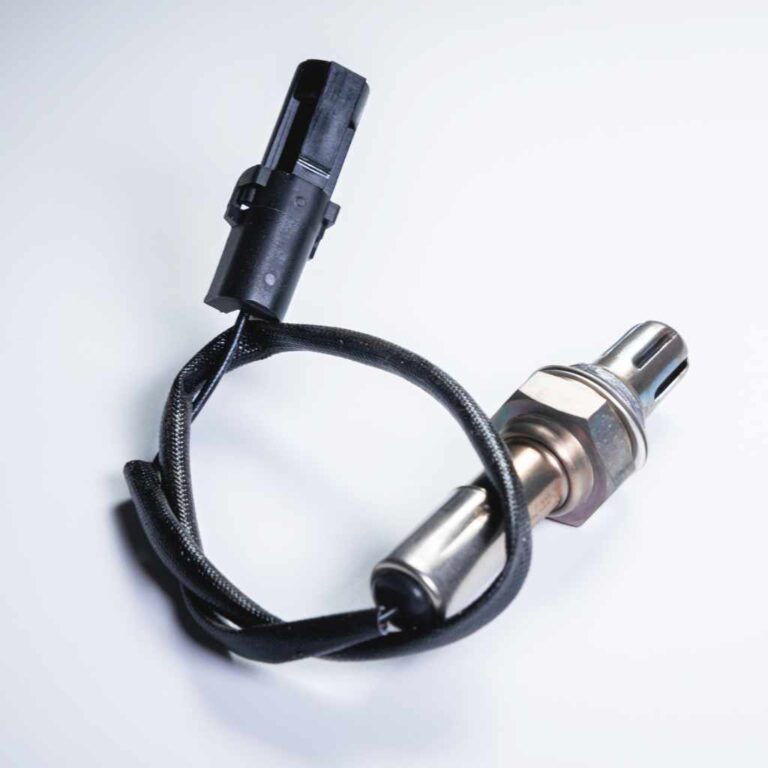
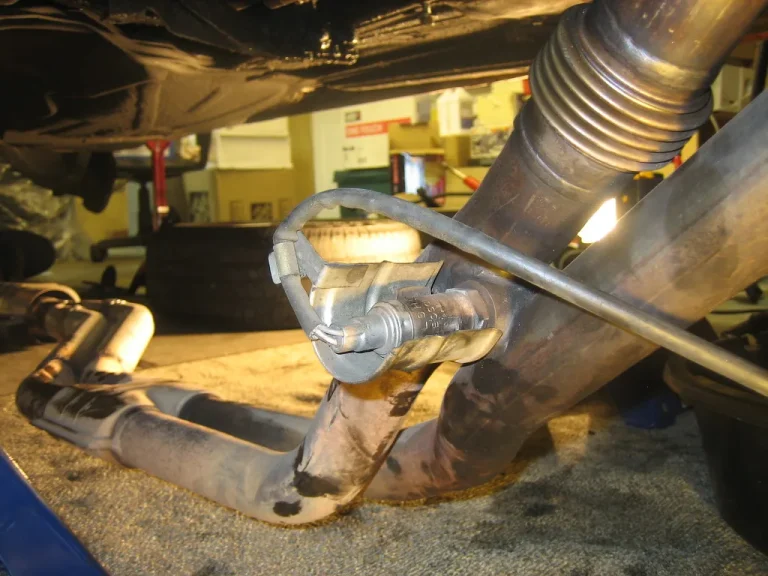
If you are doing your own inspection and want to see these essential components, knowing where to look is key. Since sensors are threaded directly into the exhaust pipe, they usually look like a small metal plug with a wire harness coming out of the top.
Tools You Might Need for Inspection
Before you start looking, ensure you have the basic safety gear and the right tools. Remember, exhaust systems get extremely hot!
- Safety Glasses and Gloves (essential)
- Jack stands and a reliable floor jack (Never work under a vehicle supported only by a jack!)
- Socket wrench set and appropriate deep sockets
- Specialized Sensor Socket (recommended for removal, to avoid damaging the wires)
- A bright work light or flashlight
Step-by-Step Location Guide
Follow these steps to find your diesel’s O2 sensors. Always let the engine cool down completely before touching any exhaust component.
- Safety First: Park on a level surface, engage the parking brake, and chock the wheels. If you need to lift the truck, use jack stands rated for the weight of your diesel.
- Locate the DOC/DPF Assembly: The system starts right after the turbocharger. Follow the exhaust pipe down. You will encounter a large canister or set of canisters attached to the pipe. This is where the DOC and DPF often reside.
- Find the Upstream Sensor: Look for the first sensor screwed into the pipe before the first large canister (the DOC). This is usually the Air-Fuel Ratio sensor. It will have a sensor body threaded into the pipe and a wire leading toward the engine compartment.
- Find the Downstream Sensor: Look for the second sensor screwed into the pipe after the DPF canister. This sensor monitors the exhaust leaving the entire cleanup system.
- Check Wiring Integrity: Once located, visually inspect the wires. Are they melted, chafed, disconnected, or visibly corroded? Damaged wiring can cause the ECU to misread the sensor, even if the sensor itself is fine.
For more information on general diesel emission regulations and components, you can refer to environmental compliance resources, such as those provided by the U.S. government, which mandate these systems for cleaner operation.
Diagnosing O2 Sensor Issues in Your Diesel
If your “Check Engine Light” (CEL) illuminates on your dash, the O2 sensors are often the first suspects in the exhaust system, especially if performance dips or you notice sootier smoke.
Common Symptoms of a Failing Diesel O2 Sensor
Because diesel sensors are so tied to regeneration and the DPF, their failure often causes noticeable drivetrain issues:
- Illuminated CEL: The most obvious sign, usually accompanied by specific trouble codes ($text{P}$ codes) related to the $text{AFR}$ or $text{O}_2$ circuitry.
- Poor Fuel Economy: If the ECU is getting bad data, it might inject too much fuel, wasting diesel.
- No Regeneration or Failed Regeneration: The system cannot tell if the DPF is full or if the exhaust temperature is right for cleaning.
- Increased Soot or Smoke: Incorrect fuel mapping leads to incomplete combustion, producing visible black smoke.
- Drivability Issues: In some cases, the ECU might enter a “limp mode” to protect the DPF, reducing engine power significantly.
Understanding Diagnostic Trouble Codes (DTCs)
When you use an OBD-II scanner (essential for modern diesels), you get codes that tell you what went wrong. While these codes vary by manufacturer (Ford, GM, Cummins, etc.), they often point directly to the sensor’s circuit.
Here is a simplified look at what certain common codes might mean related to O2 sensors:
| Generic DTC Description | Likely Sensor Affected | Beginner Interpretation |
|---|---|---|
| P0130 – P0167 (O2 Sensor Circuit Malfunction) | Upstream AFR Sensor | The main sensor isn’t sending a steady signal back to the computer. |
| P0420 (Catalyst System Efficiency Below Threshold) | System-wide (DOC/DPF) | The engine isn’t cleaning the exhaust effectively, possibly due to a bad sensor reporting bad data. |
| P2000 – P2099 (Related to $text{NO}_x$ or $text{O}_2$ After Treatment) | Downstream Sensor(s) | The system responsible for cleaning the exhaust is struggling, often pointing to the sensor monitoring the DPF. |
The Importance of Sensor Health for Diesel Performance
To truly answer “do diesels have oxygen sensors” with confidence, we must understand their impact. These sensors are the eyes and ears of your modern diesel’s computer. Without good data from them, the engine cannot optimize its complex cleaning process.
Impact 1: Emissions and Environmental Compliance
The main reason these sensors exist is compliance. A faulty sensor leads to higher emissions of pollutants. In many jurisdictions, driving a vehicle that fails emissions checks due to sensor issues can lead to fines or point deductions during inspections.
Impact 2: Protecting Expensive DPF Systems
The Diesel Particulate Filter (DPF) is one of the most expensive components in a modern diesel exhaust system to replace, often costing thousands of dollars.
Without a good sensor: The ECU cannot accurately manage regeneration. It might try to regenerate too often (wasting fuel) or, more dangerously, fail to regenerate when needed.
Failed Regeneration: This causes soot to accumulate until the DPF is physically blocked, forcing a mandatory, expensive replacement or professional cleaning.
Impact 3: Fuel Efficiency
While diesels are inherently efficient, a sensor sending a “too lean” reading when the engine is actually running rich will cause the ECU to add even more fuel—a vicious cycle that wastes money at the pump. A working sensor ensures the computer uses the minimal amount of fuel needed for the power requested.
Beginner’s Guide to Replacing a Diesel Oxygen Sensor
If diagnostics point to a faulty sensor, replacing it is a manageable DIY job for most handy owners. Remember to always check vehicle-specific repair manuals for exact torque specifications.
Safety Note
Always disconnect the vehicle’s battery before unplugging or handling any electrical sensor—this prevents accidental shorts.
Step 1: Prepare the Area
Ensure the exhaust is cool. Locate the sensor. You may need to remove heat shields or surrounding components to get good access to the sensor body and its wiring harness connector.
Step 2: Disconnect the Wiring Harness
Follow the sensor wire up to where it plugs into the main wiring harness. Unclip the connector carefully. Diesel connectors are usually robust, but the clips can be brittle; handle them gently.
Step 3: Loosen the Old Sensor
This is often the hardest part due to heat and rust.
- Apply a penetrating oil (like WD-40 or PB Blaster) to the threads where the sensor enters the exhaust pipe. Give it 15 minutes to soak in.
- Use your specialized O2 sensor removal socket or a deep 22mm/27mm socket (depending on your sensor) with a long ratchet or breaker bar.
- Turn counter-clockwise. If it’s extremely tight, stop momentarily, apply a little more penetrating oil, run the engine briefly (5 minutes maximum, if safe to do so) to build slight heat, and try again while warming cautiously.
Step 4: Install the New Sensor
New sensors usually come with anti-seize compound pre-applied to the threads or in a small packet.
- Wipe the threads in the exhaust pipe clean of any debris.
- Apply a thin layer of the provided anti-seize compound to the threads of the new sensor (be careful not to get any on the sensing element itself).
- Thread the new sensor in by hand first to ensure you don’t cross-thread it.
- Tighten it using the socket. For most sensors, tightening them by hand past the first thread, then using the socket to tighten about a half to three-quarters of a turn more, is sufficient. Always use factory torque specs if available.
Step 5: Reconnect and Test
Plug the wiring harness securely back into place. Reinstall any heat shields or components you removed. Reconnect the battery. Start the engine and monitor the dash for the CEL. You may need an advanced scanner to clear learned codes and prompt the ECU to recognize the new sensor (sometimes requiring a short drive cycle).

Frequently Asked Questions (FAQ) About Diesel Sensors
1. Can I just remove my diesel O2 sensor if it fails?
No, you absolutely should not remove a functional O2 sensor or trick the system by installing a “sensor spacer” if your diesel is equipped with one. If your truck was manufactured after 2007 (in the US), tampering with the emissions controls installed by the manufacturer is illegal under the Clean Air Act and will cause immediate DPF issues and potentially void your emissions warranty or cause you to fail a mandatory inspection.
2. How long should a diesel oxygen sensor last?
A healthy diesel O2 sensor, especially the newer wideband AFR types, is often rated for well over 100,000 miles. However, due to the harsh soot-filled environment of a diesel exhaust, they can sometimes fail earlier, especially if the engine is running very rich or burning excessive oil prior to failure.
3. Is the diesel O2 sensor the same as a gasoline O2 sensor?
Not usually, especially the upstream sensor. Gasoline sensors are designed to operate around a stoichiometric ratio (14.7:1). Diesel engines run much leaner (often 20:1 or higher). Modern diesels use specialized Wideband Air-Fuel Ratio sensors that can accurately measure these much higher air concentrations.
4. What is the difference between an O2 sensor and an $text{NO}_x$ sensor in a diesel?
An O2 sensor measures leftover oxygen for fuel calculation and DPF monitoring. A $text{NO}_x$ (Nitrogen Oxide) sensor is specific to the SCR system. It measures the amount of harmful $text{NO}_x$ present both before and after the SCR catalyst to ensure the Diesel Exhaust Fluid (DEF) is being injected at the correct rate to neutralize the $text{NO}_x$.
5. My truck is an older 1998 model. Does it have an O2 sensor?
It is highly unlikely. Emissions standards were much looser then. Most diesels built before the early 2000s did not utilize feedback O2 sensors as part of routine engine management. If you have an older mechanical injection diesel, it definitely does not.
6. Can I clean a clogged diesel O2 sensor instead of replacing it?
While you can try soaking the tip of a removed sensor in a solvent like lacquer thinner (never use abrasive cleaners or high heat), success rates are very low, especially with modern, tightly constructed wideband sensors. Given how crucial their readings are, replacement is the recommended path to ensure accurate readings and prevent damage to the DPF.