Do EFI Mowers Have Oxygen Sensors? Essential Guide
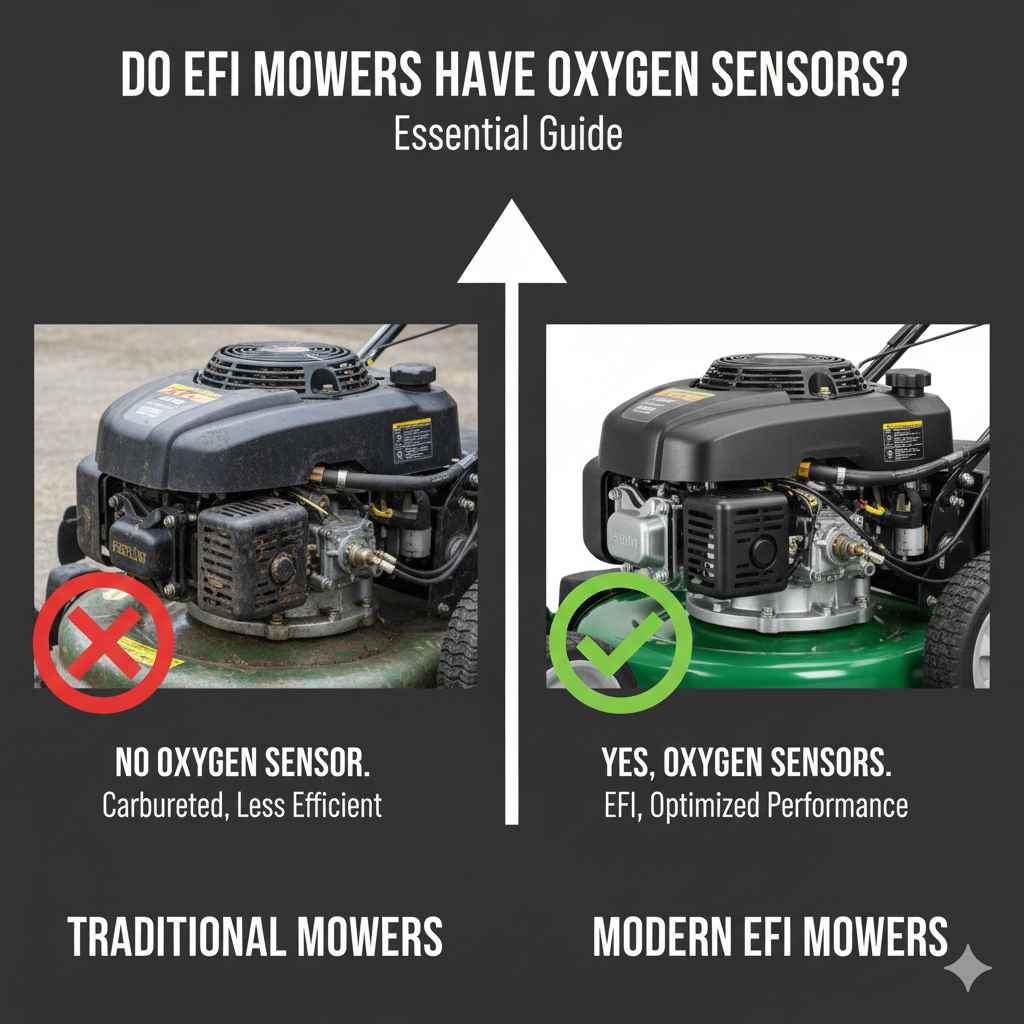
Yes, many modern Electronic Fuel Injection (EFI) mowers are equipped with oxygen sensors, similar to those found in cars. This sensor monitors exhaust gases to help the engine control unit (ECU) optimize fuel delivery for better efficiency and lower emissions, making it a vital part of the EFI system on your lawn equipment.
It can be confusing when you start looking at the engine on your lawn mower and realize it looks more complex than the older models you are used to. When you hear “EFI,” you might think of your car, not your weekend yard work! Many folks wonder if those fancy new mowers have the same tricky parts found under the hood of a truck, like an oxygen sensor.
If your mower has EFI (Electronic Fuel Injection), it almost certainly has an oxygen sensor, or O2 sensor, working hard to keep your lawn care running smoothly. Not knowing if this tiny part is present can make troubleshooting a real headache.
Don’t worry! I’m Monowar Shohag, and I’m here to clear up all the confusion. We are going to break down exactly what an O2 sensor is, why it matters on your mower, and what you need to know to keep it happy. By the end of this guide, you will understand your EFI mower’s exhaust system perfectly.
Understanding EFI in Lawn Mowers: Why It’s Different
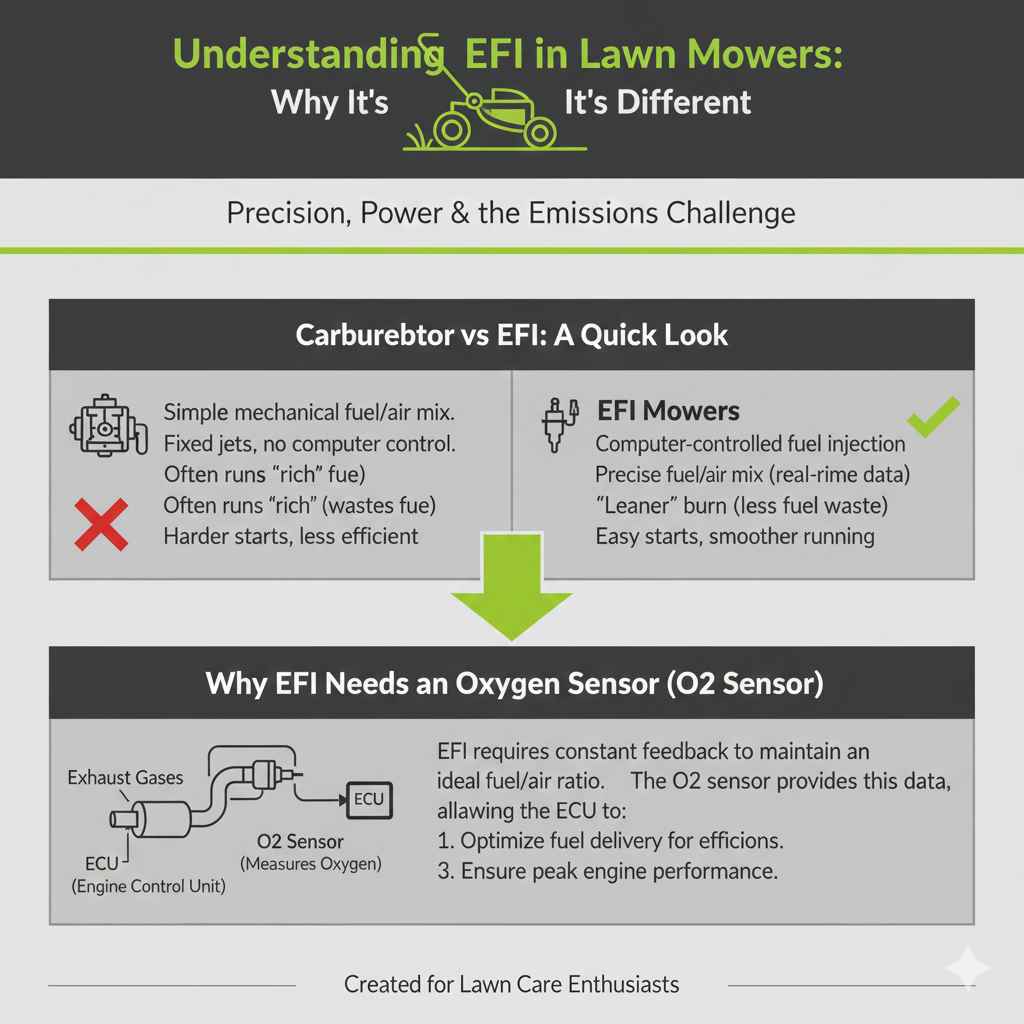
For years, lawn mowers used carburetors. A carburetor is a simple device that mixes fuel and air mechanically. EFI is the modern upgrade. Think of EFI like a tiny, computer-controlled fuel injector system right on your engine.
Instead of relying on simple mechanics, EFI uses sensors, wiring, and a small computer (the Engine Control Unit or ECU) to precisely measure and deliver the exact amount of fuel needed at any moment. This results in easier starting, smoother running, and less fuel waste. Because the system relies on precise electronic feedback, it needs sensors to know what’s happening inside the engine—this is where the oxygen sensor comes in.
Carburetor vs. EFI: A Quick Look
To understand why an O2 sensor is needed, let’s compare the two systems:
- Carbureted Mowers: Fuel mixture is set by fixed jets and vacuum. They run richer (more fuel) than necessary sometimes “just in case.”
- EFI Mowers: Fuel mixture is constantly adjusted based on real-time data from sensors. This precision demands constant feedback on how well the fuel is burning.
Do EFI Mowers Have Oxygen Sensors? The Definitive Answer
The shortest answer is: Yes, high-quality, modern EFI lawn mowers utilize an oxygen sensor.
If your mower has an EFI system mentioned on the engine housing or in the manual, you should expect to find an O2 sensor tucked into the exhaust manifold or muffler assembly. These sensors are essential gears in making the EFI system work as intended.
What is an Oxygen Sensor and What Does It Do?
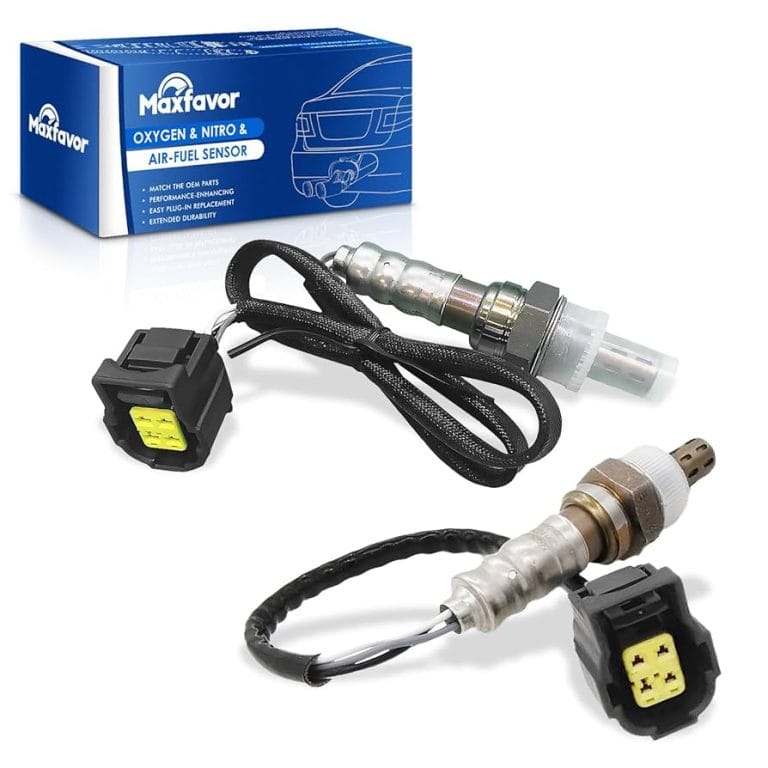
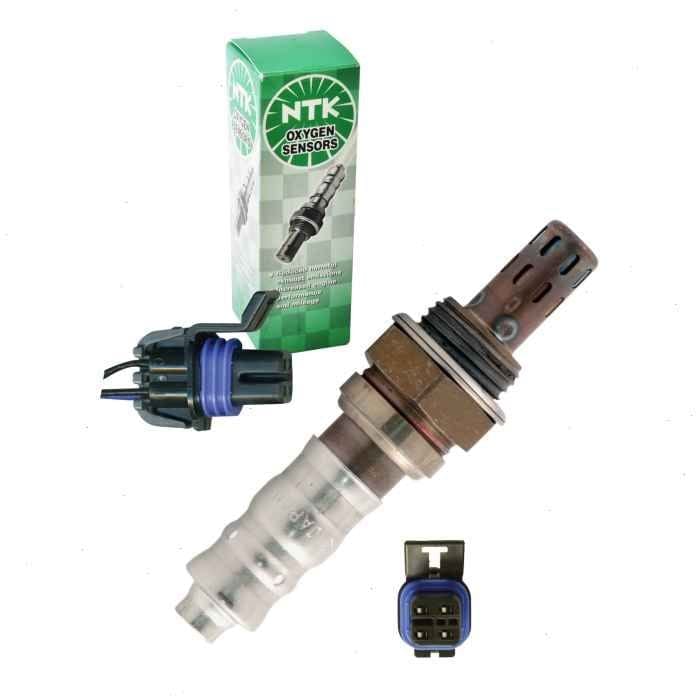
In simple terms, the oxygen sensor (often called an O2 sensor) is the engine’s “nose.” It hangs out in the hot exhaust stream leaving the engine and sniffs out how much unburned oxygen remains in that gas.
Why does it care about oxygen? This tells the ECU a huge secret: was the fuel mixture too rich (too much fuel, not enough air) or too lean (too much air, not enough fuel)?
Based on the sensor’s readings, the ECU instantly adjusts how long the fuel injector stays open, ensuring you always have the perfect Ratio (the stoichiometric ratio, around 14.7 parts air to 1 part fuel for gasoline). This perfect balance maximizes power while minimizing harmful emissions and fuel consumption.
Where Would the O2 Sensor Be Located on a Mower?
Unlike cars where the sensor is often right in the exhaust pipe under the car, on a mower, the location is usually much easier to access, though sometimes tucked away:
- Near the Engine Port: It screws directly into the exhaust header pipe, which is the short pipe coming straight out of the engine block.
- Inside the Muffler: On some designs, especially compact zero-turn mowers, the sensor might be threaded into the side of the muffler housing itself.
- Wiring Check: Look for a small, often threaded sensor with a wire harness (usually one or two wires) leading back toward the main wiring loom or the ECU box mounted near the engine.
Here is a quick comparison of where to look:
| Component | Typical Location on EFI Mower | Appearance |
|---|---|---|
| Throttle Body/Injector | On the intake manifold, where air enters the engine. | Larger component with electrical connectors. |
| ECU (Engine Computer) | Often housed in a waterproof box near the battery or starter. | Small black box with many plugs attached. |
| Oxygen Sensor (O2 Sensor) | Screwed into the exhaust manifold or muffler. | Small, threaded metal probe with a wire coming out. |
Why Your EFI Mower Needs an O2 Sensor
The presence of an O2 sensor isn’t just for compliance; it actively improves your mowing experience. Think of it as crucial maintenance that pays you back in performance.
The Three Main Benefits of O2 Sensors on Mowers
These sensors provide three major advantages over older non-feedback carburetor systems:
- Fuel Economy: By ensuring the perfect air-fuel mix, the engine doesn’t waste fuel. You get more acres mowed per tank of gas.
- Emissions Control: EFI systems are designed to meet modern, strict emission standards (like those set by the EPA in the United States). The O2 sensor is the key component that allows the ECU to keep the exhaust clean. For more information on small engine emissions, you can check resources like the Environmental Protection Agency’s guidelines on nonroad engines.
- Consistent Performance: If the air temperature changes, the altitude changes, or the fuel quality varies slightly, the O2 sensor tells the ECU to adjust immediately. This means smoother idling, less hesitation, and reliable power even under heavy load (like tough, thick grass).
What Happens When an O2 Sensor Fails?
A failing O2 sensor is one of the most common culprits behind poor performance in EFI engines. Because the ECU relies on this sensor’s data, if the data stops coming or is wildly inaccurate, the ECU defaults to a “safe mode.”
Safety mode usually means the ECU runs the engine very rich (lots of extra fuel) to prevent damage from running too lean. This leads to:
- Significantly decreased fuel mileage.
- Dark or black smoke coming from the exhaust (a sign of too much fuel).
- Rough idling or difficulty starting.
- Potential for spark plug fouling due to excess carbon buildup.
Servicing and Diagnosing Your EFI Mower O2 Sensor
As a beginner, you don’t need to become an electronics expert, but knowing how to spot a potential problem is fantastic for saving time and money on service calls. Remember, safety first—always disconnect the battery before working near wiring or sensors.
Signs Your O2 Sensor Might Be Bad
Your mower will usually give you clear hints if the sensor is acting up: