
Does Denso Make Chevy Oxygen Sensors?
Many car owners wonder Does Denso Make Chevy Oxygen Sensors? This question pops up because Denso is a huge name in car parts, and Chevy is a super popular brand. For folks just starting out with car maintenance, figuring out which brands work with their specific car can feel a little tricky.
But don’t worry! We’re here to make it really simple. We’ll walk you through exactly what you need to know, step by step, so you can get the right part for your Chevy.
Let’s find out if Denso is the answer to your oxygen sensor needs.
Denso and Chevy Your Car Part Connection
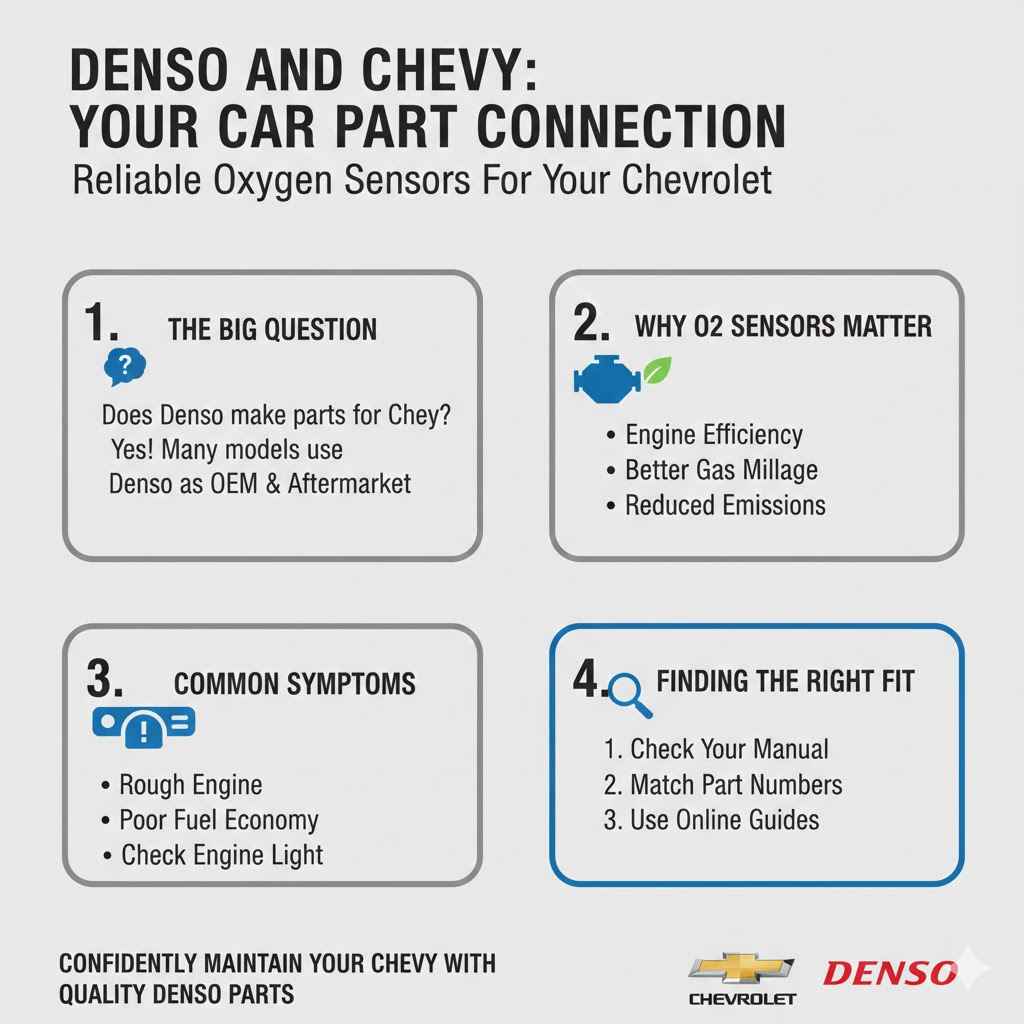
When you need to replace a part on your Chevrolet, you want to be sure you’re getting something reliable. Many drivers ask, Does Denso Make Chevy Oxygen Sensors? It’s a smart question to ask because Denso is one of the biggest names in automotive parts worldwide.
They make a lot of different things for many car companies, and that includes parts for Chevys. So, there’s a good chance they are involved.
Oxygen sensors are really important for your car’s engine. They help your car burn fuel efficiently. This means better gas mileage and fewer bad gases going into the air.
When your oxygen sensor isn’t working right, your car might run rough, use more gas, or even have a check engine light come on. That’s why getting the right replacement is key.
Why This Question Matters
For people who are new to working on cars, or even just new to their Chevy, the world of auto parts can seem a bit confusing. There are so many brands, and they all say they make good parts. You might see a Denso oxygen sensor and wonder, “Will this fit my Chevy?” Or maybe you’ve heard Denso is a good brand and you’re hoping they make what you need for your specific car model.
The good news is that knowing the answer is not as hard as it sounds. We’re going to break down the relationship between Denso and Chevrolet oxygen sensors. You’ll learn how to confirm if a Denso sensor is the right choice for your vehicle.
This way, you can feel confident when you buy parts and keep your Chevy running smoothly.
Denso’s Role in The Automotive Industry
Denso is a global company that started in Japan. They are famous for making high-quality automotive components. They supply parts to many car manufacturers, and they also sell parts directly to consumers for the aftermarket.
This means when you buy a part for your car, it might have been made by Denso, even if it has a different brand name on it.
Their product range is huge. Denso makes everything from engine parts and climate control systems to electronics and of course, sensors. Oxygen sensors are a big part of their sensor line.
They focus on making sensors that are accurate and last a long time. This attention to detail is why many mechanics and car owners trust the Denso brand.
What is an Oxygen Sensor?
An oxygen sensor, also called an O2 sensor, is a vital part of your car’s exhaust system. It sits in the exhaust pipe and measures the amount of oxygen in the exhaust gases. This information is sent to your car’s computer, called the Engine Control Unit (ECU).
The ECU uses this data to adjust how much fuel is injected into the engine. If there’s too much oxygen, it means the engine is running lean (not enough fuel), so the ECU adds more fuel. If there’s too little oxygen, the engine is running rich (too much fuel), and the ECU reduces the fuel.
This constant adjustment helps your engine run at its best.
This process does a few things:
- It improves your car’s fuel economy, saving you money at the pump.
- It makes your engine run smoother.
- It helps reduce harmful emissions, which is good for the environment.
Does Denso Make Chevy Oxygen Sensors? The Direct Answer
So, to directly answer the question Does Denso Make Chevy Oxygen Sensors? The answer is a resounding yes. Denso is a major supplier of oxygen sensors, and they absolutely make sensors that are designed to fit and work with Chevrolet vehicles.
In fact, Denso often supplies original equipment (OE) oxygen sensors directly to Chevrolet for their cars as they are being built.
This means that when you buy a Denso oxygen sensor for your Chevy, you are often getting the exact same part that came with your car from the factory. This is known as an OE equivalent part. It’s designed to meet or exceed the original specifications of the part Chevrolet installed.
OE vs. Aftermarket
When you’re looking for a replacement oxygen sensor, you’ll usually see two main types:
- Original Equipment (OE): These are parts made by the same company that originally made the part for your car manufacturer. In this case, if Denso supplied the original sensor to Chevy, a Denso-branded sensor would be an OE equivalent.
- Aftermarket: These parts are made by companies other than the original equipment manufacturer. While many aftermarket parts are good quality, OE equivalent parts from trusted brands like Denso often provide the best assurance of fit and performance.
Denso’s reputation for quality means that their aftermarket oxygen sensors are a very popular and reliable choice for Chevy owners. They are built with the same engineering and quality control standards as the parts they supply directly to car makers.
How to Find the Right Denso Oxygen Sensor for Your Chevy
Knowing that Denso makes Chevy oxygen sensors is great, but how do you make sure you get the exact one for your specific Chevrolet model? It’s easier than you might think. Most auto parts stores, both online and in person, have systems that help you find the right part based on your car’s details.
Here’s what you’ll typically need:
- Your Chevrolet’s Year
- Your Chevrolet’s Make (Chevrolet)
- Your Chevrolet’s Model (e.g., Silverado, Malibu, Equinox)
- Sometimes, your car’s engine size or trim level might be needed.
When you use a parts finder tool, you can often filter by brand. So, you can look for Denso oxygen sensors specifically for your Chevy. This takes the guesswork out of it.
You’re looking for a sensor that is listed as compatible with your vehicle.
Reading Part Numbers and Specifications
Denso has a wide variety of oxygen sensors. They are designed for different positions on the exhaust system (e.g., Bank 1 Sensor 1, Bank 2 Sensor 2) and for different engine types. While the parts finder tools are usually accurate, it’s always a good idea to double-check.
Look at the product description. It should clearly state that the sensor is for your specific Chevy model and year. You might also see information about the type of sensor (e.g., Wideband, Narrowband) and its connector type.
Most modern Chevys use plug-and-play connectors, meaning the sensor will have a connector that matches your car’s wiring harness.
Here’s a quick look at common sensor locations:
- Upstream Sensors (Sensor 1): These are located before the catalytic converter. They are crucial for the engine’s fuel management.
- Downstream Sensors (Sensor 2): These are located after the catalytic converter. They monitor the catalytic converter’s efficiency.
Denso manufactures sensors for all these common locations for Chevrolet vehicles.
Benefits of Using Denso Oxygen Sensors for Your Chevy
Choosing a Denso oxygen sensor for your Chevrolet offers several advantages. It’s not just about fitting your car; it’s about the quality and reliability you get.
Precision and Performance
Denso oxygen sensors are engineered for accuracy. They provide precise measurements of oxygen levels in the exhaust. This allows your car’s computer to make the best possible adjustments to the fuel mixture.
Better fuel mixture means your engine performs more efficiently, leading to:
- Smoother engine operation
- Optimal power delivery
- Improved throttle response
Durability and Longevity
Oxygen sensors are exposed to harsh conditions in the exhaust system, including high temperatures and corrosive gases. Denso uses high-quality materials and advanced manufacturing techniques to ensure their sensors can withstand these conditions. This means a Denso sensor is likely to last longer than a cheaper, lower-quality alternative, saving you money on replacements in the long run.
Fuel Efficiency
A properly functioning oxygen sensor is directly linked to your car’s fuel economy. By ensuring your Chevy’s engine is running with the correct air-fuel ratio, Denso sensors help prevent your engine from burning too much fuel. This can lead to noticeable savings on your gasoline bills.
Emissions Control
Modern vehicles are designed to meet strict emissions standards. The oxygen sensor plays a critical role in making sure your catalytic converter works as it should to clean up exhaust gases. Using a reliable Denso sensor helps your Chevy stay compliant with emission regulations and reduces its environmental impact.
When to Replace Your Chevy’s Oxygen Sensor
Oxygen sensors don’t last forever. They typically have a lifespan of about 60,000 to 100,000 miles, but this can vary based on driving conditions and the quality of the sensor. You should consider replacing your oxygen sensor if you notice any of the following signs:
- Check Engine Light: This is the most common indicator. The light will come on, and a diagnostic scan might reveal a fault code related to the oxygen sensor (e.g., P0130-P0167 range).
- Decreased Fuel Economy: If you’re filling up your gas tank more often than usual without changing your driving habits, a faulty O2 sensor could be the culprit.
- Rough Idling or Engine Misfires: An incorrect air-fuel mixture can cause your engine to run poorly, leading to sputtering, hesitation, or misfires.
- Failed Emissions Test: If your car doesn’t pass its emissions test, a bad oxygen sensor is often one of the reasons why.
- Rotten Egg Smell: This smell from your exhaust can indicate that your catalytic converter is overheating due to an excessively rich fuel mixture, often caused by a bad O2 sensor.
If you suspect your oxygen sensor needs replacement, using a Denso sensor is a wise choice for your Chevrolet. They are known for their reliability and performance, ensuring your car’s systems function correctly.
Denso Oxygen Sensors vs. Other Brands
While Denso is a top-tier choice, there are other reputable brands that also make oxygen sensors for Chevys. Some well-known names include NTK (NGK), Bosch, and ACDelco. ACDelco is particularly relevant as it is often the original equipment brand for GM vehicles, including Chevrolet.
Here’s a simplified comparison:
| Brand | Typical Strengths | Considerations for Chevy |
|---|---|---|
| Denso | OE quality, excellent accuracy, durable, wide availability | Often the OE supplier, so it’s a direct replacement for many Chevys. |
| NTK (NGK) | Very high quality, known for ceramics, reliable | Also a strong OE supplier for many manufacturers. |
| Bosch | Global leader, innovative technology, good performance | Offers a broad range of sensors, generally reliable. |
| ACDelco | Official GM parts brand, guaranteed fit for Chevys | Directly associated with Chevrolet, ensuring OEM specifications. |
When deciding, consider that Denso and ACDelco are often the most direct OE replacements for Chevrolet. Denso offers the assurance of global manufacturing excellence, while ACDelco provides the official GM-backed option. All these brands can be good choices, but Denso consistently stands out for its balance of quality, performance, and value, making it a go-to for many Chevy owners.
Installation and Fitment Tips
When you purchase a Denso oxygen sensor for your Chevy, the installation process is usually straightforward, especially if you’re comfortable with basic car maintenance. However, there are a few things to keep in mind.
Firstly, ensure you have the correct tools. You’ll likely need a specialized oxygen sensor socket wrench, which has a slot to accommodate the sensor’s wire. A regular socket won’t work.
Secondly, always disconnect your car’s battery before starting any work. This prevents electrical shorts and ensures safety.
Thirdly, when you remove the old sensor, you might encounter some rust or corrosion. Applying a penetrating oil a day before can make removal much easier. When installing the new Denso sensor, make sure to apply a small amount of anti-seize compound to the threads (unless the sensor comes with it pre-applied, which is common for modern sensors).
Be careful not to get any anti-seize on the sensor element itself.
Finally, after installation, reconnect the battery and start your engine. The check engine light should turn off on its own after a few driving cycles if the sensor was the only issue. If it stays on, you may need to clear the code with an OBD-II scanner or have a mechanic check it.

Frequently Asked Questions
Question: Does Denso make oxygen sensors for all Chevrolet models?
Answer: Yes, Denso manufactures a wide range of oxygen sensors that are designed to fit many different Chevrolet models and years, from older vehicles to the latest models.
Question: Are Denso oxygen sensors as good as OEM parts for my Chevy?
Answer: Denso is a major original equipment manufacturer (OEM) supplier to many car brands, including Chevrolet. So, a Denso-branded oxygen sensor is often an OE equivalent, meaning it meets or exceeds the original specifications and is often the same part you would get from a Chevrolet dealer.
Question: How do I know which Denso oxygen sensor to buy for my Chevrolet?
Answer: You can use online parts catalogs or ask an auto parts store associate. You will need your Chevrolet’s year, make, and model. Many parts finders allow you to filter by brand, so you can select Denso to see compatible options.
Question: Can I use a universal Denso oxygen sensor on my Chevy?
Answer: While universal sensors exist, it’s always best to use a direct-fit sensor specifically listed for your Chevrolet model. Direct-fit sensors come with the correct connector and are designed for your vehicle’s specific exhaust system, making installation easier and ensuring proper function.
Question: How long do Denso oxygen sensors typically last in a Chevrolet?
Answer: Denso oxygen sensors are known for their durability. While lifespan varies, they commonly last between 60,000 to 100,000 miles or more when properly installed and functioning in a healthy engine system.
Final Thoughts
When asking Does Denso Make Chevy Oxygen Sensors? the answer is a clear yes. Denso is a top-tier manufacturer that supplies many original equipment parts for Chevrolet.
Their oxygen sensors are built to high standards, offering reliability and precise performance for your Chevy. Choosing a Denso sensor means you are likely getting an equivalent to the part that came with your car, ensuring your engine runs efficiently and cleanly. You can confidently select Denso parts for your Chevrolet maintenance needs.