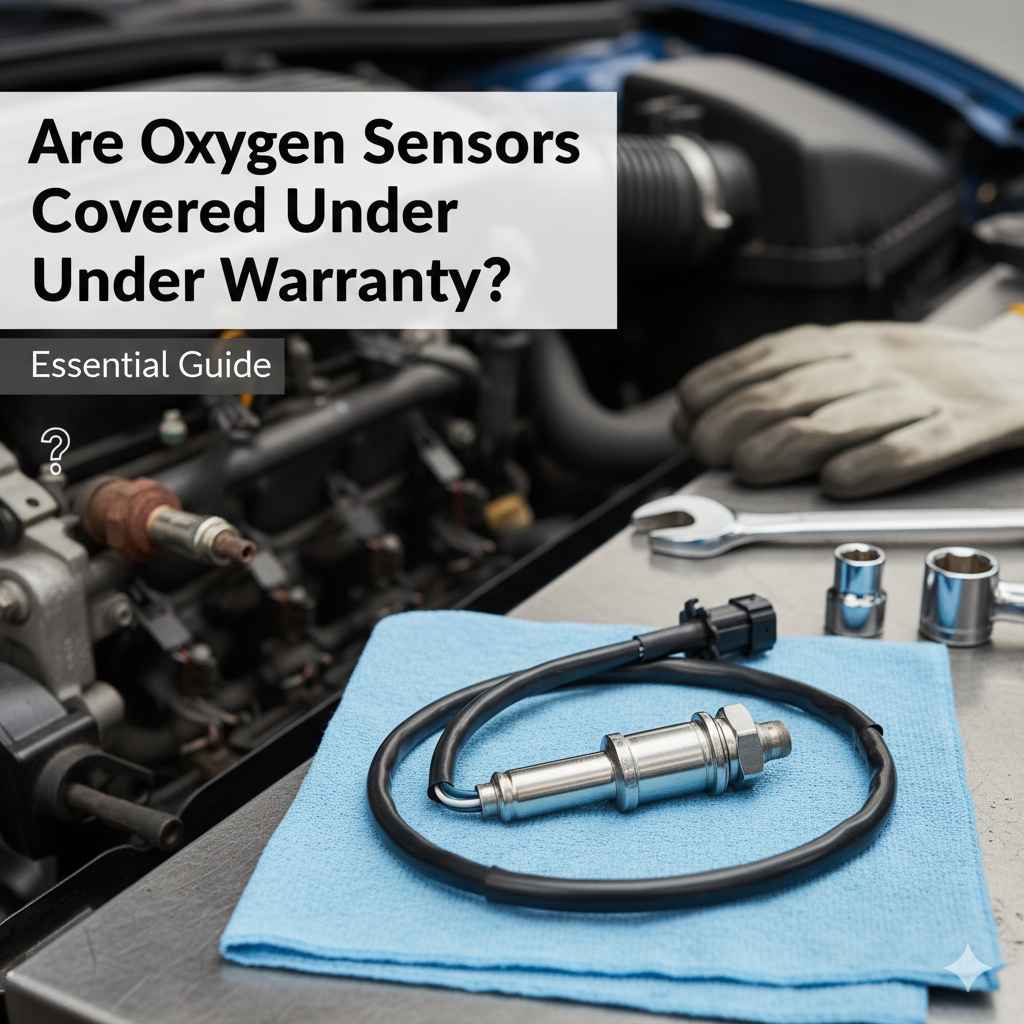
Are Oxygen Sensors Covered Under Warranty? Essential Guide
Oxygen sensors are typically covered under a vehicle’s powertrain or emissions warranty, but coverage can vary significantly based on the warranty type, the reason for failure, and the vehicle’s age and mileage. Always check your specific warranty details.
Your Oxygen Sensor Warranty: What You Need to Know
Dealing with a check engine light can be a head-scratcher, and often, a faulty oxygen sensor is the culprit. These small but mighty parts play a crucial role in your car’s performance and how much pollution it puts out. When they go bad, you might wonder if your car’s warranty will help you out. It’s a common question, and the answer isn’t always a simple yes or no. Let’s break down what you need to know about oxygen sensor warranties so you can drive with confidence. We’ll uncover the details that matter, ensuring you’re prepared to handle any surprises.
Understanding Your Car’s Warranty and Oxygen Sensors
Your car’s warranty is a contract between you and the manufacturer that promises to fix certain parts if they fail within a specific period or mileage. Oxygen sensors, often called “O2 sensors,” are vital emission control components. Their job is to measure the exhaust gases leaving your engine. This information helps your car’s computer (the ECU) adjust the fuel mixture to burn fuel efficiently and reduce harmful emissions.
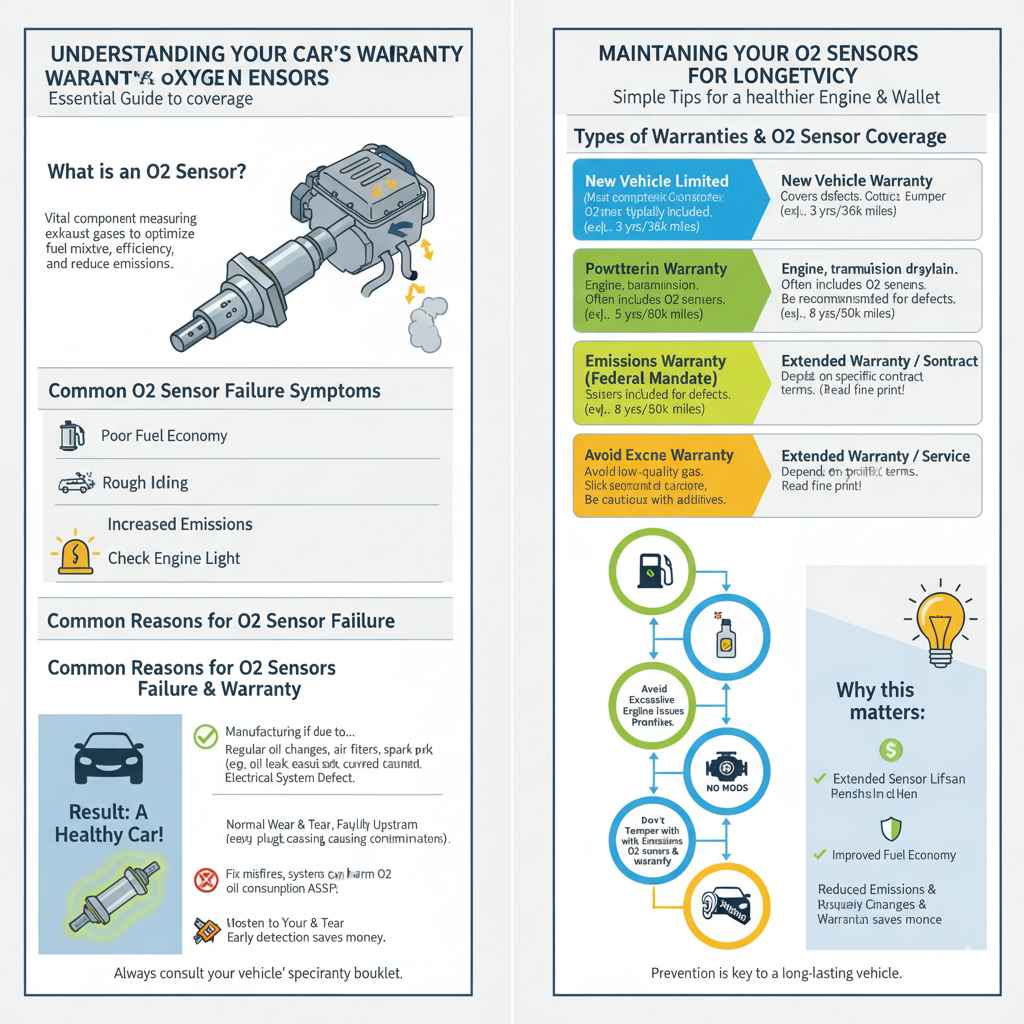
When an O2 sensor fails, it can lead to poor fuel economy, rough idling, increased emissions, and that dreaded check engine light. Because they are emission-specific components, their warranty coverage often falls under particular categories.
Types of Warranties and Their Coverage for O2 Sensors
Not all warranties are created equal. The type of warranty your car has will greatly influence whether your oxygen sensor replacement is covered.
New Vehicle Limited Warranty (Bumper-to-Bumper): This is usually the most comprehensive warranty. It covers most defects in materials or workmanship for a set period (e.g., 3 years or 36,000 miles, whichever comes first). Oxygen sensors are generally covered under this warranty if they fail due to a manufacturing defect.
Powertrain Warranty: This warranty is more specific and typically covers the engine, transmission, and drivetrain components. Since oxygen sensors are crucial for engine performance and emissions control, they are often included in the powertrain warranty, which usually lasts longer than the bumper-to-bumper warranty (e.g., 5 years or 60,000 miles, sometimes even longer for specific components).
Emissions Warranty: This is a federal mandate in many countries, including the United States, to ensure vehicles meet emission standards. In the U.S., the Environmental Protection Agency (EPA) outlines specific emissions warranties. Major emissions components, including catalytic converters and oxygen sensors, are typically covered for longer periods, often 8 years or 80,000 miles, whichever comes first. However, this warranty usually applies only to defects, not wear and tear or damage caused by other issues.
Extended Warranty/Service Contract: If you purchased an extended warranty, its coverage for oxygen sensors will depend entirely on the terms and conditions of that specific contract. Some may cover them, while others exclude them or list them as wear-and-tear items not eligible for coverage.
Common Reasons for O2 Sensor Failure
Understanding why an O2 sensor might fail can shed light on warranty coverage.
Normal Wear and Tear: Like any part, O2 sensors have a lifespan. Over time, the sensor element can degrade, become contaminated, or simply stop functioning accurately. This is considered normal wear and tear and is generally not covered by most warranties once the initial coverage period (like bumper-to-bumper) expires.
Contamination: O2 sensors can be fouled by oil, coolant, fuel additives, or excessive carbon buildup. If the contamination is caused by a defect in another component (like a leaking head gasket or rich fuel mixture due to a faulty injector), the cause of the contamination might be covered, potentially leading to the O2 sensor replacement being covered as well.
Mechanical Damage: Physical damage from road debris or improper installation can also lead to sensor failure. This type of damage is almost never covered under warranty.
Electrical Issues: Damage to the wiring harness or connectors can cause O2 sensor malfunctions. If the damage is due to a manufacturing defect in the wiring, it might be covered.
Engine Performance Issues: Problems like misfires, exhaust leaks, or incorrect fuel mixtures can accelerate the degradation of an O2 sensor. If these underlying issues are due to a covered defect, the resulting O2 sensor damage might also be covered.
How to Determine if Your Oxygen Sensor is Covered
The best way to figure out your coverage is to consult your vehicle’s warranty documentation.
Step-by-Step Guide to Checking Your Warranty Coverage
1. Locate Your Warranty Booklet: This document usually comes with your owner’s manual when you buy a new car. If you don’t have it, you can often find a digital copy on the manufacturer’s official website or by contacting your dealership.
2. Read the “What is Covered” Section: Pay close attention to sections detailing emissions components, powertrain components, and general limited warranties. Look for specific mentions of “oxygen sensors,” “O2 sensors,” or “exhaust gas sensors.
3. Note the Time and Mileage Limits: Warranties have expiration dates based on either the number of years passed or the mileage driven. Make sure your vehicle is still within these limits.
4. Understand Exclusions: Warranty booklets also list what is not covered. Common exclusions include normal wear and tear, damage from accidents, improper maintenance, modifications, and contaminated sensors (unless the contamination is due to a covered defect).
5. Contact Your Dealership or Manufacturer: If you’re still unsure, the most reliable step is to call your local dealership’s service department or the manufacturer’s customer service line. Provide your Vehicle Identification Number (VIN), and they can tell you exactly what coverage you have.
Key Warranty Terms to Look For
Defect: This usually refers to flaws in materials or workmanship from the factory.
Wear and Tear: This refers to the natural degradation of parts due to normal use over time.
Component List: Some warranties specifically list covered components and may exclude items like sensors that are considered “wearable.”
When Typically Covered vs. Not Covered
Let’s look at some common scenarios.
Scenarios Where O2 Sensors ARE Likely Covered
Within the New Vehicle Limited Warranty Period: If your car is relatively new and an O2 sensor fails due to a manufacturing defect, it’s almost certainly covered.
Within the Emissions Warranty Period (Federal Mandate in the US): If the O2 sensor failure is related to emissions and the vehicle is within the 8-year/80,000-mile emissions warranty (in the US), it’s often covered, provided it’s a component defect and not due to external factors.
Failure Caused by Another Covered Component: If a faulty fuel injector (part of the powertrain) causes an O2 sensor to fail prematurely, the sensor replacement might be covered as a consequence of the original covered failure.
Scenarios Where O2 Sensors are NOT Typically Covered
Beyond Warranty Limits: Once your powertrain or emissions warranty expires, any repairs are usually your responsibility.
Normal Wear and Tear: If the sensor has simply reached the end of its service life after many miles or years, it’s considered maintenance wear.
Damage from External Factors: This includes contamination from aftermarket additives, damage from hitting road debris, or issues from improper installation or modification.
Failure Not Related to Emissions Control: If the O2 sensor has a secondary function (which is rare and usually tied to engine performance), and the failure isn’t directly an emissions issue, it might fall outside emissions warranty coverage.
The Average Cost of O2 Sensor Replacement (If Not Covered)
If your oxygen sensor isn’t covered by warranty, you’ll need to budget for the repair. The cost can vary significantly based on the vehicle, the type of sensor, and labor rates in your area.
Cost Breakdown: Parts and Labor
| Component | Average Cost Range (USD) | Notes |
|---|---|---|
| Oxygen Sensor | $50 – $250 | Universal sensors are cheaper; direct-fit sensors for specific cars cost more. |
| Labor | $50 – $150 | Most sensors take 0.5 to 1.5 hours to replace. |
| Total Estimate | $100 – $400 | Varies greatly by vehicle and repair shop. |
Important Considerations:
Location of Sensor: Cars often have multiple O2 sensors (e.g., upstream and downstream, before and after the catalytic converter). The difficulty of access can affect labor time. Upstream sensors typically impact performance more directly and are often more expensive.
Aftermarket vs. OEM: Original Equipment Manufacturer (OEM) parts are generally more expensive but ensure exact fit and quality. Aftermarket parts can offer savings but may compromise performance or lifespan.
Diagnostic Fees: Many mechanics charge a diagnostic fee to pinpoint the cause of the check engine light. This fee is usually separate from the repair cost.
How to Inspect Your O2 Sensor (A Beginner’s Look)
While diagnosing O2 sensor issues often requires specialized tools, a basic visual inspection can sometimes offer clues, especially if the sensor is easily accessible.
Tools You Might Need (For Basic Inspection)
Safety glasses
Gloves
Jack and jack stands (if working underneath the vehicle)
Basic hand tools (wrenches, sockets) – though often not needed for just looking.
A flashlight
Basic Visual Inspection Steps
1. Safety First: Ensure your vehicle is parked on a level surface, the engine is off and cool, and engage the parking brake. If you need to lift the vehicle, use jack stands securely.
2. Locate the Sensors: O2 sensors are screwed into the exhaust pipe. You’ll typically find one or more sensors before the catalytic converter (upstream) and one or more after it (downstream). They have wires coming out of them.
3. Visually Inspect the Sensor: Look for obvious signs of damage, such as a cracked sensor housing, melted plastic, or damaged wiring.
4. Check the Wiring: Follow the wires from the sensor. Look for any cuts, abrasions, melting, or loose connections. Sometimes, rodents can chew through wiring.
5. Look for Leaks: Inspect the area around the sensor’s connection point on the exhaust pipe for any signs of exhaust leaks, which can affect sensor readings.
Note: This visual inspection is limited. A faulty O2 sensor might look perfectly fine. Accurate diagnosis usually involves monitoring sensor data with an OBD-II scanner.
When to Seek Professional Help
While basic checks are DIY-friendly, O2 sensor replacement and diagnosis often require specific knowledge and tools.
Signs You Need a Mechanic
Check Engine Light: This is the most common indicator. The code pulled from your car’s computer often points to an O2 sensor issue.
Poor Fuel Economy: A significant drop in your miles per gallon can signal a malfunctioning O2 sensor.
Rough Idling or Stalling: The engine may not run smoothly.
Failed Emissions Test: High emission readings are a direct consequence of O2 sensor issues.
Inability to Access the Sensor: Many O2 sensors are located in hard-to-reach places or are seized by rust, requiring specialized tools and techniques.
Uncertainty About Diagnosis: If you’re not sure if the O2 sensor is the actual problem or if it’s covered by warranty, a professional can provide expert advice.
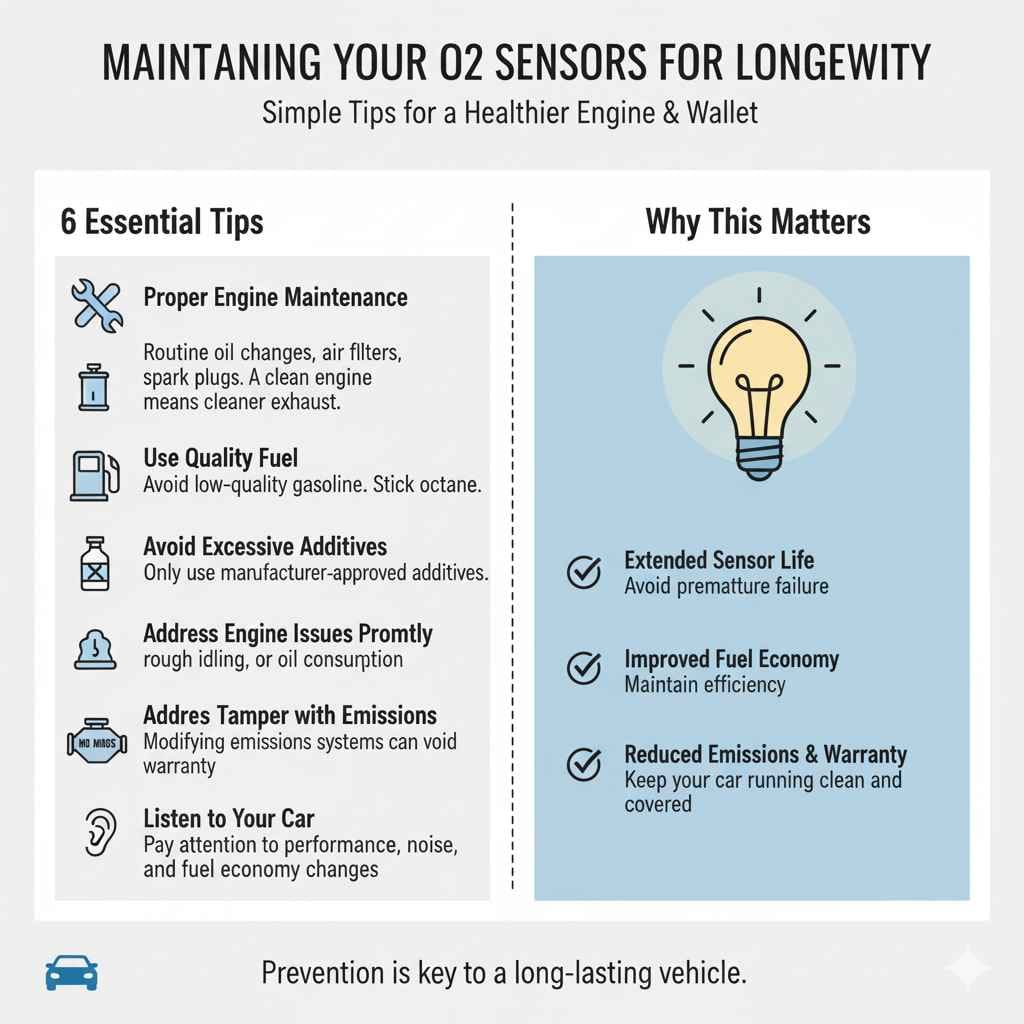
Maintaining Your O2 Sensors for Longevity
While you can’t prevent all failures, proper vehicle maintenance can help extend the life of your O2 sensors and avoid issues that might lead to their premature demise.
Tips for Extending O2 Sensor Life
Proper Engine Maintenance: Keep up with routine oil changes, air filter replacements, and spark plug service. A healthy engine runs cleaner, reducing the chance of exhaust contamination.
Use Quality Fuel: Avoid cheap, low-quality gasoline that can contain harmful additives or lead to combustion problems. Stick to recommended octane ratings.
Avoid Excessive Additives: Be cautious with fuel additives. Some can contaminate O2 sensors. Only use additives recommended by your vehicle manufacturer.
Address Engine Issues Promptly: Don’t ignore symptoms like misfires, rough idling, or oil consumption. These can lead to exhaust contamination that damages O2 sensors.
Don’t Tamper with Emissions Systems: Modifying or bypassing any part of your vehicle’s emissions control system can negatively impact O2 sensor function and may void warranty coverage.
Listen to Your Car: Pay attention to changes in engine performance, exhaust noise, or fuel economy. Early detection of problems can prevent more extensive damage.
Frequently Asked Questions (FAQ)
Q1: Are O2 sensors considered “wear and tear” items?
A1: Yes, generally, once a vehicle is outside its initial bumper-to-bumper warranty, O2 sensors are often classified as wear-and-tear items. This means they are expected to degrade over time and use, and their replacement is typically not covered by extended warranties unless explicitly stated, or if the failure is due to a covered manufacturing defect.
Q2: How long do oxygen sensors usually last?
A2: Oxygen sensors are designed to last a long time, often between 60,000 to 100,000 miles, or roughly 8 to 10 years in normal driving conditions. However, this can vary significantly based on driving habits, fuel quality, and overall engine health.
Q3: Can a bad O2 sensor cause my car to fail an emissions test?
A3: Absolutely. The primary function of an O2 sensor is to help the engine control emissions. If it’s not sending accurate data, the engine’s computer cannot properly adjust the fuel-to-air mixture, leading to increased pollutants and likely failing an emissions test.
Q4: If my check engine light is on, is it definitely the O2 sensor?
A4: Not necessarily. While O2 sensors are a common cause of the check engine light, many other components can trigger it, including spark plugs, ignition coils, mass airflow sensors, catalytic converters, and even loose gas caps. It’s essential to have the diagnostic trouble codes (DTCs) read with an OBD-II scanner to identify the specific issue.
Q5: Can I replace an O2 sensor myself?
A5: For mechanically inclined individuals with the right tools, yes, it can be a DIY job. However, sensors can be difficult to access, rusted in place, and require specific knowledge to avoid damaging wiring or the sensor itself. If you’re unsure, it’s best left to a professional mechanic.
Q6: Does the type of O2 sensor matter for warranty?
A6: The type of sensor (e.g., upstream, downstream, wideband) typically doesn’t change the warranty eligibility, but it can affect the cost if you have to pay for the repair. However, the reason for failure and the specific warranty* (e.g., emissions vs. powertrain) are the key factors determining coverage.
Q7: What is the main difference between a powertrain warranty and an emissions warranty regarding O2 sensors?
A7: The powertrain warranty covers components essential for making the car move (engine, transmission). The emissions warranty specifically covers parts designed to reduce pollution, like catalytic converters and O2 sensors. While O2 sensors are critical for both engine performance and emissions, they are explicitly covered under emissions warranties for longer periods due to their role in meeting environmental standards.
Conclusion
Navigating your vehicle’s warranty when it comes to components like oxygen sensors can feel a bit like a puzzle. Remember, your oxygen sensor is likely covered under your car’s new vehicle limited warranty, powertrain warranty, or a specific emissions warranty, especially if it fails due to a manufacturing defect within the specified time and mileage limits. However, if the sensor has simply worn out from normal use over many years and miles, or if it’s been damaged by external factors, you’ll likely be responsible for the repair costs.
Always refer to your specific warranty documentation or contact your dealership to confirm coverage for your vehicle. Proactive maintenance and addressing engine issues promptly can also help extend the life of these vital components. By understanding these nuances, you can approach any unexpected check engine light with greater confidence and clarity. Happy driving!