
Do Ford Motorcraft Oxygen Sensors Have Left-Hand Threads
When it comes to car maintenance, sometimes small details can cause big headaches. For many people working on their Ford vehicles, a common question pops up: Do Ford Motorcraft Oxygen Sensors Have Left-Hand Threads? This can be a bit confusing, especially for beginners, because most bolts and screws you encounter turn to the right to tighten and to the left to loosen. But oxygen sensors can be a little different.
Don’t worry if this has you scratching your head; we’ll break it down simply and show you exactly what you need to know to get the job done right. We’ll cover what you need to know next.
Understanding Oxygen Sensor Threads
What Are Oxygen Sensors?
Oxygen sensors, also known as O2 sensors, are really important parts of your car’s exhaust system. They help your car’s computer know how much oxygen is in the exhaust. This information is key for the computer to adjust the fuel and air mix going into the engine.
Getting this mix just right helps your car run smoothly, saves you gas, and keeps pollution down.
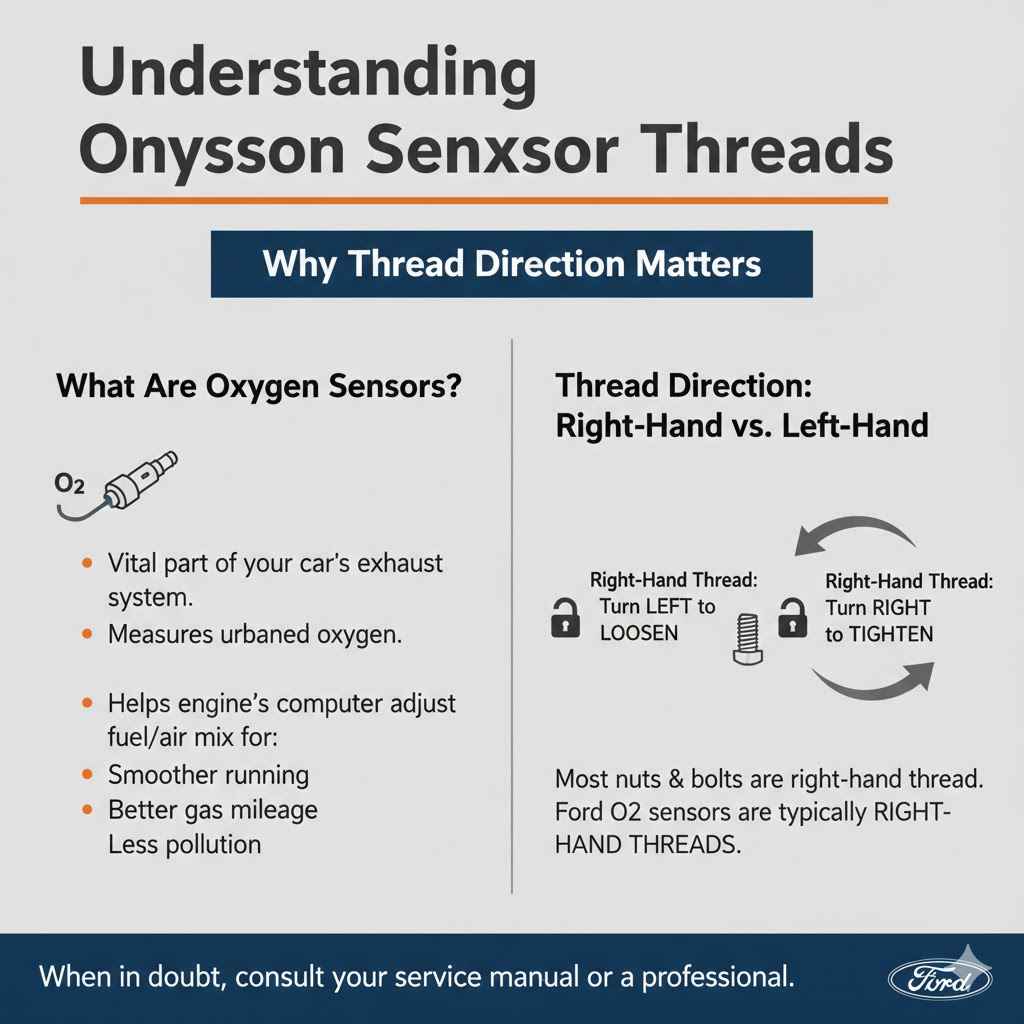
Why Thread Direction Matters
When you need to replace an oxygen sensor, you have to unscrew the old one. The direction you turn the sensor to remove it is called the thread direction. Most nuts and bolts have what’s called “right-hand threads.” This means you turn them counter-clockwise (to the left) to loosen them and clockwise (to the right) to tighten them.
It’s the standard way things are made.
Common Confusion About Oxygen Sensor Threads
The confusion about Ford Motorcraft oxygen sensors often comes from the fact that some exhaust components, like exhaust pipes or flanges, might have left-hand threads. This is done to prevent them from loosening up due to the vibrations and heat of the exhaust system. If a part is prone to unscrewing on its own, using left-hand threads means that even if it tries to loosen, the normal engine vibrations will actually tend to tighten it further, making it more secure.
However, this doesn’t automatically mean that the oxygen sensor itself will have left-hand threads.
Do Ford Motorcraft Oxygen Sensors Have Left-Hand Threads?
The Straight Answer
For the vast majority of Ford Motorcraft oxygen sensors, the answer is no. Do Ford Motorcraft Oxygen Sensors Have Left-Hand Threads? The common answer is that they have standard right-hand threads. This means you will turn them to the left (counter-clockwise) to loosen and remove them, and to the right (clockwise) to tighten and install them.
Why the Misconception?
The reason this question comes up so often is that there are other parts in the exhaust system that might use left-hand threads. For instance, some older Ford exhaust pipes or specific repair kits might feature left-hand threads to ensure they stay tight under extreme conditions. When someone is working on an exhaust system and encounters a left-hand threaded part, they might mistakenly assume that all components within that system, including the oxygen sensor, will follow the same pattern.
This can lead to a lot of frustration if they try to force a right-hand threaded sensor out using a left-hand motion, or vice-versa.
What About Different Ford Models?
It is extremely rare for a Ford Motorcraft oxygen sensor itself to have left-hand threads. This applies across most Ford models and years. The primary reason for this is standardization.
Manufacturers like to keep designs as consistent as possible to simplify production and repair. If a specific model or sensor did have left-hand threads, it would be a significant deviation from the norm and would likely be clearly marked or documented by Ford. However, such instances are not common for the sensors themselves.
Identifying the Correct Thread Type
The best way to be sure is to always check the part you are working with. Before trying to force anything, observe the sensor and its mounting point. The threads on the sensor and in the exhaust manifold or pipe will usually be visible.
If you are unsure, it’s always best to consult your vehicle’s service manual or look up specific information for your car’s year and model. Online forums and repair databases can also be helpful resources.
When You Might See Left-Hand Threads (Indirectly)
While the sensor itself typically uses right-hand threads, there might be situations where you encounter left-hand threads in the surrounding area. For example, if an exhaust pipe has been
The Importance of the Right Tool
When you’re removing or installing an oxygen sensor, using the right tool is crucial. Oxygen sensor sockets are designed to slip over the sensor’s wiring pigtail, allowing you to access the sensor itself. If you try to use a standard wrench or socket, you risk damaging the sensor, its wiring, or the threads in the exhaust manifold.
Make sure you have the correct oxygen sensor socket for your vehicle.
Common Scenarios and How to Handle Them
Scenario 1: Sensor Won’t Budge
If you’re trying to remove a Ford Motorcraft oxygen sensor and it feels stuck, don’t assume it has left-hand threads. The most common reasons for a stuck sensor are rust, carbon buildup, or the sensor being overtightened during its last installation. What you should do is:
- Apply a penetrating oil (like PB Blaster or WD-40) to the base of the sensor where it threads into the exhaust.
- Let it soak for at least 15-30 minutes, or even longer for heavily rusted areas.
- Tap lightly around the sensor mounting area with a small hammer to help the penetrating oil work its way in.
- Use your oxygen sensor socket and a breaker bar or ratchet. Apply steady, firm pressure in the loosening direction (counter-clockwise).
- If it’s still very stubborn, you might need to heat the area around the sensor mounting point gently with a torch. Be very careful when heating exhaust components, as there can be residual fuel or oil. Have a fire extinguisher nearby.
Scenario 2: Sensor Seems Loose Initially
If the sensor feels like it’s unscrewing too easily, and you’re worried it might be a left-hand thread, take a step back. As mentioned, genuine Ford Motorcraft sensors almost always have right-hand threads. It’s more likely that the threads in the exhaust manifold or pipe are damaged, or the sensor was cross-threaded when it was installed previously.