Do Heated Oxygen Sensors Go Bad In 30000 Miles: Essential Truth
Quick Summary: While it’s uncommon for a heated oxygen sensor (O2 sensor) to fail completely at just 30,000 miles, premature failure is possible due to severe engine issues, poor fuel quality, or contamination. Most quality sensors are designed to last much longer, often surpassing 100,000 miles with normal use.
Welcome! Dealing with engine lights can be stressful, especially when the culprit seems too new to fail. Many drivers wonder about the lifespan of heated oxygen sensors. You see that check engine light flicker, and you start worrying about big repair bills.
It’s frustrating when a modern car part seems to quit early. But don’t worry! We are going to break down exactly how long these vital sensors should last and why some might fail sooner than expected, even around 30,000 miles.
I’m Monowar Shohag, and I make exhaust maintenance simple. We’ll cover what an O2 sensor actually does, what causes them to fail early, and how you can spot the signs without needing a fancy degree. Stick with me, and we will demystify the mystery of premature O2 sensor failure.
What Exactly Is a Heated Oxygen Sensor (And Why Does It Need Heat)?
To understand why a sensor might fail at 30,000 miles, we first need to know its job. Think of the oxygen sensor, or O2 sensor, as your engine’s air quality checker. It lives right in your exhaust system, sensing how much oxygen is left over after the fuel burns in your cylinders.
The Engine’s Air Quality Reporter
This tiny sensor sends critical data back to your car’s main computer, the Engine Control Unit (ECU). The ECU uses this information to adjust the air-to-fuel ratio perfectly. This perfect mix ensures:
- Maximum fuel economy.
- Low harmful emissions.
- Smooth engine performance.
The Role of the Heater Circuit
When your engine starts cold, the exhaust gas isn’t hot enough for the sensor to work correctly. If the sensor stays cold, it sends slow, inaccurate readings. This wastes fuel and creates more pollution.
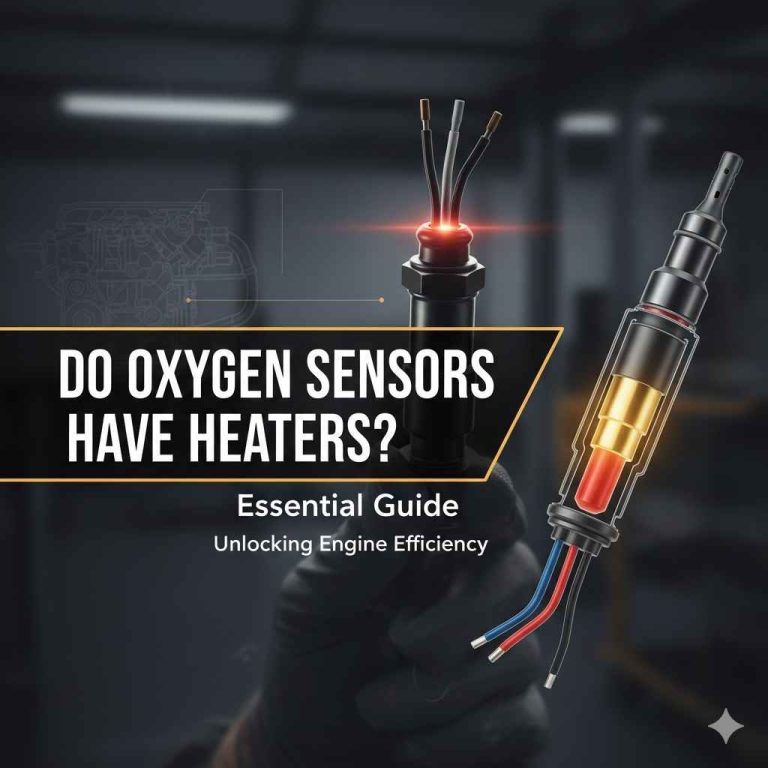
That’s where the “heated” part comes in. Modern O2 sensors have a built-in heating element, much like the filament in an old lightbulb. The heater warms the sensor up very quickly—often within seconds of starting the car.
This faster warmup time is vital for meeting modern emissions standards right away. According to the Environmental Protection Agency (EPA), quick emissions control is key to cleaner air, and the heater element makes that possible.

The 30,000-Mile Question: Do Heated O2 Sensors Go Bad This Early?
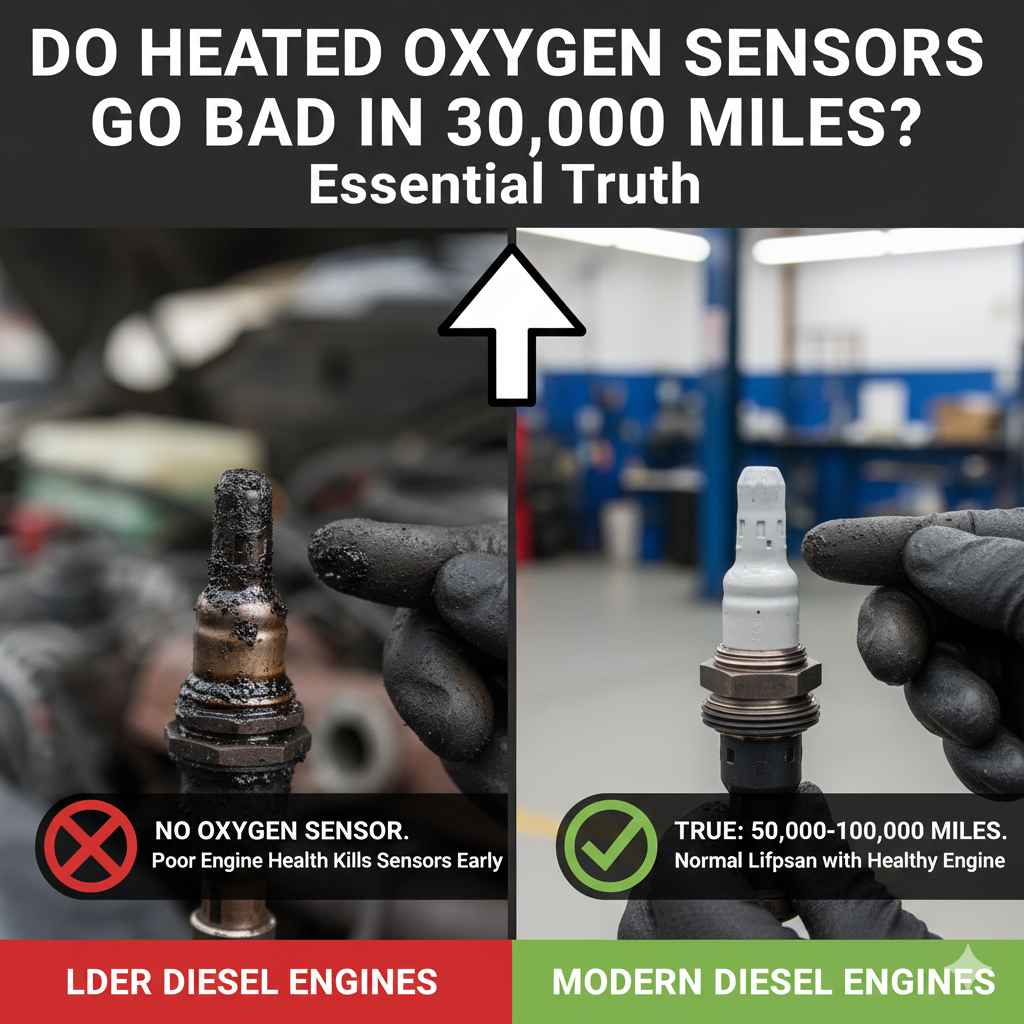
The short answer? It is unusual, but definitely possible. Most high-quality, factory-installed heated oxygen sensors are rated to last well past 100,000 miles under ideal conditions. If your car is only at 30,000 miles, it suggests something other than simple “wear and tear” is causing the issue.
Normal vs. Premature Failure
Let’s look at what “normal” looks like versus what might be happening around 30k miles:
| Condition | Expected Lifespan | Reason for the 30k Issue |
|---|---|---|
| Normal Wear and Tear | 80,000 – 120,000 miles | Sensor ages naturally due to exposure to heat and exhaust gases. |
| Premature Failure (30k Miles) | Often less than 50,000 miles | Usually caused by contamination (oil, coolant) or a failing heater circuit. |
If your vehicle is new, the immediate suspect is not the sensor itself, but what is flowing into it through the exhaust stream. A sensor doesn’t just go bad; it usually gets poisoned or damaged.
The Top 5 Reasons Why Your O2 Sensor Died Young
When an O2 sensor fails around 30,000 miles, it almost always points to an underlying problem in the engine or fuel system that has damaged the delicate sensing tip. Here are the most common culprits that shorten an O2 sensor’s life dramatically.
1. Contamination by Coolant or Oil Leaks
This is perhaps the number one killer of new O2 sensors. If your engine is burning oil (perhaps due to worn piston rings) or leaking coolant into the combustion chamber (like a bad head gasket), those contaminants enter the exhaust stream.
These chemicals coat the sensor element. Silicon (from coolant) or lead/phosphorus (from oil additives) essentially “poison” or clog the sensor. Once coated, the sensor can no longer accurately “breathe” the exhaust gas, leading to incorrect readings or outright failure.
2. Unburnt Fuel (Rich Condition)
If your engine runs too rich—using too much fuel for the amount of air—unburnt gasoline blasts through the exhaust. This excess fuel bakes onto the sensor, especially the heater element while cycling on and off. Causes of a rich condition include:
- Failing fuel injectors dripping fuel.
- A faulty Mass Air Flow (MAF) sensor telling the computer the engine is starving for fuel when it’s not.
- A clogged air filter restricting necessary air intake.
3. Heater Circuit Failure
Remember the critical heating element we discussed? This is often where a 30,000-mile failure occurs. The heater circuit gets its power from the car’s electrical system. If the wiring insulation breaks down, or if there’s a short, the heater can burn out. If the heater fails, the sensor will report an error code almost immediately because it cannot reach its operating temperature quickly enough.
4. Poor Quality or Knock-Off Sensors
If an O2 sensor was replaced recently (even if it was just a few months ago) and it’s already failing, the brand matters immensely. Cheap, aftermarket sensors often use lower-grade materials that cannot withstand the high temperatures and chemical environment of your exhaust system.
Always look for OEM (Original Equipment Manufacturer) parts or trusted, high-reputation brands when buying sensors. Quality parts are built to last the full lifespan expected by the vehicle manufacturer.
5. Voltage Spikes or Electrical Issues
The ECU sends a specific voltage signal to the heater circuit. If your car has underlying electrical problems—like an alternator overcharging or intermittent voltage drops—this instability can stress the delicate internal wiring of the sensor, leading to premature burnout.