Straight Pipe vs Catalytic Converter
For street use, a catalytic converter is the safer choice. A straight pipe is usually for race-only builds, and it may fail emissions or inspection checks. Skip that risk and you can avoid fines, failed inspections, loud drone, and a car that is harder to register or resell. This guide compares legality, noise, performance tradeoffs, inspection risk, and when a high-flow catalytic converter is the smarter compromise.
Key factors at a glance
| Factor | straight pipe | catalytic converter | Winner |
|---|---|---|---|
| Legality for street use | Generally not legal for public roads in most regions | Required for street vehicles in most countries | catalytic converter |
| Emissions compliance | Fails emissions tests in most jurisdictions | Designed to meet emissions laws | catalytic converter |
| Cabin noise and exterior sound | Very loud, aggressive, and more likely to draw citations | Quieter and easier to live with day to day | catalytic converter |
| Check-engine-light risk | Higher, because oxygen sensor and catalyst-efficiency checks can fault | Lower, if the converter and sensors are working properly | catalytic converter |
| Performance intent | Built for maximum flow and sound, with possible peak horsepower gain | More restricted, but still the legal baseline for road use | straight pipe for race-only use |
Legality
A straight pipe removes the emissions hardware that street vehicles are expected to keep in most places. A catalytic converter stays in the exhaust path, so it fits road-use rules, inspection checks, and registration requirements far better.
Emissions compliance
The converter is the part that cleans exhaust gases so a vehicle can meet emissions laws. A straight pipe deletes that function, so it is the poor choice any time an emissions inspection is part of ownership.
Noise and daily use
Straight-piped cars are extremely loud and often feel harsh in the cabin, especially on long drives. A catalytic converter, usually paired with a muffler, keeps sound closer to normal and avoids the kind of attention that can lead to noise citations.
Check-engine-light risk
Removing the converter can affect oxygen sensor readings and catalyst-efficiency monitoring. That is why a straight pipe can set a fault such as a P0420-style code, while a functioning catalytic converter gives the ECU the readings it expects.
Performance intent
A straight pipe can slightly improve peak horsepower because it removes restriction, but the gain is context-specific and often small. If the vehicle is meant for the street, the legal and diagnostic cost usually outweighs that upside. For road use, a high-flow catalytic converter is the better compromise.
What a catalytic converter does
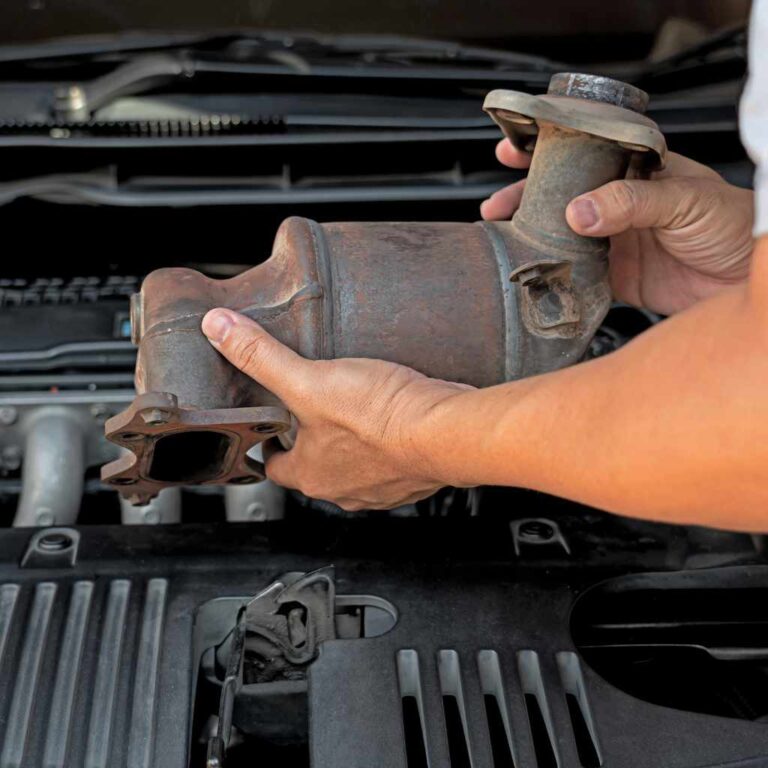
A catalytic converter is an emissions-control device in the exhaust system. It reduces carbon monoxide, hydrocarbons, and nitrogen oxides by using platinum, palladium, and rhodium to catalyze exhaust cleanup. (Wikipedia)
That function is why catalytic converters are required for street vehicles in most countries and why they matter during emissions inspection. If the converter is missing or bypassed, the car is much more likely to fail the test and be treated as noncompliant for road use.
Why it matters for ownership
The converter is not only an emissions part. It also affects legality, resale confidence, and whether the car can pass the kind of inspection that keeps it road-legal.
What a straight pipe changes
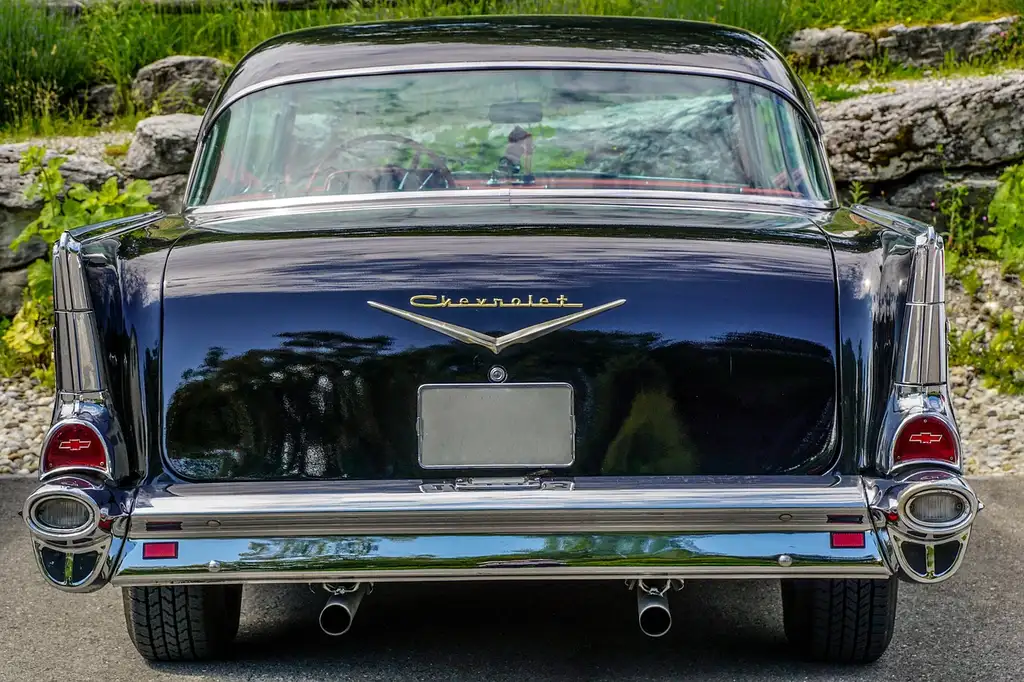
A straight pipe removes restrictions for more sound and flow. In common usage, it means no catalytic converter and usually no muffler, though some setups also remove resonators and other sound-control parts.
That change reduces backpressure, which is why some owners expect better throttle response or more peak power. The tradeoff is louder exhaust, more cabin drone, and a higher risk of legal and diagnostic trouble.
What usually comes off the car
A straight-pipe setup often deletes the converter first, then the muffler. Some definitions also include no resonator, which is why the final note can become sharp and intrusive rather than simply “sporty.”
Say your sedan passes a state inspection with a stock exhaust, then the converter is removed for a weekend build. The car may sound deeper at idle and much louder under load, but the next inspection or roadside check can become a problem immediately.
Is a straight pipe legal for street driving?
No, not in most regions. The EPA Clean Air Act prohibits tampering with emissions equipment on street vehicles in the U.S., and straight pipes are generally not legal for public road use. Noise rules can add another layer of risk because excessive decibel levels can bring citations even before emissions testing does.
Street, track-only, and off-road use are not the same thing. A straight pipe can make sense on a race-only or off-road vehicle that is not meant for public roads, but that does not make it a legal street modification.
Where the rules change
Track-only cars are judged by the track’s rules, not by the same street equipment standards as a commuter car. Off-road vehicles may avoid some road-legal requirements, but once the vehicle returns to public roads, emissions and noise rules can apply again.
A common first-timer mistake is assuming “off-road use” on a parts listing means the car can still be driven anywhere. It usually does not. The label is a warning that the part may fail street legality requirements.
Catalytic converter decision matrix
This matrix scores the three most common ownership paths: a straight pipe, a stock catalytic converter, and a high-flow catalytic converter. The middle ground matters because many owners want better flow without deleting the emissions device that keeps the car legal and inspection-ready.
| Owner outcome | straight pipe | stock catalytic converter | high-flow catalytic converter | Best option |
|---|---|---|---|---|
| Legality | Poor for street use | Strong for street use | Strong for street use | stock catalytic converter |
| Emissions compliance | Poor | Strong | Strong, if properly matched to the vehicle and rules | stock catalytic converter |
| Cabin noise | Poor comfort | Best comfort | Moderate to good | stock catalytic converter |
| Check-engine-light risk | Higher | Lower | Lower than a deleted converter, but not zero if fitment or tuning is wrong | stock catalytic converter |
| Resale and inspection risk | High risk | Low risk | Lower than straight pipe, but depends on local inspection rules | stock catalytic converter |
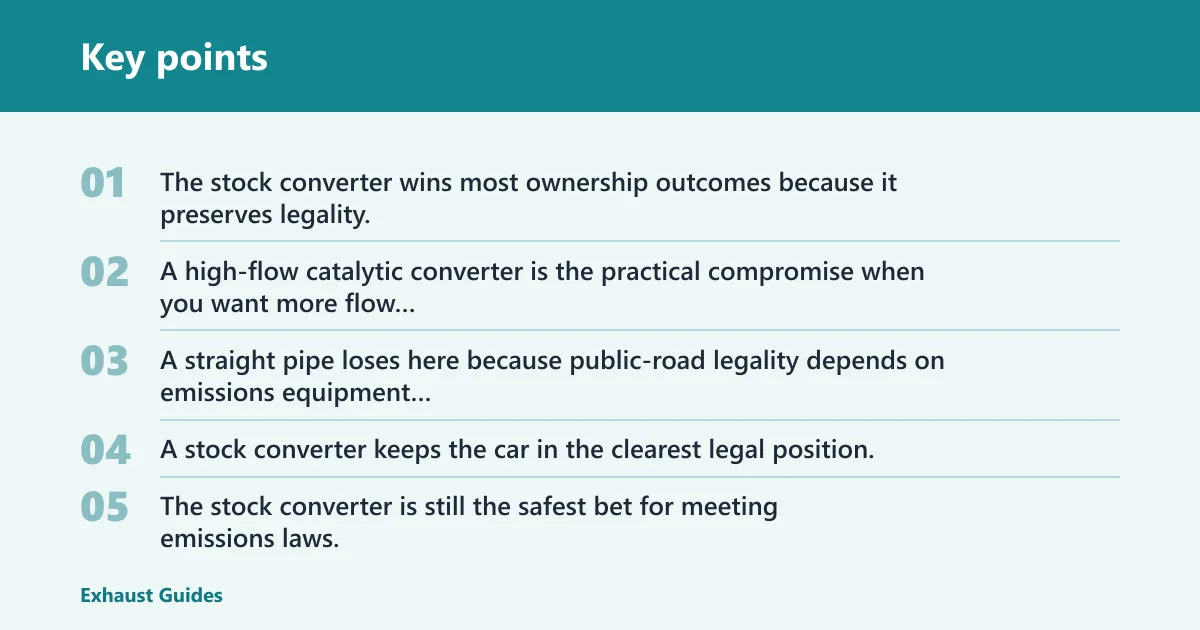
The stock converter wins most ownership outcomes because it preserves legality, inspection readiness, and normal noise levels. A high-flow catalytic converter is the practical compromise when you want more flow without stepping into straight-pipe problems.
Legality score
A straight pipe loses here because public-road legality depends on emissions equipment in most places. A stock converter keeps the car in the clearest legal position, while a high-flow unit keeps the converter in place and is usually the more defensible upgrade for street use.
Emissions compliance score
The stock converter is still the safest bet for meeting emissions laws. A high-flow converter can fit the same role if it is chosen correctly, but a straight pipe has no catalyst at all, so it cannot do that job.
Noise and cabin comfort
Noise is where the straight pipe loses the most day-to-day value. The sound may thrill briefly, but the louder exhaust, drone, and possible vibration often become the part you live with every commute.
Diagnostics and resale
Removing the converter can trigger error codes from the ECU because oxygen sensors are watching catalyst performance. That fault history can scare off buyers and complicate inspection, even if the car still runs normally.
Performance claims
Backpressure is the restriction people argue about in exhaust discussions. A straight pipe and some cat-back systems reduce it, but the real-world gain is situation-specific and can be offset by noise, tuning needs, and legal exposure.
Will a straight pipe trigger a check engine light?
Yes, it can. Oxygen sensors and catalyst-efficiency monitoring may detect the missing converter and set an error code, including P0420-style faults. A tune can sometimes adjust sensor logic, but it does not make a deleted converter legal or restore emissions compliance.
The important point is that a tune may address the warning light, not the underlying ownership risk. If the exhaust no longer has a catalyst, the car can still fail emissions inspection and remain illegal for street use in many regions.
What a tune can and cannot do
A calibration change may help prevent nuisance codes in some setups, especially after exhaust work. It cannot recreate the emissions-cleaning function of a converter, and it cannot turn a straight pipe into a street-legal system.
Suppose a turbo car gains a straight pipe and starts throwing a catalyst-efficiency code on the drive home. Clearing the code without fixing the hardware may hide the warning briefly, but the inspection problem and legal exposure remain.
Choose straight pipe if… / Choose catalytic converter if…
Choose straight pipe if the vehicle is race-only, track-only, or off-road and you want more flow and sound. Choose catalytic converter if the vehicle is street-driven, must pass emissions inspection, or needs lower legal and resale risk. For many owners, a high-flow catalytic converter is the best middle ground.
Choose straight pipe if…
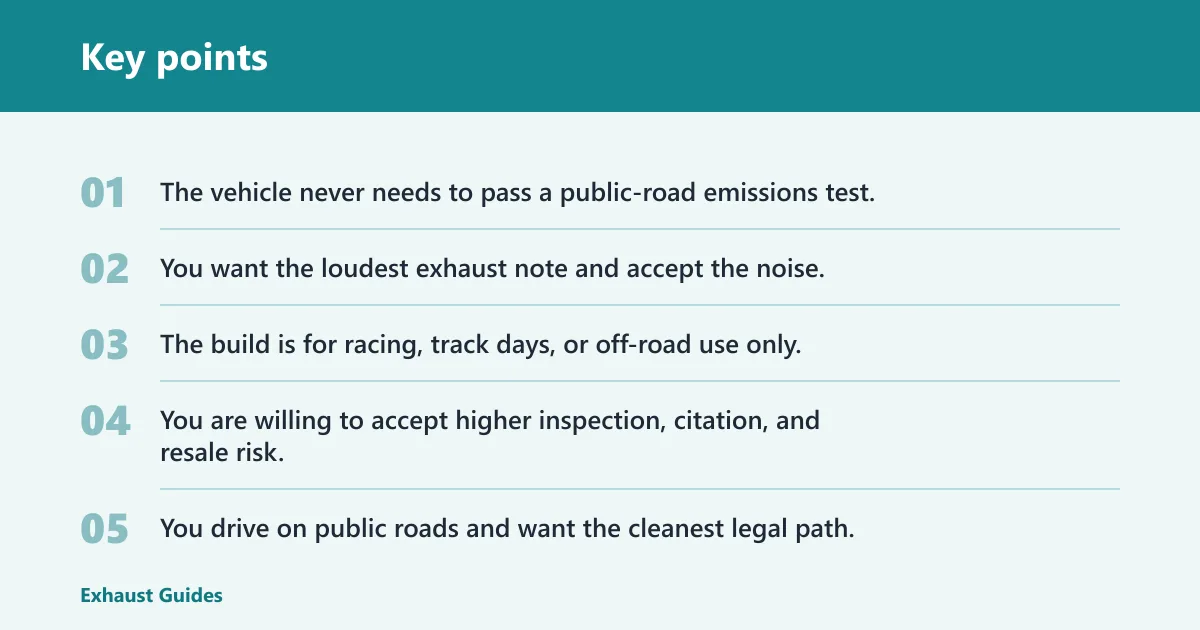
- The vehicle never needs to pass a public-road emissions test.
- You want the loudest exhaust note and accept the noise.
- The build is for racing, track days, or off-road use only.
- You are willing to accept higher inspection, citation, and resale risk.
Choose catalytic converter if…
- You drive on public roads and want the cleanest legal path.
- You need to pass emissions inspection.
- You want less cabin noise and less drone.
- You want the lowest chance of check-engine-light and registration problems.
Where a high-flow catalytic converter fits
A high-flow catalytic converter is often used as a legal alternative for owners who want less restriction without deleting emissions equipment. It keeps the car closer to inspection-ready form while still aiming for better flow than a restrictive stock unit.
- Decide whether the vehicle must stay street legal.
- Check whether your area uses emissions inspection, noise enforcement, or both.
- If the car is street-driven, start with a catalytic converter or a high-flow catalytic converter.
- If the car is track-only or off-road, a straight pipe may fit the use case.
- Confirm the plan before buying parts, since rework costs can exceed the price of doing it once.


Frequently asked questions
Exhaust pipe vs catalytic converter
An exhaust pipe is the path exhaust travels through, while a catalytic converter is the emissions-control device mounted in that path. The pipe moves gases out of the engine, and the converter cleans them so the vehicle can meet emissions laws and inspection rules.
Can I replace a catalytic converter with a straight pipe?
You can physically do it on some vehicles, but that does not make it legal for street use in most regions. Replacing the converter with a straight pipe usually raises emissions, noise, and check-engine-light risk, which is why it is better reserved for race-only or off-road builds.
Does a straight pipe have a catalytic converter?
No. A straight pipe is generally described as exhaust with no catalytic converter and usually no muffler. That is why it flows freely and sounds much louder, but also why it fails the legal and emissions side of the comparison.
Does straight pipe mean no catalytic converter?
Yes, in the usual sense. Straight pipe means the converter is deleted, and many definitions also remove the muffler or resonator. If a vehicle still has the converter in place, it is not a true straight-pipe setup.
What is the difference between a straight pipe and a cat-back?
A cat-back exhaust replaces the system after the catalytic converter and keeps the converter in place. That makes it the street-usable comparison point many people confuse with straight piping. A cat-back may reduce backpressure and alter sound, but it does not delete emissions equipment.
Will a straight pipe fail emissions inspection?
In most jurisdictions, yes. Emissions inspection is tied directly to road legality, and a straight-piped vehicle usually fails because the catalyst is gone. Even if the car runs well, the missing emissions hardware is the problem inspectors are looking for.
Are there legal alternatives to straight piping?
Yes. The most practical legal alternative is a high-flow catalytic converter, often paired with a cat-back exhaust if you want more sound without deleting the converter. That path keeps the vehicle far closer to street legality, inspection readiness, and normal resale expectations.