Catalytic Converter Fiesta Cost
A Ford Fiesta catalytic converter replacement usually costs £350-£1,400 in the UK or $900-$2,500 in the US. The cheapest safe route is often a direct-fit aftermarket converter with fresh gaskets. Cheap universal parts or ignored fault codes can lead to MOT or inspection failure, repeated check-engine lights, and extra labor if the new converter is damaged again. This guide explains Fiesta fitment differences, parts and labor, emissions rules, and the lowest-cost repair path that still passes inspection.
Does a Ford Fiesta have a catalytic converter?
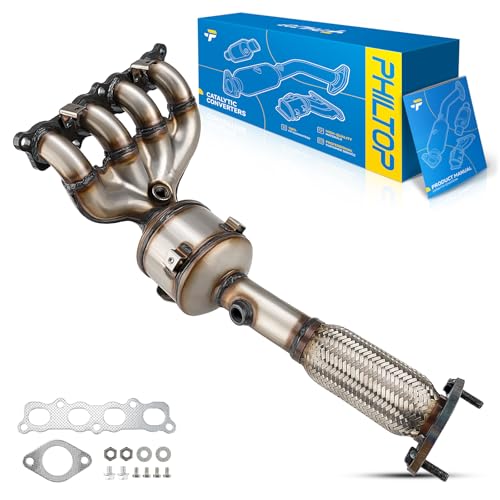


Yes. Every Ford Fiesta with a gasoline engine and OBD2-era emissions controls uses catalytic conversion somewhere in the exhaust path, but the exact layout changes by engine and model year. Some Fiesta engines place the main catalyst in a separate front pipe, while others use an integrated manifold and catalyst assembly.
Main cat versus pre-cat layouts
The main split is between a standalone main converter and a compact pre-cat or manifold-cat assembly. On many Fiesta variants, the converter sits close to the cylinder head so it heats up quickly after startup. That helps emissions compliance, but it also makes replacement more expensive when the converter is built into the manifold or front pipe.
Do not assume one Fiesta exhaust fits another. A 1.25-liter car, a 1.0 EcoBoost, and a diesel Fiesta can use different housings, sensor bungs, flange shapes, and heat shields. The right replacement depends on the exact engine code and whether the converter is welded into the front pipe.
Where is the catalytic converter on a Ford Fiesta?
On a Ford Fiesta, the catalytic converter is usually in the front section of the exhaust, close to the engine bay. Depending on engine and year, it may bolt to the exhaust manifold, sit in the front pipe below the car, or form one assembly with the manifold. That location affects parts price and labor time.
Exhaust manifold versus front pipe placement
Integrated-cat designs place the catalyst inside or right after the exhaust manifold. Separate designs put the converter farther down in the front pipe. Integrated units often cost more because you are replacing a larger assembly, not just the catalyst brick and shell.
Sensor mounting points you should check
Most Fiesta layouts use an upstream oxygen sensor before the catalyst and a downstream sensor after it. Some engines also use temperature or other emissions sensors. Check whether the replacement part includes sensor ports in the same positions as the original, since a missing bung or wrong angle can add labor or force a different part choice.
Catalytic converter fiesta cost matrix
| Model year range | Engine type | Part format | Expected parts cost | Labor range | Total installed cost | When it is appropriate |
|---|---|---|---|---|---|---|
| 2009-2019 | 1.25 / 1.4 petrol | OEM integrated manifold-cat | £400-£900 / $700-$1,500 | £120-£280 / $180-$420 | £520-£1,180 / $880-$1,920 | Best when fitment must match exactly, or when the original is integrated with the manifold. |
| 2009-2019 | 1.25 / 1.4 petrol | Direct-fit aftermarket | £180-£450 / $250-$700 | £120-£260 / $180-$380 | £300-£710 / $430-$1,080 | Best value when the car needs a legal, bolt-on replacement and the original layout is standard. |
| 2009-2019 | 1.25 / 1.4 petrol | Universal | £70-£180 / $100-$250 | £220-£500 / $300-$750 | £290-£680 / $400-$1,000 | Only when a qualified exhaust shop will fabricate it and local emissions rules still allow it. |
| 2012-2019 | 1.0 EcoBoost petrol | OEM integrated or OE-spec direct-fit | £450-£1,000 / $800-$1,700 | £150-£320 / $220-$480 | £600-£1,320 / $1,020-$2,180 | Often needed because turbo and catalyst packaging leaves less room for cheap universal parts. |
| 2009-2019 | Diesel Fiesta | OEM or OE-spec direct-fit DPF/catalyst section | £500-£1,200 / $900-$1,900 | £180-£350 / $250-$520 | £680-£1,550 / $1,150-$2,420 | Needed when the diesel aftertreatment section is part of the failed assembly. |
How much does a Ford Fiesta catalytic converter replacement cost?
For a Ford Fiesta, the cost depends on how much of the exhaust you replace. A simple direct-fit converter is cheaper than an integrated manifold-cat assembly, and a universal part looks cheaper until fabrication time is added. Gaskets, clamps, and sensor costs can move the final bill by hundreds.
Parts cost versus labor cost
In the UK, parts often run from about £180 for a basic aftermarket direct-fit unit to more than £900 for an OEM integrated assembly. Labor commonly adds £120-£350, depending on rust, access, and whether the shop uses a bolt-on part or has to cut and weld the pipe.
In the US, the spread is wider in dollar terms, but the pattern is the same. Expect labor rates around $100-$180 per hour at independent shops, with 1.0-2.5 hours being common for a straightforward Fiesta replacement. Corroded fasteners or seized sensors can push that higher.
Gaskets, clamps, and sensor costs
Budget for new gaskets and, if the joints are bolted, new clamps or flange hardware. Those parts are cheap compared with the converter, but skipping them can cause exhaust leaks and repeat codes. Oxygen sensors are sometimes reusable if they test correctly and the threads are undamaged, but replacement is sensible when a sensor is old, contaminated, or heat-damaged.
UK versus US pricing differences
UK pricing is shaped by MOT compliance, parts sourcing, and the market for small-engine Euro-spec exhaust components. US pricing can be higher for some Fiesta trims because fewer aftermarket options are stocked, and because emissions rules vary by state. In both markets, turbo and integrated-cat layouts cost more than simple front-pipe replacements.
Why does Fiesta replacement cost vary so much?
Fiesta pricing swings because Ford used different exhaust layouts by engine, and because converter hardware is tied to emissions compliance. A front pipe with an integrated cat is more expensive than a stand-alone rear converter. Add in rust, sensor seizures, and theft damage, and the same model can land in very different price bands.
Integrated cat/manifold designs
Integrated manifold-cat parts are common on small petrol engines that need quick catalyst warm-up. They reduce cold-start emissions, but they also mean the manifold, catalyst housing, and sometimes shields are replaced together. That is why the part price jumps even when the actual catalyst brick is only part of the assembly.
OE-spec emissions compliance
Not every cheap replacement is built to OE-spec emissions performance. A Fiesta needs a converter that lowers fault-code risk and supports catalyst-efficiency monitoring. If the part cannot store oxygen and clean exhaust at the expected rate, the downstream sensor will see poor conversion efficiency and the car may fail inspection.
Catalyst substrate and emissions hardware
Replacement parts differ in substrate loading, precious metal content, and shell design. A higher-grade catalyst usually costs more because it is built to meet emissions targets and light off quickly. The cost also rises when the part includes heat shields, flex sections, or sensor bosses that match the original layout.
Say your 1.25 Fiesta has a P0420 code, a rattling front pipe, and a rusted flange. A direct-fit converter with fresh gaskets is usually the safest low-cost path. A universal unit would add fabrication time and can still leave the car vulnerable to repeated catalyst-efficiency faults if the shell volume or sensor positions are wrong.
OEM, direct-fit, or universal: what should you buy?
OEM is the safest fitment choice, direct-fit aftermarket is often the cheapest safe option, and universal parts are only sensible when a specialist shop can fabricate correctly and the vehicle still meets emissions rules. For most Fiesta owners, direct-fit is the value point unless the engine uses an integrated manifold-cat layout.
When OEM makes sense
Choose OEM when the Fiesta uses a tightly packaged turbo or manifold-integrated setup, when exact sensor placement matters, or when you want the least fitment risk. OEM parts usually cost more, but they reduce the chance of return visits for leaks, readiness issues, or fitment mismatch.
When a direct-fit aftermarket part is the better value
A direct-fit aftermarket converter is usually the best balance when the old unit is a standard bolt-on part and the car needs a legal repair at the lowest safe cost. Look for an OE-spec shell, correct flange shape, and proper upstream/downstream sensor locations. That keeps labor down and helps preserve OBD2 readiness.
Why universal parts can raise labor or compliance risk
Universal converters can be cheaper on the invoice, but they often need cutting, welding, and extra tuning of the exhaust run. That raises labor cost and can change sensor placement. If the catalyst volume, substrate quality, or pipe routing is off, the result may be an emissions failure rather than a bargain.
Can you clean, repair, or keep driving with a failing converter?
Cleaning is worth trying only when the converter is not melted, broken, or physically blocked, and when the real problem is mild contamination from oil or rich running. If the substrate is rattling, collapsed, or showing repeated efficiency faults after the engine issue is fixed, replacement is the safer choice. Driving with a failing converter can overheat the exhaust and trigger inspection failure.
When cleaning is worth trying
Cleaning may help if the car has a transient mixture problem, a sensor fault, or mild soot loading. It does not restore a melted or cracked substrate. If the converter is only lightly contaminated, fix the root cause first, then clear codes and complete drive cycles so the monitors can reset.
Signs the converter is already beyond cleaning
A rattling shell, severe power loss at higher rpm, a glowing exhaust section, or repeated P0420-type faults after sensor replacement usually means the catalyst is finished. At that point, cleaning is a delay, not a fix. The same applies if the substrate has collapsed or if the converter was poisoned by oil or coolant.
Driveability risks and emissions-test consequences
Can you drive it? Sometimes, for a short distance to a shop. But a failing converter can create backpressure, poor acceleration, and heat damage. It can also prevent OBD2 readiness from completing, which means the MIL may stay on and the car can fail an emissions test or MOT check.
When to replace sensors at the same time
Replace the upstream oxygen sensor if it is slow, contaminated, or older and inaccessible once the new converter is installed. Check the downstream sensor too, because a lazy sensor can mimic converter failure. After repair, clear codes, verify no exhaust leaks, and complete the relearn or drive cycle required by the ECU.
A common first-timer mistake is buying the cheapest universal converter for a 1.0 EcoBoost Fiesta, then finding the sensor ports and pipe angle do not match the original front pipe. The shop has to fabricate extra joins, and the final bill can end up close to a direct-fit unit anyway.
Frequently asked questions
How much does it cost to replace a catalytic converter on a Ford Fiesta?
The low end is a direct-fit aftermarket part on a standard bolt-on layout. The high end is usually an OEM integrated manifold-cat or a job with rust, sensors, and extra exhaust hardware.
What is the catalytic converter replacement cost for a Ford Fiesta in the UK?
In the UK, a Fiesta converter replacement usually costs about £350-£1,400 installed. Direct-fit aftermarket parts are often the cheapest safe route. OEM integrated assemblies cost more, and labor rises if the exhaust is rusty, sensors are seized, or the converter is welded into the front pipe.
Is it cheaper to replace or clean a Ford Fiesta catalytic converter?
Cleaning is cheaper only if the converter is mildly contaminated and still structurally sound. If the substrate is broken, melted, or blocked, cleaning is wasted money. For most Fiesta owners with repeated catalyst-efficiency codes, replacement is the lower-risk option because it fixes the hardware fault rather than delaying it.
Can I drive my Ford Fiesta with a failing catalytic converter?
You may be able to drive a short distance, but it is not wise to keep using the car long term. A failing converter can cause power loss, heat buildup, and check-engine-light issues. It can also fail OBD2 readiness or MOT/emissions testing until the fault is repaired and the monitors run again.