Catalytic Converter Cost for Toyota Camry
A Toyota Camry catalytic converter usually costs about $250 to $1,600 for the part alone, and $600 to $2,500 installed, depending on year, engine, and whether you need an OEM or aftermarket unit. A wrong match can mean a check engine light, an emissions failure, or a part that will not bolt up. This guide breaks down Camry converter costs by model year, engine, and fitment so you can compare part price, labor, and emissions setup before you buy.
Toyota Camry converter costs by year
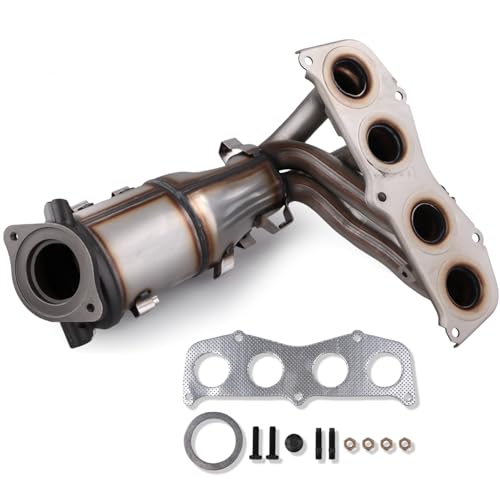


Camry converter pricing changes with model year because the exhaust layout, emissions setup, and engine family are different from one generation to the next. An older 2.2L application is usually cheaper than a later setup with stricter emissions fitment, but the installed price can rise fast if the part is California-specific or hard to source.
What changes the price from 2001 to 2007
Between 2001 and 2007, fitment and emissions compliance drive most of the price difference, not the metal tube itself. Some years show direct replacement options in parts catalogs, while others need a closer check on flange shape, sensor locations, and whether the car is federal-emissions or California-emissions equipped.
Part-only pricing is usually lower when an aftermarket direct replacement is available. Labor adds more when the converter is welded in, fasteners are seized, or the shop has to verify the exact emissions configuration before installation.
What a Camry catalytic converter does
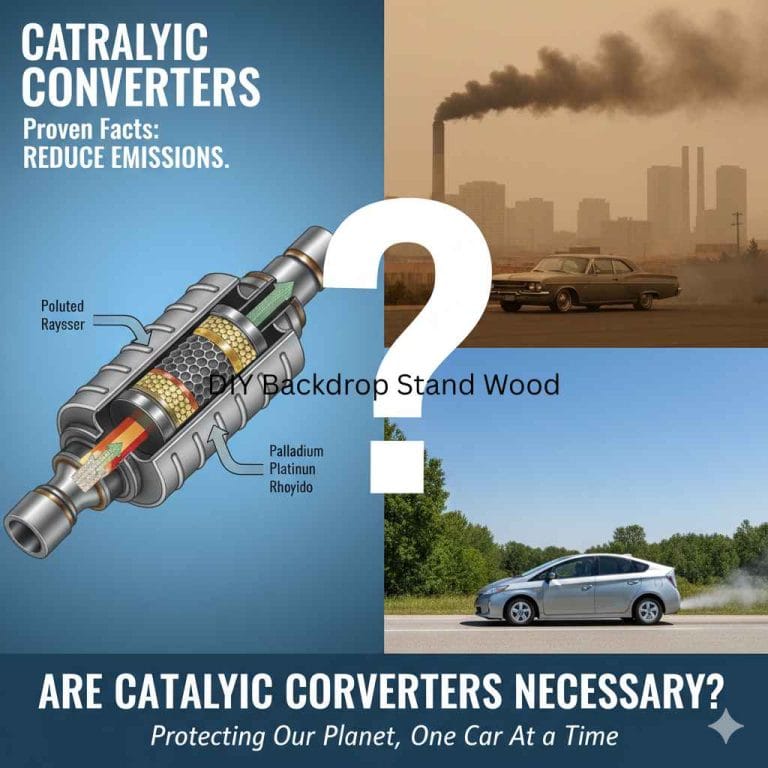
The catalytic converter is part of the Camry exhaust and emissions system. It reduces exhaust pollutants, so replacement cost depends on emissions compliance as much as hardware fit. If the converter is damaged, stolen, clogged, or flagged by diagnostic trouble codes, the car may fail an emissions test or run with a persistent check engine light.
How it fits into the exhaust system
On a Camry, the converter sits in the exhaust stream between the engine side of the exhaust and the rest of the system. That location matters because flange style, overall length, sensor bungs, and pipe angle must line up exactly. A direct replacement should match those points, or installation becomes slower and costlier.
Why emissions compliance affects replacement cost
Converters are priced by how closely they must match the vehicle’s emissions setup. Federal and California configurations can require different part numbers or layouts, and that difference often explains why two Camrys from nearby model years do not share the same replacement converter.
Which Camry years cost more to replace?
The years that cost more are usually the ones with tighter fitment, California-specific emissions needs, or less common engine applications. A 2001-2005 Camry may share some catalog overlap, but that does not mean every listed converter is interchangeable. The wrong choice can add return shipping, labor delays, and a second install charge.
2001-2005 fitment overlap
Some listings cover 1997-2001 Toyota Camry fitment, and the application may be listed specifically for a 2.2L Camry. That matters because engine-specific fitment changes price. A converter sold as a direct replacement for one 2.2L setup may not match a different engine family or emissions configuration, even if the car looks similar underneath.
Competitor catalogs may also link a 2004 Toyota Camry catalytic converter and a 2005 Toyota Camry catalytic converter as related items. Treat that as a fitment cue, not proof of universal compatibility.
2004 and 2005 catalog listings
2004 and 2005 Camry converters often show up in related-product blocks because those years sit near overlapping exhaust layouts in parts catalogs. That overlap is useful, but it can also mislead buyers into selecting the wrong unit if they do not confirm engine size and emissions label first.
2007 pricing and fitment checks
A 2007 Camry converter can cost more than an early-2000s unit if the car uses a less common emissions setup or a converter with stricter OE-style dimensions. Before buying, check whether the part is a direct replacement, whether it matches the sensor count, and whether the listing separates federal and California applications.
Say your 2003 Camry has a check engine light for catalyst efficiency and a shop confirms the converter is failing. If the car has the federal setup, the replacement may be straightforward. If it has California emissions, the same repair can cost more because the available part choices narrow.
How engine and emissions setup change fitment
Camry converter fitment depends on engine family, emissions configuration, and the exact year. A part that fits one 2.2L application may not fit another Camry engine. VIN decoding and the emissions label are the safest ways to confirm the correct unit before you order.
2.2L engine applications
The competitor listing identifies a 2.2L Camry application. That is a reminder that engine size is not a side note. It is one of the main filters that determines whether a converter bolts up and whether the sensor and flange layout line up without custom work.
Federal versus California emissions
California-emissions Camrys may use a different converter configuration from federal-emissions cars. That difference can change price and availability. If you skip this check, you may buy a converter that looks close but does not meet the emissions spec for your vehicle.
VIN and emissions label checks
Your VIN helps narrow the model year and engine. The emissions label, usually under the hood, confirms whether the car is federal or California emissions. Match both before you buy. If the label and listing disagree, stop and verify the part number rather than guessing.
Catalytic converter cost matrix
Use this matrix to separate part-only cost, installed cost, and fitment risk. The ranges below are practical buying bands for replacement planning, not single fixed quotes. Installed price moves with labor time, rust, gasket replacement, and whether the shop needs to source a California-emissions unit.
| Model year | Engine family | Emissions configuration | Part-only price band | Installed price band | Fitment notes | Most common buying mistake |
|---|---|---|---|---|---|---|
| 2001 | 2.2L | Federal or California | $250-$550 | $600-$1,000 | Direct replacement listings are common, but confirm the exact 2.2L application. | Buying a converter for the wrong engine family. |
| 2002 | 2.4L or V6, depending on trim | Federal or California | $300-$700 | $700-$1,200 | Sensor and flange layout can differ from 2001 parts. | Assuming a 2001 overlap listing fits automatically. |
| 2003 | 2.4L or V6, depending on trim | Federal or California | $300-$800 | $700-$1,300 | Good candidate for aftermarket OE-style direct replacement, if verified by VIN. | Skipping emissions-label confirmation. |
| 2004 | 2.4L or V6, depending on trim | Federal or California | $325-$850 | $750-$1,400 | Often appears as a related catalog item, but related does not mean identical. | Choosing by year alone. |
| 2005 | 2.4L or V6, depending on trim | Federal or California | $350-$900 | $800-$1,500 | Related listings may help, but engine and emissions label still decide fitment. | Assuming a 2004 listing fits without checking sensor layout. |
| 2006 | 2.4L or V6, depending on trim | Federal or California | $375-$1,000 | $850-$1,700 | Pricing starts to climb when OE-style dimensions are tighter. | Buying a universal-style part instead of a direct replacement. |
| 2007 | 2.4L or V6, depending on trim | Federal or California | $400-$1,100 | $900-$1,900 | Check the emissions label carefully; this year can vary in availability and price. | Ignoring California-specific fitment. |
OEM reference vs aftermarket replacement
OEM references and aftermarket replacements are not the same thing. The OEM number helps identify the correct family of part, while an aftermarket OE-style direct replacement is built to match the original shape and mounting points without being a factory part. Price differs because sourcing, materials, and emissions certification can differ too.
OEM number 55537 as a reference
The listing includes OEM number 55537. That number is useful as an identification reference when you compare replacement options. It helps you line up the aftermarket listing with the factory-style shape and the right Camry application, but it does not replace a full fitment check.
Direct replacement and OE-style options
The product is described as a direct replacement fit, and it is sold as an aftermarket OE-style unit. That matters because OE-style parts are meant to match original fit and mounting points, while generic replacements may need more adjustment or may not be right for a specific Camry year.
Why aftermarket units vary in price
Aftermarket converters vary because some are built for a narrow application and others are meant to cover more common import applications. A unit built with OE flange specifications, included gasket, and hardware can cost more than a bare converter, but the extra pieces can reduce install time.
What comes with an aftermarket converter?
Some aftermarket converters include more than the main body. The competitor listing says the part uses 304 stainless steel body material and comes with a gasket and hardware. Those details matter because they affect corrosion resistance, install time, and the total amount you may spend at the shop.
304 stainless steel body material
304 stainless steel is commonly used on aftermarket exhaust parts because it resists corrosion better than plain steel in many driving conditions. That does not guarantee a perfect fit, but it can improve durability compared with a cheaper bare-metal unit.
Gasket and hardware inclusion
If a converter includes a gasket and hardware, you may save on missing small parts and reduce the chance of reusing worn fasteners. The savings can be modest, but they matter when a shop is billing labor separately. A missing gasket can add both delay and expense.
Suppose your 2005 Camry needs a converter on a rust-prone exhaust flange. A direct replacement with gasket and hardware can cut down on return trips for missing pieces. A bare converter might look cheaper online and still cost more once the shop adds the extra parts.
How to confirm the right part before you buy
Match the year, engine, and emissions label before you order a Camry converter. Then compare the listing’s flange style, sensor layout, and OEM reference. This is the fastest way to avoid a wrong part, a wasted return, or a converter that does not clear emissions inspection.
- Read the emissions label under the hood and confirm federal or California configuration.
- Use the VIN to verify the model year and engine family.
- Match the engine size to the listing, especially on 2.2L applications.
- Check whether the part is a direct replacement with OE flange specifications.
- Compare sensor count, pipe shape, and mounting points against the listing photos and notes.
- Use the OEM reference number, such as 55537, to narrow the correct aftermarket option.
Avoid the wrong flange or sensor layout
Two converters can look similar and still fail to fit. Wrong flange spacing, different oxygen-sensor positions, or a mismatched pipe angle can turn a simple repair into a return and reorder. That is why a part number alone is not enough.
Frequently asked questions
How much does a catalytic converter cost for a 2003 toyota camry?
A 2003 Toyota Camry catalytic converter usually costs about $300 to $800 for the part alone, with installed pricing often landing around $700 to $1,300. The exact figure depends on engine family, federal versus California emissions, and whether you buy an OE-style direct replacement or an OEM part.
How much does a catalytic converter cost for a 2005 toyota camry?
A 2005 Toyota Camry catalytic converter commonly falls around $350 to $900 for the part alone, with installed pricing roughly $800 to $1,500. A large share of the spread comes from emissions configuration and engine fitment, so a listing that looks close can still be the wrong one.
How much does a catalytic converter cost for a 2004 toyota camry?
A 2004 Toyota Camry catalytic converter is often priced around $325 to $850 for the part alone, with installed pricing commonly around $750 to $1,400. Related catalog listings can help you narrow the search, but year alone is not enough to confirm fitment.
How much does a catalytic converter cost for a 2002 toyota camry?
A 2002 Toyota Camry catalytic converter usually runs about $300 to $700 for the part alone, with installed pricing commonly around $700 to $1,200. The most common mistake is assuming the 2001 overlap in some listings means every 2002 part will fit without checking the engine and emissions label.
How much is a toyota camry catalytic converter worth?
A Toyota Camry catalytic converter can be worth anywhere from a few hundred dollars to well over $1,000 as a replacement part, depending on year, engine, and emissions setup. Its value rises when the part is scarce, California-specific, or sold as an OE-style direct replacement with the correct flange layout.
How much is a catalytic converter for a 2007 toyota camry?
A 2007 Toyota Camry catalytic converter often costs about $400 to $1,100 for the part alone, with installed pricing commonly around $900 to $1,900. Because 2007 fitment can vary by emissions configuration, confirm the VIN and emissions label before you buy, especially if you are comparing federal and California parts.
Does a toyota camry have a catalytic converter?
Yes. A Toyota Camry has a catalytic converter as part of its exhaust and emissions system. If that converter is stolen, clogged, or failing emissions checks, the car may need replacement, and the cost depends on year, engine, emissions configuration, and whether you choose OEM or aftermarket.
How much does it cost to replace catalytic converter toyota?
For a Toyota, catalytic converter replacement often costs about $600 to $2,500 installed, depending on the model year, engine, emissions rules, and labor. Part-only pricing is lower, but labor is separate, and a hard-to-fit or California-specific converter can push the total toward the top of the range.