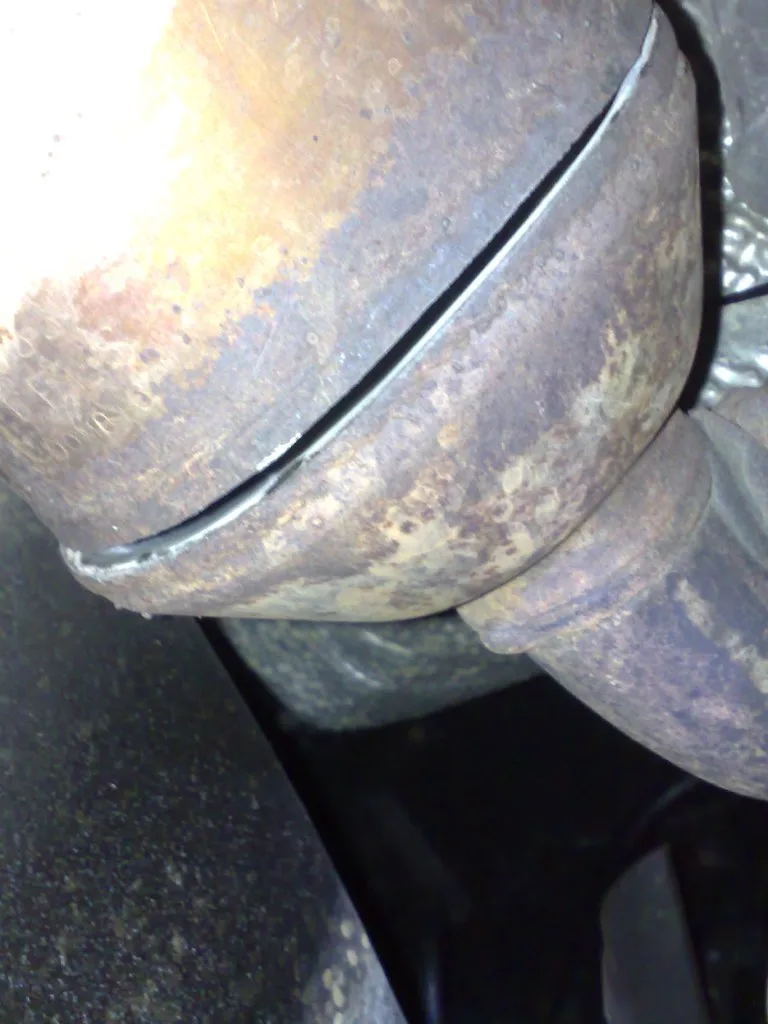
Catalytic Converter Replacement Cost by Vehicle Type
Catalytic converter replacement cost by vehicle type often runs roughly $400–$1,500 for compact cars, about $1,000–$2,500 for SUVs and trucks, and around $2,000–$5,000+ for luxury or performance models, before sensors, labor, and scrap credit. A weak budget can turn one repair into a no-start, a failed emissions test, or a larger bill from damaged oxygen sensors. This guide maps costs by vehicle class and converter type, then shows how to budget net of labor, sensors, and scrap value.
This guide is part of our Catalytic converter guide series.
How much does catalytic converter replacement cost by vehicle type?


The short answer is that the bill tracks vehicle class, converter count, and fitment. A compact 4-cylinder often needs one converter and less labor. A 6-cylinder sedan may need one or two. SUVs, trucks, and performance models can need larger units, more labor hours, and sometimes multiple converters.
A catalytic converter is an exhaust emission control device. Most gasoline-powered vehicles starting with the 1975 model year are equipped with catalytic converters, and three-way converters reduce oxides of nitrogen, in addition to other pollutants. That matters for cost because emissions design affects the part you need, not only the price tag. (en.wikipedia.org)
What changes between a compact 4-cylinder, a 6-cylinder sedan, an SUV or truck V8, and a luxury or performance car
Vehicle class changes the estimate in three direct ways. Smaller engines usually use smaller converters and simpler exhaust layouts. The calculator says larger engines generally need bigger converters, and bigger converters use more precious metals such as platinum, palladium, and rhodium. That raises parts cost before labor starts.
Luxury and performance vehicles can add another layer. Fitment can be tighter, underbody packaging can be crowded, and some platforms use more than one converter per bank or per exhaust path. That pushes both parts count and install time upward.
Why the same repair can land in very different price bands
The same fault code can mean very different invoices. A low-cost universal aftermarket unit may solve a simple compact-car repair. An OEM unit on a premium SUV in a strict emissions state can be several times higher once labor, gaskets, sensors, and compliance parts are added.
📊 The calculator includes a contingency for a potential O2 sensor replacement. Source: Calcimator.
What drives the total repair bill?
Parts, labor, and add-ons all matter. The converter is only one line item. Shop rate, access, and compliance rules can move the final total more than the converter price on some vehicles.
Parts cost: OEM, direct-fit aftermarket, and universal aftermarket
Universal aftermarket converters are the cheapest converter type in the calculator. They are the most flexible on fit, but that flexibility can mean more fabrication and less certainty on emissions compliance. Direct-fit aftermarket parts sit in the middle. OEM converters are described as the most expensive option.
Fitment is the key difference. Universal parts may require welding or adaptation. Direct-fit parts are shaped for the vehicle. OEM parts match the factory layout and are often the cleanest choice when you need the closest possible fit and emissions spec.
Labor cost: shop rate, install time, and access
Labor depends on the shop’s hourly rate and how difficult the converter is to reach. A bolt-on flange is faster than a welded or rusted underbody joint. A converter tucked near the firewall or above a crossmember takes longer than one hanging in plain view. Labor is where access becomes money.
As a simple rule, better access means fewer billed hours. Hard-to-reach layouts can also increase the risk of broken fasteners, which may add more labor for extraction and reassembly.
Add-ons: gaskets, hardware, and possible O2 sensor replacement
The calculator includes a flat gasket-and-hardware allowance. That is small next to the converter itself, but it is still part of the job. The calculator also includes a contingency for a potential O2 sensor replacement, because a failing sensor can mimic converter trouble or fail alongside the converter.
Say your sedan has a P0420 code and a rusty flange. The converter may be the main part, but the repair quote should still include gaskets, hardware, and a sensor allowance. That keeps the estimate closer to the final invoice.
Vehicle-type cost matrix: parts, labor, converter count, and net cost
The table below uses a realistic owner-facing framework. It separates parts from labor, then subtracts a scrap-credit assumption to show net out-the-door cost. Scrap value is not guaranteed, and the old converter’s recovery value can swing with metal content and market conditions.
| Vehicle class | Likely converter count | Parts range | Labor range | Gaskets and hardware | O2 sensor contingency | Scrap-credit assumption | Net out-the-door range |
|---|---|---|---|---|---|---|---|
| Compact 4-cylinder | 1 | $250–$700 | $150–$350 | $30–$75 | $0–$180 | -$50 to -$150 | $400–$1,150 |
| 6-cylinder sedan | 1–2 | $450–$1,200 | $200–$500 | $40–$90 | $0–$180 | -$75 to -$200 | $750–$1,950 |
| SUV/truck V8 | 2–4 | $900–$2,800 | $350–$900 | $50–$120 | $0–$220 | -$100 to -$300 | $1,500–$3,800 |
| Luxury/performance | 2–4 | $1,500–$4,500 | $500–$1,200 | $60–$150 | $0–$300 | -$100 to -$350 | $2,300–$5,800+ |
The net range above reflects typical parts mix and a modest scrap assumption, not a quote. If the old converter has little recovery value, the net total rises. If the converter contains more precious metals, the credit can trim the bill more.
The calculator’s worked example shows a default total estimated cost of $755.00. That kind of midrange figure often fits a single converter on an accessible vehicle with moderate labor and standard hardware.
How the scrap-credit assumption changes the net total
Net cost after scrap credit subtracts the old converter’s estimated recovery value. That credit should be treated as an offset, not a promise. A stolen or damaged converter may have less recoverable value, and some shops handle core return differently.
Why do SUVs and V8s cost more?

SUVs and V8s usually cost more because they often use more converters, larger converters, and tighter packaging. Some V8s and dual-exhaust vehicles have up to 4 catalytic converters, and that multiplies parts, gaskets, and labor. Bigger engines also need bigger converters, which means more precious-metal loading.
More converters on some V8s and dual-exhaust systems
Most cars have 1-2 catalytic converters. That is the normal budget baseline. Once a vehicle has bank-specific converters or dual-exhaust layouts, the parts count can rise quickly. More converters means more flanges, more seals, and more time under the vehicle.
Bigger converters and higher precious-metal loading
Converter pricing is tied to the metals inside the substrate and washcoat. Platinum, palladium, and rhodium are expensive inputs, and larger engines generally need bigger converters with more of that material. That is one reason a V8 replacement rarely prices like a compact-car job.
Harder access under larger platforms
Trucks and SUVs often place converters deeper in the exhaust path or closer to crossmembers and drivetrain parts. That can turn a straightforward swap into a slower job. If a heat shield, oxygen sensor, or rusty flange fights removal, labor rises with it.
Suppose a full-size SUV has two upstream converters and one rear converter per bank. The part count alone can double the bill versus a compact car, even before the shop charges for extra time on seized fasteners.
Does OEM cost more than aftermarket?
Yes. OEM catalytic converter replacement cost more than aftermarket in most cases because OEM parts are the most expensive option. The tradeoff is fitment confidence and emissions spec matching. Aftermarket parts split into universal and direct-fit types, and those are not priced or installed the same way.
Fitment differences between universal and direct-fit parts
Universal aftermarket converters fit more than one application, which is why they are cheapest. Direct-fit parts are built for one vehicle layout and usually save time compared with a universal unit. If the exhaust is simple and the law allows it, direct-fit is often the middle path between price and convenience.
When OEM is the safer choice for emissions compliance
OEM is often the safer choice when the vehicle has strict factory calibration, tight underbody packaging, or repeated emissions issues with aftermarket parts. If the vehicle is still under warranty coverage for emissions components, OEM may also be the more practical route. That is especially true when fitment tolerance is narrow.
When a direct-fit aftermarket part is the middle path
Direct-fit aftermarket parts often make sense on common sedans, crossovers, and trucks in states that allow them. They can reduce cost while avoiding the labor and adaptation risk of a universal converter. For many owners, that is the most balanced option.
Do you need a CARB-compliant converter in a strict emissions state?
If you are in a strict emissions state such as California or New York, you may need a CARB-compliant converter for the vehicle and application. Strict emissions states add a 25-50% premium, so this choice can change the quote even before labor. The exact requirement depends on the vehicle and registration rules.
California and New York compliance basics
CARB-compliant converters are built to meet stricter emissions requirements. They are usually priced above non-CARB units because compliance design and certification narrow the part pool. If the vehicle is registered in a strict state, you should verify that the part number is approved for that exact application before the order is placed.
How CARB-compliant parts usually price above non-CARB parts
The premium can be substantial. A 25-50% jump is a useful planning range, especially on vehicles that already use expensive OEM-style converters. On a luxury or performance model, the premium stacks on top of an already high baseline.
How to check fitment before ordering
- Confirm the vehicle’s model year, engine, and emissions package.
- Check how many converters the vehicle uses and where they sit.
- Match the replacement part to the exact bank and position.
- Verify CARB approval if the vehicle is registered in a strict state.
- Ask the shop whether the quote includes gaskets, hardware, and sensor allowances.
What else should you budget with the converter?
Budget for the sensor, the seals, and the core credit. The converter itself may be the biggest line item, but oxygen sensors, gaskets, and mounting hardware are common companion costs. Scrap value can reduce the bill, but it should be treated as an estimate until the old part is assessed.
O2 sensor replacement contingency
A bad O2 sensor can change catalytic converter replacement cost because it may need replacement during the same visit. That matters for both diagnosis and final cost. If the sensor sent a false reading or was damaged by heat, the shop may recommend replacement rather than reuse.
Gaskets and hardware allowance
Gaskets and hardware are usually inexpensive compared with the converter, but they are not optional in a proper repair. Rusted studs, crushed gaskets, and corroded springs can add time and parts. The flat allowance in the calculator keeps those small items from becoming a surprise.
Scrap value from the old converter
Can you subtract scrap value from the replacement cost? Yes, but only as a credit. The old converter’s recovery value depends on metals, condition, and market pricing. It lowers the net number; it does not erase the need to budget the full repair first.
Frequently asked questions
How much does catalytic converter replacement cost by vehicle type?
Compact 4-cylinder cars often land around $400–$1,500 net, 6-cylinder sedans around $750–$1,950, SUVs and truck V8s around $1,500–$3,800, and luxury or performance vehicles can reach $2,300–$5,800+. The spread comes from converter count, access, part type, and emissions rules.
Why do SUVs and V8s cost more to replace a catalytic converter?
They often use bigger converters, more converters, and harder-to-reach exhaust layouts. Some V8s and dual-exhaust vehicles have up to 4 catalytic converters. Larger engines also need bigger converters, which means more precious-metal loading and higher parts cost before labor is added.
How many catalytic converters can a vehicle have?
Most cars have 1-2 catalytic converters. Some V8s and dual-exhaust vehicles have up to 4 catalytic converters. More units raise both parts and labor because each converter may need its own seals, fasteners, sensors, and installation time.
Does OEM catalytic converter replacement cost more than aftermarket?
Yes. OEM converters are described as the most expensive option, while universal aftermarket converters are the cheapest converter type in the calculator. Direct-fit aftermarket parts sit between those two. The best choice depends on fitment, emissions compliance, and how the vehicle is packaged.
Do I need a CARB-compliant converter in a strict emissions state?
If the vehicle is registered in a strict emissions state such as California or New York, a CARB-compliant converter may be required. Those parts usually cost more, and strict emissions states add a 25-50% premium. The exact fitment must match the vehicle’s year, engine, and emissions package.
Will a bad O2 sensor change catalytic converter replacement cost?
Yes. The calculator includes a contingency for a potential O2 sensor replacement because the sensor may fail with the converter or create a bad reading that leads to replacement. Adding the sensor to the quote increases the total, but it can prevent a repeat repair.