Are Oxygen Sensors Necessary: Essential Guide
Yes, oxygen sensors are absolutely necessary for your car to run efficiently, safely, and legally. They help your engine burn fuel correctly, reduce harmful emissions, and improve gas mileage. Without them, your car’s computer can’t make crucial adjustments, leading to poor performance and potential damage.
Ever notice that little “check engine” light flickering on your dashboard? Sometimes, it’s pointing to a tiny but mighty part called the oxygen sensor. Many car owners wonder if these sensors are just a fancy extra or truly essential. I understand it can be confusing when you see warning lights or hear about parts you don’t fully grasp. That’s why I’m here to break it down simply. Think of me as your friendly guide to understanding your car’s exhaust. We’ll cover exactly what oxygen sensors do, why they matter so much for your car’s health and your wallet, and what happens when they don’t work right. By the end of this guide, you’ll know precisely why these sensors are a big deal and how to keep them in top shape!
What Exactly IS an Oxygen Sensor?
An oxygen sensor, often called an O2 sensor, is a small but crucial part of your car’s exhaust system. Its main job is to check how much unburned oxygen is in your exhaust gases after combustion. It sends this information to your car’s engine control unit (ECU), which is like the car’s brain.
Imagine your engine is a chef trying to perfectly cook a meal. The O2 sensor is like a taste-tester, telling the chef if there’s too much or too little seasoning (fuel) in the food (exhaust). The ECU then uses this feedback to adjust the air-fuel mixture going into the engine. This keeps the engine running smoothly and burning fuel as cleanly as possible.
Why Are Oxygen Sensors So Important?
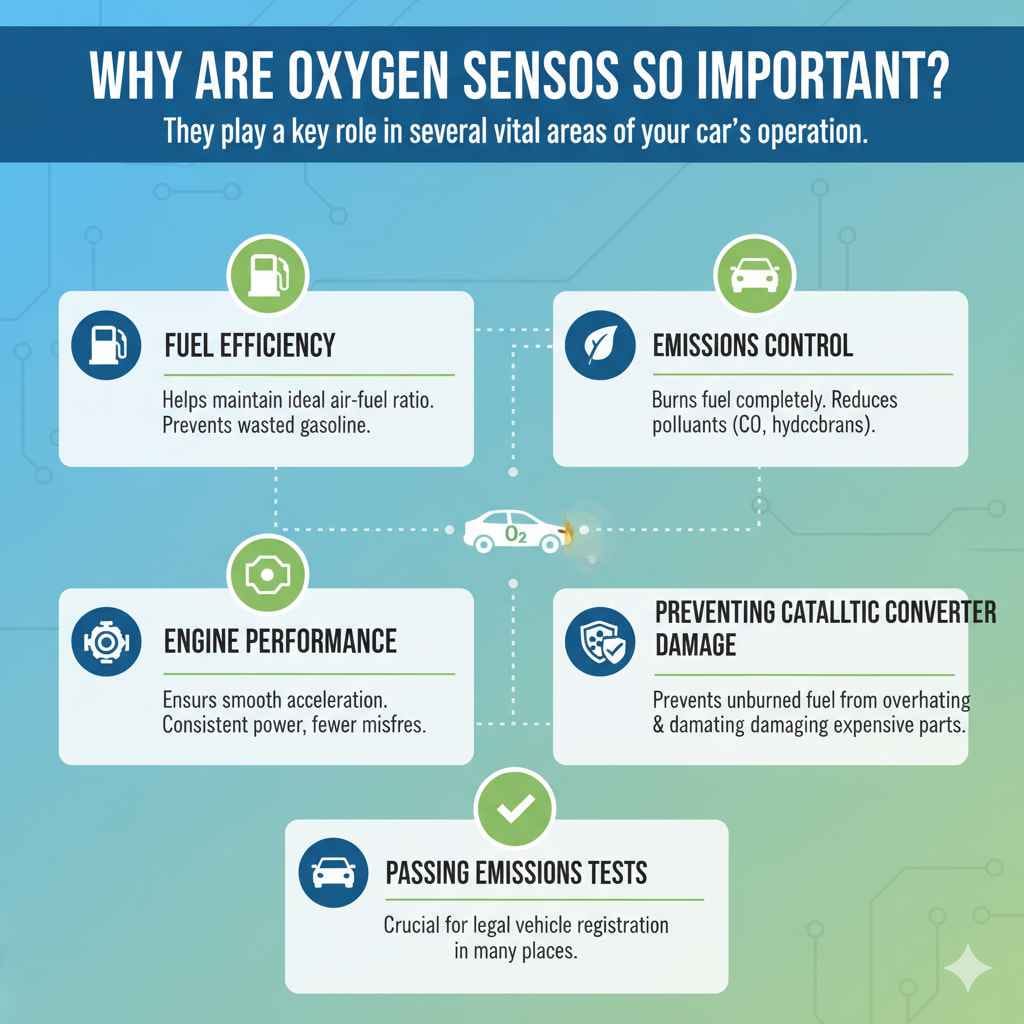
You might be thinking, “Okay, it measures oxygen, but why is that a big deal?” The importance of a working oxygen sensor can’t be overstated. They play a key role in several vital areas of your car’s operation:
- Fuel Efficiency: A properly functioning O2 sensor helps the ECU maintain the ideal air-fuel ratio. This means your engine doesn’t waste gasoline. When the ratio is off, you’ll notice you’re filling up your gas tank more often, even if you’re driving the same way.
- Emissions Control: This is a huge one. Cars produce exhaust fumes, and some of these can be harmful to the environment and our health. Oxygen sensors help ensure your car burns fuel as completely as possible, significantly reducing the amount of pollutants like carbon monoxide and hydrocarbons released into the air. Think of it as your car’s way of being a kinder neighbor to the planet.
- Engine Performance: When the air-fuel mixture is correct, the engine runs at its best. This translates to smooth acceleration, consistent power, and fewer engine misfires. A bad O2 sensor can lead to rough idling, hesitation, and a general feeling that your car isn’t performing as it should.
- Preventing Catalytic Converter Damage: The catalytic converter is a critical component that further cleans your exhaust. If your O2 sensors aren’t working right, the ECU might send too much fuel into the engine. This unburned fuel can overheat and damage your catalytic converter, a very expensive part to replace.
- Passing Emissions Tests: In many places, your car needs to pass an emissions test to be registered. A faulty O2 sensor will almost certainly cause your car to fail this test because it can’t control emissions properly.
How Does an Oxygen Sensor Work?
It’s fascinating how these small sensors do their job! Most modern cars use either zirconia or titania oxygen sensors. Let’s keep it simple:
The sensor is essentially a probe that sticks out into the exhaust stream. Inside, it has a ceramic element that changes its electrical resistance or voltage depending on the amount of oxygen in the exhaust gases.
- High Oxygen (Lean Mixture): If there’s a lot of oxygen left over, it means the engine is running lean (not enough fuel for the amount of air). The sensor will send a signal to the ECU indicating a lean condition.
- Low Oxygen (Rich Mixture): If there’s very little oxygen, it means the engine is running rich (too much fuel for the amount of air). The sensor will send a signal indicating a rich condition.
The ECU constantly monitors these signals and makes tiny adjustments to the fuel injection over and over again, thousands of times per minute. This closed-loop system, where the sensor feeds data back to the ECU for adjustments, is key to efficient engine operation.
Types of Oxygen Sensors
While they all do a similar job, there are a few types of oxygen sensors you might encounter:
1. Zirconia Oxygen Sensors: These are the most common type. They are heated by the exhaust gases but also often have a built-in heating element to warm them up faster. Faster warming means the ECU can enter “closed-loop” mode (where it uses O2 sensor data) sooner, improving emissions control right from startup.
2. Titania Oxygen Sensors: Less common in modern vehicles, these sensors actually float another voltage instead of changing resistance to signal oxygen levels. They also require a specific voltage to operate correctly.
3. Wideband (Air-Fuel Ratio) Sensors: These are more advanced and measure the exact air-fuel ratio rather than just telling you if it’s rich or lean. Many newer, high-performance, or more environmentally conscious vehicles use these for even finer tuning.
Location Matters Too:
You’ll usually find O2 sensors in pairs:
- Upstream Sensor(s): Located before the catalytic converter. This is the primary sensor that provides critical feedback for fuel mixture adjustments. Most cars have at least one, and V-engines (like in many trucks or V6/V8 cars) will have one for each bank of cylinders.
- Downstream Sensor(s): Located after the catalytic converter. This sensor’s main job is to monitor the catalytic converter’s efficiency. It doesn’t directly affect the air-fuel mixture as much but tells the ECU if the converter is working properly.
Signs of a Failing Oxygen Sensor
Your car will often give you clues when an oxygen sensor is on its way out or has failed. Don’t ignore these signs! They can save you from bigger problems down the road.
Symptoms to Watch For:
- Illuminated Check Engine Light: This is the most common indicator. The light comes on when the ECU detects a problem with the sensor’s readings or its performance.
- Poor Fuel Economy: You’ll notice that your gas mileage suddenly drops. You’re visiting the gas station more frequently without changing your driving habits.
- Rough Idling or Stalling: The engine might run unevenly when you’re stopped at a light, or it might even cut out unexpectedly.
- Hesitation or Poor Acceleration: When you press the gas pedal, the car might feel sluggish, hesitate, or not accelerate as smoothly as it used to.
- Failed Emissions Test: As mentioned before, a bad O2 sensor will likely cause your car to fail its smog or emissions check.
- Rotten Egg Smell: In some cases, a rich fuel mixture (too much fuel) caused by a faulty sensor can lead to the catalytic converter overheating and producing a sulfurous, rotten egg smell.
- The Engine Just Feels “Off”: Sometimes, it’s not one specific symptom, but a general feeling that your car isn’t running right.
If you notice any of these, it’s a good idea to get your O2 sensor checked. A mechanic can diagnose if it’s the sensor or something else.
How to Test an Oxygen Sensor
Testing an oxygen sensor usually requires some specialized tools and knowledge, so if you’re a beginner, this is often best left to a trusted mechanic. However, understanding the process can be helpful.
A mechanic might use a few methods:
- OBD-II Scanner: This is the first step. A diagnostic trouble code (DTC) from the scanner can point to a specific O2 sensor circuit problem (e.g., P0130-P0167 codes). The scanner can also display live data from the sensor, allowing the mechanic to see if its voltage is fluctuating appropriately.
- Multimeter: A mechanic can use a multimeter to test the sensor’s electrical signals and heater circuit resistance. They’ll check if the output voltage changes as expected when the engine is running and if the heater element has the correct resistance.
- Exhaust Gas Analyzer: For a more comprehensive test, an exhaust gas analyzer can measure the actual oxygen content in the exhaust. This can help confirm if the sensor’s readings align with the real-world exhaust composition.
Can you replace it yourself? Yes, if you’re a bit more hands-on and have the right tools, replacing an O2 sensor can be a DIY job. However, accurate diagnosis is key before buying a replacement part.
Replacing an Oxygen Sensor: A Beginner’s Look
Replacing an oxygen sensor is often compared to changing a spark plug – it’s a common maintenance task. While it might seem daunting, with the right steps and precautions, it can be manageable for a DIYer.
Tools You Might Need:
- New oxygen sensor (make sure it’s the correct one for your car!)
- Oxygen sensor socket wrench (a specialized tool that has a slot for the wire)
- Ratchet or breaker bar
- Penetrating oil (like WD-40, but specifically for rusted bolts)
- Anti-seize compound (optional, but recommended for the new sensor threads)
- Gloves and safety glasses
- Jack and jack stands (if you need to lift the car for access)
Step-by-Step Guide (General):
- Safety First: Ensure your car is parked on a level surface and the engine is completely cool. If you need to lift the car, use jack stands properly. Never rely solely on a jack. Disconnect the negative battery terminal to prevent electrical shorts.
- Locate the Sensor: Find the specific oxygen sensor you need to replace. Upstream sensors are usually closer to the engine, while downstream sensors are further back. You might need to trace the exhaust pipe from the engine.
- Inspect and Disconnect: Look for the electrical connector that attaches the sensor to your car’s wiring harness. Carefully unplug it. Sometimes there’s a small tab you need to press.
- Remove the Old Sensor: Spray some penetrating oil around the base of the sensor where it screws into the exhaust pipe. Let it soak for a few minutes. Use the O2 sensor socket wrench and a ratchet to loosen and unscrew the old sensor. It might be tight due to rust and heat cycles.
- Prepare the New Sensor: Some new sensors come with anti-seize lubricant already applied to the threads. If yours doesn’t, apply a small amount of anti-seize compound to the threads of the new sensor. Avoid getting it on the sensor tip.
- Install the New Sensor: Screw the new sensor into the exhaust pipe by hand as far as it will go. Then, use the socket wrench and ratchet to tighten it firmly. Don’t overtighten.
- Reconnect and Finish: Plug the electrical connector for the new sensor back into the wiring harness. If you lifted the car, carefully lower it. Reconnect the negative battery terminal.
- Clear Codes and Test Drive: Start the car. The check engine light might turn off on its own, or you might need to use an OBD-II scanner to clear the code. Take your car for a test drive to ensure it’s running smoothly and that the check engine light stays off.
Important Note: Always refer to your car’s specific repair manual for detailed instructions and torque specifications. Different cars have different sensor locations and types.
What Happens if I Ignore a Bad Oxygen Sensor?
Ignoring a failing oxygen sensor is like ignoring a warning light on your dashboard – it’s asking for trouble. Here’s a breakdown of the problems that can arise:
| Problem | Description |
|---|---|
| Decreased Fuel Economy | The most immediate effect. Your ECU can’t adjust fuel properly, so it might default to a richer mixture, significantly increasing fuel consumption. |
| Increased Emissions | Your car will pollute more. This is bad for the environment and will likely cause you to fail emissions tests required for vehicle registration in many areas. |
| Engine Damage | A consistently rich or lean mixture can cause long-term damage, such as engine knocking or overheating. |
| Catalytic Converter Failure | This is a major concern. Unburned fuel entering the catalytic converter can cause it to overheat, melt, and become clogged. A new catalytic converter can cost hundreds or even thousands of dollars. |
| Poor Engine Performance | You’ll experience rough idling, hesitation, stalling, and a general lack of power, making the car unpleasant and potentially unsafe to drive. |
Simply put, addressing a bad oxygen sensor promptly is one of the most cost-effective repairs you can make to prevent much larger and more expensive issues down the line. For more information on how your exhaust system components work together, you can check out resources from the U.S. Environmental Protection Agency on vehicle emissions controls.
Oxygen Sensor Lifespan and Maintenance
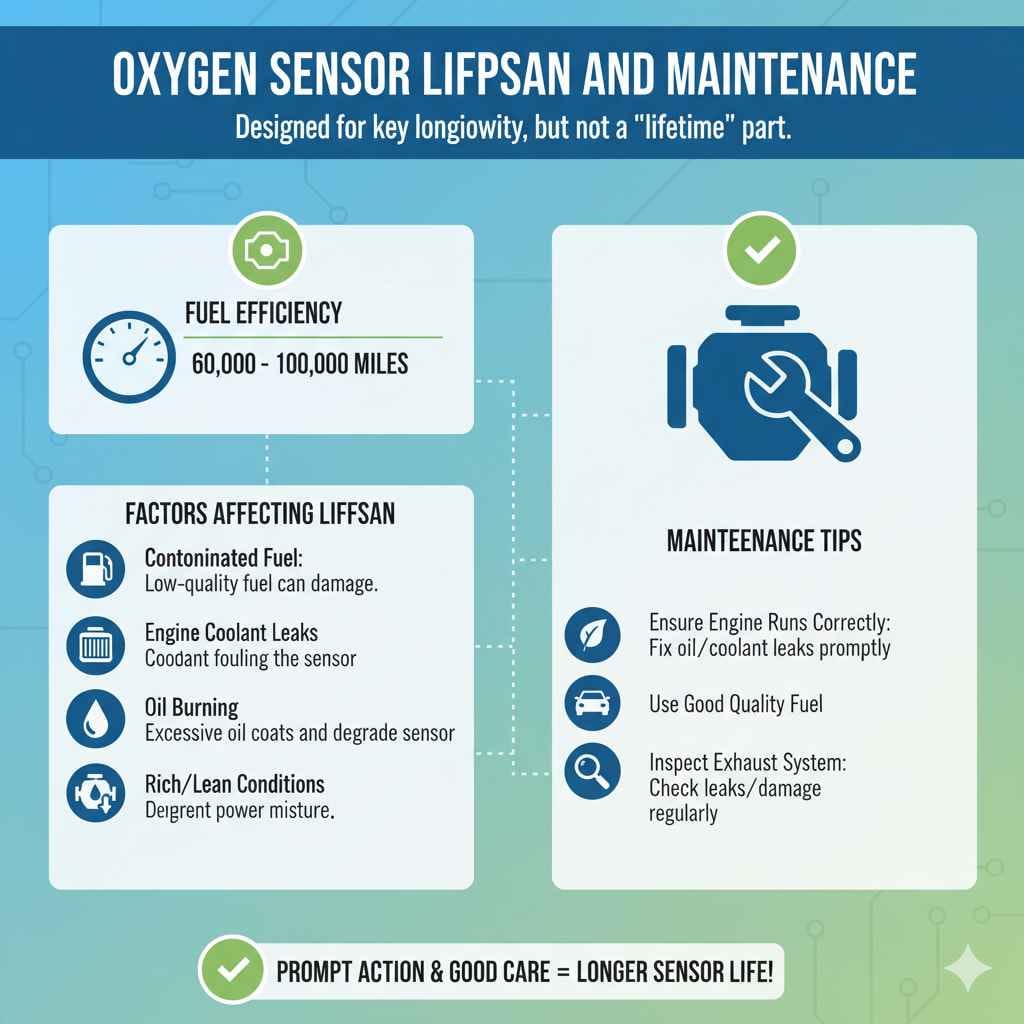
Oxygen sensors are designed to last a long time, but they aren’t typically considered a “lifetime” part. Their lifespan can vary significantly based on driving conditions, fuel quality, and the sensor’s quality.
- Typical Lifespan: Most oxygen sensors are rated to last between 60,000 and 100,000 miles. However, some may fail sooner, and others might last longer.
- Factors Affecting Lifespan:
- Contaminated Fuel: Using low-quality fuel with additives or contaminants can damage the sensor element.
- Engine Coolant Leaks: If coolant leaks into the combustion chamber and gets into the exhaust, it can foul the sensor.
- Oil Burning: If your engine burns excessive oil, the oil can coat and degrade the sensor.
- Rich/Lean Conditions: Prolonged periods of incorrect air-fuel mixtures before the sensor is replaced can also shorten its life.
- Maintenance: There isn’t a specific “maintenance” you do on an O2 sensor itself. The best maintenance is to ensure your engine is running correctly. This means addressing issues that could prematurely wear out the sensor, such as fixing oil or coolant leaks, using good quality fuel, and responding promptly to any check engine lights.
Regularly checking your exhaust system for leaks or damage can also help. A robust exhaust system, including healthy sensors, contributes to your car’s overall longevity and performance.
Are All Cars Required to Have Oxygen Sensors?
For practically all gasoline-powered cars manufactured and sold in the United States since the mid-1980s, the answer is a resounding yes. Oxygen sensors became a standard requirement due to increasingly strict emissions regulations. The U.S. Environmental Protection Agency (EPA) mandates that vehicles meet certain emission standards to reduce air pollution. Oxygen sensors are a critical technology that enables vehicles to meet these standards by controlling the air-fuel mixture precisely.
Even if you drive an older classic car that predates widespread O2 sensor use, any modern vehicle you purchase will have them. For diesel vehicles, the systems are a bit different, often using different types of sensors, but the principle of monitoring exhaust gases to control emissions still applies.
So, whether you have a brand-new SUV or a reliable sedan, oxygen sensors are an integral part of the vehicle’s emission control system, mandated by law for cleaner air.
Frequently Asked Questions (FAQ)
Q1: How do I know if my oxygen sensor needs replacing?
The most common sign is the “Check Engine” light illuminating on your dashboard. You might also notice a significant drop in your fuel economy, rough idling, or poor acceleration.
Q2: Can I drive my car with a bad oxygen sensor?
You can, but it’s not recommended. Driving with a faulty O2 sensor will lead to poor fuel economy, increased emissions, and can potentially damage other, more expensive components like your catalytic converter. It is best to get it replaced as soon as possible.