How to Add Diesel Exhaust Fluid: Essential Guide
Adding Diesel Exhaust Fluid (DEF) is a simple, essential maintenance task for modern diesel vehicles. Follow these clear steps to locate the DEF tank, open it, safely pour in the DEF, close the cap securely, and reset any dashboard warnings. This guide ensures you can confidently manage your DEF levels for optimal emissions control and engine performance.
Hey there, fellow drivers! If you own a diesel vehicle with Selective Catalytic Reduction (SCR) technology, you’ve likely seen a message pop up about Diesel Exhaust Fluid, or DEF. It might seem a bit technical, but topping up your DEF is actually a straightforward process that keeps your engine running smoothly and cleanly. Don’t let it intimidate you! We’re going to walk through it together, step by simple step. By the end, you’ll feel totally confident handling this yourself, saving you time and a trip to the shop. Ready to keep your diesel running its best? Let’s dive in!
Why DEF Matters for Your Diesel Engine
Modern diesel engines are marvels of engineering, designed to be powerful and efficient. To meet strict environmental regulations, many use a system called Selective Catalytic Reduction (SCR). This system works by injecting Diesel Exhaust Fluid (DEF) into the exhaust stream before it reaches the catalytic converter. When heated, DEF breaks down into ammonia, which then reacts with harmful nitrogen oxides (NOx) in the exhaust and converts them into harmless nitrogen and water vapor. It’s a clever way to significantly reduce diesel emissions.
Think of DEF as a vital ingredient for your engine’s “breath” control. Without enough DEF, the SCR system can’t do its job. This not only harms the environment by letting more pollutants into the air but also triggers warning lights on your dashboard. Eventually, your vehicle might even refuse to start or run at reduced power to protect itself and comply with laws. Keeping your DEF tank topped up is crucial for performance, legal compliance, and environmental responsibility.

Understanding Diesel Exhaust Fluid (DEF)
So, what exactly is this DEF stuff anyway? It’s not a fuel additive; it’s a consumable fluid. It’s a carefully manufactured solution made up of 32.5% high-purity urea and 67.5% deionized water. This mixture is specifically designed for use in SCR systems.
It’s important to know that DEF is prone to contamination. Exposure to dirt, dust, or other fluids can damage your SCR system, leading to expensive repairs. That’s why handling and storage are key. Always use DEF from reputable sources and store it in its original, sealed container. Never put anything besides DEF into the DEF tank, and never put DEF into your fuel tank!
Common DEF Misconceptions
Many new diesel owners worry about DEF. Here are a few common myths:
- Myth: DEF is a fuel additive. Actually, DEF is stored in its own separate tank and injected into the exhaust system, not mixed with the diesel fuel.
- Myth: You can use any urea solution. While DEF contains urea, it must be automotive-grade, urea dissolved in purified water. Other types of urea or solutions can damage the SCR system.
- Myth: DEF freezes. DEF can freeze, but don’t worry! The freezing point is around 12°F (-11°C). Your vehicle’s DEF tank system is designed with heaters to melt the DEF when needed, ensuring it’s ready to use even in cold weather.
- Myth: DEF is dangerous or toxic. DEF is non-toxic and non-hazardous. However, it can corrode some metals, so it’s best to clean up any spills and avoid contact with painted surfaces by using a funnel.
Where to Buy Diesel Exhaust Fluid
Finding DEF is much easier than you might think. Most automotive parts stores, large retailers with auto sections (like Walmart or Target), truck stops, and even some gas stations carry DEF. You’ll typically find it in various sizes, from small top-up bottles to larger jugs.
When purchasing DEF, look for:
- ISO Certification: Ensure the DEF meets the ISO 22241 standard. This guarantees its purity and suitability for your vehicle.
- Sealed Containers: Always buy DEF in containers that appear unopened and undamaged to prevent contamination.
- Reputable Brands: Stick to well-known brands to ensure quality.
How to Add Diesel Exhaust Fluid: Step-by-Step Guide
Adding DEF is a no-fuss process once you know where to look and what to do. Let’s break it down into simple steps.
Step 1: Locate Your Diesel Exhaust Fluid (DEF) Tank
The DEF tank is usually found alongside the diesel fuel tank. In most cars and trucks, you’ll find two filler necks located next to each other and often covered by a single cap or flap. One is for diesel fuel (usually larger and often black or yellow), and the other is for DEF (typically smaller and blue). Check your vehicle’s owner’s manual if you’re having trouble finding it – it’s the best resource for your specific model. Sometimes, the DEF tank filler might be under the hood or in the trunk, especially in European models.
Step 2: Prepare Your DEF and Tools
Before you start pouring, make sure you have your DEF on hand. It’s best to use DEF that has been stored properly, out of direct sunlight and extreme temperatures. You’ll also want a funnel, preferably one designed specifically for DEF. This helps prevent spills and ensures a clean pour. A clean rag or paper towels will be handy for wiping up any minor drips.
Essential items:
- Container of Diesel Exhaust Fluid (ensure it’s ISO 22241 certified)
- DEF funnel (often included with DEF purchase or available separately)
- Clean rag or paper towels
Step 3: Open the DEF Tank
Once you’ve located your DEF filler and identified the correct one (remember, it’s usually smaller and sometimes marked with a blue ring or cap), open it. If there’s a separate flap or cap for the DEF filler, open that. Be careful not to mix it up with the diesel fuel filler. You’ll typically just need to unscrew the cap counter-clockwise.
Step 4: Add the DEF
Attach the DEF funnel to the opening of the DEF tank. Now, carefully pour the DEF from its container into the funnel. It’s important to pour slowly and steadily to avoid splashing. Most vehicles have a level sensor, so overfilling isn’t usually a major concern, but it’s still good practice to avoid filling it to the absolute brim. Some vehicles may have a specific fill line indicated in the manual.
Important Tip: Never use a funnel that has been used for anything else, especially diesel fuel. Contamination is the enemy of the SCR system.
Step 5: Close the DEF Tank
Once you’ve poured in the required amount of DEF, remove the funnel and securely screw the DEF tank cap back on. Make sure it’s tightened properly to prevent evaporation and contamination. If your vehicle has a flap covering the fillers, close it.
Step 6: Start Your Vehicle and Reset Warnings (If Necessary)
After closing the DEF tank, you’ll need to start your vehicle. For many vehicles, the system needs a few minutes to register the new DEF level. You might need to let the engine idle for a short period, or even drive for a few miles, for the dashboard warning lights or messages to clear. Your owner’s manual will specify the exact procedure for your vehicle, but often, simply turning the ignition on for a minute without starting the engine, or driving a short distance, will allow the vehicle’s computer to recognize the added DEF and turn off any related dash lights.
If a warning light related to DEF or emissions persists after a reasonable amount of driving, or if you suspect an issue, consult your owner’s manual or a qualified mechanic.
DEF Tank Capacity and Refill Frequency
DEF tank sizes vary greatly depending on the vehicle. Passenger cars might have smaller DEF tanks, while larger trucks can have substantial ones. The refill frequency depends on several factors:
- Tank Size: A larger tank means less frequent refills.
- Driving Habits: Frequent highway driving or towing may consume DEF faster than city driving.
- Driving Conditions: Extreme temperatures and driving styles can impact consumption.
- Vehicle Model: Different vehicles are calibrated to consume DEF at different rates.
As a general guideline, many modern diesel vehicles can go between 3,000 to 10,000 miles (approximately 5,000 to 16,000 kilometers) between DEF refills. Your vehicle’s dashboard will typically provide a warning when the DEF level gets low, giving you plenty of time to refill.
Here’s a quick look at typical capacities for different vehicle types:
| Vehicle Type | Typical DEF Tank Capacity (Gallons) | Typical DEF Tank Capacity (Liters) | Approximate Refill Frequency (Miles) |
|---|---|---|---|
| Passenger Cars/SUVs | 2.5 – 5 | 9.5 – 19 | 3,000 – 6,000 |
| Light-Duty Trucks | 4 – 7 | 15 – 26.5 | 5,000 – 8,000 |
| Medium/Heavy-Duty Trucks | 7 – 20+ | 26.5 – 75+ | 6,000 – 10,000+ |
Always refer to your vehicle’s owner’s manual for the most accurate information regarding your specific DEF tank capacity and recommended refill intervals. Some vehicles have a low DEF level warning that triggers when you have enough range for approximately 500 miles, giving you ample notice.
When to Refill Your DEF
Your diesel vehicle is equipped with a sophisticated monitoring system. You’ll receive multiple warnings as your DEF level drops:
- Initial Warning: A light on your dashboard will illuminate, and you might see a notification indicating the DEF level is low and when it needs refilling.
- Intermediate Warning: As the level gets lower, the warnings may become more prominent, and you’ll be given an estimated range before the issue becomes critical.
- Critical Warning: At this stage, if DEF is not added, the vehicle will likely prevent starting or severely limit engine performance to comply with emissions regulations. This is your absolute last chance to add DEF before facing significant restrictions.
It’s wise to refill your DEF when you receive the first or second warning. This avoids any potential inconvenience and ensures your SCR system operates correctly. If you regularly purchase DEF in containers, keeping one topped up in your garage or vehicle (during cooler weather, away from direct sun) can be a good proactive measure, provided it’s stored correctly.
What Happens if You Run Out of DEF?
Running out of DEF is not a minor inconvenience because it directly impacts your vehicle’s emissions control system. Most modern diesel vehicles are programmed to react if the DEF level drops too low. Initially, you’ll get dashboard warnings. However, if you ignore these warnings and continue driving until the DEF tank is empty, the vehicle will likely:
- Prevent Restart: Once the engine is turned off, you may find that the vehicle simply will not start again until DEF is added.
- Limit Engine Power: In some cases, to prevent illegal emissions, the engine’s power will be significantly reduced. This is often referred to as “limp mode.”
This is a safety and regulatory feature. TheSCR system is essential for meeting emissions standards. Without DEF, the system cannot function, and the vehicle cannot legally operate in many places. Adding DEF is the only way to resolve this situation.
For more information on emissions standards and the role of SCR systems, the U.S. Environmental Protection Agency (EPA) provides extensive resources. You can learn more about diesel emissions standards and technologies on their website, for example, by searching for information on diesel emissions controls.
Tips for Storing and Handling DEF
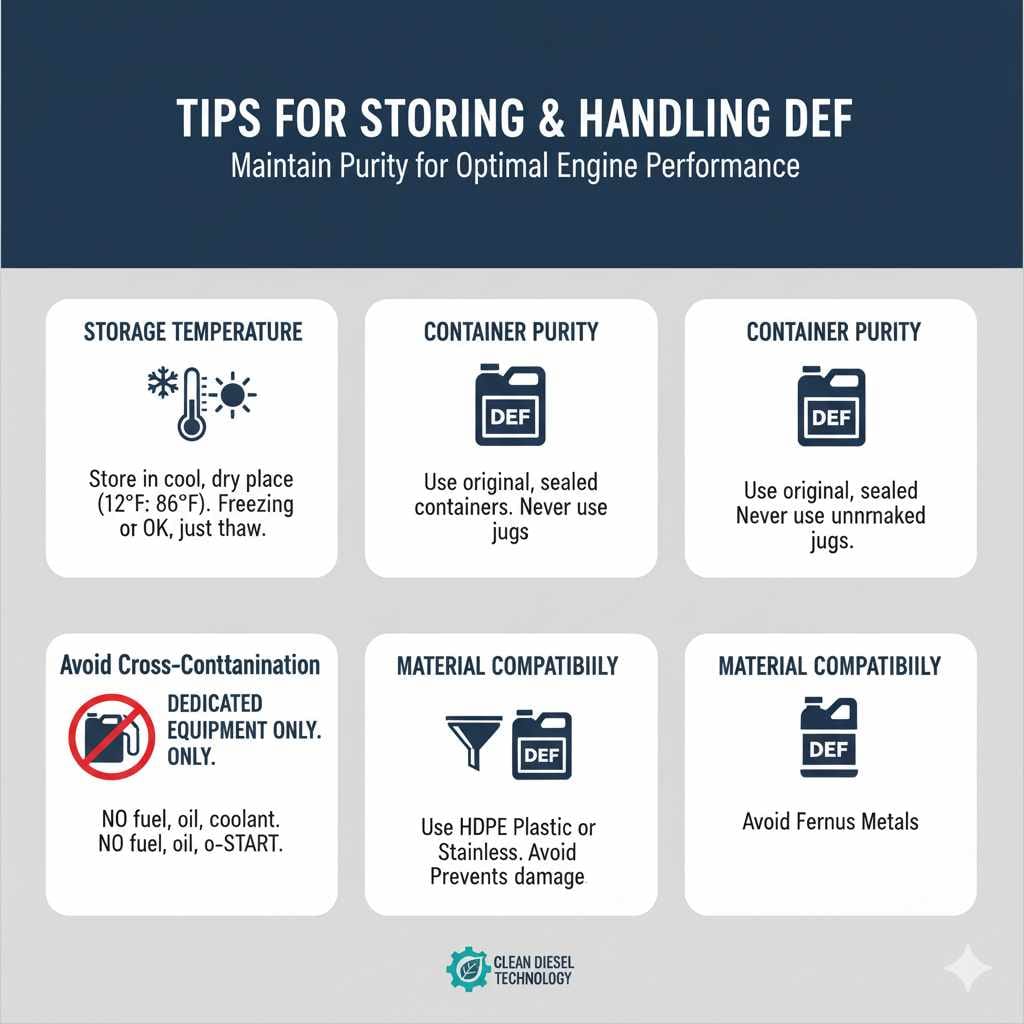
Proper storage and handling of DEF are crucial to ensure its effectiveness and prevent damage to your vehicle’s SCR system. Remember, DEF is sensitive to contamination and temperature extremes.
- Storage Temperature: Store DEF in a cool, dry place, out of direct sunlight. Ideal storage temperatures are between 12°F (-11°C) and 86°F (30°C). While DEF freezes at 12°F, it is not damaged by freezing. Once thawed, it can be used.
- Container Purity: Always use DEF from its original, sealed container. Never pour DEF into an unmarked container or leave the cap off.
- Avoid Cross-Contamination: This is paramount. Never use a funnel, pump, or container that has been used for diesel fuel, oil, coolant, or any other fluid. Even tiny amounts of contamination can damage your SCR system.
- Material Compatibility: DEF is corrosive to certain materials, especially ferrous metals (iron, steel). Always use dedicated DEF equipment. Many DEF containers and funnels are made from high-density polyethylene (HDPE) or stainless steel, which are compatible.
- Spill Cleanup: If you spill DEF on your vehicle’s paintwork, wipe it up immediately with a clean rag and water. The urea in DEF can potentially affect paint finishes over time.
Common Issues and Troubleshooting
While adding DEF is usually straightforward, a few common issues can arise:
| Problem | Possible Cause | Solution |
|---|---|---|
| DEF Warning Light Stays On | DEF level too low after refill; sensor issue; system fault. | Ensure enough DEF was added; allow vehicle time to register; check for dashboard error codes; consult owner’s manual or mechanic. |
| Spilled DEF on Paint | Careless pouring. | Wipe up spills immediately with a clean cloth and water. |
| Difficulty Opening DEF Cap | Cap stuck or cross-threaded. | Ensure you are turning the correct cap counter-clockwise. If stuck, gentle pressure may be needed. Consult owner’s manual for specific cap mechanisms. |
| DEF Foam During Pour | Excessive pouring speed; wrong funnel. | Pour slower; use a proper DEF funnel designed to vent air. |
If you encounter persistent issues, especially with warning lights that won’t clear after refilling, it’s always best to consult your vehicle’s owner’s manual or seek assistance from a qualified diesel mechanic. They have specialized tools to diagnose SCR system faults.
Frequently Asked Questions (FAQ)
Q1: How much DEF do I need to add?
A: You should add DEF whenever your vehicle’s dashboard indicates a low level. For topping up, add enough to bring the level up to the recommended fill point, usually indicated in your owner’s manual. For a full refill when the tank is nearly empty, you’ll need enough to fill the tank based on its capacity (refer to your manual for tank size).
Q2: Can I use regular water in the DEF tank if I run out?
A: Absolutely not. Water is not a substitute for DEF. Using water will dilute the urea solution, rendering it ineffective for emissions control and potentially causing system errors or damage. Always use certified Diesel Exhaust Fluid.