How to Avoid Structural Resonance Damage
Learning how to avoid structural resonance damage can seem tricky at first. It’s like trying to guess what a bridge might do in a strong wind. But don’t worry, it’s simpler than it sounds!

Generic
Acoustic Guitar Resonance Maintenance Tool
- Designed for daily upkeep of acoustic guitar bridge and cavity, assists in optimizing internal structural fit for better sound per…
- Professional tool configuration adapts to conventional guitar internal structure for routine finishing and part fitting work.
- Helps stabilize the connection state of bridge and cavity parts, maintains consistent vibration transmission effect.
As an Amazon Associate I earn from qualifying purchases.
We’ll walk through it step-by-step, making it easy to grasp. Get ready to learn the basics and feel more confident about protecting structures.
Understanding Structural Resonance
This section will help you get a clear picture of what structural resonance is all about. We’ll break down the core ideas so you can see why it matters for building strong and safe structures. Understanding this basic concept is the first big step.
What is Resonance
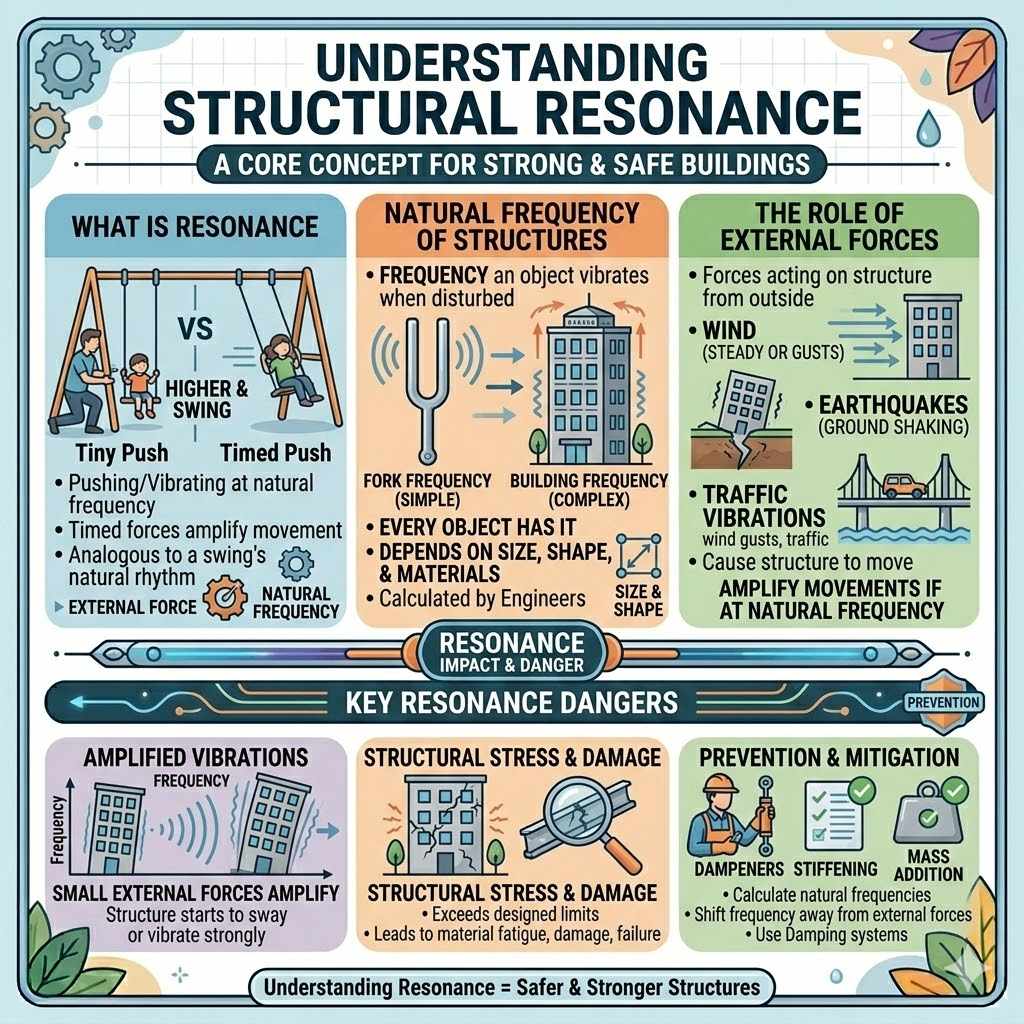
Resonance happens when something is pushed or vibrated at its natural frequency. Think of a swing. If you push it at just the right time, it goes higher and higher.
This is its natural rhythm.
In structures like bridges or buildings, they also have natural frequencies. These are the speeds at which they like to wiggle back and forth on their own. A structure can be made of many parts, and each part might have its own natural frequency.
When an outside force, like wind or an earthquake, shakes the structure at one of these natural frequencies, the vibrations get bigger and bigger. This is like a tiny push on a swing making it go much higher. This is the basic idea behind resonance.
Natural Frequency of Structures
Every object has a natural frequency. This is the frequency at which it will vibrate if it’s disturbed and then left alone. For a simple object like a tuning fork, it’s easy to hear.
For a big building or a bridge, it’s more complex.
The natural frequency of a structure depends on its size, shape, and the materials it’s made from. A tall, skinny building will have a different natural frequency than a short, wide one. Stiff materials will also change how a structure vibrates.
Engineers calculate these natural frequencies. They need to know them to make sure the structure won’t get damaged. If the structure is too flexible, or too light, it might be more easily affected by outside forces.
The Role of External Forces
External forces are things that act on a structure from the outside. Wind is a very common one. It can blow steadily or in gusts.
Earthquakes cause the ground to shake, and this shaking moves the structure. Even traffic on a bridge creates vibrations.
When these external forces push and pull on a structure, they make it move. If the force is happening at the same speed as the structure’s natural frequency, a problem can happen. The movements start to add up.
This is where resonance can become dangerous. The small movements caused by the external force get amplified. The structure starts to sway or vibrate much more strongly than it normally would.
Identifying Potential Resonance Risks
Now that we know what resonance is, let’s talk about how to spot when it might be a problem. This part is all about looking at the structure and its surroundings to find clues. It’s like being a detective for buildings and bridges.
Common Causes of External Vibrations
Several things can cause vibrations that might lead to resonance. Wind is a big one. Different types of wind, like steady breezes or strong gusts, can hit a structure.
Sometimes, the wind can create swirling patterns behind the structure.
These swirling patterns, called vortices, can happen very often. If the rate at which these vortices form matches the structure’s natural frequency, it can cause the structure to shake. The famous Tacoma Narrows Bridge collapse is a classic example of this.
Other causes include earthquakes, which cause sudden and powerful ground shaking. Machinery operating nearby, like large pumps or engines, can also send vibrations through the ground and into a structure. Even heavy traffic on bridges can create vibrations.
Characteristics of Resonant Structures
Some structures are more likely to experience resonance than others. Long, slender structures are often more susceptible. Think of tall towers or long bridges.
They tend to have lower natural frequencies.
Structures made from materials that can flex easily are also at higher risk. If a structure is too flexible, it can be more easily moved by external forces. Light structures that aren’t very stiff can also be more prone to resonance.
The shape of a structure plays a role too. Aerodynamic shapes, meaning shapes that affect how air flows around them, can interact with wind in ways that cause vibrations.
Environmental Factors
The environment around a structure is important. Places with strong winds are naturally at higher risk. If a structure is in an area prone to earthquakes, that’s another major factor.
The ground the structure sits on also matters. Soft soil can amplify ground vibrations from earthquakes or nearby heavy equipment. Harder ground might transmit vibrations differently.
Even water can play a role. For structures like offshore platforms or bridges over water, wave action can create forces that might cause resonance.
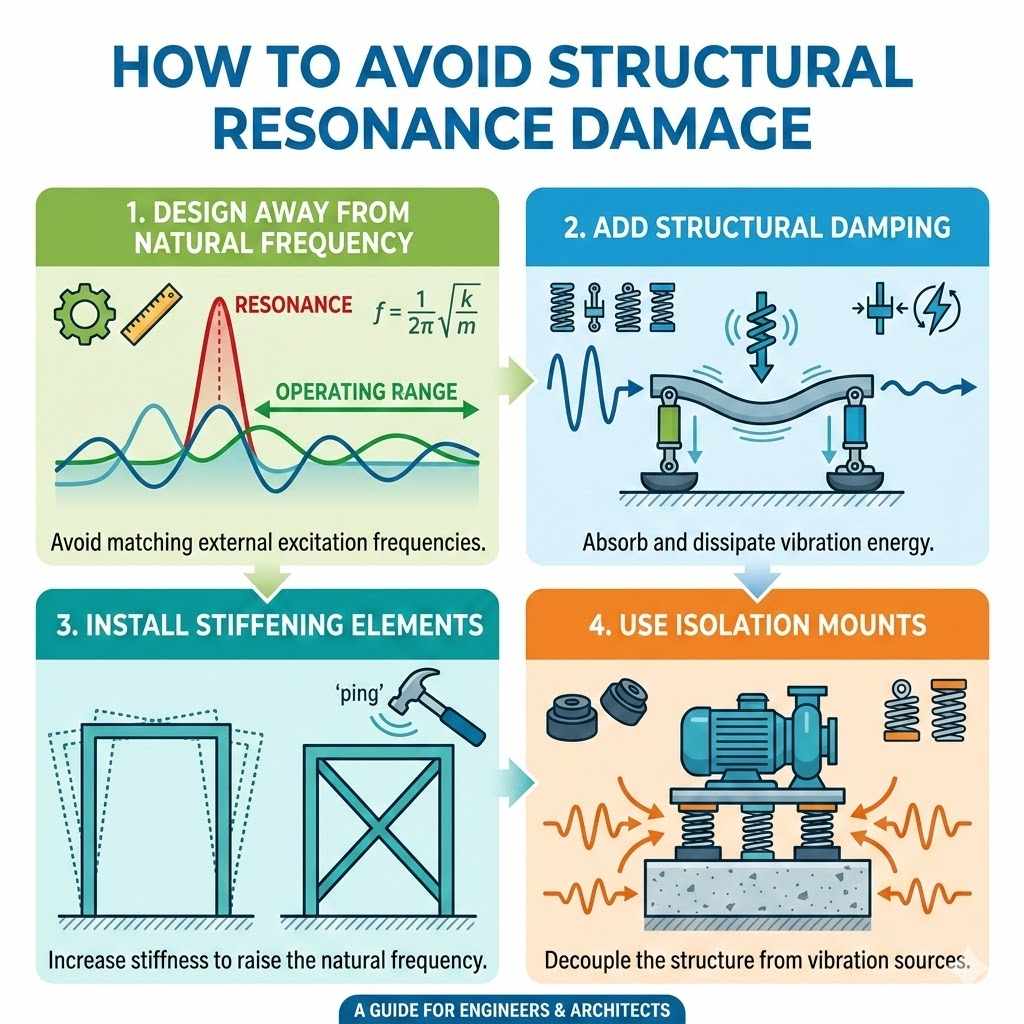
How to Avoid Structural Resonance Damage
This is where we get into the solutions. We’ll explore the methods engineers use to make sure structures can handle vibrations without getting damaged. These techniques are key to building safely and preventing problems.
Structural Design Principles
Engineers use smart design ideas from the very start. They aim to build structures that don’t have natural frequencies that match common outside forces. This is a primary defense.
One way they do this is by making structures stiffer. A stiffer structure has a higher natural frequency. This means it takes a much stronger or faster force to make it resonate.
They might use stronger materials or add more bracing.
They also consider the shape. Sometimes, changing a structure’s shape can help break up wind patterns that cause vibrations. It’s about making the structure less appealing to destructive forces.
Damping Mechanisms
Damping is like putting a brake on vibrations. It’s a way to reduce how much a structure wiggles. There are different kinds of dampers.
One common type is called a tuned mass damper. Imagine a big, heavy weight hanging inside a building. It’s attached in a way that it can move.
If the building starts to sway, this weight moves in the opposite direction. This counter-movement helps to cancel out the building’s sway.
Another method is material damping. Some materials naturally absorb vibrations better than others. Engineers might use these materials in certain parts of the structure, or add special layers to absorb energy.
Aerodynamic Modifications
For structures like bridges that are exposed to a lot of wind, engineers sometimes change the shape of the structure itself. This is called aerodynamic modification.
They might add fairings, which are like smooth covers, to the edges of a bridge deck. These fairings help to smooth out the airflow. This prevents the formation of those nasty swirling wind patterns.
Sometimes, they might even change the shape of the bridge girders, the main beams supporting the deck. This is done to make the wind flow more smoothly and predictably.
Case Study: The Millennium Bridge
The London Millennium Bridge is a famous example. When it first opened, people walking across it caused it to sway. This was because the frequency of people walking in step matched the bridge’s natural frequency.
Engineers had to add special dampers to fix the problem. These dampers were tuned mass dampers, similar to what we discussed earlier. They effectively absorbed the energy from the pedestrians’ footsteps.
After the dampers were installed, the bridge became much more stable. This case shows the real-world impact of resonance and how it can be successfully managed with the right solutions.
Advanced Techniques and Materials
Beyond the basic principles, engineers have developed more sophisticated ways to combat resonance. These involve cutting-edge science and new materials that offer even greater protection. This section explores those advanced approaches.
Base Isolation Systems
Base isolation is a technique used primarily for earthquake protection, but it also helps with vibrations. Instead of the building being directly connected to the ground, it sits on flexible bearings or pads.
These bearings act like shock absorbers. When the ground shakes, the building is somewhat disconnected from the shaking motion. This means the vibrations don’t travel up into the structure as strongly.
The building can move more freely on these isolators, absorbing much of the earthquake’s energy. This greatly reduces the stress on the structure.
Active and Semi-Active Control Systems
These are high-tech solutions that involve sensors and computers. Active systems use sensors to detect vibrations. They then use actuators to apply counter-forces to stop the vibrations before they get too big.
Semi-active systems are similar but use less energy. They can adjust their damping properties in real-time based on the detected vibrations. They are a bit like smart shock absorbers.
These systems are complex and costly, but they offer very precise control over a structure’s movement. They are often used in very tall buildings or important structures where extreme stability is needed.
Use of Advanced Materials
New materials are constantly being developed that can help with resonance. Some materials are naturally very good at absorbing vibrations, which can be incorporated into building designs.
Shape memory alloys are one example. These are metals that can return to their original shape after being deformed. They can be used in flexible joints or dampers to help a structure recover from stress.
Advanced composites, like carbon fiber, are very strong and light. They can be used to reinforce structures or create elements that have specific vibration-absorbing properties.
Monitoring and Maintenance
Building a structure strong is only part of the story. Keeping it strong over time is just as important. This section looks at how we keep an eye on structures and what to do if problems start to show up.
Structural Health Monitoring
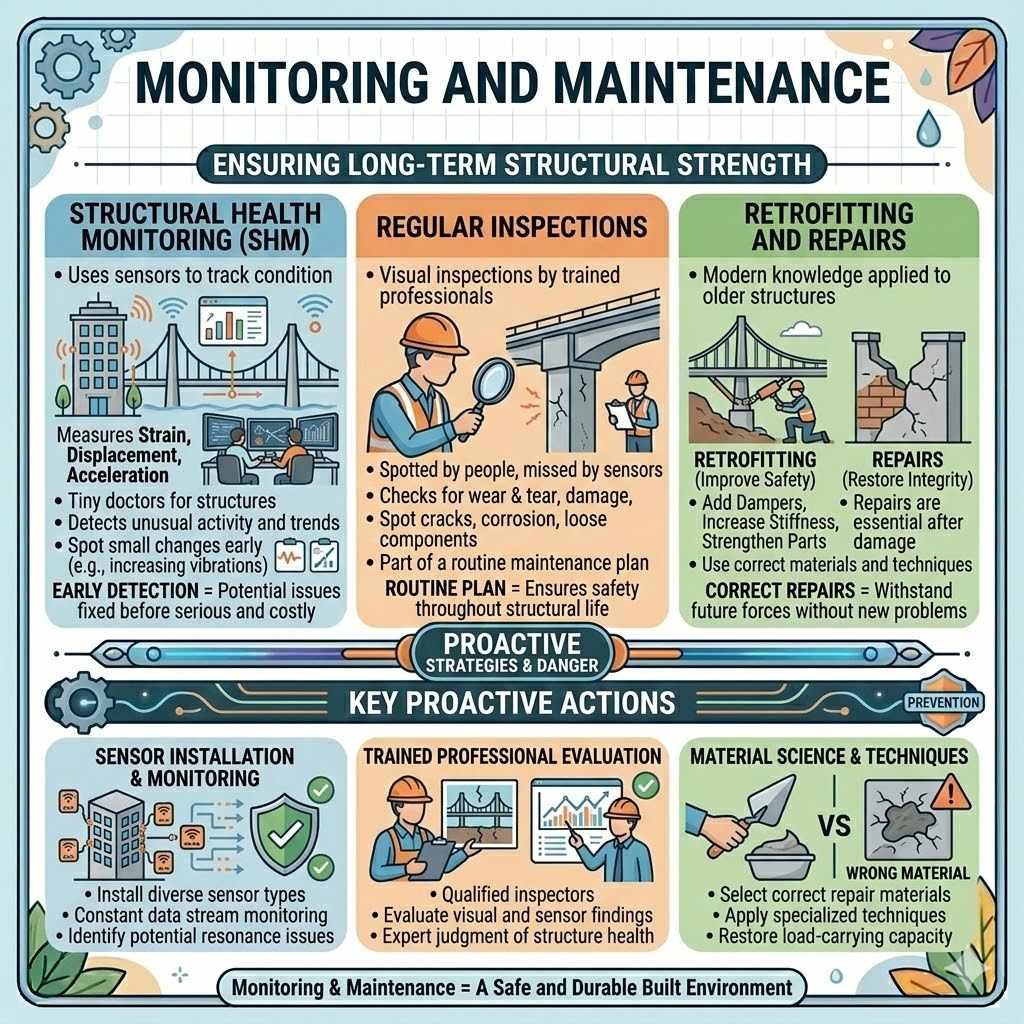
Structural Health Monitoring (SHM) uses sensors to keep track of a structure’s condition. These sensors can measure things like strain, displacement, and acceleration. They are like tiny doctors for buildings and bridges.
By constantly measuring these things, engineers can see if anything unusual is happening. They can spot small changes that might indicate a problem is developing, like increasing vibrations.
This system allows for early detection. It means that potential issues can be found and fixed before they become serious and costly.
Regular Inspections
Even with advanced sensors, regular visual inspections by trained professionals are vital. People can spot things that sensors might miss.
Inspectors look for any signs of wear and tear, damage, or unusual movement. This might include cracks, corrosion, or loose components.
These inspections are part of a routine maintenance plan. They ensure that the structure remains safe and sound throughout its life.
Retrofitting and Repairs
Sometimes, older structures might not have been designed with modern knowledge of resonance in mind. In these cases, retrofitting can be done. This means adding new elements or modifying existing ones to improve safety.
This could involve adding dampers, increasing stiffness, or strengthening certain parts. If damage does occur, repairs are essential. These repairs must be done correctly to restore the structure’s integrity.
Using the right materials and techniques for repairs is key. It ensures that the structure can withstand future forces without developing new problems.
Frequently Asked Questions
Question: What is the main danger of structural resonance?
Answer: The main danger is that vibrations can become so large they cause the structure to fail or collapse.
Question: How does wind cause resonance?
Answer: Wind can create swirling air patterns that, at certain speeds, can shake the structure at its natural frequency, causing it to vibrate more and more.
Question: Can I feel resonance happening?
Answer: Sometimes you can feel it as a strong swaying or vibration. Other times, it might be too subtle for people to notice without sensors.
Question: Are modern buildings designed to avoid resonance?
Answer: Yes, modern building codes and engineering practices include steps to analyze and prevent resonance issues.
Question: What is the simplest way to reduce resonance?
Answer: Making the structure stiffer or adding a device to absorb vibrations, like a damper, are simple ways.
Summary
Learning how to avoid structural resonance damage involves understanding natural frequencies and external forces. By using smart design, damping techniques, and monitoring, engineers protect structures. This knowledge helps build safer environments for everyone.
Related pick: Check today's price on Amazon