Does OBD2 Read Oxygen Sensors
Many people wonder, Does OBD2 Read Oxygen Sensors? It’s a common question, especially for folks just starting with car maintenance. Sometimes, the technical terms can make it seem a bit tricky to figure out.
But don’t worry! It’s actually quite straightforward. We’ll walk through it step-by-step so you can see for yourself how your car’s computer talks to these important parts.
Get ready to learn how your OBD2 tool can help you check those sensors.
Does OBD2 Read Oxygen Sensors
What Is an Oxygen Sensor
An oxygen sensor, also called an O2 sensor, is a vital part of your car’s engine system. Its main job is to measure the amount of unburned oxygen in your car’s exhaust gas. Think of it like a watchdog for your engine’s fuel economy and emissions.
By knowing how much oxygen is left after combustion, the engine’s computer can adjust the air-fuel mixture. This helps the engine run as efficiently as possible, using just the right amount of fuel and producing fewer harmful gases.
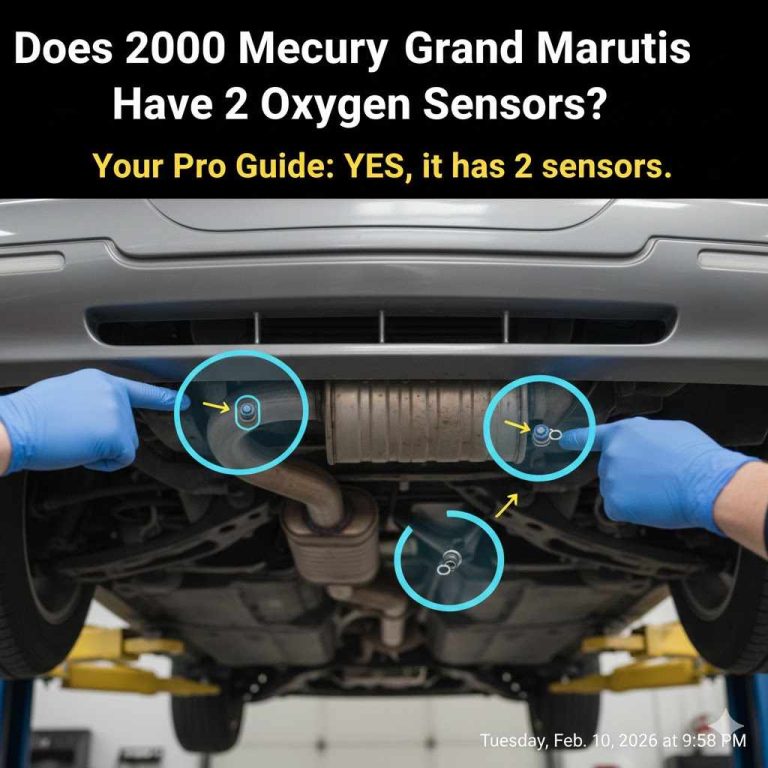
There are usually a few O2 sensors on a modern car. Some are located before the catalytic converter, and others are placed after it. The ones before the converter help the engine control unit (ECU) manage the air-fuel ratio for optimal burning.
The ones after the converter check if the catalytic converter is working correctly to clean up the exhaust gases.

How OBD2 Connects to Your Car
OBD2 stands for On-Board Diagnostics, second generation. It’s a standardized system that cars have used since 1996. The OBD2 port is usually found under the dashboard on the driver’s side.
This port is like a secret doorway into your car’s internal computer system. When you plug an OBD2 scanner or reader into this port, you can access a lot of information about your car’s performance and health.
This system was created to help drivers and mechanics easily identify problems with a car’s emissions system. When a part of the emissions system isn’t working right, the car’s computer will often turn on the “Check Engine” light. The OBD2 system stores a code that tells you what the problem might be.
This code can then be read using an OBD2 scanner.
Does OBD2 Read Oxygen Sensors
Now, to answer the big question directly: Yes, OBD2 absolutely reads oxygen sensors. In fact, oxygen sensors are one of the most commonly reported components by the OBD2 system. Because they play such a critical role in managing your engine’s performance and emissions, their data is constantly monitored by the car’s computer.
When an OBD2 scanner is connected to your car, it can retrieve specific data related to the oxygen sensors. This data includes things like the voltage output of the sensors, their operating temperature, and whether they are responding correctly to changes in the air-fuel mixture. If an O2 sensor is faulty, not sending the right signals, or is slow to respond, the OBD2 system will detect this and store a diagnostic trouble code (DTC).
Common Oxygen Sensor Codes
The OBD2 system uses standardized codes to indicate problems. For oxygen sensors, these codes typically start with the letter “P” followed by four numbers. For example:
- P0130 to P0167: These codes relate to the oxygen sensors themselves and their circuits.
- P0420 and P0430: These codes often indicate a problem with the catalytic converter, but they are frequently triggered by failing oxygen sensors that provide incorrect data to the ECU.
These codes are invaluable because they pinpoint the specific sensor and the type of issue. For instance, a code like “P0135 Oxygen Sensor Heater Circuit (Bank 1 Sensor 1)” tells you that the heater element for the upstream oxygen sensor on the first bank of the engine has a problem.
How to Check Your Oxygen Sensors with OBD2
Checking your oxygen sensors with an OBD2 scanner is a straightforward process. Here’s a general guide:
- Locate the OBD2 Port: Find the OBD2 port in your car, usually under the dashboard on the driver’s side.
- Connect the Scanner: Plug your OBD2 scanner into the port. Make sure the car’s ignition is turned to the “ON” position, but the engine doesn’t need to be running for basic code reading. For live data, you will need to start the engine.
- Turn On the Scanner: Follow the instructions for your specific scanner. It will typically power on automatically or require you to turn it on.
- Read Codes: Navigate through the scanner’s menu to “Read Codes” or “DTCs” (Diagnostic Trouble Codes). The scanner will display any stored codes.
- Identify Sensor Codes: Look for codes related to oxygen sensors (e.g., P0130-P0167).
- Access Live Data: Many scanners can also show “live data.” This feature allows you to see the real-time performance of your oxygen sensors, such as their voltage readings as the engine runs. This can help you diagnose issues that might not set a specific code immediately.
Observing the live data from your O2 sensors can provide a deeper insight. A healthy upstream O2 sensor will typically fluctuate between roughly 0.1 volts and 0.9 volts. A downstream sensor, however, should show a more stable voltage reading, indicating the catalytic converter is functioning correctly.
Why Oxygen Sensors Are Important
Oxygen sensors are crucial for several reasons:
- Fuel Efficiency: By ensuring the correct air-fuel ratio, O2 sensors prevent the engine from using too much fuel. A faulty sensor can lead to a significant drop in miles per gallon.
- Emissions Control: They help the engine run cleaner by allowing the catalytic converter to work at its best. This reduces harmful pollutants like carbon monoxide, hydrocarbons, and nitrogen oxides.
- Engine Performance: The right air-fuel mixture is essential for smooth engine operation. Problems with O2 sensors can cause rough idling, hesitation, and stalling.
- Preventing Further Damage: A failing O2 sensor can cause the catalytic converter to overheat and become damaged, which is a much more expensive repair.
Signs of a Failing Oxygen Sensor
Besides the Check Engine light, you might notice other symptoms if your oxygen sensors are starting to fail:
- Reduced fuel economy
- Rough idling or engine misfires
- Hesitation during acceleration
- A rotten egg smell from the exhaust (indicating a rich fuel mixture and a potentially damaged catalytic converter)
- Failed emissions tests
If you experience any of these symptoms, it’s a good idea to check your OBD2 codes. Often, the codes will point you directly to the faulty O2 sensor, saving you diagnostic time and money.
Types of Oxygen Sensors
There are a few main types of oxygen sensors used in vehicles:
Zirconia (ZrO2) Sensors
These are the most common type. They have a ceramic element made of zirconium dioxide. When exhaust gases flow over the sensor, they create a voltage based on the oxygen difference between the exhaust and the outside air.
They operate best at high temperatures (around 600°F or higher).
Titania (TiO2) Sensors
Titanium dioxide sensors are less common but are also used for measuring oxygen content. They have a different operating principle, providing a voltage output that varies with the oxygen concentration.
Wideband (Air-Fuel Ratio) Sensors
These are more advanced sensors that provide a more precise measurement of the air-fuel ratio across a wider range. They are often used in performance vehicles or those with advanced engine management systems to achieve optimal efficiency and power. These sensors also communicate their data via the OBD2 system.
The Role of the Catalytic Converter
The catalytic converter works hand-in-hand with the oxygen sensors. Its purpose is to convert harmful exhaust gases into less harmful ones. The oxygen sensors provide the engine control unit (ECU) with the data needed to ensure the engine is running at an optimal air-fuel ratio.
This optimal ratio is critical for the catalytic converter to function effectively. If the O2 sensors are not sending accurate data, the engine might run too rich (too much fuel) or too lean (too much air). Both conditions can prevent the catalytic converter from doing its job properly and can even damage it over time.
OBD2 Scanners Capabilities
OBD2 scanners come in various forms, from simple handheld devices to more advanced diagnostic tools and smartphone apps that connect via Bluetooth or Wi-Fi. Regardless of the type, they all access the same OBD2 data stream.
Basic scanners are great for reading and clearing trouble codes. More advanced ones offer features like:
- Live Data Streaming: View real-time sensor data, including O2 sensor voltage, engine coolant temperature, RPM, and more.
- Freeze Frame Data: Capture a snapshot of engine conditions at the moment a trouble code is set.
- I/M Readiness Monitors: Check if emissions-related systems have completed their diagnostic checks.
- O2 Sensor Monitor Tests: Some advanced scanners can perform specific tests on O2 sensors.
When you check the live data for your oxygen sensors, you’re essentially watching the computer’s reaction to the exhaust gases. A fast-reacting upstream sensor indicates good engine combustion. A stable downstream sensor reading confirms the catalytic converter is working.
Any unusual patterns or flat lines can point to a sensor issue or a problem with the exhaust system itself.
Troubleshooting Common O2 Sensor Issues
When an OBD2 scanner indicates an oxygen sensor issue, here’s how you might approach troubleshooting:
- Verify the Code: Always confirm the specific code your scanner provides. This is the first step to narrowing down the problem.
- Inspect Wiring and Connectors: Check the wiring harness and connectors for the O2 sensor. Look for any signs of damage, corrosion, or loose connections. A damaged wire can mimic a failing sensor.
- Check for Exhaust Leaks: Leaks in the exhaust system before or near the O2 sensor can introduce extra air, skewing the sensor’s readings and causing false error codes.
- Test the Sensor: If wiring and exhaust are fine, the sensor itself may be faulty. You can test its performance using the live data feature of your OBD2 scanner or by using a multimeter. Compare the sensor’s voltage output to expected values.
- Consider Sensor Age: Oxygen sensors have a limited lifespan, typically ranging from 80,000 to 100,000 miles. If your car has high mileage, the sensors may simply be worn out, even without obvious symptoms.
Replacing an oxygen sensor is often a DIY-friendly repair for many car owners. However, if you’re not comfortable working with exhaust components or electrical systems, it’s best to consult a qualified mechanic.
OBD2 vs. Professional Diagnosis
While OBD2 scanners are incredibly useful for DIY diagnostics, they have limitations. A code reading is a starting point. A professional mechanic has advanced diagnostic tools, specialized knowledge, and experience to interpret the data accurately.
They can perform more in-depth tests, such as:
- Exhaust gas analysis
- Using an oscilloscope to view sensor waveforms
- Testing the engine control module (ECU) itself
For complex issues or if you’re unsure about the diagnosis, seeking professional help is always recommended. However, for many common O2 sensor problems, an OBD2 scanner can give you a very clear indication of what’s wrong.

Frequently Asked Questions
Question: Can an OBD2 scanner tell me exactly which oxygen sensor is bad
Answer: Yes, OBD2 codes usually specify the bank (Bank 1 or Bank 2) and the sensor number (Sensor 1 for upstream, Sensor 2 for downstream, etc.) that is reporting a fault, helping you pinpoint the exact sensor.
Question: Do I need to start the engine to read oxygen sensor data
Answer: You can read stored trouble codes with the engine off. However, to view live data from the oxygen sensors and see how they are performing in real-time, you will need to start the engine.
Question: How often should oxygen sensors be replaced
Answer: Oxygen sensors are wear items and typically last between 80,000 and 100,000 miles. It’s recommended to inspect or replace them around this mileage or if you notice symptoms of poor performance or a Check Engine light.
Question: What happens if I don’t replace a bad oxygen sensor
Answer: Driving with a faulty oxygen sensor can lead to reduced fuel economy, increased emissions, poor engine performance, and potential damage to your catalytic converter, which is an expensive part to replace.
Question: Are all OBD2 scanners able to read oxygen sensor data
Answer: Most modern OBD2 scanners, even basic ones, can read trouble codes related to oxygen sensors. However, advanced features like live data streaming or specialized sensor tests may require a more sophisticated scanner.
Final Thoughts
So, Does OBD2 Read Oxygen Sensors? The answer is a resounding yes. Your OBD2 tool is a powerful ally in checking your car’s oxygen sensors.
It provides the codes and data needed to understand potential issues. This technology helps you identify problems early, leading to better fuel efficiency and cleaner emissions. Use your scanner to gain insight and address any sensor concerns promptly.