Does Grease Monkey Replace Oxygen Sensors
Many car owners wonder if places like Grease Monkey can handle replacing their oxygen sensors. It’s a common question because oxygen sensors are important for your car’s engine to run well and to pass emissions tests. If you’re new to car maintenance, this might seem like a tricky job.
But don’t worry! We’ll break down exactly what you need to know about Does Grease Monkey
Grease Monkey and Oxygen Sensor Replacements
What is an Oxygen Sensor?
Why Oxygen Sensors Matter
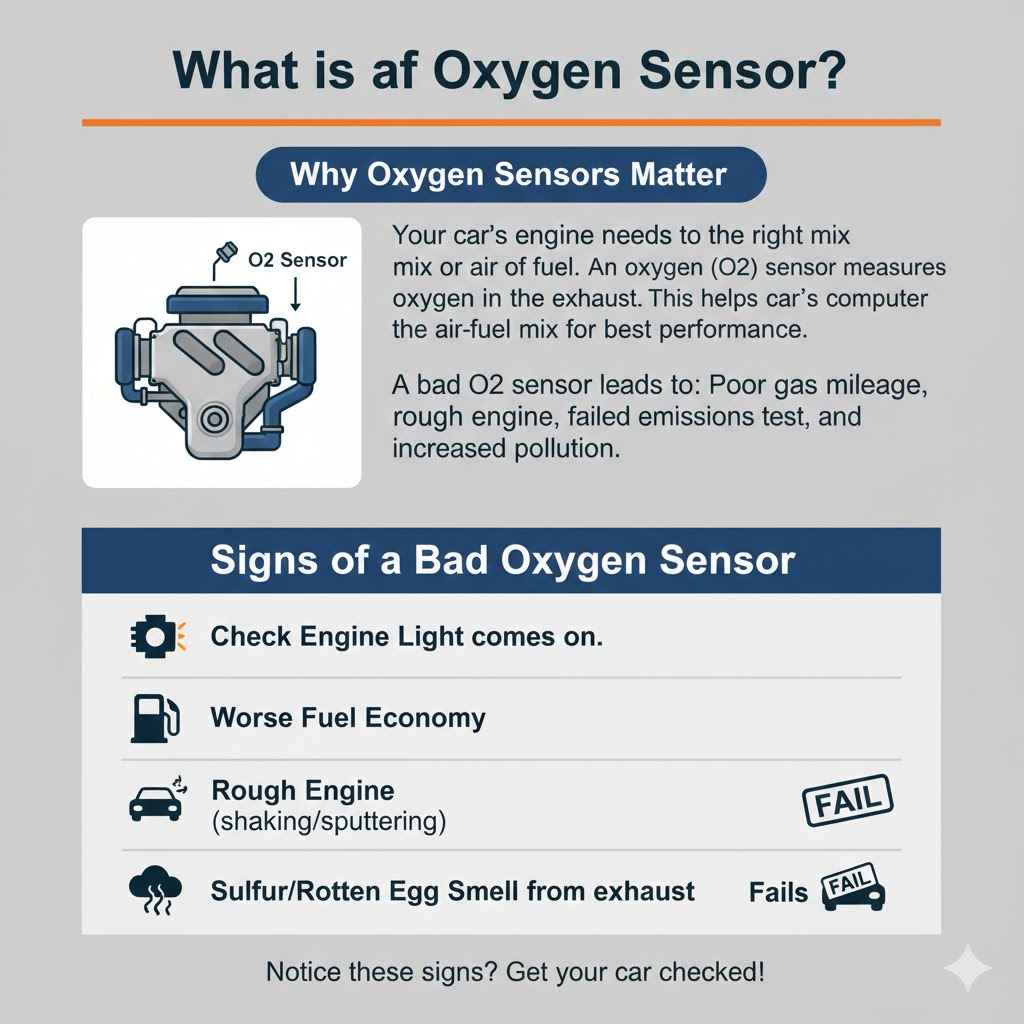
Your car’s engine needs the right mix of air and fuel to work its best. An oxygen sensor, also called an O2 sensor, helps your car’s computer figure out how much oxygen is in the exhaust. This information is key for the computer to adjust the air-fuel mix perfectly.
When the oxygen sensor isn’t working right, the engine computer can’t make these adjustments. This means your car might use too much gas or not run as smoothly. It can also cause your car to fail an emissions test because it’s putting out too many pollutants.
Signs of a Bad Oxygen Sensor
You might notice a few things if your oxygen sensor is failing:
- Your check engine light comes on. This is usually the first sign.
- Your car’s fuel economy gets worse. You’ll be filling up your gas tank more often.
- Your engine runs rough. It might shake or sputter, especially when idling.
- Your car might smell like sulfur or rotten eggs from the exhaust.
- Your car fails an emissions test.
If you see any of these signs, it’s a good idea to get your car checked out. A failing oxygen sensor is something that needs attention.
Can Grease Monkey Replace Oxygen Sensors?
Grease Monkey’s Services
Grease Monkey is a well-known automotive service center that offers a wide range of maintenance and repair services for vehicles. Their primary focus is often on routine maintenance like oil changes, tire rotations, and fluid checks. However, many Grease Monkey locations also provide more advanced repair services.
This includes services related to the exhaust system and engine diagnostics. Since oxygen sensors are part of the exhaust system and directly impact engine performance and emissions, it’s very likely that Grease Monkey performs oxygen sensor replacements. They have trained technicians and the necessary equipment to diagnose and fix such issues.
What to Expect at Grease Monkey
When you take your car to Grease Monkey for an oxygen sensor issue, the technicians will likely:
- Scan your car’s computer for diagnostic trouble codes (DTCs). A bad O2 sensor often triggers a specific code.
- Perform a visual inspection of the sensor and its wiring.
- Test the sensor’s performance to confirm it’s faulty.
- If a replacement is needed, they will select the correct part for your car’s make and model.
- Remove the old sensor and install the new one, ensuring it’s properly sealed.
- Clear the diagnostic codes and test drive your vehicle to ensure everything is working correctly.
Their goal is to get your car running efficiently and safely again. They aim to be a convenient option for many car repair needs.
The Process of Replacing an Oxygen Sensor
Locating the Oxygen Sensor
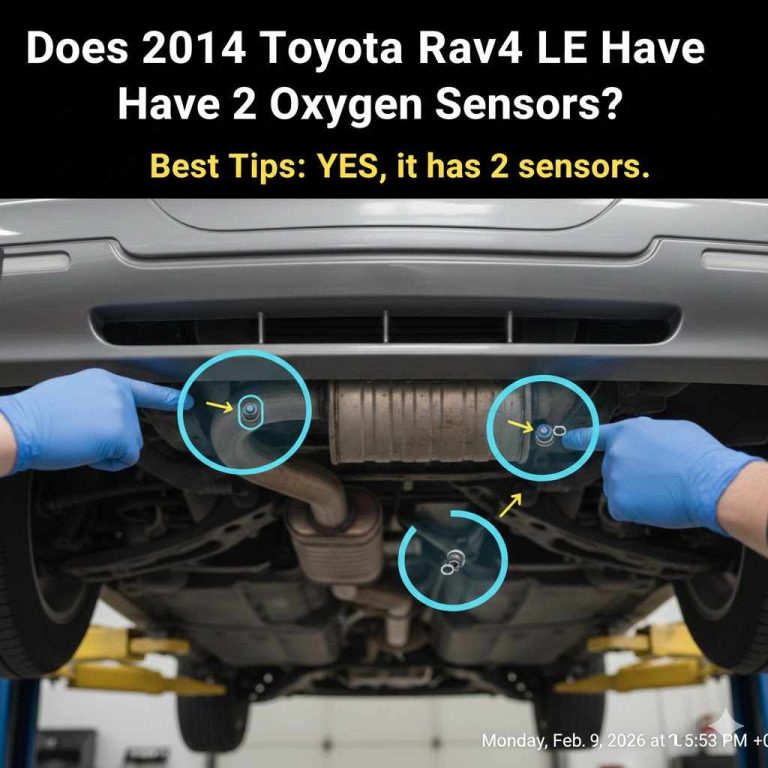
Oxygen sensors are screwed into the exhaust pipe. Cars usually have at least two. One is typically before the catalytic converter, and another is after it.
The one before the converter monitors the air-fuel mix, while the one after monitors the converter’s efficiency.
Finding them might involve looking under your car along the exhaust system. They look like small metal probes with wires coming out of them. The location can vary a bit depending on your car’s design.
Tools Needed for Replacement
Replacing an oxygen sensor requires a few specific tools. A common one is an oxygen sensor socket wrench. This tool has a slit in the side, allowing the wires of the sensor to pass through while you loosen or tighten it.
You might also need:
- A ratchet wrench to use with the socket.
- Penetrating oil to help loosen a stuck sensor.
- Anti-seize compound to apply to the threads of the new sensor.
- Safety glasses and gloves.
Having the right tools makes the job much easier and safer. It also helps prevent damage to the exhaust system.
Step-by-Step Replacement Guide
Here’s a general idea of how an oxygen sensor is replaced:
- Ensure the Engine is Cool: Never work on a hot exhaust system. Let the car cool down completely.
- Locate the Sensor: Identify the faulty oxygen sensor. Often, diagnostic codes will tell you which one it is (e.g., Bank 1 Sensor 1).
- Disconnect the Wiring: Carefully unplug the electrical connector from the sensor.
- Remove the Old Sensor: Use the oxygen sensor socket wrench and ratchet to unscrew the old sensor. If it’s very tight, you might need to use some penetrating oil and wait a bit.
- Prepare the New Sensor: Apply a thin layer of anti-seize compound to the threads of the new sensor. Be careful not to get it on the sensor tip. Some new sensors come with anti-seize already applied.
- Install the New Sensor: Screw the new sensor into place by hand first, then tighten it snugly with the socket wrench. Do not overtighten.
- Reconnect the Wiring: Plug the electrical connector back into the new sensor.
- Clear Codes and Test: Start the car and use a scan tool to clear any diagnostic trouble codes. Take the car for a short drive to ensure the check engine light stays off and the engine runs smoothly.
This process is something a trained mechanic at a place like Grease Monkey can do efficiently. For DIYers, it’s a manageable task with the right tools and a bit of patience.
Why Choose a Professional for Oxygen Sensor Replacement
Expertise and Tools
Professional auto repair shops like Grease Monkey have technicians who are trained to handle a wide variety of car repairs. They understand the nuances of different vehicle makes and models. They also have access to specialized tools and diagnostic equipment that many car owners don’t have at home.
This expertise is important because oxygen sensors are connected to the engine’s computer. Incorrect installation or handling could lead to further problems or damage. Professionals can quickly and accurately diagnose the issue and perform the repair.
Warranty and Peace of Mind
When you have a service done at a reputable shop, you often get a warranty on the parts and labor. This means if the new oxygen sensor has a problem or if the repair wasn’t done correctly, you can bring your car back for them to fix it at no extra charge.
This warranty offers peace of mind. It ensures that you are getting quality service and reliable parts. For many people, this guarantee is well worth the cost of professional service, especially for components as critical as oxygen sensors.
Cost of Oxygen Sensor Replacement
Factors Affecting Cost
The cost to replace an oxygen sensor can vary based on several factors:
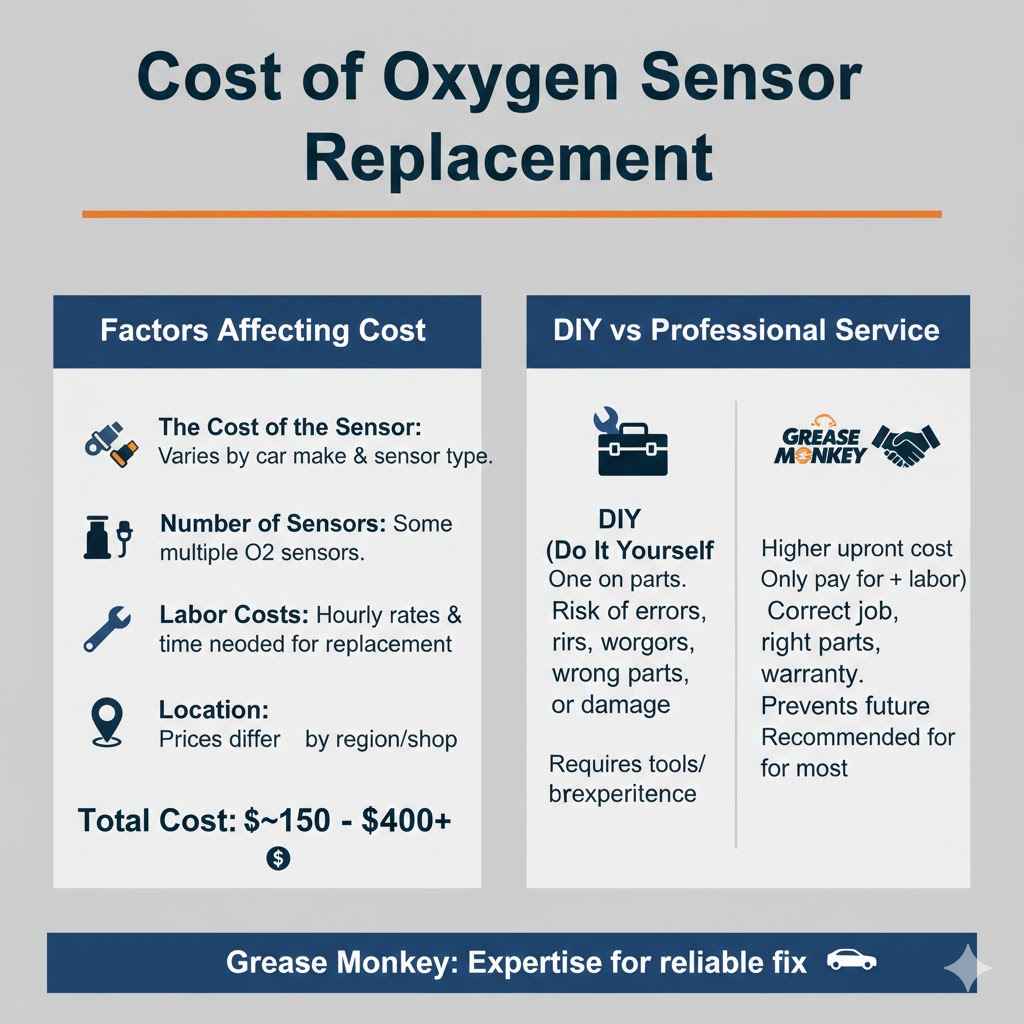
- The Cost of the Sensor: Different car manufacturers use different types of sensors, and some are more expensive than others.
- Number of Sensors: Some cars have multiple oxygen sensors, and if more than one needs replacement, the cost will increase.
- Labor Costs: The hourly labor rate at the repair shop and the time it takes to replace the sensor will affect the total price. Some sensors are harder to access, requiring more labor.
- Location: Prices for parts and labor can differ depending on where you live.
You can expect the total cost to range from about $150 to $400 or more for a single sensor replacement. This includes both the part and the service.
Comparing DIY vs. Professional
Doing it yourself (DIY) can save you money on labor costs, as you’ll only pay for the part. However, if you don’t have the right tools or experience, you could potentially cause more damage or buy the wrong part, leading to higher costs in the long run.
Using a professional service like Grease Monkey guarantees that the job is done correctly with the right parts. While it costs more upfront due to labor charges, it often provides better value due to the expertise, warranty, and the prevention of potential future issues. For those who are not mechanically inclined or lack the necessary tools, a professional service is the safer and more reliable option.
Frequently Asked Questions
Question: Can I drive my car with a bad oxygen sensor?
Answer: You can usually drive your car with a bad oxygen sensor, but it’s not recommended for long periods. Your car will likely consume more fuel, run less efficiently, and may eventually stall or run very poorly. It can also damage your catalytic converter over time, which is a much more expensive repair.
Question: How long does an oxygen sensor typically last?
Answer: Oxygen sensors are designed to last for a long time, often between 60,000 and 100,000 miles. However, they can fail sooner due to engine issues, contamination, or simply wear and tear.
Question: Does Grease Monkey charge for diagnostics?
Answer: Yes, most automotive service centers, including Grease Monkey, typically charge a diagnostic fee to identify the problem with your vehicle. This fee covers the time and expertise of their technicians to accurately determine what needs to be repaired.
Question: Are all oxygen sensors the same?
Answer: No, oxygen sensors are not all the same. They vary based on the vehicle’s make, model, year, and even the specific location on the exhaust system (e.g., upstream or downstream sensor). Using the wrong sensor can lead to incorrect readings and engine problems.
Question: Can a bad oxygen sensor affect my car’s performance?
Answer: Yes, a bad oxygen sensor can significantly affect your car’s performance. It can lead to poor acceleration, rough idling, hesitations, and decreased fuel efficiency because the engine computer isn’t getting the correct information to optimize the air-fuel mixture.
Final Thoughts
Yes, Grease Monkey does replace oxygen sensors. They are equipped with skilled technicians and the proper tools to diagnose and repair this common car issue. If your check engine light is on or you notice poor fuel economy, taking your car to Grease Monkey is a reliable option for getting your oxygen sensor replaced correctly, ensuring your car runs smoothly and efficiently.