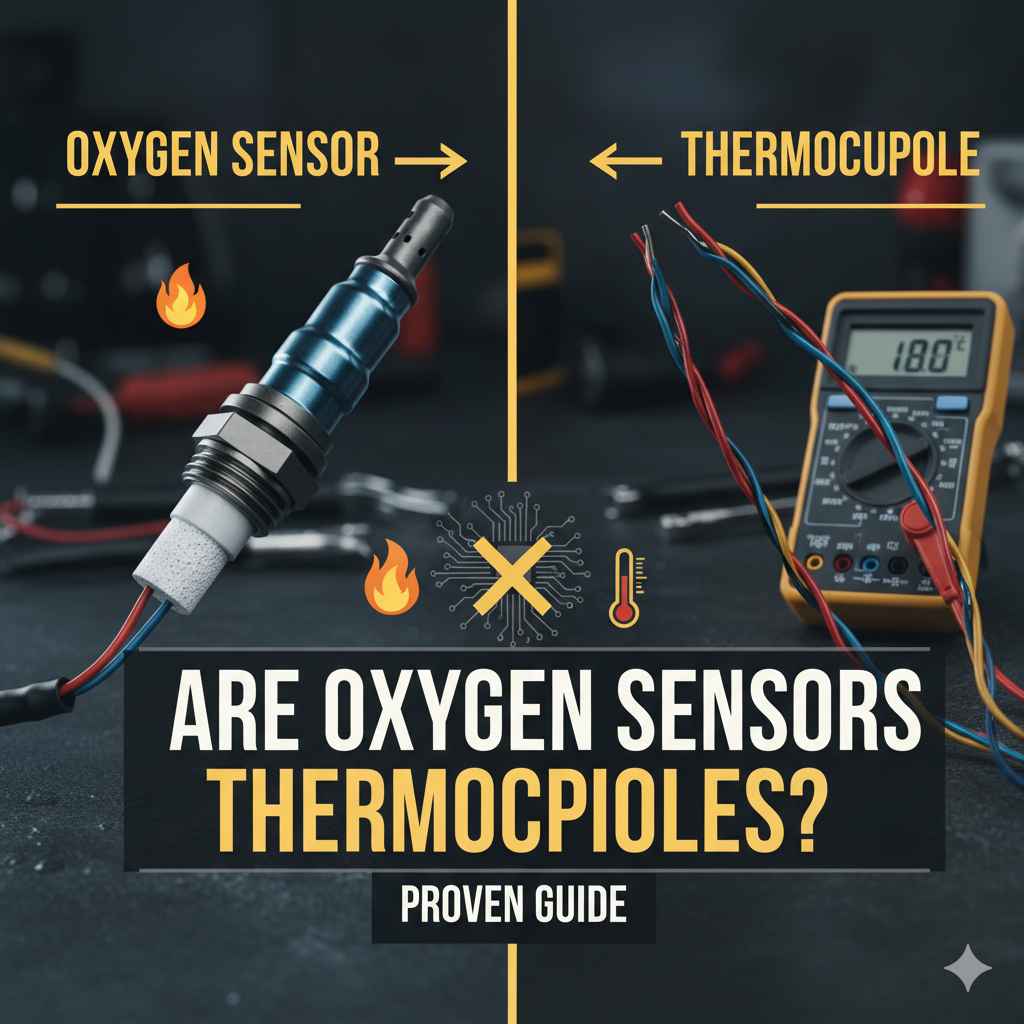
Are Oxygen Sensors Thermocouples: Proven Guide
No, oxygen sensors are not thermocouples. While both devices measure temperature and use metal elements, they function very differently and are used for distinct purposes in your vehicle’s exhaust system. This guide will explain the difference clearly.
Having trouble understanding your car’s exhaust system? You’re not alone! Many car owners find terms like “oxygen sensor” and “thermocouple” confusing, especially when trying to figure out how their car works or what needs fixing. Let’s clear things up. We’ll dive into what oxygen sensors actually are and how they differ from thermocouples, making it easy for you to understand your vehicle’s needs and keep it purring along smoothly. Get ready to feel more confident about your car’s exhaust system!
Are Oxygen Sensors Thermocouples? The Simple Answer
Let’s cut straight to the chase: Oxygen sensors are NOT thermocouples. This is a common point of confusion because both are used in automotive applications and involve measuring something related to the exhaust. However, they operate on completely different principles and serve distinct roles.
A thermocouple is a temperature-measuring device. An oxygen sensor, on the other hand, measures the amount of unburned oxygen in your exhaust gases. Understanding this fundamental difference is key to grasping how your car’s engine management system works efficiently and how to keep it running at its best.
What is an Oxygen Sensor?
An oxygen sensor, often called an O2 sensor, is a crucial component in a modern vehicle’s exhaust system. Its primary job is to measure the amount of oxygen in the exhaust gases leaving the engine. Why is this important? Because the amount of oxygen directly tells the engine’s computer (ECU – Engine Control Unit) whether the air-fuel mixture being burned in the engine is too rich (not enough air, too much fuel) or too lean (too much air, not enough fuel).
The goal of the ECU is to maintain a very precise air-fuel ratio, ideally close to the stoichiometric (chemically perfect) ratio. This perfect ratio ensures:
- Maximum fuel efficiency
- Minimum harmful emissions
- Optimal engine performance
Based on the readings from the O2 sensor, the ECU adjusts how much fuel is injected into the engine. If the O2 sensor detects too much oxygen (lean mixture), the ECU might add more fuel. If it detects too little oxygen (rich mixture), the ECU will reduce the fuel amount. This constant feedback loop is essential for a healthy engine.

Types of Oxygen Sensors
There are a few main types of oxygen sensors you might encounter:
- Zirconium Dioxide (Zirconia) Sensors: These are the most common type. They work by creating a voltage that varies with the difference in oxygen between the exhaust gas and the outside air.
- Titanium Dioxide (Titania) Sensors: Less common now, these sensors change their electrical resistance based on oxygen content.
- Wideband (Air-Fuel Ratio) Sensors: These are more advanced and provide a much more precise measurement of the air-fuel ratio across a wider range. They are often found in performance vehicles.
How a Zirconia O2 Sensor Works (Simplified)
Imagine a tiny ceramic thimble made of zirconium dioxide. This ceramic has special properties that allow oxygen ions to pass through it when it’s hot enough (around 600°F or 315°C). One side of the thimble is exposed to exhaust gas, and the other side is exposed to ambient air.
When there’s a difference in oxygen concentration between the exhaust and the outside air, the ceramic generates a small electrical voltage. A higher oxygen difference generates a higher voltage. The ECU reads this voltage and uses it to determine if the mixture is rich or lean.
What is a Thermocouple?
A thermocouple is a temperature-measuring device. It’s made by joining two different types of metal wires together at one end, creating a “hot junction.” The other ends of the wires are left separate, forming a “cold junction.”
When the hot junction is at a different temperature than the cold junction, a small, predictable voltage is generated across the wires. This phenomenon is known as the Seebeck effect. The magnitude of this voltage is directly related to the temperature difference between the two junctions.
Thermocouples are valued for their:
- Durability: They can withstand high temperatures and harsh environments.
- Wide Temperature Range: They can measure temperatures from very cold to extremely hot.
- Simplicity: They are relatively simple in construction.
- Response Time: Some types can respond very quickly to temperature changes.
How a Thermocouple Works (Simplified)
Think of it like this: when two dissimilar metals are heated or cooled at one point, the electrons in those metals get agitated differently, causing them to flow and create a tiny electrical current. The hotter the junction gets compared to the other end, the stronger this current becomes. A specialized meter reads this tiny voltage and translates it into a temperature reading.
Thermocouples are used in many applications, including industrial furnaces, ovens, scientific research, and some specialized automotive uses. For example, some high-performance exhaust gas temperature (EGT) gauges use thermocouples.
Key Differences: Oxygen Sensor vs. Thermocouple
Now that we know what each device is and how it works, let’s highlight the core differences side-by-side:
| Feature | Oxygen Sensor (O2 Sensor) | Thermocouple |
|---|---|---|
| Primary Function | Measures oxygen content in exhaust gas. | Measures temperature. |
| Operating Principle | Electrochemical reaction based on oxygen concentration difference. | Seebeck effect (thermoelectric voltage generated by temperature difference between dissimilar metals). |
| Output Signal | Voltage signal that directly (or indirectly for wideband) relates to air-fuel ratio. | Voltage signal directly proportional to temperature difference. |
| Purpose in Vehicle | Optimize air-fuel ratio for emissions, fuel economy, and performance. | Measure temperature (e.g., exhaust gas temperature in high-performance applications, coolant temperature). |
| Construction | Often ceramic (Zirconia or Titania) with electrodes. | Two dissimilar metal wires joined at one end. |
| What is Measured | Oxygen concentration. | Temperature. |
Why the Confusion? Common Touchpoints
The confusion between oxygen sensors and thermocouples often stems from a few common overlaps:
- Location: Both can be screwed into the exhaust system. This shared location can lead people to assume they are the same type of device.
- Temperature Dependence: Both require heat to operate correctly. O2 sensors need to reach a “light-off” temperature (typically above 600°F / 315°C) to function. Thermocouples also rely on temperature differences.
- Electrical Output: Both produce a voltage signal that is interpreted by a vehicle’s computer or a gauge.
- Automotive Context: Their presence within the automotive world, especially in relation to the exhaust, further fuels the mix-up.
However, it’s crucial to remember their core functions. One is about chemistry (oxygen presence), and the other is about physics (temperature). Even though they can both be found in the hot exhaust stream, what they do there is entirely different.
Are There Thermocouples in My Exhaust System?
While your car likely has an oxygen sensor (or multiple) in its exhaust for engine management, it’s less likely to have a standard thermocouple for general engine operation. However, some specialized automotive applications might use thermocouples:
- Exhaust Gas Temperature (EGT) Gauges: In performance vehicles, especially those with turbochargers or diesel engines, an EGT gauge is often installed. These gauges typically use a thermocouple probe screwed into the exhaust manifold or pipe upstream of the turbocharger to measure how hot the exhaust gases are. Monitoring EGT is important for preventing engine damage under high load. You can find resources on installing these, like guides from reputable automotive forums or performance parts retailers.
- Aftermarket Temperature Sensors: Some custom builds or performance monitoring setups might use thermocouples for various temperature readings.
So, while not a standard part of everyday engine control, thermocouples can certainly be found in the exhaust system of some vehicles, usually for performance monitoring. Always confirm the specific part you are dealing with to understand its function.
How to Identify Your Sensor
If you’re under your car or looking at parts diagrams and aren’t sure what you’re looking at, here’s how to get a general idea:
Oxygen Sensor:
- Usually has a ceramic-looking “tip” or sheath.
- Typically connects using a wire harness with 1 to 5 wires. The number of wires can indicate its type (e.g., 1-wire for older, unheated sensors; 4-wire for heated sensors; 5-wire for some wideband sensors).
- Located within the exhaust piping, often before and sometimes after the catalytic converter.
- Often has part numbers or markings like “O2”, “[Brand Name] LSU/LSX” (for wideband), etc.
Thermocouple (for EGT):
- Typically looks like a metal probe with a fine point or a bead at the end.
- Consists of two thin wires bundled together, often covered in a heat-resistant sleeve, leading to a connector.
- Will be connected to an EGT gauge or data logger, not directly to the main engine control harness.
- May have markings indicating its type (e.g., “Type K,” “Type J”).
When in doubt, always consult your vehicle’s service manual or a trusted mechanic. Parts diagrams can be incredibly helpful for visually identifying components in their specific location.
Troubleshooting and Common Issues
Understanding the difference between O2 sensors and thermocouples is also vital for troubleshooting. A faulty oxygen sensor is a very common issue and can lead to:
- Check Engine Light illumination
- Poor fuel economy
- Rough idling
- Increased emissions
- Reduced engine performance
A faulty thermocouple, on the other hand, would lead to inaccurate temperature readings, potentially causing incorrect fuel adjustments or providing misleading information to the driver if it’s part of an aftermarket gauge. For instance, if an EGT thermocouple fails, the gauge might read incorrectly high or low, or show no reading. This could lead a performance tuner to make wrong decisions.
Important Note on OBD-II Codes: When diagnostic trouble codes (DTCs) are pulled from your car’s computer (e.g., P0130-P0167 range for O2 sensors), they specifically relate to the oxygen sensor system. You won’t find codes directly related to a thermocouple unless it’s part of a specific aftermarket system that has its own diagnostic capabilities.
Why Proper Air-Fuel Ratio Matters (The O2 Sensor’s Role)
The oxygen sensor is your engine’s primary tool for achieving the optimal air-fuel ratio (AFR). Let’s break down why this is so critical, as it’s the main reason why your car has an O2 sensor:
Stoichiometric (Ideal) AFR: Around 14.7:1
- This is the perfect balance of air and fuel for complete combustion.
- At this ratio, the catalytic converter works most efficiently to clean up exhaust gases (converting CO, NOx, and unburned hydrocarbons into less harmful substances).
- This is the target for normal cruising and light acceleration.
Rich Mixture: Less than 14.7:1 (e.g., 12:1)
- Too much fuel, not enough air.
- Produces more power but wastes fuel and increases emissions of carbon monoxide (CO) and hydrocarbons (HC).
- The O2 sensor detects less oxygen and signals the ECU to reduce fuel.
Lean Mixture: More than 14.7:1 (e.g., 16:1)
- Too much air, not enough fuel.
- Improves fuel economy but can lead to higher combustion temperatures and increased emissions of oxides of nitrogen (NOx).
- The O2 sensor detects more oxygen and signals the ECU to increase fuel.
The O2 sensor’s ability to accurately report oxygen levels allows the ECU to make constant, minute adjustments, keeping the engine running in its most efficient and cleanest operating window. A failing O2 sensor throws this entire system out of balance.
For more detailed information on stoichiometry and air-fuel ratios, you can refer to resources like those found in university automotive engineering departments, for example, lectures on internal combustion engines often detail these concepts.

Conclusion: Two Different Jobs, One System
So, to recap, the answer to “Are oxygen sensors thermocouples?” is a definitive no. They are distinct devices with entirely different functions, even though they might both reside in the hot environment of your exhaust.
Your oxygen sensor is a chemical sensor working to optimize your engine’s air-fuel ratio for efficiency and emissions. A thermocouple, on the other hand, is a thermal sensor specifically designed to measure temperature, often used in performance monitoring like EGT gauges.
Understanding these differences helps you diagnose issues correctly, maintain your vehicle properly, and appreciate the complex systems at play under the hood. With this knowledge, you’re better equipped to keep your car running smoothly and efficiently!
Frequently Asked Questions (FAQs)
Q1: Can a bad oxygen sensor be mistaken for a bad thermocouple?
A: It’s unlikely if you’re diagnosing a car’s core functions. A faulty O2 sensor will cause engine performance and emissions issues, often triggering Check Engine Lights with specific O2 sensor codes. A faulty thermocouple will cause incorrect temperature readings on an EGT gauge or other temperature-monitoring device, usually separate from the main engine management system.
Q2: Do all cars have oxygen sensors?
A: Virtually all gasoline-powered cars and trucks manufactured since the early 1980s have at least one oxygen sensor. Modern vehicles typically have multiple O2 sensors (before and after the catalytic converter) to monitor and control emissions more precisely.
Q3: How does an oxygen sensor “know” if the mixture is rich or lean?
A: Zirconia O2 sensors measure the difference in oxygen concentration between the exhaust gas and the outside air. If there’s little oxygen in the exhaust (rich mixture), it generates a high voltage. If there’s a lot of oxygen (lean mixture), it generates a low voltage. Wideband sensors use a more complex electrochemical process to measure the actual amount of oxygen.
Q4: Can I test a thermocouple myself?
A: Yes, you can test a thermocouple with a multimeter capable of measuring millivolts (mV). You can gently heat the tip of the thermocouple (e.g., with a lighter from a safe distance, or a heat gun) and observe the voltage change on the meter. The voltage should increase as temperature increases. However, accurately calibrating it to specific temperatures requires specialized equipment.
Q5: What happens if my oxygen sensor fails?
A: A failed O2 sensor can lead to increased fuel consumption, poor engine performance (stumbling, hesitation), rough idling, increased emissions, and illuminate your Check Engine Light. The catalytic converter can also be damaged if the engine runs too rich for too long.
Q6: Are there any situations where an O2 sensor acts like a thermostat?
A: No, an oxygen sensor doesn’t function as a thermostat. However, heated oxygen sensors have a built-in heater element that helps them reach their optimal operating temperature faster after a cold start. This is to ensure accurate readings sooner, improving emissions control from the moment the engine warms up, not to regulate engine temperature.
Q7: Where can I find more information on exhaust gas temperature sensors for performance cars?
A: Reputable performance parts retailers, automotive forums dedicated to specific car makes or performance tuning, and often the websites of EGT gauge manufacturers will have detailed guides and technical information about exhaust gas temperature sensors and thermocouples. For instance, companies like Innovate Motorsports or AEM offer data logging and sensor solutions.