Can Exhaust Rust Be Repaired or Only Replaced?
Surface rust on an exhaust can often be repaired, but holes, cracked seams, or rust at joints and hangers usually mean replacement is the safer call. Ignoring severe corrosion can turn a noisy leak into exhaust gas entering the cabin, and a weakened section can break loose. This guide explains which rust damage can be repaired, which fixes are temporary, and when replacement is the only sensible option.
Assessing whether surface rust has become structural failure
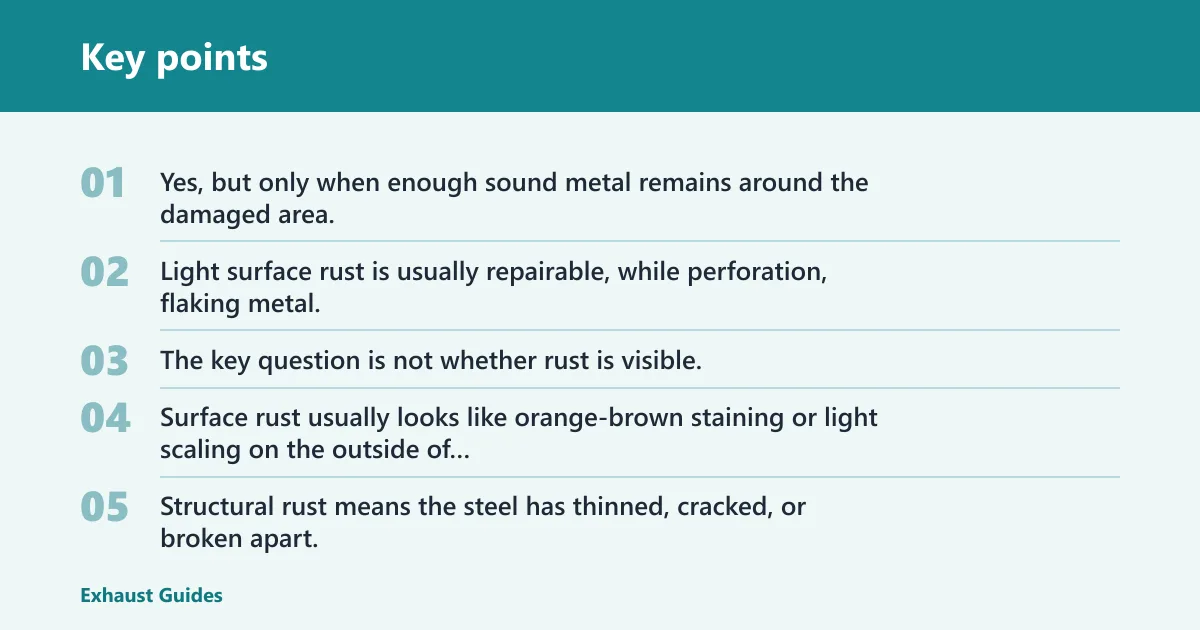


Yes, but only when enough sound metal remains around the damaged area. Light surface rust is usually repairable, while perforation, flaking metal, and rust that runs through seams or mounting points often need section replacement or a full new part. The key question is not whether rust is visible; it is whether the metal still holds its shape and sealing surface.
Surface rust versus structural rust
Surface rust usually looks like orange-brown staining or light scaling on the outside of the pipe. It has not yet eaten through the wall. Structural rust means the steel has thinned, cracked, or broken apart, which is a different problem because it can no longer seal, support weight, or tolerate welding for long.
A common first-timer mistake is treating a flaky patch near a hanger as “just rust.” If the metal bends with a screwdriver, crumbles at the edge, or opens up when tapped, that is past cosmetic corrosion. At that point, repair may only buy time.
What makes a rusted exhaust still repairable
Repairability depends on how much metal remains sound around the defect. A small leak can often be sealed, clamped, or welded, if the surrounding pipe is still sound. A localized hole with clean edges and enough surrounding steel may also take a patch or a short section replacement.
Underbody location matters because exhaust pipes sit in the spray path for water, debris, and road salt. Salt speeds corrosion, especially after winter driving, so the same rust pattern may be repairable on one car and too far gone on another of the same age.
When repair becomes a short-term fix
Some repairs stop noise and fumes for a while without restoring the part. Sealant, tape, or a clamp can help when the damage is small and the pipe still has enough surface for the product to grip. Those fixes are temporary when corrosion is active around the repair area, because the surrounding steel continues to fail.
That is why a garage inspection is worth it when rust is visible or symptoms appear. A quick diagnosis can separate a minor leak from a failing section before the car becomes unsafe to drive.
Repair decision matrix
| Rust type | Visible symptoms | Metal condition | Likely fix | Temporary or permanent | Red flags |
|---|---|---|---|---|---|
| Surface rust | Orange staining, no hole, no leak noise | Sound metal, no flaking through the wall | Clean, inspect, protect; no part replacement if the pipe is still solid | Permanent if kept dry and monitored | Deep pitting, bubbling, rust at seams |
| Pinhole leak | Soft ticking, faint fumes, tiny visible hole | Enough clean metal around the hole for sealing or welding | Sealant, clamp, small patch, or weld | Usually temporary unless welded into sound metal | Hole enlarging, soot trails, thin surrounding wall |
| Flange rust | Leak at a joint, black soot, rattling near a connection | Flange still holds shape and bolt holes are intact | Replace gasket, hardware, or flange section | Permanent if the mating faces are sound | Flange warped, cracked, or rusted through |
| Flex pipe rust | Louder exhaust note, vibration, visible fraying | Braided or corrugated section weakened | Section replacement, sometimes with adjacent pipe | Permanent when the flex section is replaced | Frayed braid, splits, heavy corrosion at both ends |
| Perforated pipe section | Clear hole, fumes, loud leak, possible rattles | Wall thinned through or breaking apart | Section replace or full replace if the surrounding pipe is also thin | Permanent if the damaged section is fully replaced | Multiple holes, widespread scaling, rust near hangers |
How do you repair a rusted exhaust pipe?
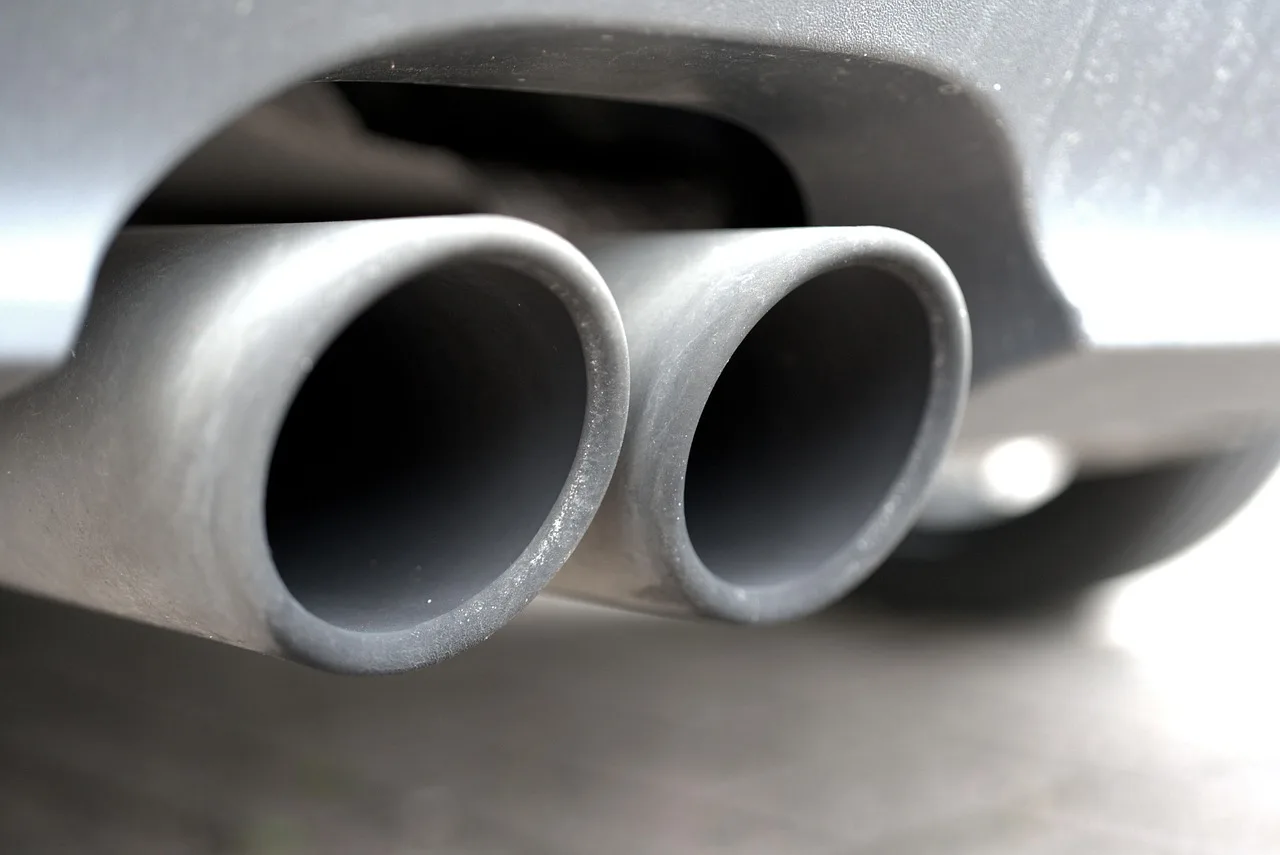
Repair starts with inspection, because the right fix depends on whether the pipe has a small leak, a thin wall, or a wide perforation. If the metal is still sound, a sealant, clamp, weld, or short replacement section may work. If rust has spread across joints or the pipe wall has collapsed, replacement is safer.
Sealant and clamp repairs
Sealant can help with very small exhaust leaks, but only if enough metal remains for it to stick. It is not a cure for severe rust. A clamp can also close a minor split or hold a patch in place, but these methods rely on a stable pipe surface and usually work best as a stopgap.
For example, a roughly 10 mm pinhole in the straight section of pipe, with the surrounding metal still firm, can be used as a repair example. A clamp-on repair or sealant may quiet the leak. If the same hole is surrounded by scaly rust, the repair will likely fail quickly.
Welding a localized hole
Welding is possible only when the damage is localized and the metal around it is still strong enough to accept heat and filler. That means no widespread thinning, no active crumbling, and no rust eating through a long run of pipe. Welding on heavily corroded steel usually burns through or fails soon after.
Welding can be paired with section replacement when one damaged area sits in an otherwise usable section. The mechanic may cut out the bad part and weld in a new piece, which is better than trying to seal over rotten steel.
Section replacement versus full replacement
Section replacement makes sense when one part has failed but the rest of the exhaust system is still usable. That might be a pipe segment, flex pipe, muffler, resonator, hanger, or clamp area. Full replacement is more likely when corrosion is spread across several parts or the system has multiple weak points.
Exhaust systems include joints and support hardware, so a single leak rarely stays single for long if the pipe metal is already thin. If the same rust is showing up on several sections, a larger replacement is often the cheaper choice over time, even if the first bill is higher.
FixMyCar lists the average exhaust repair price at £107.62, the average exhaust fitting price as £135.25, and exhaust leak repair at an average price of £110. It also says a back box fitment typically takes 30 minutes to one hour, while a full exhaust system fitment takes two to six hours.
When is rust too far gone?
Rust is too far gone when the steel is flaking, perforated over a broad area, or weakened around a joint that must hold pressure and alignment. At that point, repair may hide the leak for a short time, but it does not restore strength. A part with widespread metal loss should go straight to replacement.
Flaky metal and wide perforation
If rust has turned the pipe into layers of scale, there may be little solid steel left for welding or sealing. A hole is repairable only if the surrounding wall is still thick enough. Once the metal is paper-thin, any patch just bridges over a failing shell.
Halfords says chip repairs are usually possible under 25mm and replacement is likely over 25mm. That rule is about body damage, not exhaust parts, but it gives a useful reference point: once a defect is large enough that the surrounding material cannot support the fix, replacement becomes the practical answer.
Rust at joints and flanges
Rust around flanges, clamps, hangers, and seams is a warning sign because those areas must stay aligned and sealed. If the flange face is pitted, warped, or cracked, a gasket alone will not solve it. If the hanger mount is rotten, the pipe can move, stress the joint, and break the seal again.
Flex pipe rust is especially unforgiving. The section is built to move, so once the braid frays or the inner tube splits, a patch usually lasts only briefly. That is why flex pipes are often replaced rather than repaired.
Why some repairs fail quickly
Repairs fail when corrosion keeps spreading under the repair area. Moisture, salt, and heat cycles keep working on the metal, and the original weak spot opens again. If the pipe is thin for several inches around the hole, the patch has to fight the whole damaged zone, not just one point.
Do exhaust leaks affect sound and safety?
Yes. Exhaust leaks often make the system louder, create a ticking or rattling noise, and can reduce efficiency if the leak changes backpressure or sensor readings. They can also let fumes escape where they should not, which is why leak symptoms deserve fast inspection rather than guesswork.
Noise changes and rattling
A leak near the front of the exhaust often sounds sharp or tick-like on acceleration. A leak farther back may make the car sound hollow, harsh, or louder than usual. Loose rust, broken hangers, and cracked clamps can also rattle as the pipe moves against the body or shield.
Suppose the car suddenly sounds louder at idle and there is a metallic buzz over bumps. That points to more than surface rust. A hanger may have failed, or a rusted section may be letting the pipe vibrate against the underbody.
Fumes and carbon monoxide risk
An exhaust leak can route fumes into the cabin if the opening sits near the floorpan, rear quarter, or any area where air can be drawn inward while driving. Carbon monoxide is the concern here, because it is colorless and dangerous. If the cabin smells like exhaust or you feel dizzy, stop driving and get the car checked.
Exhaust smell, rattling, or a sudden change in note should trigger inspection. A garage can confirm whether the leak is at a pipe, flange, muffler, resonator, hanger, or clamp, and whether the damage is local enough to repair.
Why exhausts rust in the first place
Exhausts rust because they sit under the car, where they take water, road spray, salt, and debris. Heat cycles also stress the metal. As the pipe heats and cools, condensation forms inside and outside the system, which gives corrosion more chances to start and spread.
Road salt and winter driving
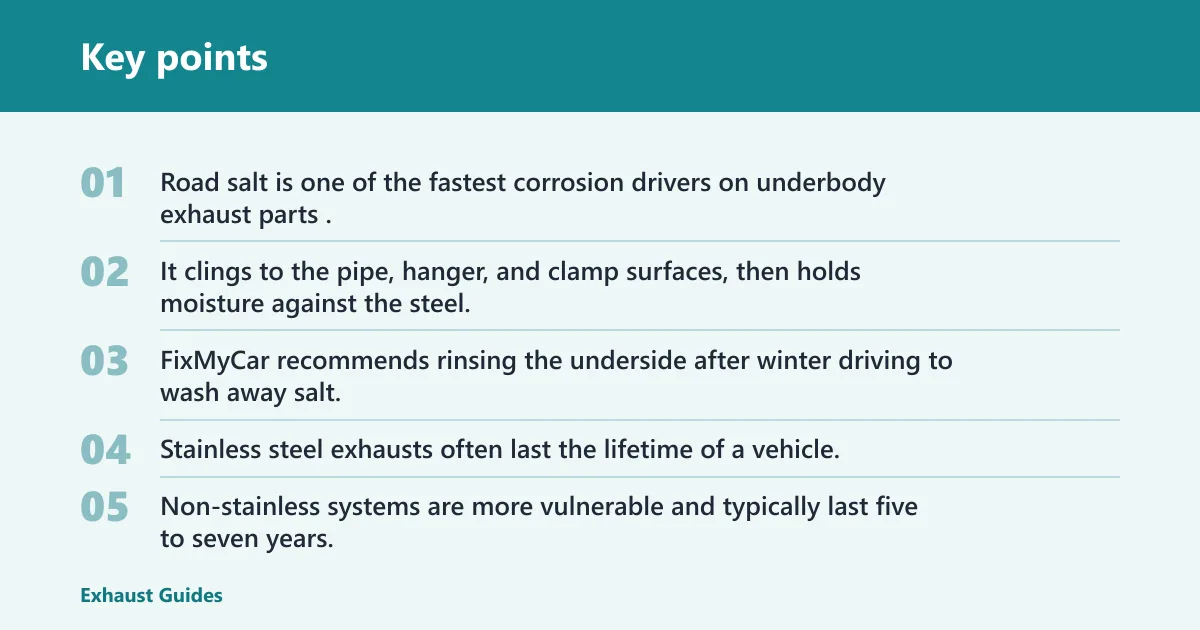
Road salt is one of the fastest corrosion drivers on underbody exhaust parts. It clings to the pipe, hanger, and clamp surfaces, then holds moisture against the steel. The same source recommends rinsing the underside after winter driving to wash away salt, which helps slow corrosion.
Stainless steel versus non-stainless systems
Stainless steel exhausts often last the lifetime of a vehicle, although severe conditions can still corrode them. Non-stainless systems are more vulnerable and typically last five to seven years. That difference matters when deciding whether a rusty section deserves repair or a larger replacement plan.
The material type also changes failure mode. On non-stainless parts, rust often starts on the outer shell and moves into seams and welds. On stainless parts, corrosion may be slower but can still attack joints, clamps, or areas exposed to repeated salt and moisture.
How can you slow exhaust rust?
You can slow exhaust rust by washing off road salt, checking the underside regularly, and fixing small leaks before they spread corrosion. Prevention is mostly about keeping the underside drier and catching weak spots early, while the metal is still worth saving.
Wash off road salt
After winter driving, rinse the underside so salt does not sit on the pipe, hangers, and clamps. Do this more often if the car sees salted roads regularly. Salt left on the underbody keeps attracting moisture, which speeds up rust on exposed metal.
Check the underside regularly
Look for orange staining, soot at joints, loose brackets, and fresh rattles. Those signs often show up before a part fails completely. A quick check under the car can catch a leak while it is still repairable, instead of waiting for a hole to open.
Fix small leaks before corrosion spreads
Small leaks matter because escaping hot gas dries and heats nearby metal unevenly, and the leak opening often gets bigger as rust grows. A minor exhaust leak can often be repaired by sealing or replacing one section, but the sooner you catch it, the more likely the rest of the system can stay in place.
Frequently asked questions
Can exhaust rust be repaired or does it always need replacing?
Surface rust can often be repaired or managed, but rust that has punched through the metal, cracked a seam, or spread around a joint usually needs replacement. The deciding factor is how much sound steel remains. If the pipe is still solid, repair may be enough; if it is thin and flaky, replace it.
Can you weld a rusted exhaust pipe?
Yes, but only when the damage is localized and the metal around it is still strong enough to hold. Welding on heavily corroded pipe often fails because the heat burns through thin steel. If the rust is broad, section replacement is usually safer and lasts longer.
Can you seal small exhaust rust holes temporarily?
Yes. Sealant can work for a very small leak if there is enough clean metal for it to stick. It is temporary, not permanent, and it will not fix severe rust or large holes. If the area keeps crumbling, the real fix is replacement of the damaged section.
Does exhaust rust affect sound or performance?
Yes. Rust can cause louder exhaust noise, ticking or rattling, fumes, and in some cases reduced efficiency. A leak changes how the exhaust flows, and a damaged hanger or flex pipe can let the system vibrate. If the sound changes suddenly, the car should be inspected.
Can a rusted exhaust leak carbon monoxide?
Yes. A leak can let exhaust gases escape under the car and, in some layouts, enter the cabin. Carbon monoxide risk is why exhaust smell inside the vehicle should never be ignored. If you notice fumes, stop driving and get the system inspected before using the car again.