5 Best Rust Preventers for Exhaust Systems (2026): we compared
For light surface rust on exhaust pipes, use a high-temp rust converter or ceramic coating; for flaking scale, seams, or pinholes, replace the part because coatings will not stop failure. If you ignore it, a cheap clamp or pipe can turn into a loud leak, a failed inspection, or a bigger repair bill. This roundup compares rust-prevention methods by rust stage, exhaust part, and heat exposure, plus long-term value by part and repair stage.
This guide is part of our Exhaust rust and corrosion guide series.
Quick comparison
| Product | Badge | Best for | Price | ||
|---|---|---|---|---|---|
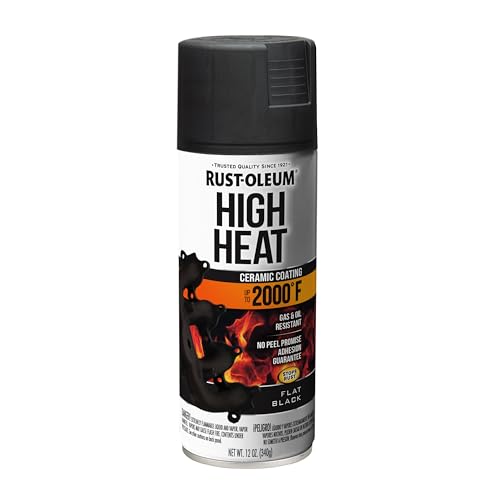 |
Rust-Oleum Automotive High Heat Spray Paint, Flat BlackRust-Oleum | Our pick | Flat black high heat spray paint | $9.97
Price as of 9 Oct 2026
|
View |
 |
Rust-Oleum Stops Rust Reformer Black Spray Paint forRust-Oleum | Budget pick | Rust reformer black spray paint | $8.97
Price as of 9 Oct 2026
|
View |
 |
B’Laster Surface Shield Rust Prevention Spray – LanolinBlaster | Also great | Lanolin undercoating spray pack | $40.20
Price as of 9 Oct 2026
|
View |
 |
VHT Flameproof Coating, Flat, Red, 11 ozVHT | Upgrade pick | Flameproof ceramic coating | $18.20
Price as of 9 Oct 2026
|
View |
 |
Boeshield T-9® Waterproof Lubricant & Corrosion ProtectantBoeshield | Pair with it | Waterproof lubricant and protectant | $22.99
Price as of 9 Oct 2026
|
View |
This chart helps you match the fix to the failure mode and the part, not the product label. Exhaust parts run hot, cool slowly, and trap moisture in ways body panels do not.
For most lightly rusted pipes and mufflers, the best balance is a high-temp coating on properly prepped metal. For maintenance after cleaning, a rust inhibitor spray makes more sense.
How we chose
The best pick here had to fit exhaust heat zones, not generic metal. We compared prep difficulty, maintenance interval, known failure modes, and the point where replacement becomes the only durable answer.
We also separated part types. Pipes, mufflers, clamps, hangers, and bolts do not fail the same way, and they should not get the same treatment.
Finally, we weighed cost against lifespan. A cheap spray that needs frequent reapplication can make sense for upkeep, while a stainless upgrade can make sense when road salt keeps winning.
Decision matrix: match rust stage to the right fix
Light surface rust on a pipe or muffler is often the sweet spot for coating or reformer use. Once metal is thinning, flaking, or perforated, the durable fix is replacement because no coating can rebuild lost steel.
| Rust stage | Part type | Best method | Prep steps | Reapply interval | Heat or failure limit | Replace when |
|---|---|---|---|---|---|---|
| Light surface rust | Pipes, mufflers, clamps, hangers | High-temp exhaust coating or rust inhibitor spray | Wire brush or sand to sound metal; clean dust and oil; dry fully | Coating: after cure, as needed on exposed spots; spray: every few months or after harsh winter washes | Coating is for hot zones; spray belongs on cooler, underbody-adjacent areas | If metal is thin, scaly, or starting to crack |
| Active surface rust | Pipes, mufflers, seams | Rust converter, then topcoat or follow-up protection | Remove loose scale; degrease; apply only to cleaned rusted metal | After the topcoat wears or the exposed area is chipped | Not for hot spots unless the product is rated for that use | If rust returns fast, spreads through seams, or leaves pinholes |
| Perforation, flaking, heavy scaling | Muffler shells, pipe sections, joints | Replacement | Inspect hanger points, seams, and flanges; confirm wall thickness is gone | Not a maintenance case | Any coating will only delay failure briefly | Immediately if exhaust noise, soot trails, or leaks appear |
Rust-Oleum Automotive High Heat Spray Paint: best for prepped pipes and mufflers
- Withstands intermittent high heat up to 2000°F
- Stops Rust formula prevents corrosion
- Protects against grease, oil, and salt
This is the best fit for light surface rust on parts that see high exhaust heat, especially pipes and some muffler shells. Rust-Oleum lists intermittent heat resistance up to 2000°F and says the Stops Rust formula helps protect against grease, oil, and salt.
Use it only after proper prep. That means wire-brushing or sanding loose rust, then cleaning off dust, oil, and road film before spraying. It works best on bare or fully cleaned metal, and it can also help on clamps and hangers if the surface is sound.
The drawback is simple: paint is only as good as the prep, and hot spots can outrun any coating on thin or badly scaled metal. It is a finishing step, not a cure for perforation, and the part still needs inspection after winter use.
Rust-Oleum Stops Rust Reformer Black Spray Paint: best for cleaned active rust
- Instantly converts rust to a paintable surface
- Bonds directly with rusted metal
- Can be sprayed in any direction
This is the better choice when the metal still has life but the rust is active and stubborn. Rust-Oleum says it instantly converts rust to a paintable surface, which makes it useful on cleaned bare metal that still shows stable rust staining or light scale.
It fits the stage where you have removed loose material but do not yet have holes. That makes it a practical step for pipes, muffler exteriors, and some brackets before a topcoat goes on.
The limitation is just as important. It does not fix perforation, and it is not a substitute for replacement when the steel is thin or layered with heavy scale. It also needs follow-up protection if the treated area will keep seeing water, salt, and heat cycling.
B’Laster Surface Shield Rust Prevention Spray: best for maintenance after cleaning
- Forms a durable barrier against moisture
- Thick lanolin-based coating resists sagging
- Aggressively displaces moisture
This lanolin-based spray is the maintenance option for underbody metal that is not directly exposed to extreme exhaust heat. It forms a barrier against moisture and aggressively displaces water, which makes it useful after washing road salt off the underside.
It works well for frameside areas near the exhaust, hanger brackets, hardware, and cooler exterior zones where a spray film can stay in place. Some drivers use products like this as a seasonal barrier, then refresh it after winter or after repeated underbody washes.
The drawback is heat. Spray films like this are not for hot pipes, catalytic-converter shells, or any area that gets enough temperature to burn off the coating. Use it where the product can stay intact, or the benefit disappears fast.
VHT Flameproof Coating: best for high-heat parts before installation
- Ceramic resins resist heat up to 2000°F
- Ideal for headers and manifolds
- Unique silicone ceramic coating
This is the strongest match for parts that live in the hot zone, especially headers and manifolds, and for exhaust pieces coated before installation. VHT’s ceramic resins are listed as resisting heat up to 2000°F, which is why high-temp coating is often the right answer for new or fully cleaned metal.
It is best when the part is off the car, or when the exhaust has been stripped clean enough to prep correctly. That prep matters: remove rust, oil, and residue, then follow the product’s dry and cure steps so the coating can bond and harden properly.
The drawback is time and prep sensitivity. If the metal is dirty, scaly, or only partially cleaned, the coating will fail early. It is also a poor fix for hidden rust inside seams or for sections that are already thin.
Boeshield T-9 Waterproof Lubricant & Corrosion Protectant: best for clamps and cool-area hardware
- Penetrates and displaces moisture
- Dries to a thin waxy film
- Long-lasting waterproof wax-based formula
This is a good fit for dry-film corrosion protection on hardware that does not see direct exhaust heat. It penetrates, displaces moisture, and dries to a thin waxy film, which makes it useful on clamps, bolts, hangers, and adjacent underbody metal after cleaning.
It makes sense when you want ongoing protection rather than a hard coating. Short-trip cars, salted-road commuters, and coastal vehicles can benefit from a maintenance spray on exposed fasteners and nearby brackets after winter washdowns.
The drawback is that it is not a hot-pipe coating. On direct heat zones, a waxy film will not survive, so it should stay on cooler parts and be refreshed as conditions demand.
How to keep exhaust from rusting
The best answer is regular cleaning, drying, and part-specific protection. Rust can be slowed by applying a rust-resistant coating to the exhaust pipes, but the coating must match the heat zone and the rust stage. Moisture, road salt, and trapped debris do the damage, so your job is to remove all three before they sit in seams and low spots.
Short trips are often a bad habit for exhaust longevity because they can leave moisture trapped inside the muffler and speed up rust. Driving longer can help dry trapped moisture inside the muffler, especially after cold starts or wet-weather use. On salted roads, wash the underside often and inspect seams, hangers, and clamps.
A common first-timer mistake is spraying every visible surface the same way. A hot pipe needs a high-temp coating or replacement; a cool hanger bracket can take an inhibitor spray; a perforated muffler needs a new shell, not another layer of paint.
How to prevent rust on exhaust pipe
For an exhaust pipe, prevention starts with metal prep and ends with the right coating for the heat level. Clean the pipe, remove loose scale, dry it fully, then apply a high-temp exhaust coating or high-temperature paint if the part is being painted before installation. A maintenance spray belongs only on cooler adjacent areas.
Road salt is the big accelerator in winter. It works into seams, clamp edges, hanger tabs, and the backside of bends where rinse water often misses. Regularly spraying the underside helps remove rust-trapping particles, but you still need a safe rinse that reaches hidden spots.
Say your car sees weekly salted commutes and a wet driveway. A coating on the pipe plus a scheduled underbody rinse will do more than a one-time spray over dirt.
How to clean exhaust rust
Clean rust by removing loose scale first, not by painting over it. A wire brush, sanding pad, or abrasive hand tool should take the surface down to firm metal or at least a stable rust layer before a converter, high-temp paint, or coating goes on. If the steel is paper-thin, skip straight to replacement.
After mechanical cleaning, wipe away dust and oily residue so the treatment can bond. Rust converter is useful on cleaned active rust, but it is not a fix for perforation. If you can probe the metal with a pick or see layers separating at a seam, the repair is no longer cosmetic.
Picture a muffler with orange staining near the seam and black soot at the tail end. That is the point to inspect for leaks, not the point to keep stacking products.
What is the best rust preventer for exhaust systems
The best rust preventer depends on the part and the rust stage. For most light surface rust on pipes and mufflers, a high-temp exhaust coating on properly prepped metal is the best balance of heat tolerance and durability. For cooler hardware, a corrosion spray or waxy protectant can be the smarter maintenance choice.
Rust converters fit cleaned active rust. Stainless steel fits long-term replacement. Undercoating is less consistent because some drivers use it, but it has mixed reviews, and one downside is odor after burn-off. That makes it a poor choice near hot exhaust metal unless the product is specifically approved for that zone.
So the answer is not one product. It is the right product for the part, the heat, and the condition of the metal.
Should I use high-temp paint or undercoating on an exhaust
Use high-temp paint on exhaust parts that actually get hot, especially when painting before installation. Use undercoating only on cooler underbody areas near the exhaust, if at all, because it can burn off and leave odor after burn-off. The two products are not interchangeable.
High-temperature paint needs bare, cleaned metal and proper dry or cure time. Undercoating may help protect adjacent panels, brackets, or floorpan areas from salt splash, but it should not be applied where exhaust heat will cook it. Avoid coating hot pipes, converter shells, and other heat-soaked zones with a general underbody product.
If you are choosing only one for an actual exhaust component, the heat-rated paint wins.
Does stainless steel exhaust prevent rust
Stainless steel exhaust systems resist rust better than other metals, but they are not completely rust proof. Stainless helps most in salt states because it slows corrosion and generally extends service life, especially compared with mild steel or low-grade aftermarket tubing.
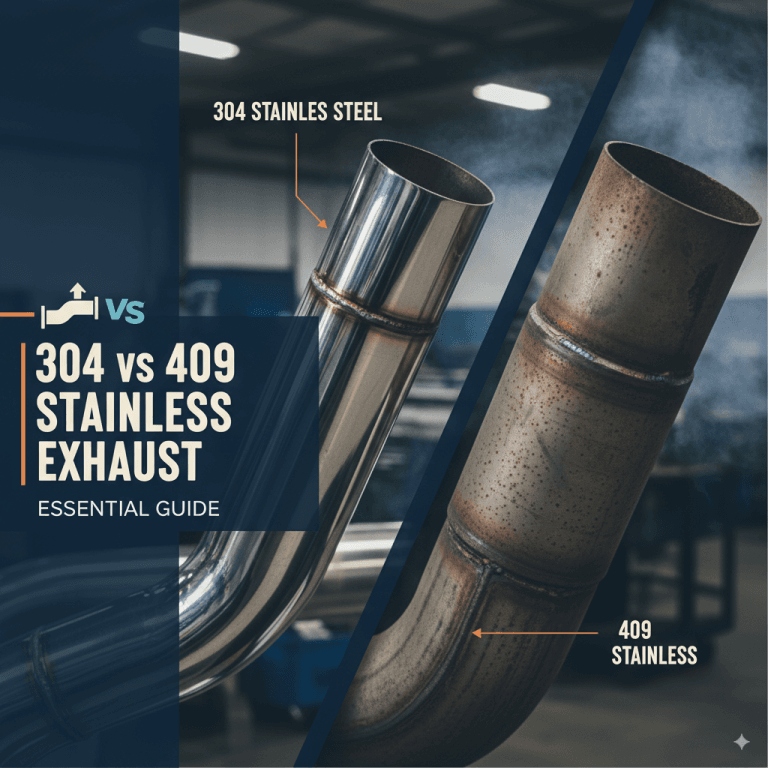
Grade matters. A 409 stainless system is common and more affordable than higher grades, but the higher the corrosion resistance, the higher the price premium usually is. Even stainless can stain, pit, or rust at welds, clamps, and places where road salt and moisture sit for long periods.
Use stainless as a durability upgrade, not as a promise that maintenance is no longer needed.
How often should I wash road salt off my exhaust
Wash road salt off after winter drives often enough that salt does not dry into seams, clamps, and hanger pockets. A good rule is to rinse the underside after major storms or at least every one to two weeks during active salting, especially if the car sees short trips and wet storage. Use a gentle, thorough rinse rather than a narrow blast that misses hidden pockets.
Focus on the backside of pipes, the tops of mufflers, heat shield edges, and clamp overlaps. Those are the hidden trap points where salt and moisture sit longest. Regularly spraying the underside helps remove rust-trapping particles, but it works best when paired with a full rinse that reaches the hardware, not just the visible pipe.
Let the car dry afterward if possible. Moisture trapped in the muffler is part of the problem.
Can I treat a rusty exhaust before it needs replacement
Yes, if the rust is still superficial and the metal is structurally sound. Light surface rust, stable active rust, and early staining can be treated with cleaning, a converter, a high-temp coating, or a maintenance spray depending on heat and location. The key is to act before scale turns into holes.
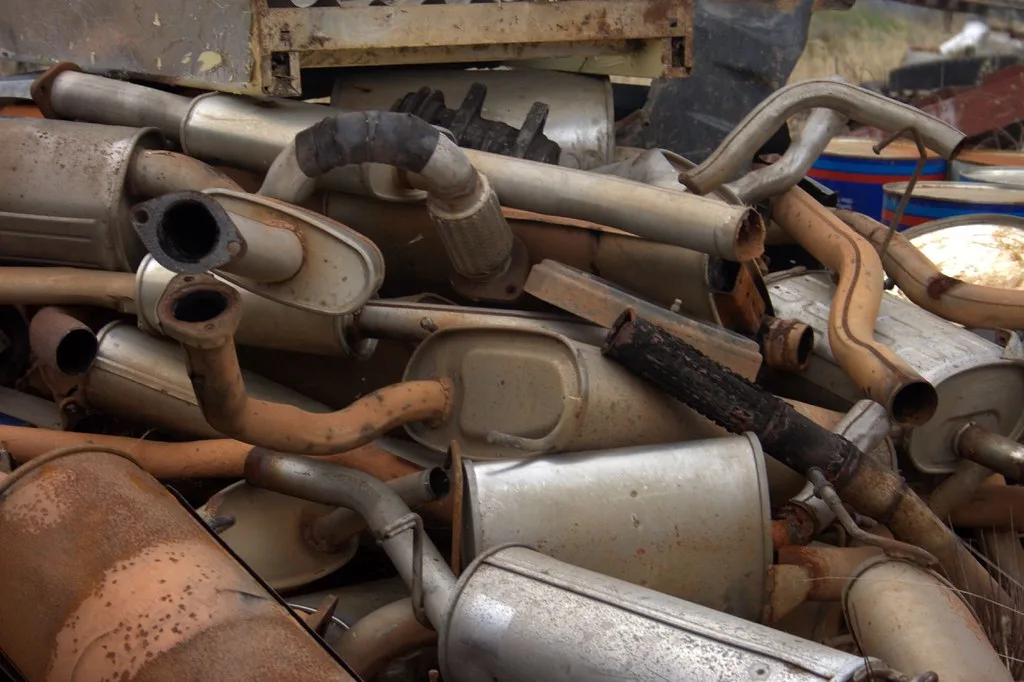
Replacement becomes the durable option when rust has created perforation, heavy flaking, soft metal, or seam failure. That is especially true on mufflers and pipe sections, where internal moisture plus short trips can keep corrosion active from the inside out. A coating can slow the process, but it cannot restore lost wall thickness.
Suppose the pipe still sounds normal but the hanger tab is crusted and the muffler shell is thin at the seam. Treating that part is often worth less than replacing it.
What products work on mufflers, pipes, clamps, and hangers
Pipes and mufflers can take high-temp coatings if the metal is properly cleaned and still structurally sound. Clamps and hangers usually do better with rust inhibitor sprays or a light corrosion protectant because they are smaller hardware, often cooler, and easier to refresh after winter cleaning. Rust converter can help on cleaned active rust, but only before the metal fails.
Match the product to the temperature and exposure. High-temp paint and exhaust coating belong on hot parts. Spray film products belong on cooler, salt-exposed hardware. Undercoating is the least flexible option because it can burn off and may create odor where heat is high.
That separation matters. A muffler shell, a clamp bolt, and a hanger loop all age differently.
How long does an exhaust last in salt states
There is no fixed number because life depends on material, winter exposure, trip length, storage, and maintenance. In salt states, mild-steel exhaust parts often fail much sooner than stainless systems, while 409 stainless usually lasts longer than basic steel but still needs care. Short trips and frequent salt exposure shorten life by keeping moisture and brine in the system.
The useful question is not just how long it lasts, but what part fails first. Hangers, clamps, flange hardware, muffler seams, and pipe bends often rot before the whole system does. Stainless steel exhaust systems resist rust better than other metals, yet even they are not completely rust proof.
If the car is a winter commuter, regular washing and targeted protection can delay replacement. If perforation starts, the clock is already close to the end.
Which one should you buy
If you drive a short-trip daily commuter, start with a high-temp coating for any light rust on the pipe or muffler, then use a rust inhibitor spray on cooler hardware after washing. Short runs trap moisture, so a maintenance plan matters as much as the product.
If you commute in the salt belt, prioritize underbody rinsing, then use a converter or high-temp coating on sound rusted metal and a lanolin-based spray on adjacent hardware. For a beach or coastal vehicle, corrosion spray on cooler zones and stainless replacement for repeated failures usually make more sense than repeated repainting.
If the exhaust is already rusted but still whole, treat the rust stage you actually have. If the muffler or pipe has perforation, flaking, or thin seams, replace it. A stainless upgrade makes more sense when repeated repairs on mild steel keep failing, especially if the budget can absorb the price premium.
Frequently asked questions
How to keep exhaust from rusting
Keep the exhaust clean, dry, and matched to the heat zone. That means washing off road salt, treating light rust early, and using a high-temp coating on pipes or mufflers only after proper prep. Cooler hardware can take a maintenance spray, but perforated metal needs replacement.
How to prevent rust on exhaust pipe
Prevent pipe rust by removing road salt, mud, and moisture before they sit on the metal. Wire-brush or sand early rust, then apply a high-temp coating or high-temperature paint if the pipe is off the car or fully prepped. Recheck clamp edges and bends, where rust starts first.
How to clean exhaust rust
Use mechanical cleaning first: wire brush, sanding, or a similar abrasive step to remove loose scale and expose sound metal. Then degrease and dry the area before using a converter or coating. If the rust has made holes or soft spots, cleaning only delays an inevitable replacement.
Can I treat a rusty exhaust before it needs replacement
Yes, if the rust is still surface-level and the metal is thick enough to stay sound. A converter, high-temp coating, or rust inhibitor can slow further damage. Once the part is flaking, thin, or perforated, treatment no longer gives durable value.
What products work on mufflers, pipes, clamps, and hangers
Pipes and mufflers usually need high-temp coating or replacement. Clamps and hangers often do best with a rust inhibitor spray or waxy protectant because they are cooler and easier to maintain. Rust converter fits cleaned active rust, but it still needs follow-up protection.
How long does an exhaust last in salt states
It depends on material, driving pattern, and maintenance. Salt, moisture, and short trips shorten life, while stainless steel extends it compared with mild steel. Even stainless is not rust proof, so regular washing and targeted protection still matter in winter climates.