Best exhaust clamps for stainless steel exhaust (2026): research shows
For stainless exhaust, the best clamp is usually a wide-band lap-joint clamp for slip-fit sections or a V-band for flanged sections, while U-bolts are the last choice because they can crush thin-wall tube. Wrong clamp choice causes leaks, warped pipe ends, and seized fasteners. This guide explains which clamp style fits each stainless joint, what sizes and materials to buy, and when to avoid clamping altogether.
Quick picks
- Best overall: stainless band clamp for most slip-fit stainless exhaust joints. It seals over 360 degrees without pinching the tube as easily as a U-bolt.
- Best for performance systems: V-band clamp with matching flanges. It is the cleanest answer for frequent disassembly and tightly controlled fabrication.
- Best budget pick: dual-bolt clamp for straightforward repairs where you need more clamping force than a basic U-bolt, but do not need a flanged joint.
📊 The article says a well-designed clamp can reduce installation time by up to 30%. Source: Best Stainless Steel Performance Exhaust Clamps for Ultimate….
Quick comparison
| Product | Badge | Best for | Price | ||
|---|---|---|---|---|---|
 |
TIROL 3 inch Exhaust Clamp, 3" Exhaust Band Clamp 304TIROL | Our pick | 3 inch · 304 Stainless Steel · Band Clamp | $15.99
Price as of 13 Oct 2026
|
View |
 |
Walker 33226 Exhaust ClampWalker | Budget pick | Universal fit · Undercar component connection | $14.99
Price as of 13 Oct 2026
|
View |
 |
Vibrant Performance 2795 Stainless Steel T-Bolt Clamp, 3"Vibrant Performance | Also great | 3 inch · T304 Stainless Steel · T-Bolt | $19.66
Price as of 13 Oct 2026
|
View |
 |
GaRhomxy 2.5 "Exhaust Clamp 304 Stainless Steel Heavy-DutyGaRhomxy | Upgrade pick | 2.5 inch · 2 Pack · Heavy-Duty | $15.99
Price as of 13 Oct 2026
|
View |
Use the comparison table to sort by joint type, pipe wall thickness, and service needs before you shop. A slip-fit muffler repair, a turbo-back system, and a custom flange layout each call for a different clamp.
How we chose
The main filter is joint type. A slip-fit stainless exhaust joint needs a different clamp than a flange-to-flange connection, and a misaligned repair needs a different fix again.
Next comes pipe behavior. Thin-wall stainless tubing reacts badly to concentrated pressure, while thicker tubing tolerates more point load. Clamp contact area matters.
Serviceability also matters. If you expect to remove the part later, you want a clamp style that comes apart cleanly and does not leave the hardware seized in place.
Finally, the clamp material has to make sense for the environment. Stainless clamps resist corrosion, rust, and heat in a hot exhaust system, and some designs are rated for temperatures over 1,000 degrees Fahrenheit.
Stainless band clamp: best for slip-fit joints
- Made from durable 304 stainless steel
- Provides 360-degree clamping and sealing
- No welding design with pre-attached hardware
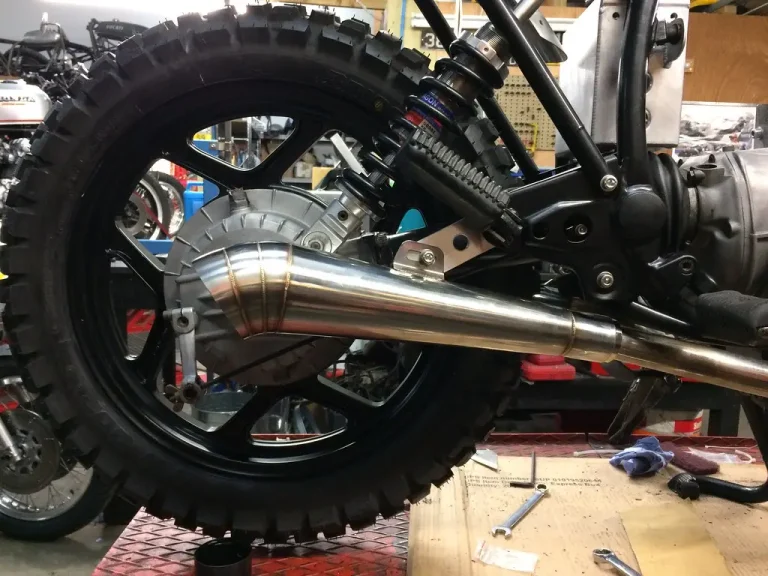
This is the safest default for most slip-fit stainless exhaust joints. It is the right shape for pipe-over-pipe connections because a band clamp spreads load around the pipe instead of squeezing it at a few points.
The TIROL 3 inch Exhaust Clamp uses 304 stainless steel and a band-clamp layout, so it fits the common need: hold a stainless slip-fit without crushing the tube. A 360-degree sealing surface also helps reduce small leak paths that show up after heat cycles and vibration.
The drawback is simple. A band clamp cannot rescue a bad fit. If the overlap is too shallow, the outside diameters are too far apart, or the pipes are oval already, the clamp may only press the problem into a smaller leak.
Walker 33226 Exhaust Clamp: best for basic repair fits
- Designed to connect undercar exhaust components
- Available in a variety of styles and sizes
- Provides sealing for exhaust repairs
This is the plain repair option for undercar exhaust connections where you need a universal-style clamp and do not want a fabrication-heavy solution. It suits straightforward replacement work more than performance builds.
Walker positions the 33226 as a connection clamp for undercar components, and that makes it useful when you need a simple sealing method at a common repair point. The main advantage is availability in multiple styles and sizes, which helps when the system is close to stock geometry.
The drawback is that generic repair clamps are not the best answer for thin-wall stainless if a wider band clamp or a flanged joint is possible. If the joint is misaligned or the pipe ends are sensitive, a simple clamp can still leave a leak path.
Vibrant Performance 2795 stainless steel T-bolt clamp: best for higher-force fastening
- Constructed from highly durable t304 stainless steel
- Features a floating bridge design
- Includes bolt and lock nut
This is the better fit when you need strong, even clamping on a performance-style connection and you have enough control over the joint shape. T-bolt clamps are common where pressure and vibration are higher than on a basic muffler repair.
The Vibrant Performance 2795 uses T304 stainless steel and a floating bridge design, which helps the clamp apply force more evenly than a simple narrow-band fastener. The lock nut also matters in hot service, where hardware can back off if the joint was not set correctly.
The drawback is that it still depends on fit. If the diameter mismatch is too large or the overlap is short, a stronger clamp can hide the problem for a while and then reopen as the system heats and moves.
GaRhomxy 2.5 inch heavy-duty lap joint band clamp: best for small-diameter slip-fit repairs
- Thickened 304 stainless steel bands resist corrosion
- Aluminum alloy I-block evenly distributes clamping force
- Widened band and dual-bolt tension control
This clamp fits a common 2.5 inch repair path, especially when you want a lap-joint band clamp with more structure than a bare U-bolt. It is aimed at mufflers, catalytic converters, and exhaust pipes where you want even clamping and corrosion resistance.
The thickened 304 stainless steel band, widened band, and dual-bolt tension control make it better suited to stainless slip-fit repair than a narrow compression clamp. The aluminum alloy I-block is meant to spread load across the band so the pipe sees less point pressure.
The drawback is that this kind of clamp still needs a close size match. It is also not the right answer for a flange-to-flange connection, and it cannot fix warped pipe ends or a badly offset joint.
Which one should you buy
Choose the TIROL band clamp if your joint is a normal stainless slip-fit and you want the safest default with good leak control. Choose the Vibrant Performance T-bolt clamp if you are building a performance system and need more clamp force around a controlled joint.
Choose the GaRhomxy 2.5 inch clamp if the repair is specifically 2.5 inch and you want a heavy-duty lap-joint style. Choose the Walker clamp when you need a general repair part and the exhaust layout is close to stock.
If the system uses matched flanges and you plan to remove the joint later, a V-band is usually better than any squeeze clamp. If the pipe is thin-wall stainless and the joint is not a flange, avoid U-bolts unless there is no better option.
Say your 3 inch stainless muffler inlet is a tight slip-fit but one side is about 1/8 inch loose. A wide band clamp is the safer fix because it spreads pressure around the joint instead of crushing the tighter side first.
Suppose a turbo-back section has matching flanges and you expect to drop the pipe for clutch work or turbo service. A V-band clamp is the better choice because it comes apart faster and keeps alignment more consistent once the flanges are correct.
What is the best exhaust clamp for stainless steel exhaust?
For stainless-steel exhaust, a wide-band lap-joint clamp is often a good choice for slip-fit joints, and a V-band clamp fits systems with matched flanges. That choice seals more evenly, protects thin-wall tube better, and reduces the chance of a future leak path compared with a U-bolt.
For most DIY stainless exhaust work, the safest default is the band clamp. It gives a 360-degree sealing surface, which matters on a slip-fit exhaust joint where you want even pressure around the pipe instead of two compressed lines.
Slip-fit joints: when a band clamp is the safest default
Slip-fit pipe-over-pipe joints depend on correct sizing and overlap depth. A band clamp is the safest default because it spreads load around the circumference and is less likely to ovalize thin-wall stainless tubing.
That matters more on stainless than on thick mild steel. Stainless can still dent, and once the pipe end deforms, the clamp can create its own leak path even if the hardware is tight.
Flanged joints: when a V-band clamp is the right call
A V-band clamp is the right call when both sides have matching flanges and you want quick removal with repeatable alignment. It is common on performance systems because it holds the joint together cleanly when fabrication is accurate.
The catch is that V-bands require matching flanges. If the faces are not aligned, the clamp may pull unevenly, leak, or seize under heat cycles.
Misaligned joints: when a wide-band design may be easier to seal
When the pipes are slightly misaligned or the outside diameters differ a little, a wide-band design is often easier to seal than a narrow clamp. The extra band width helps distribute load across a larger area of the overlap.
That is still a repair, not magic. If the joint is badly offset or the pipe ends are damaged, the better fix is to correct the fit rather than clamp harder.
When a U-bolt clamp is acceptable and when it is not
A U-bolt clamp can work on simple, low-cost repairs when the pipe is thick enough to handle point loading and a perfect seal is not the main priority. It is not the default for thin-wall stainless because it can flatten the tube and leave uneven pressure marks.
Use it only when the rest of the system gives you little choice. If a band clamp or V-band is possible, those are better answers for stainless.
Stainless band clamp: why the 360-degree seal matters
A stainless band clamp matters because it clamps the joint across the full circle. That helps prevent the small leaks that show up at the seam after repeated heat cycles, vibration, and cooling contraction in a hot exhaust system.
Stainless steel clamps resist corrosion, rust, and heat, and some are rated for temperatures over 1,000 degrees Fahrenheit. T304 and T409 are common stainless alloys in clamp hardware, with T304 presented as having superior corrosion resistance.
That does not mean all stainless clamps behave the same. A band clamp with poor overlap, wrong diameter, or a damaged pipe end can still leak.
Sizing a band clamp without crushing the tube
Measure the outside diameter, not the nominal pipe size. Then check the overlap depth and the clamp’s allowed diameter range, because a band clamp only seals well when the two parts sit within its working window.
If the joint is a slip-fit, the clamp should compress the overlap, not collapse the tube. A properly sized band clamp can also cut installation time, and the source text says a well-designed clamp can reduce installation time by up to 30%.
Common failure modes: wrong diameter, poor overlap, pinched pipe
- Wrong diameter: the clamp bottoms out before the joint seals.
- Poor overlap: the band closes on too little pipe contact and leaves a leak path.
- Pinched pipe: over-tightening deforms thin-wall stainless and can make the leak worse.
V-band clamp: best for performance and serviceability
A V-band clamp is best when the system uses matching flanges and you want a joint that comes apart cleanly. It is a strong choice for performance exhaust work because it keeps the connection tight without a separate gasketed slip joint.
The benefit is serviceability. Once the flange faces are correct, a V-band is usually faster to separate and reassemble than a slip-fit clamp arrangement. That is why it is common on performance systems with frequent service needs.
Why it needs matching flanges
The V-band clamp does its job by squeezing two flanges together. If the flanges are not matched, the clamp cannot create even pressure, and you get a gap, a leak, or a hard-to-remove twist in the joint.
That makes fabrication control part of the buying decision. A V-band is a system choice, not a universal clamp.
Where it outperforms slip-fit clamps
It outperforms slip-fit clamps when you need to remove the section often, such as on turbo-back layouts or custom exhaust work with limited room. It also works well when alignment is repeatable and the fabricator can hold the flanges square.
It is not the best answer for a tired stock joint with wallowed pipe ends. In that case, the flanges are the problem, not the clamp.
Common failure modes: flange mismatch, poor alignment, seized hardware
- Flange mismatch: the V-band cannot pull uneven parts into a true seal.
- Poor alignment: side load opens a leak path under heat.
- Seized hardware: heat and road grime make removal difficult if the clamp is left in service too long.
Dual-bolt and U-bolt clamps: when to use each
Dual-bolt clamps are useful when you want higher clamping force than a plain U-bolt and the joint still depends on overlap fit. U-bolt clamps are the simpler design, but they are the poorer default for thin-wall stainless because their compression is less even.
Use dual-bolt hardware for more controlled clamping on a repair joint. Use a U-bolt only when the job is simple, budget matters most, and the pipe wall can tolerate the pressure.
Dual-bolt clamps for higher-force clamping
Dual-bolt exhaust clamps spread force better than a single U-bolt and can handle more demanding repairs. They are common on performance systems and can help where a joint needs extra hold-down force without moving to a flanged setup.
The drawback is that force alone does not fix fit. If the pipe ends are mismatched or the joint is crooked, the clamp may only trap the misalignment.
U-bolt clamps for simple jobs and why they can deform thin-wall pipe
U-bolt clamps are simple, cheap, and common. They are also compression-based fasteners, which means they press hardest where the pipe can least afford it.
On thin-wall stainless, that can ovalize the tube, flatten the seam, and create a leak path that was not there before. For a stainless system, that is why U-bolts are usually the last choice.
Common failure modes: ovalizing, leak paths, fastener loosening
- Ovalizing: the clamp squeezes the pipe out of round.
- Leak paths: pressure is concentrated instead of spread evenly.
- Fastener loosening: heat cycling and vibration can back off a poor installation.
How do you size a stainless exhaust clamp?
Size a stainless exhaust clamp by measuring the outside diameter of the assembled joint, then checking wall thickness, overlap depth, and the clamp’s allowed diameter range. Nominal pipe size is not enough, because actual outside diameter and joint stack-up decide whether the clamp seals or slips.
For stainless, the fit has to be close enough that the clamp can pull the joint together without bottoming out. If the parts differ by a small amount, a wide-band clamp or dual-bolt design may be more forgiving than a narrow compression clamp.
Measure outside diameter, not nominal pipe size
Use calipers or a wrap measure on the actual joint. A 2.5 inch nominal pipe and the joined outside diameter are not the same thing, and the clamp has to match the real assembled diameter.
Check wall thickness and overlap depth
Thin-wall tubing needs more sealing area and less point pressure. If the overlap is short, the clamp may need to be wider or the joint may need to be reworked before clamping.
Account for small diameter differences between mating parts
Mixed parts are common in stainless exhaust work. If two stainless pieces are different alloys or slightly different outside diameters, choose a clamp style that can tolerate that difference without crushing the smaller tube or leaving a gap on the larger one.
Will a stainless clamp stop exhaust leaks?
A stainless clamp can stop an exhaust leak only if the joint is sound, the clamp style matches the connection, and the size is correct. It cannot fix warped pipe ends, cracked flanges, or a joint that has too little overlap to seal in the first place.
That is why clamp choice matters. A band clamp may solve a slip-fit leak that a U-bolt only makes worse, while a V-band may stop a recurring leak on a flanged performance section.
Are stainless steel exhaust clamps worth it?
Yes, stainless steel exhaust clamps are worth it for most stainless systems because they resist corrosion better than plain steel, handle heat better, and hold up better in a hot exhaust system. T304 is the better corrosion-resistance choice, while T409 is a common lower-cost stainless option used in exhaust hardware.
They are worth less if the joint fit is wrong. A better clamp cannot fully cover poor fabrication, and in that case the money is better spent correcting the joint first.
Do stainless steel exhaust clamps rust?
Stainless steel exhaust clamps resist rust better than plain steel, but they can still discolor, stain, or corrode at the surface in high-heat service. Road salt, thermal cycling, and mixed-metal contact all increase the chance of cosmetic staining or long-term surface damage.
That is why alloy choice matters. T304 is commonly used when corrosion resistance matters most, while T409 is a lower-cost stainless option often used in exhaust hardware where some oxidation resistance is acceptable.
How tight should an exhaust clamp be on stainless pipe?
An exhaust clamp on stainless pipe should be tight enough to stop movement and seal the joint, but not so tight that it ovalizes the tubing or crushes the overlap. If the clamp needs extreme force to seal, the joint size or alignment is usually wrong.
As a practical rule, tighten in small steps and recheck after the first heat cycle. Stainless expands and contracts, and a joint that felt tight cold may move once the system reaches exhaust temperature.
Can I reuse an exhaust clamp on a stainless system?
You can reuse some exhaust clamps, but only if the hardware is not distorted, seized, or heat-damaged and the clamp style is meant to come apart cleanly. V-bands are generally more reusable than U-bolts, while crushed or heavily marked band clamps are often best replaced.
Reuse also depends on the joint. If the pipe ends were ovalized during removal, a fresh clamp may not solve the leak because the real problem is the damaged tube.
Should I use a band clamp or U-bolt clamp on stainless exhaust?
Use a band clamp on stainless exhaust in most slip-fit situations because it seals around the tube and is less likely to deform thin-wall pipe. Use a U-bolt only when you need a simple, low-cost clamp and the tubing is thick enough to tolerate point loading.
The difference is not cosmetic. Band clamps are better for leak prevention, while U-bolts are more likely to leave an imprint, pinch the joint unevenly, and create a future leak path.
Which clamp is best for a performance exhaust?
A V-band clamp is usually best for a performance exhaust when the system has matched flanges and you expect frequent service. It is the cleanest choice for quick removal, repeatable fit, and controlled alignment on custom stainless systems.
If the performance system still uses slip-fit sections, a high-quality stainless band clamp is the next-best option. A dual-bolt clamp can also work when you need more force and the joint is already close to correct.
Frequently asked questions
What size exhaust clamp do I need for my pipe?
You need a clamp that matches the assembled outside diameter of the joint, not just the nominal pipe size. Also check overlap depth and the clamp’s allowed diameter range, because those details decide whether the joint seals evenly or bottoms out before it clamps.
Will a stainless clamp stop exhaust leaks?
A stainless clamp can stop an exhaust leak if the joint is correctly sized, aligned, and undamaged. It will not fix warped pipe ends, cracked flanges, or a fit that is far outside the clamp’s working range.
Can I reuse an exhaust clamp on a stainless system?
Sometimes. Reuse is more realistic with V-bands and less reliable with clamps that have been crushed, heat-cycled, or removed with seized hardware. If the clamp or pipe end is distorted, replacement is the safer call.