Cat Back Exhaust vs Downpipe
Choose a cat back exhaust if you want a louder exhaust note and modest flow gains without a tune; choose a downpipe if your turbo car needs more power, but expect tune requirements and possible emissions trouble. Pick the wrong part and you can pay for sound instead of performance, or create drivability and inspection problems. This guide compares power, sound, legality, tune needs, and daily-use tradeoffs.
| Decision factor | cat back exhaust | downpipe | Winner |
|---|---|---|---|
| Power gain range | Usually modest. One comparison puts cat-back gains at 10-15 hp maximum, and another at 6 to 16 hp at most. | Usually larger on turbo cars. Sources place gains at 10 to 20 horsepower, up to 40 hp, and 30 to 40 hp over stock with a supporting tune. | downpipe |
| Tune requirement | Usually no tune needed. | Often needs a tune or reflash, especially with freer-flowing or catless setups. | cat back exhaust |
| Emissions and street legality | Usually keeps the catalytic converter in place and is mostly legal in the comparison source. | Catted versions may be more defensible, but catless setups carry clear emissions and legality risk; one comparison marks legality as no. | cat back exhaust |
| Cabin drone and smell | Can change tone and drone through the muffler, resonator, and mid-pipe, but usually stays easier to live with. | Louder, sharper, and more likely to add smell and cabin noise, especially catless versions. | cat back exhaust |
| Install complexity | Usually simpler. It replaces parts behind the catalytic converter and often bolts in with less upstream work. | More complex. It sits at the turbo outlet and can involve tighter access, more heat, and more supporting work. | cat back exhaust |
| Street reversibility | Usually easier to return to stock and easier to sell with fewer questions. | Harder to reverse if the setup changes emissions behavior or requires a tune to run correctly. | cat back exhaust |
Where each part sits and what it changes first
The main split is simple: a cat back exhaust changes the rear half of the system, while a downpipe changes the section right after the turbo outlet, where exhaust restriction matters most. If your complaint is sound or cabin tone, start at the back. If your complaint is turbo flow and power, start near the turbo.
Where each part sits in the exhaust path
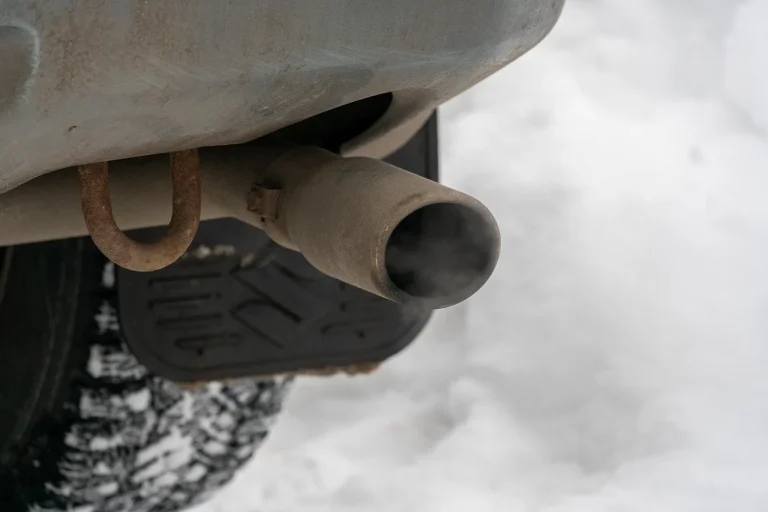
A downpipe connects the turbocharger outlet to the rest of the exhaust system. That makes it the closest exhaust upgrade to the engine on a turbocharged car. A cat-back starts after the catalytic converter and runs to the muffler tip, and many kits include the mid-pipe, resonator, muffler, and exhaust tips.
That placement matters because it decides what changes first. Rear-section parts mostly alter tone, drone, and weight. Turbo-side parts reduce restriction where exhaust energy exits the turbine, which is why they move power more aggressively on turbo cars.
What changes first: sound or flow
With a cat-back, sound is the first change. Flow improves some, but the gain is usually small enough that the note, not the lap time, is the reason people buy it. With a downpipe, flow is the point, and sound change is a side effect.
Suppose a turbo sedan already pulls hard enough but feels too quiet and muted on throttle lift. A cat-back can fix that without forcing a tune. Suppose the same car feels restricted in the midrange after boost comes in. A downpipe is the part that addresses that complaint.
What a cat-back changes
A cat-back replaces the rear portion of the exhaust system, usually from after the catalytic converter to the tips. The main effects are sound, weight, and small power gains. Fitment is usually simpler because the catalytic converter stays in place and the work stays farther from the turbo and manifold heat.
Mid-pipe, resonator, muffler, and tips
The mid-pipe changes exhaust path length and can affect drone. The resonator shapes tone and helps reduce cabin boom. The muffler is the main sound-damping piece, and the tips change the exit appearance more than performance.
That is why two cat-backs can sound very different even if both fit the same car. Remove the resonator and the car may get sharper and louder, but cabin comfort can suffer. Keep the resonator and use a larger muffler, and the note usually stays more civil.
Sound, weight, and small power gains
Most cat-back systems are bought for sound first and modest flow second. The sourced comparisons put cat-back gains at 10-15 hp maximum or 6 to 16 hp at most, which is useful but not transformative. On a naturally aspirated engine, that usually means small changes you can feel more in throttle character than in outright pace.
Why fitment is usually simpler
Because the cat-back starts after the catalytic converter, it avoids the most heat-soaked and emissions-sensitive part of the exhaust path. That usually makes installation more straightforward than a downpipe swap. It also means fewer reasons to trigger a fault code or need calibration work.
What a downpipe changes
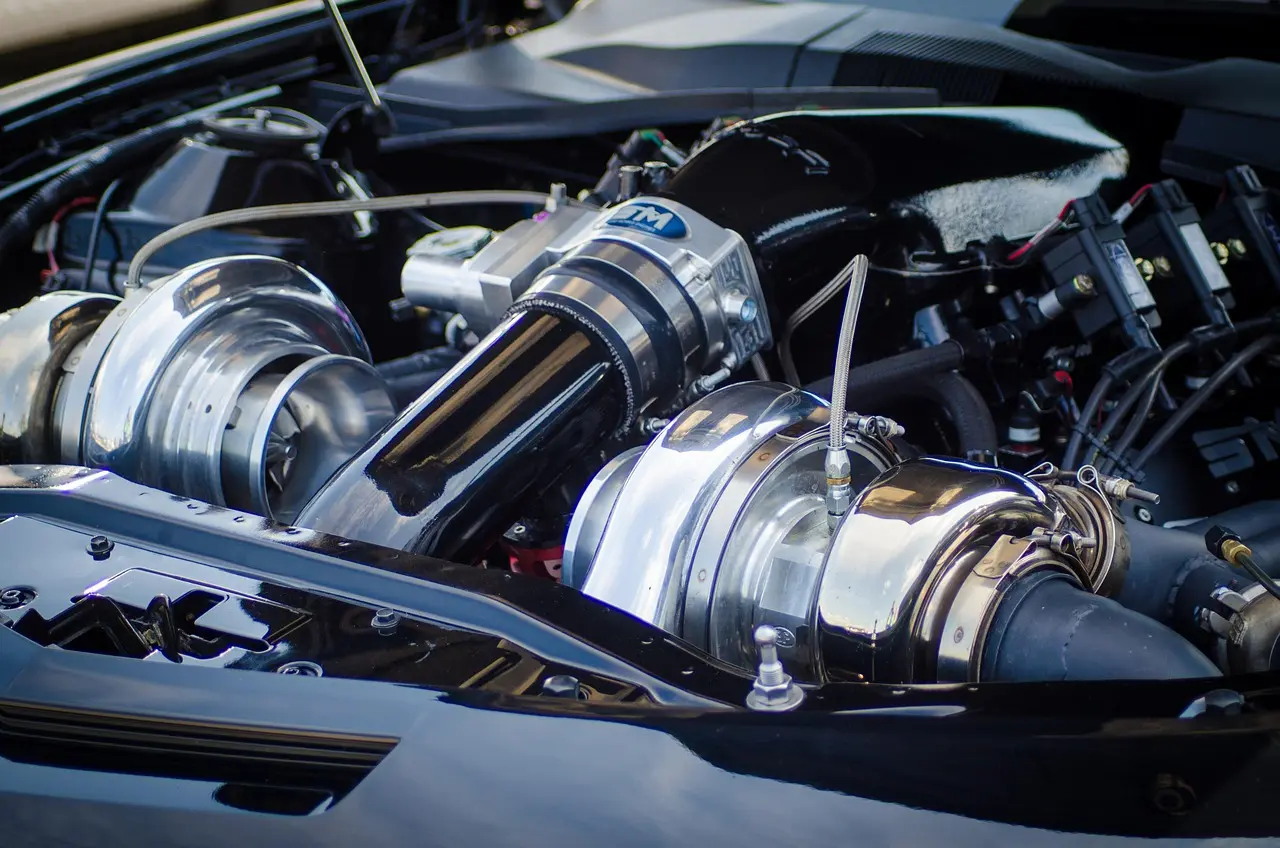
A downpipe changes the flow path right after the turbo outlet, so it can reduce turbine-side restriction where it matters most. On turbocharged engines, that is why a downpipe usually makes the larger horsepower and torque difference. The effect is strongest when paired with a supporting tune or reflash.
Turbo outlet flow and spool behavior
Downpipes are unique to turbocharged engines. That means the upgrade logic changes completely for non-turbo cars: if there is no turbocharger outlet, there is no downpipe in the relevant performance sense. For turbo cars, freer flow can help the turbo work with less backpressure and can improve spool and upper-end pull.
One common first-timer mistake is buying a downpipe for a naturally aspirated car because it looks like a universal power part. It is not. The real gains come from reducing restriction after the turbo, so the part belongs on turbocharged platforms.
Catted vs catless downpipes
A catted downpipe keeps a catalytic converter in the path, while a catless downpipe removes it. That choice affects odor, emissions compliance, and inspection risk. Catless setups are the loudest and usually the least street-friendly, even if they can make the strongest flow gains.
Keeping a catalyst usually improves the odds of passing inspection and reduces smell, but it can still need a tune and may still be illegal in some places. Removing the catalyst pushes the setup farther from stock behavior and farther from street simplicity.
Why tune requirements matter
Many downpipes need a tune or reflash to run cleanly and to keep the check-engine light behavior under control. That is part of the real cost of the mod, not an optional extra. One source places a B58 catless downpipe at $199.99, while an AWE cat-back starts at $1,845, so the sticker price alone does not tell the full story.
A freer-flowing downpipe can create fault codes or drivability changes if the calibration still expects the stock catalytic converter behavior. A tune can solve some of that, but it also adds cost, complexity, and another modification that may matter during inspection or resale.
Which gives more power?
On turbocharged engines, the downpipe usually gives more horsepower and torque than a cat-back because it changes the most restrictive part of the system closest to the turbo. On naturally aspirated engines, neither part delivers the same payoff; the cat-back is mainly a sound and weight upgrade, and the downpipe discussion mostly does not apply.
Turbocharged engine results
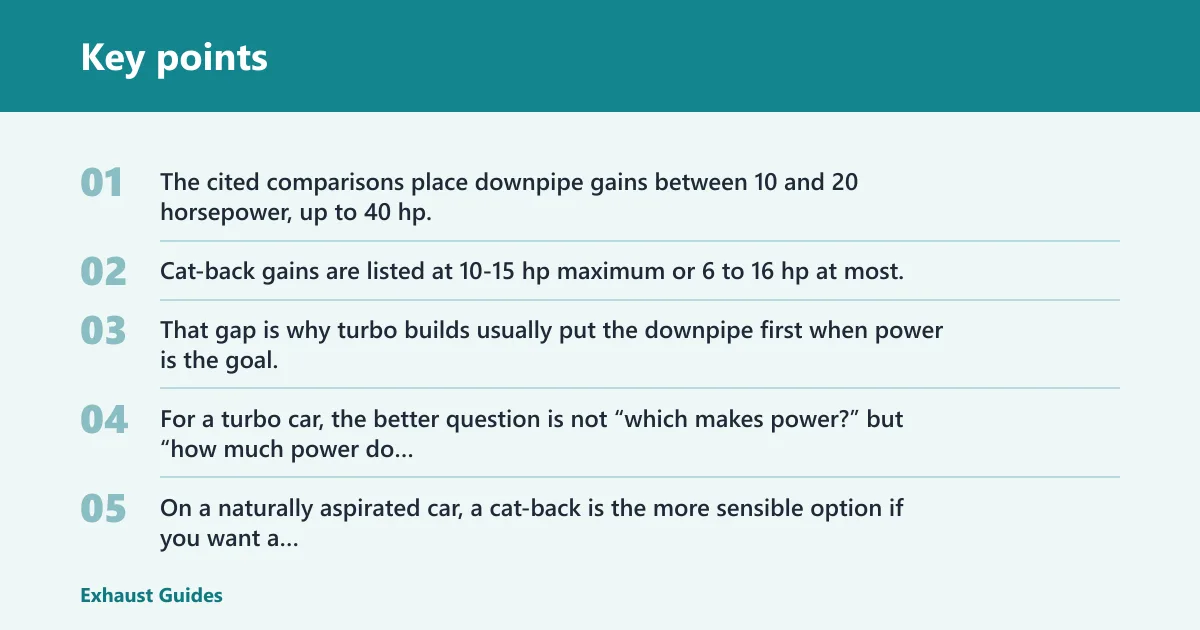
The cited comparisons place downpipe gains between 10 and 20 horsepower, up to 40 hp, and 30 to 40 hp over stock with a supporting tune. Cat-back gains are listed at 10-15 hp maximum or 6 to 16 hp at most. That gap is why turbo builds usually put the downpipe first when power is the goal.
For a turbo car, the better question is not “which makes power?” but “how much power do you want, and what are you willing to give up to get it?” A downpipe adds more, but it also asks more from your tune, emissions setup, and inspection plan.
Naturally aspirated engine reality
On a naturally aspirated car, a cat-back is the more sensible option if you want a change you can hear and live with. The power gain is usually modest. A downpipe is not the right comparison point in the same way, because the turbo outlet component is absent.
Tune-required versus no-tune gains
The strongest downpipe numbers assume a supporting tune. Without one, the gain may be smaller, and the risk of warning lights or poor calibration behavior rises. A cat-back usually delivers its benefit without requiring calibration changes, which keeps the cost and complexity lower even if the peak power gain is smaller.
Will it make your car louder?
Yes, but not in the same way. A cat-back usually makes the car louder in a more controlled way, with the note shaped by the muffler, resonator, and mid-pipe. A downpipe is louder, more aggressive, and more likely to bring drone and smell into daily use, especially in catless form.
Muffler and resonator effects
The muffler is the biggest single tool for keeping volume in check. The resonator often matters more than people expect because it can cancel the frequencies that cause cabin boom. Delete either part, and the car may sound more exciting but also less settled on the highway.
Drone risk and cabin comfort
Drone is not a spec-sheet issue. It is the low-frequency resonance that turns a sporty exhaust into a tiring commuter. Cat-back systems can create it if the mid-pipe and resonator choices are aggressive, but downpipes tend to increase the risk more because the change starts closer to the source of exhaust energy.
Picture a 2.0-liter turbo hatch driven at about 70 mph for roughly 45 minutes every weekday. A loud catless downpipe may sound good for five minutes and wear thin by mile 20. A quieter cat-back with a resonator can still add character without turning the cabin into a fatigue test.
Smell, tone, and daily use
Smell is one of the clearest daily-use differences between these parts. A cat-back usually keeps the catalytic converter in place, so exhaust odor is far less likely to change. A catless downpipe can add a raw exhaust smell that becomes obvious at idle, in traffic, or after a cold start.
Choose cat back exhaust if… / Choose downpipe if…
Choose a cat back exhaust if your main complaint is silence, dull tone, or a mild lack of character, and you want a change that usually stays simpler to install and easier to live with. Choose a downpipe if your turbo car needs more flow, you are prepared for tuning and inspection tradeoffs, and you want the larger performance gain.
Daily driver recommendation
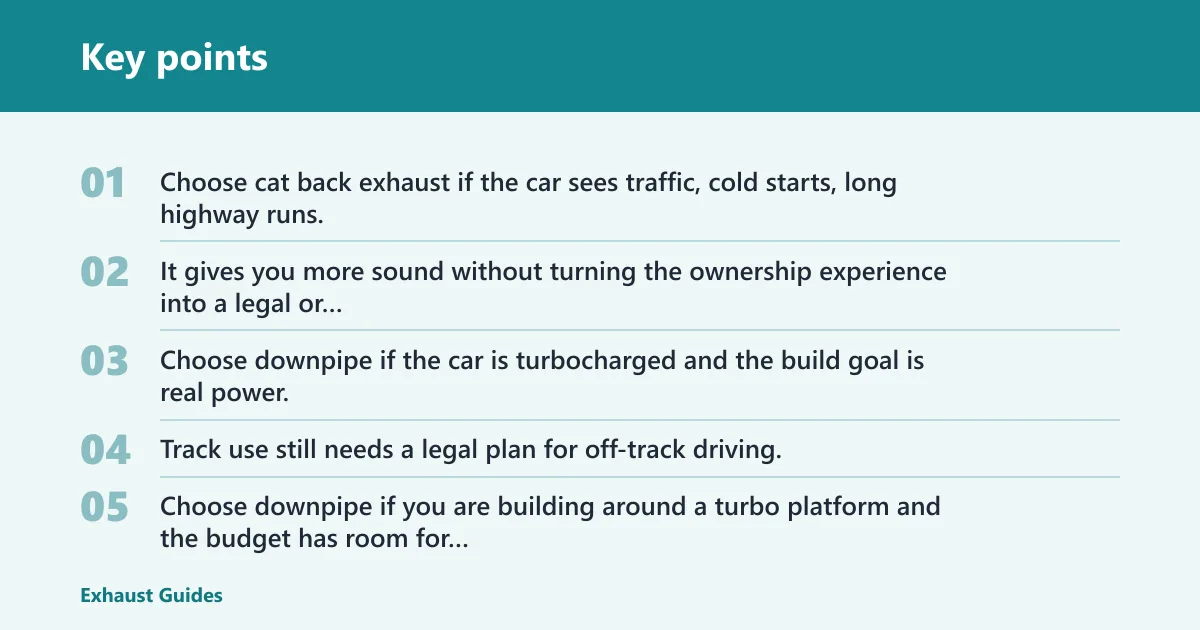
Choose cat back exhaust if the car sees traffic, cold starts, long highway runs, or regular inspections. It gives you more sound without turning the ownership experience into a legal or calibration project.
Track build recommendation
Choose downpipe if the car is turbocharged and the build goal is real power, not just a louder note. Track use still needs a legal plan for off-track driving, but performance-first builds usually benefit more from the downpipe than from a rear-section swap.
Budget turbo build recommendation
Choose downpipe if you are building around a turbo platform and the budget has room for the tune or reflash the part usually demands. If the budget stops at the part itself, a cat-back is the safer purchase because it avoids buying flow without the calibration to support it.


Frequently asked questions
Cat back exhaust vs catless downpipe
A cat back exhaust is the safer street choice because it usually keeps the catalytic converter in place and mainly changes sound. A catless downpipe is the more aggressive performance part, but it brings stronger emissions risk, smell, and tune dependency. For street use, the cat-back is easier to justify.
Does cat back exhaust make a difference?
Yes. It usually changes the exhaust note the most, and it can add modest power and reduce weight depending on the design. The difference is real, but it is usually smaller than what a downpipe does on a turbo car. Expect character first, not a major performance jump.
Cat back exhaust vs full exhaust
A cat-back replaces the exhaust from after the catalytic converter to the tips. A full exhaust usually goes farther upstream and can include more of the system, which can change cost, sound, and legality. If you only want a tone change, cat-back is the narrower, simpler choice.
Which gives more horsepower, a cat-back or downpipe?
On turbocharged engines, the downpipe usually gives more horsepower because it changes restriction right after the turbo outlet. The cited comparisons place downpipe gains above cat-back gains by a wide margin. On naturally aspirated cars, the cat-back is usually the more relevant upgrade, but the power increase remains modest.
Do you need a tune for a downpipe?
Often, yes. Many downpipes, especially freer-flowing or catless versions, need a tune or reflash to manage check-engine-light behavior and drivability. A cat-back usually does not require calibration work. If tuning is not in the plan, the cat-back is the lower-risk purchase.
Is a downpipe legal on the street?
It depends on the design and local rules, but catless downpipes are the most problematic and are usually not street-friendly. Catted downpipes may be easier to live with, yet they still can raise emissions and inspection concerns. A cat-back is generally the easier option for street legality.