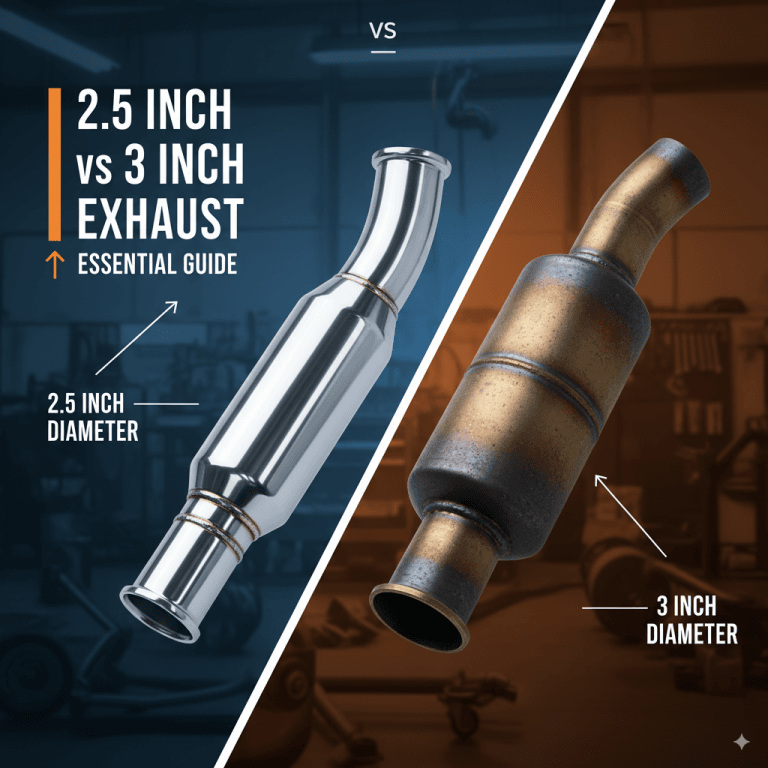
What Causes Exhaust Clamp Rattling?
Exhaust clamp rattling usually comes from a loose clamp, a misaligned slip joint, or pipe movement against the clamp or bracket; if tightening to spec does not stop it, the clamp or the supported section is likely the problem. Ignoring it can let the joint fret, leak, or crack nearby pipe. This guide shows how to tell clamp noise from hanger, shield, or pipe contact, then decide whether to retorque, realign, replace the clamp, or inspect another part.
Exhaust clamp rattle basics

- Joins 2.5-inch OD pipe to 2.5-inch OD pipe
- Easy to install or remove without welding
- 360-degree force distribution helps seal evenly
An exhaust clamp should hold two pipe sections together without letting them chatter. When the clamp is the right style and diameter, it keeps the joint still enough to stop vibration. When it is the wrong size, poorly aligned, or fighting a damaged joint, the clamp can become the noise source instead of the cure.
Clamp noise is not always a leak noise. A loose clamp can let the joint vibrate and leave a soot trail, but a tight-looking clamp can still rattle if the pipes move against each other or the clamp bottoms out before it makes enough pressure. That is why the clamp type and joint shape matter before you reach for a wrench.
Clamp types and where they belong
Different clamp styles are commonly used for different joint types. A lap joint clamp is meant for overlapping pipes, while a butt joint band clamp is intended for two pipe ends with the same diameter. A V-band clamp works with compatible flanges rather than plain overlapping pipes.
- Band clamp. Spreads pressure around the joint and is often used where a smooth seal matters.
- U-bolt clamp. Common on basic exhaust joints, but it can distort thin pipe if overtightened.
- Lap joint clamp. Best when one pipe overlaps another.
- Butt joint clamp. Best for same-diameter pipe ends that meet squarely.
- V-band clamp. Used on matching flanges, often on turbo and downpipe setups, not on plain overlap joints.
A wrong-style clamp can rattle even when it feels tight. A butt joint clamp on an overlapped pipe, for example, may clamp unevenly and leave the joint able to move. A clamp that is too large may bottom out before applying enough pressure, and a clamp that is too small may not seat correctly around the joint.
Why does my exhaust clamp rattle?
Most clamp rattle comes from one of three problems: the clamp size does not match the pipe, the joint is not aligned, or corrosion and vibration have left the clamp unable to hold the parts still. A clamp can look intact and still let the pipe move enough to buzz, click, or knock.
Wrong size or pipe ovality
If the pipe end is ovalized, dented, or badly corroded, the clamp may tighten on the high spots and leave gaps elsewhere. That can make the joint rattle during operation even though the hardware is snug. Exhaust clamp wire that is too large can also let the pipes move enough to chatter.
Look for uneven clamp contact, crushed pipe edges, or a gap that opens and closes as the engine moves. If the joint diameter has changed from rust loss or a previous impact, the clamp may be the wrong answer even if it is brand new.
Loose hardware, corrosion, and vibration
Rust can thin the clamp, seize the fastener, or leave the joint surface rough enough that the clamp never grips well. Vibration then works the connection loose over time. A well-fitting exhaust clamp stops pipes from rattling as a vehicle operates, so repeated loosening is a sign the fit or the support is wrong.
Black soot around a connection usually indicates exhaust gas escaping there. If soot appears along with a metallic buzz, the joint may be leaking and moving at the same time.
Misalignment at the joint
Improper alignment can cause the clamp to hold pipes that are pushing sideways against one another. That side load creates chatter, especially when the engine rocks or the exhaust heats up. Incorrect size, unsuitable structure, damaged pipe surface, poor alignment, and improper tightening can all cause clamp leaks.
Picture a lap joint where one pipe is inserted too shallowly and the clamp sits on a taper instead of a straight overlap. The clamp may feel tight, yet the pipes still rub each other whenever the engine twists under load.
What the noise pattern tells you
The way the rattle changes can point to the cause. Rattling on acceleration often means a metal piece is touching or vibrating at a set frequency. Engine movement and rising exhaust flow can make small gaps loud, so a clamp problem may show up only when the system is under load.
Rattle on acceleration
If the sound appears as soon as you step into the throttle, look for pipe movement, a loose clamp, or a nearby bracket that contacts the pipe. A loose exhaust seal can reduce fuel economy and increase emissions, so an acceleration rattle deserves a closer look even if the system still seems functional.
Rattle over bumps
If the noise shows up over bumps, the clamp may be fine and the support may be failing. A worn hanger can let the pipe swing into the body, crossmember, or suspension, and that contact can sometimes sound like a clamp rattle. A loose clamp can also be blamed when the real issue is pipe movement from a failed hanger.
Rattle at idle or one rpm range
A rattle that changes with engine rpm while parked points closer to the engine. Heat shields, manifold hardware, catalytic converter internals, or a flex pipe near the front of the exhaust can all mimic clamp chatter. If the sound changes at the same rpm in park and in gear, the source is often closer to the engine than the rear clamp.
Exhaust clamp noise decision table
Use this table to separate clamp problems from lookalikes. Start with where the noise happens, then check the joint shape, clamp fit, and nearby supports before replacing parts.
| Noise when | Visible signs | Probable clamp issue | Non-clamp lookalikes | Recommended fix |
|---|---|---|---|---|
| Acceleration or tip-in throttle | Fresh soot at the joint, slight pipe movement, clamp appears centered but loose | Clamp under-torque, wrong diameter, or joint slipping under load | Flex pipe crack, hanger sag, contact with a bracket | Retorque only if the clamp matches the joint; otherwise realign or replace the clamp and inspect the support |
| Over bumps or on rough road | Pipe touches body or suspension, hanger rubber looks torn or stretched | Clamp is taking side load from a failed hanger | Heat shield buzz, tailpipe contact, loose strap bracket | Replace the hanger first, then reassess the clamp after the pipe is centered |
| Idle or a narrow rpm band | Clamp looks normal, no clear soot, sound seems to come from higher in the system | Often not the clamp itself | Heat shield, catalytic converter, muffler baffle, flex pipe | Check adjacent parts before touching the clamp |
| After recent exhaust work | Clamp sits on an overlap or butt joint at an odd angle | Wrong clamp type or poor alignment | Pipe section cut unevenly, distorted end, misfit flange | Use the correct clamp style and realign the pipe ends before tightening |
| Constant metallic chatter | Clamp hardware rusted, clamp can be moved by hand, joint shows black soot | Corrosion loss or clamp fatigue | Loose shield, muffler internal failure, catalytic converter rattle | Replace the clamp if the joint surfaces are still usable; repair the pipe section if corrosion has eaten the sealing area |
How do you tell the clamp from a lookalike?
The easiest way to separate clamp noise from a lookalike is to follow the sound path and the movement path. If the noise changes when the exhaust is tapped lightly or shifted by hand, the problem may be at the clamp. If it changes with rpm or body movement, another part may be loose.
Heat shield buzz vs clamp chatter
A thin heat shield can buzz at certain rpm and sound very close to a clamp rattle. These shields often loosen from cracked spot welds or bent contact points. If the noise is a tinny buzz that fades when you press on the shield, the clamp may not be involved at all.
Hanger wear and pipe contact
An exhaust hanger is a rubber isolator or support that controls movement and sag. When it wears out, the pipe can contact the body or suspension and overload a clamp. In that case, the clamp may keep loosening because it is being forced to hold the pipe in a position it was not meant to hold.
If the rear clamp is on a clean overlap joint, but the tailpipe is hanging about 15 mm lower than the surrounding pipes and tapping the axle on bumps, the sag may be hanger-related. The fix starts with the hanger, not the clamp, because the clamp is only reacting to the sag.
Muffler, catalytic converter, and flex pipe clues
A muffler with broken internal baffles can rattle with a hollow or metallic sound, and the noise can change with throttle. A catalytic converter with a loose ceramic substrate may sound like gravel in a can and can be louder at idle or with a quick rev. A flex pipe can fray or crack near the front or mid-pipe and make both rattle and leaks.
If the sound is in front of the clamp and changes with engine speed while parked, move the diagnosis forward. Clamping the shell will not fix a loose catalytic converter substrate, and a cracked flex pipe usually needs repair or replacement, not more clamp force.
How do I fix an exhaust rattle without replacing the whole system?
Start with the clamp, but only if the joint style and pipe condition make a clamp repair possible. Tighten a correctly sized clamp, realign the pipe if the joint is cocked, and replace worn hardware if corrosion has weakened the grip. If the pipe surface or support is the real fault, a clamp alone will not last.
-
Confirm the joint type.
Check whether the joint is lap, butt, or flange-based before touching the fastener. A lap joint clamp is meant for overlapping pipes, a butt joint band clamp is intended for same-diameter ends, and a V-band clamp belongs on matching flanges. -
Inspect for movement.
Wiggle the pipe by hand when the exhaust is cool. If the joint shifts, twists, or knocks against a bracket, the problem may be alignment, hanger wear, or an oversized clamp that cannot hold the joint firmly. -
Check for soot and damage.
Look for black soot around the joint and for rust thinning, oval pipe ends, or crushed sealing surfaces. Soot means gas escape, and damaged pipe surfaces can keep a good clamp from sealing. -
Retorque or replace.
Tighten only if the clamp matches the joint and still has enough travel to clamp correctly. If the fastener bottoms out, the clamp is rusted through, or the size is wrong, replace the clamp instead of forcing it tighter. -
Correct support issues.
Replace worn hangers and re-center the exhaust before final tightening. A bad support can put side load on the clamp and bring the rattle back within a few drives.
Suppose a butt-joint clamp on a same-diameter mid-pipe rattling appears after a repair. If the pipe ends are about 5 mm off center, tightening harder may only worsen the chatter. Realigning the ends first usually gives the clamp a chance to seal and hold.
Should I tighten, replace, or realign a noisy exhaust clamp?
Retorque a clamp when the joint is the right style, the pipe surfaces are sound, and the clamp still sits squarely. Replace it when corrosion, wrong sizing, or damaged hardware prevents proper clamping. Realign the pipes when the clamp is good but the joint is cocked or loaded sideways.
If the exhaust still rattles after a proper retorque, do not assume the clamp is bad by itself. Look at the hanger, the pipe end shape, and the nearby contact points. A clamp can be innocent and still be the first part that starts to chatter.
When retorquing makes sense
Retorquing makes sense when the clamp is the correct type for the joint, the pipes are not bent or rust-thinned, and the hardware still tightens evenly. If the joint settles slightly after a repair, a careful retorque can stop the vibration before it becomes a leak.
When to replace the clamp
Replace the clamp if it is the wrong size, rusted thin, bent, or unable to apply even pressure. A clamp that is too large may bottom out before applying enough pressure, and a clamp that is too small may not seat correctly around the joint. Both can leave the joint noisy.
When the pipe section or support is the real fix
If the pipe end is ovalized, cracked, or badly corroded, the section may need repair or replacement. If the hanger is worn or missing, fix that first so the clamp is not asked to hold the exhaust in position by itself. A clamp is a joining part, not a suspension part.
Frequently asked questions
Why is my exhaust rattling when I accelerate?
Acceleration loads the exhaust with engine movement and higher flow, which can make a small gap loud. If the noise appears only on throttle, suspect a loose clamp, misaligned slip joint, or a pipe touching a bracket. Soot at the joint and visible movement point toward the clamp area.
Why does my muffler rattle over bumps?
A muffler that rattles over bumps often has a worn hanger, a loose strap, or internal baffles that have broken loose. If the sound follows body movement more than engine rpm, check the rear support points first. A clamp may be involved only if the muffler is shifting on its inlet pipe.
Can a loose exhaust clamp cause a rattling noise?
Yes. A loose exhaust clamp can let the joint vibrate and leave a soot trail, and the noise often shows up on acceleration or over bumps. Loose exhaust seals can also reduce fuel economy and increase emissions, so the sound should not be ignored even if the exhaust still looks intact.
How do I tell if the rattle is the clamp, hanger, or heat shield?
A clamp rattle usually tracks with joint movement and soot at the connection. A hanger issue shows up as sag or contact with the body or suspension. A heat shield buzz is usually a thin metallic buzz at certain rpm and often changes when the shield is pressed by hand.
Is a rattling exhaust dangerous to drive with?
It can be. A rattle may mean a loose joint, a leak, or a failing support that could worsen and crack nearby pipe. If the sound is from the catalytic converter, flex pipe, or a leaking clamp, the vehicle should be inspected soon because emissions and heat management can be affected.
What causes pipes to rattle under a car?
Underbody pipe rattle usually comes from a loose clamp, worn hanger, misalignment, or contact with a bracket or heat shield. Corrosion, vibration, and pipe movement can all make a joint noisy even when it still looks complete. The exact fix depends on whether the pipe is moving, leaking, or simply touching something.
Why is my exhaust rattling?
An exhaust rattle can come from a clamp, heat shield, hanger, muffler, catalytic converter, or flex pipe. If the sound changes with acceleration, bumps, or rpm, use that pattern to narrow the source. A clamp-focused check should come first only when the noise centers on a joint or shows soot there.
Why does my exhaust rattle?
The most common reason is movement where parts should stay still: a loose clamp, a slipped joint, a worn hanger, or a nearby shield vibrating against the pipe. If the clamp looks tight but the pipe still moves, the problem is often size, alignment, or corrosion rather than the fastener alone.
Why is my muffler rattling?
A muffler rattling sound often points to broken internal baffles, a loose shield, or a failing hanger that lets the shell contact the body. If the noise is hollow and changes with throttle, the muffler itself may be the source. A clamp only matters if the inlet or outlet joint is moving.
Why is my engine rattling?
Engine-area rattle that changes with rpm while parked is less likely to be a rear exhaust clamp. It more often points to a heat shield, manifold hardware, catalytic converter, downpipe area, or front flex pipe. If the noise follows engine speed without vehicle motion, start the inspection near the engine side of the exhaust.