Can You Clamp Exhaust Pipes Together?
Yes, you can clamp exhaust pipes together if the pipe ends are sound, aligned, and sized correctly; if the metal is thin, split, or badly rusted, a clamp usually fails and welding or replacement is the fix. A bad joint leaks exhaust, rattles, melts nearby parts, and can come apart. This guide covers which clamp to use, which joint type fits each repair, and when to skip clamping.
What you’ll need


- Exhaust band clamp or U-bolt exhaust clamp, sized to the pipe outer diameter
- Exhaust sleeve connector, if the pipe ends are damaged or slightly mismatched
- Exhaust sealant rated for exhaust temperatures, if the joint type allows it
- Socket set or wrench that fits the clamp hardware
- Torque wrench, if the clamp maker lists a torque value
- Measuring tape or caliper for outer diameter
- Wire brush, emery cloth, or abrasive pad
- Penetrating oil for rusty fasteners
- Jack stands or ramps
- Eye protection and gloves
Measurements to take first
Measure the exhaust pipe outer diameter before you buy anything. Clamp size is based on OD, and metric and imperial sizes both matter. A 2-inch pipe and a 50.8 mm pipe are the same size in practice, but the wrong clamp range can leak or crush the tube.
Safety checks before you start
Work on a cool exhaust system. Support the car on ramps or jack stands, not a jack alone. Check that the joint sits in the hangers without pulling the pipe sideways, because misalignment can make a good clamp leak.
Clamp-or-Not Checklist
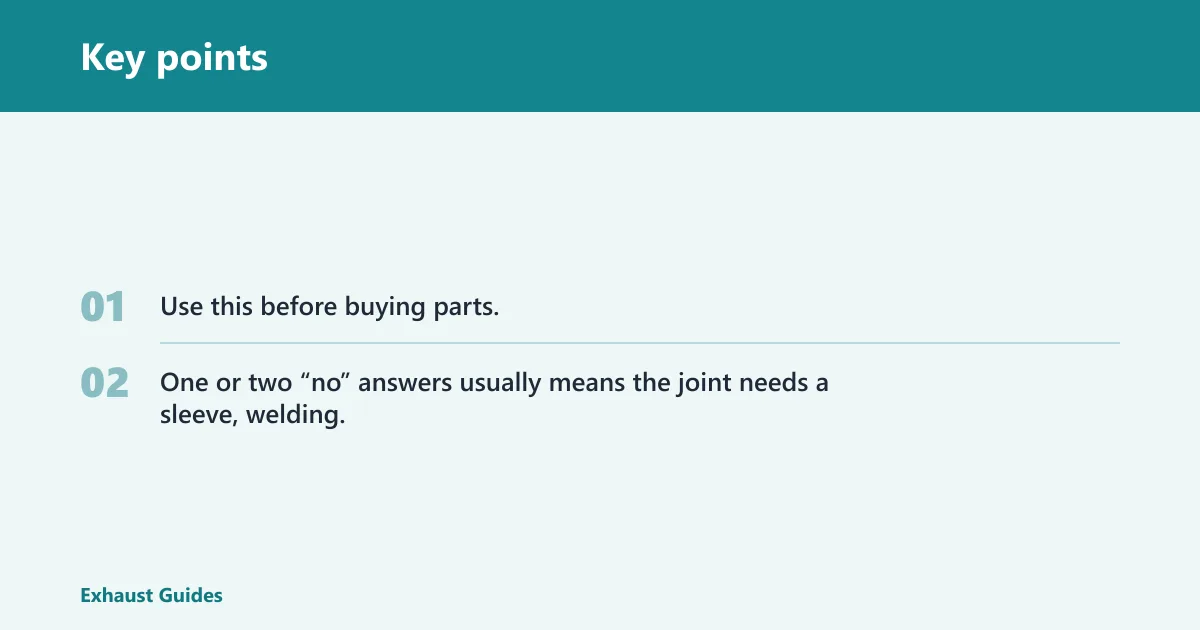
Use this before buying parts. One or two “no” answers usually means the joint needs a sleeve, welding, or replacement instead of a simple clamp.
| Check | Yes means | No means |
|---|---|---|
| Pipe ends are round | A clamp can squeeze evenly | Ovalized pipe may leak or distort more |
| Rust is light surface scale | The joint may still seal | Deep pitting usually needs replacement |
| Pipe OD is known | You can choose the right clamp size | Wrong size often leaks or crushes |
| Slip fit overlap is present | A band clamp can seal the joint | Short overlap often slips or rattles |
| Hangers hold the system centered | The joint will not be stressed | Misalignment can reopen the leak |
| Pipe walls are still thick | Band or sleeve clamping is realistic | Thin-wall pipe may deform under load |
| Ends are not split or cracked | Clamping is still on the table | Cracks usually spread under clamp force |
| Leak risk is low to moderate | Clamp-only repair may hold | Heavy blow-by often needs welding |
| Outcome | Best choice | Why |
|---|---|---|
| Clean slip joint, correct size | Band clamp | Even 360-degree force and better sealing |
| Budget repair on thicker pipe | U-bolt clamp | Cheaper and common, but less even |
| Damaged or near-size pipe ends | Sleeve connector | Bridges the gap and supports the joint |
| Split, badly rusted, or ovalized pipe | Replace or weld | Clamping often leaks or distorts the metal |
Measure the exhaust pipe diameter
Measure the exhaust pipe outer diameter at the joint, not the inner opening. Most clamps are sold by OD, and a small mismatch can keep the seal from closing evenly. If you are between sizes, compare the pipe to the clamp range printed on the package before buying.
Match metric or imperial sizes
Imperial sizes such as 2.0, 2.25, and 2.5 inches are common, and metric sizes such as 50 mm and about 63.5 mm may appear on aftermarket exhaust parts. If the pipe is 2.25 inches, that is about 57 mm. Do not assume a near-fit clamp will tighten down cleanly.
Confirm overlap on slip joints
A slip fit exhaust joint needs enough overlap for the inner pipe to sit straight inside the outer pipe. If the overlap is short, the clamp may hold for a while and then loosen from heat cycles and vibration. Clean, round mating surfaces matter as much as size.
Choose the right clamp or connector
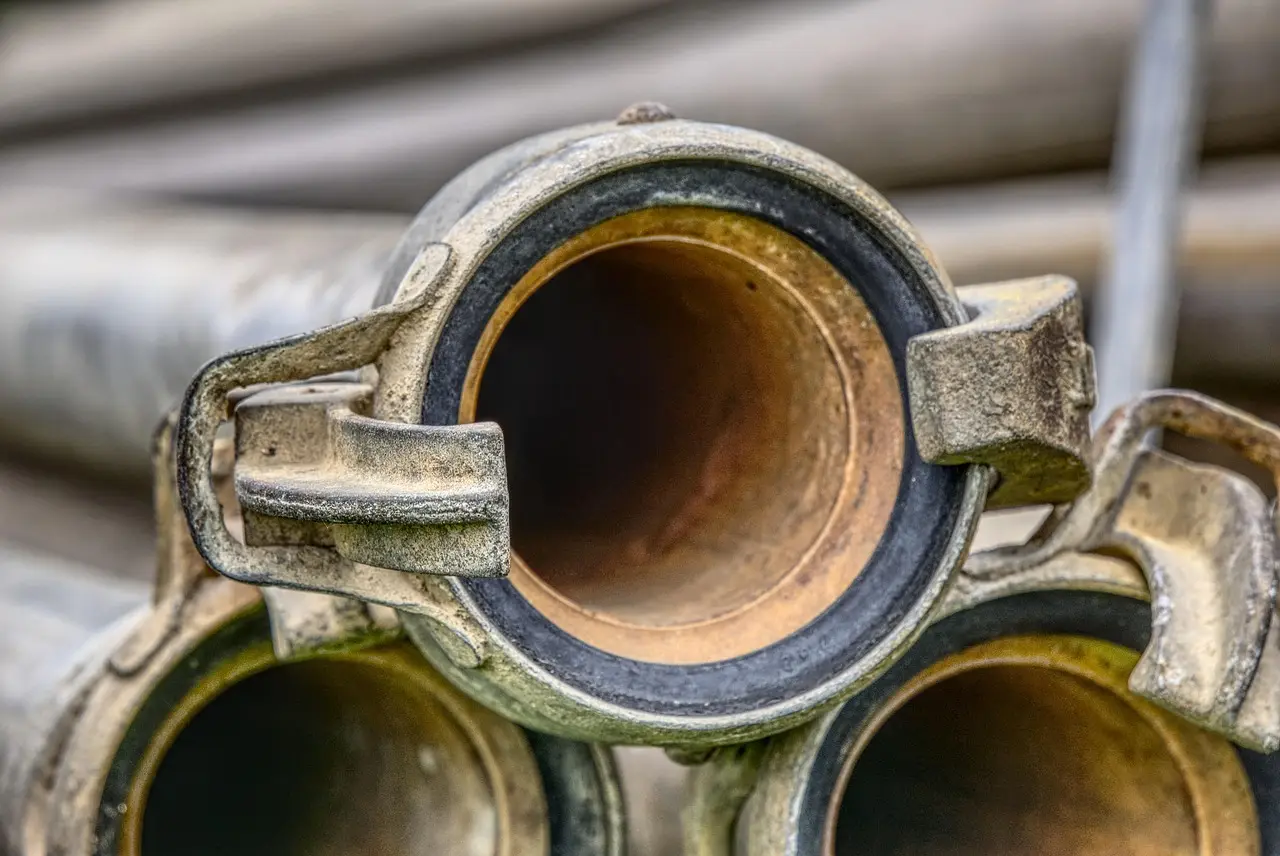
Choose the part for the failure mode, not just the pipe size. A band clamp is often a good choice for slip-joint connections because it gives even 360-degree clamping force and is commonly reported to seal better than a U-bolt clamp. A U-bolt clamp is often cheaper and can be fine for temporary or budget repairs, but it may deform thin-wall pipe.
Band clamp for slip joints
Use a band clamp when the joint fits correctly and the pipe ends are still round. It is the better pick for many aftermarket exhaust repairs because it applies force around the whole pipe, not just two sides. That helps avoid the flat spots U-bolts can leave behind.
U-bolt clamp for budget repairs
Use a U-bolt exhaust clamp when the pipe is sturdy and you need a low-cost repair. It is common, available everywhere, and often good enough on thicker material. On thin-wall pipe, though, it can pinch the tube out of shape before the leak is fully sealed.
Sleeve connector for damaged ends
Use an exhaust sleeve connector when the pipe ends are damaged, short, or slightly mismatched. The sleeve bridges the joint and gives the clamp more surface to grab. That makes it a better choice when a simple slip fit no longer seals well enough for a band clamp alone.
Say your 2.25-inch rear pipe is sound but the overlap is short because the old joint slid apart after a hanger broke. A band clamp plus a sleeve connector is the cleaner fix. The same clamp on a split, rust-flaked edge would likely leak again.
Install and tighten the joint
Clean the mating faces, center the pipes, and tighten in stages. Exhaust sealant can help with a marginal joint, but it is not a substitute for correct fit. Use it only if the joint type and the sealant label both support exhaust use.
- Brush rust, dirt, and scale off both pipe ends.
- Dry-fit the joint and confirm full overlap.
- Set the pipes so the exhaust hangs straight in the rubber mounts.
- Slide the clamp into place over the joint.
- Snug the fastener until the clamp seats evenly.
- Add sealant only if the joint needs it and the product is exhaust-rated.
- Tighten the clamp in two or three stages, then recheck alignment.
- Drive a short loop, then inspect for soot, ticking, or movement.
A common first-timer mistake is cranking the clamp fully on the first pass. That can ovalize the pipe before the other side of the joint seats. A better approach is to tighten a little, settle the joint, then add pressure in steps.
Common mistakes
Most clamp failures come from fit, alignment, or force. A clamp that is the right size can still leak if the pipe is oval, the joint is rusty, or the exhaust hangs under tension.
Overtightening and pipe ovalizing
If the pipe bulges flat where the clamp sits, you have gone too far. Back off, realign the joint, and reassess whether a band clamp or sleeve connector would spread the load better. Overtightening can crush thin-wall pipe and make the leak worse.
Ignoring rust or damaged edges
Deep pitting, split seams, and jagged edges give the clamp very little to seal against. In that case, a clamp may hold for a short time and then fail after heat cycles. Replace the damaged section or use a sleeve connector if the pipe still has usable length.
Leaving the joint misaligned
If the exhaust is pulled sideways in the hangers, the clamp sees bending load instead of simple compression. That can cause rattles, repeat leaks, and loose hardware. Recenter the system before the final tightening.
Suppose a 50 mm mid-pipe sits 6 mm low in the hanger after the clamp is snug. Even a good seal can start ticking again because the joint is being flexed. Move the pipe back to center first, then retighten.
Frequently asked questions
How do you clamp exhaust pipes together?
Clean both ends, confirm the OD, align the pipes in their hangers, and place the clamp over the joint. Tighten in stages so the pipe seats evenly. A final check after a short drive helps catch a slow leak before it turns into a larger failure.
Can you clamp exhaust pipes together without welding?
Yes, if the joint is round, the overlap is correct, and the pipe walls are still sound. Many aftermarket joints are made for clamped repair. If the metal is split, badly rusted, or badly ovalized, welding or replacement is the better fix.
What type of clamp works best on exhaust pipes?
A band clamp is usually the best choice for a good slip joint because it gives even 360-degree pressure. A U-bolt clamp is cheaper and common, but it can seal less evenly and can deform thin-wall pipe if you tighten it hard.
How tight should an exhaust clamp be?
Tight enough that the joint does not move by hand, but not so tight that the pipe flattens. If the pipe ovalizes, back off. If the joint still slips or leaves soot after a short drive, the fit is wrong and the clamp choice needs to change.
Do exhaust clamps seal a leak on their own?
They can, but only when the leak comes from a good joint that has loosened or was assembled poorly. A clamp will not fix a cracked pipe, a split edge, or a badly rusted section. In those cases, a sleeve, weld, or replacement is the real fix.
Do you need sealant with an exhaust clamp?
Not always. Use exhaust sealant only as an aid on a suitable joint, and only if the product is rated for exhaust temperature. It cannot replace correct size, clean surfaces, or proper alignment. If the fit is poor, sealant alone will not hold.