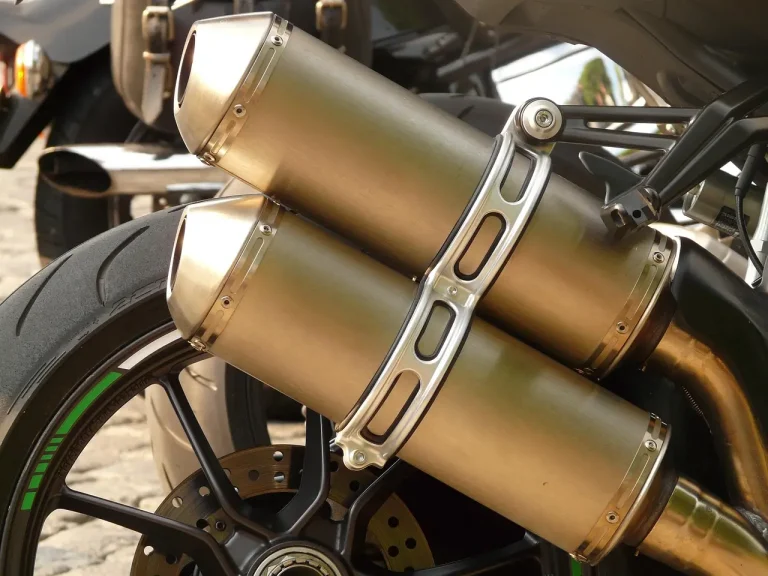
What Gray Exhaust Smoke Means in a Gas Car
Gray exhaust smoke in a gas car is often condensation if it appears only on a cold start and clears within about 1 to 2 minutes. Smoke that persists, smells oily, or shows up under acceleration usually needs diagnosis. Ignoring it can lead to burned oil, catalytic converter damage, or a failing transmission seal. This guide shows how to judge gray smoke by when it appears, what it smells like, and which causes are most likely.
Gray exhaust smoke basics


Gray exhaust smoke sits between white and blue, so color alone is rarely enough. The better clues are timing, smell, and operating condition: startup, idle, acceleration, a warm engine, and whether the car has an automatic transmission. Auto Express says smoke diagnosis starts by identifying when the smoke appears, and smoke only during acceleration can point to a different problem than smoke at idle.
On a gas car, gray or blue-gray smoke often points to oil entering the intake or exhaust path. That can come from worn valve seals, piston rings, a turbocharger, a failed PCV valve, or, on automatics, a transmission fluid leak. Condensation matters too, especially on cold or wet days, because it can look like smoke before the exhaust system heats up.
Gray smoke triage table
Use the pattern first. Then check smell, fluid level, and when the smoke happens.
| Symptom pattern | Most likely cause | Quick homeowner check | Urgency | Next diagnostic step |
|---|---|---|---|---|
| Cold-start puff that clears in 1 to 2 minutes | Condensation or water vapor | Watch whether it fades as the exhaust warms | Low if it clears quickly | Recheck on a warmer, drier day |
| Smoke after overnight parking | Worn valve seals or oil seepage past seals | Look for oily tailpipe residue and oil loss over time | Moderate | Shop inspection of valve seals and valve guides |
| Smoke after idling at a stop | Oil pooling in the intake or turbo side | Note whether the smoke appears as you pull away | Moderate | Inspect PCV system and turbo plumbing |
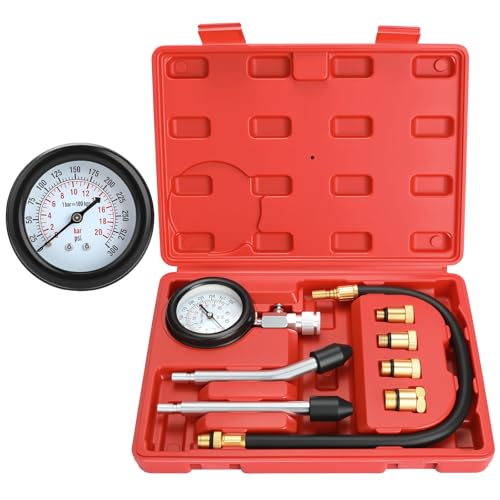
| Smoke on acceleration | Oil entry under load, piston rings, or turbocharger | Check oil level and whether power feels weak | Moderate to high | Compression or leak-down test, plus turbo inspection |
| Smoke only under boost | Turbocharger oil leak | Listen for boost leak noise and watch oil usage | High on turbo cars | Inspect turbo seals, intake pipes, and intercooler hoses |
| Smoke with oil loss between oil changes | Oil burning from seals, rings, or turbo | Check dipstick level and note how fast it drops | Moderate to high | Track consumption, then diagnose the oil-entry path |
| Smoke with burnt-oil smell | Oil burning | Smell the exhaust outside the car, not inside the cabin | Moderate | Inspect for external oil leaks and internal oil burning |
| Gray smoke on automatic cars with shifting issues | Transmission fluid leak | Check transmission-fluid level and look for delayed shifts | High | Inspect vacuum modulator, seals, and related transmission parts |
Suppose a driver assumes any gray exhaust puff means the same repair is needed, even though the smoke can come from burning oil, a leaking turbo seal, or a fuel mixture problem. A cold puff that disappears before the temperature gauge moves is different from smoke that returns every time the driver accelerates uphill in a warmed-up car.
Is gray smoke ever normal?
Yes. Gray-looking exhaust can be normal condensation if it appears on a cold or wet day and disappears once the engine is up to temperature. The same source notes that condensation is fairly common on cold or wet days and should disappear once the engine is up to temperature. If it lingers, smells oily, or thickens with throttle, treat it as a fault.
Cold-weather condensation and water vapor
Short-lived vapor is most believable when the car has sat outside, the air is damp, and the exhaust pipe is cold. It usually looks thin, light gray to white-gray, and it clears fast. Auto Express also notes that white smoke can be caused by condensation or a coolant leak, so a brief plume is not enough to diagnose a major problem.
How long normal vapor should last?
A common rule of thumb is that normal condensation should fade within a few minutes of running, often sooner. If the plume still hangs around after the engine is warm, or if it returns after every stoplight, it is less likely to be simple water vapor. That pattern points back to oil, fuel, or a fluid leak.
Signs that it is real smoke instead
True smoke tends to have an oily smell, appears repeatedly in the same operating condition, and often comes with fluid loss. White-gray haze that gets thicker with acceleration is also suspicious. If the tailpipe smells like burnt oil, or the oil level drops between services, condensation is a weak explanation.
What does gray smoke on startup mean?
Gray smoke on startup usually points to oil that has seeped into the combustion path while the car sat. Worn valve seals are a common cause, and worn piston rings can do the same on older, high-mileage engines. If the puff appears after an overnight soak and then clears, condensation and oil seepage are the main contenders.
Worn valve seals after sitting
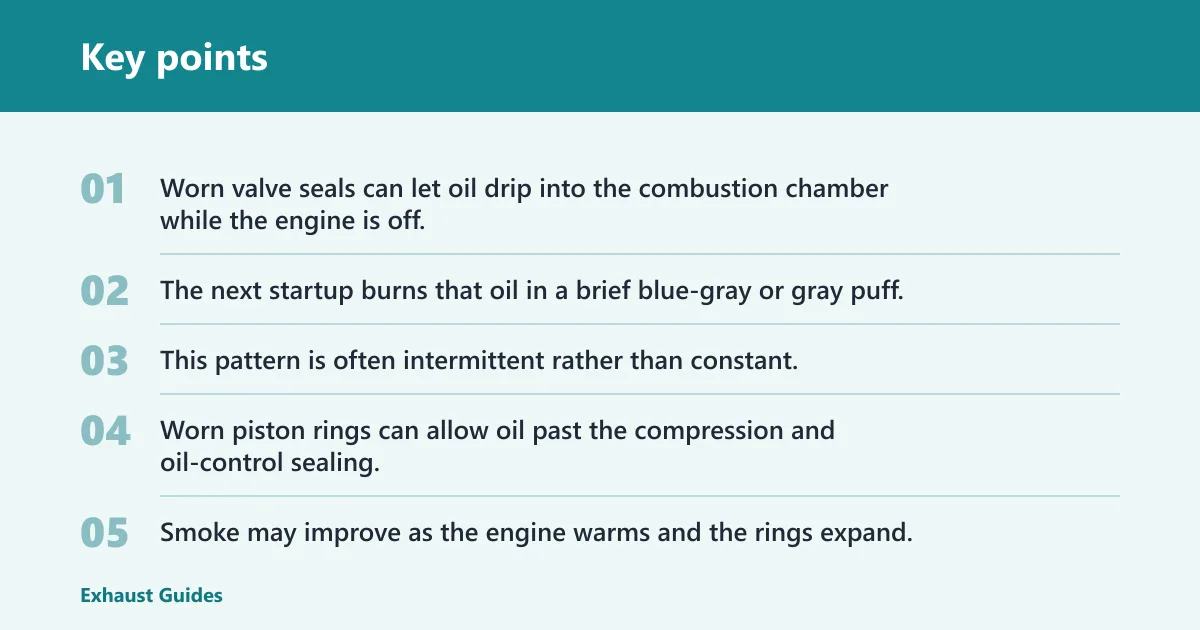
Worn valve seals can let oil drip into the combustion chamber while the engine is off. The next startup burns that oil in a brief blue-gray or gray puff. This pattern is often intermittent rather than constant, which is why it can be missed if the car is only observed at idle.
Oil seepage from piston rings
Worn piston rings can allow oil past the compression and oil-control sealing. Smoke may improve as the engine warms and the rings expand, which is why a cold-start puff followed by cleaner exhaust can still point to internal wear. Auto Express links severe blue smoke causes to worn valve seals, piston rings, or turbochargers.
Turbo oil seep after shutdown
On turbocharged cars, oil can seep through a tired turbocharger after shutdown and then burn on the next start. That can create a gray or blue-gray puff after sitting, especially if the smoke is worse after a hard drive followed by a short stop. Turbo cars deserve extra attention here.
Suppose a 2.0-liter turbo car sits overnight, then throws a blue-gray puff for five seconds at startup and clears. That is more consistent with oil seepage than condensation, especially if the oil level is dropping between services.
Why does gray smoke happen under acceleration?
Smoke that appears under acceleration usually points away from simple condensation and toward oil entry under load. The same source says smoke only during acceleration can indicate a different problem than smoke at idle. On a gas car, that pattern often involves valve seals, piston rings, or a turbocharger that leaks more when pressure rises.
Oil entry under load
Under throttle, intake vacuum, crankcase pressure, and exhaust flow all change. That can pull oil mist into the intake or push oil past worn seals. If the smoke appears mainly when merging, climbing a hill, or passing, note whether it also comes with reduced power or rising oil consumption.
Turbocharger-related smoke under boost
Under boost, a failing turbocharger can force oil into the intake or exhaust side. Smoke then shows up most clearly during hard acceleration or while the turbo is spooling. That is one of the strongest clues for a turbo-related fault on a gas car.
When acceleration points away from condensation
Condensation should not suddenly get worse just because the throttle opens. If the car idles cleanly, then smokes when you step on the gas, the cause is likely mechanical rather than weather-related. That pattern is especially important when the engine is already warm.
Could a PCV valve cause gray exhaust smoke?
Yes. A failed PCV valve can contribute to gray smoke by disturbing crankcase ventilation and allowing oil mist into the intake. That does not mean the PCV valve is the only cause, but it belongs on the short list when smoke is gray rather than black and the engine also shows oil consumption or rough idle.
How PCV problems send oil mist into intake air
The PCV system routes crankcase vapors back into the intake to be burned. If the valve sticks open, sticks closed, or the hose is restricted, oil mist can enter where it should not. The result can be gray or blue-gray smoke, usually with no dramatic change in smoke color from one day to the next.
Quick homeowner check for a stuck PCV valve
- Locate the PCV valve and its hose.
- Look for cracked hoses, loose fittings, or oil wetness.
- With the engine off, shake a removable valve gently; a stuck valve may not rattle.
- Check for rough idle, whistling, or obvious vacuum leaks.
If the hose is brittle or soaked with oil, that matters too. A clogged breather or failed grommet can create the same symptom path as a bad valve.
What to replace or inspect next
If the PCV system looks suspect, replace the valve with the correct part and inspect the connected hoses and intake tubing. If smoke remains after that, move on to valve seals, rings, or turbo seals. A PCV fault can be part of the problem without being the whole problem.
Gray smoke and automatic transmission problems
On an automatic car, gray smoke can come from a transmission fluid leak. The same source says gray smoke in automatic cars can come from a transmission fluid leak. This matters because automatic-transmission fluid can be drawn into the engine and burned, which can mimic oil smoke.
How transmission fluid can be burned
Some automatic transmissions have parts or hoses that can let fluid move where it should not. If fluid reaches the intake path, the engine burns it and the exhaust can look gray or blue-gray. The smell may be different from engine oil, but the smoke itself can look very similar.
Which symptoms make this more likely?
Look for delayed or harsh shifting, low transmission-fluid level, and smoke that appears alongside drivability changes. A transmission-related fault is more likely if the car is automatic and the smoke pattern does not match classic oil-burning clues like long-term oil loss or startup-only puffs.
Picture an automatic sedan that smokes gray only after a long climb, then starts shifting late when leaving a stop. That combination makes the drivetrain context important, because the smoke is not behaving like plain condensation.
Why this pattern matters on automatic cars
A transmission-fluid problem can worsen if ignored. It can also be mistaken for engine oil burning, which sends diagnosis down the wrong path. On an automatic, a gray smoke complaint should include both engine checks and transmission checks, not one or the other.
What does gray smoke mean on startup only?
Startup-only smoke is often caused by oil that has collected while the engine sat. The most common paths are worn valve seals, worn piston rings, or turbo oil seepage after shutdown. If the smoke clears quickly and never returns under throttle, condensation is still possible, but the timing makes oil entry more likely.
What if gray smoke happens only when I accelerate?
Smoke only during acceleration usually suggests oil entry under load rather than simple condensation. That pattern can point to piston rings, valve seals, a turbocharger, or, on an automatic, a transmission-fluid problem. If the car smokes only when you press the pedal and the rest of the time looks clean, use that timing as the main clue.
How do I tell gray smoke from blue smoke?
Gray and blue smoke overlap. Blue smoke is the clearer sign of oil being burned, while gray smoke can be gray-blue, white-gray, or slightly blue depending on light and distance. The best separator is not color alone but when it appears, whether it smells oily, and whether it follows startup, idle, acceleration, or boost.
Gray smoke with a burnt-oil smell and oil loss leans toward oil burning. Gray smoke that vanishes quickly on a cold morning leans toward condensation. If the car is automatic and the smoke comes with shifting issues, add transmission fluid to the list before blaming the engine.
When should I stop driving if the exhaust is gray?
Stop driving if the smoke is heavy, getting worse, or paired with rough running, loss of power, overheating, or low oil. Persistent smoke is not a normal condition. A light cold-start puff that disappears quickly is one thing; smoke that continues warm, smells oily, or changes how the car drives needs prompt inspection.
Frequently asked questions
What does grey smoke from exhaust mean?
Gray exhaust smoke usually means the engine is burning something it should not, most often oil. It can also be condensation on a cold start, especially if it clears within 1 to 2 minutes. Timing matters: startup-only smoke is different from smoke that appears under acceleration or after the engine is warm.
Why is my car blowing gray smoke?
The most likely causes are condensation, oil burning, a failed PCV valve, or, on automatic cars, a transmission fluid leak. If the smoke appears only when accelerating, oil entry under load moves up the list. If it happens only on a cold morning and then disappears, condensation is the better fit.
Is gray exhaust smoke dangerous?
It can be. Brief cold-start vapor is usually low concern, but persistent gray smoke can mean oil burning or a fluid leak. That can damage the catalytic converter, waste oil, and hide a problem that gets worse with mileage. If the smoke grows thicker or the car drives differently, stop waiting.
Can gray smoke be condensation or oil burning?
Yes. Condensation is common in cold or wet weather and should fade as the engine warms. Oil burning is more likely when the smoke has a burnt-oil smell, appears after sitting, or shows up under acceleration. The same color can mean different things, so timing and smell matter.