What Causes Exhaust Smoke After an Oil Change?
Light smoke for about 1–2 startup cycles after an oil change is often harmless burn-off from spilled oil, but smoke that keeps coming back, lasts more than a few minutes, or is blue-gray from the tailpipe can point to overfill, a leak, or a PCV fault. Ignore it, and you can foul plugs, contaminate the catalytic converter, or miss a real engine problem. This guide helps you separate normal burn-off from overfill and engine oil-ingestion faults, step by step.
Smoke decision table

- OE-number fitment for many VW and Audi models
- Airtight sealing gasket helps the install
- Designed to reduce crankcase pressure
Use this checklist to separate a service spill from a real engine fault. Start with the dipstick, then inspect the filter area and drain plug, then check PCV, valve cover, and intake clues, and only then decide whether the smoke is fading or still coming from the tailpipe.
| Branch | Exact checks | What you should observe | Next action if smoke does not fade |
|---|---|---|---|
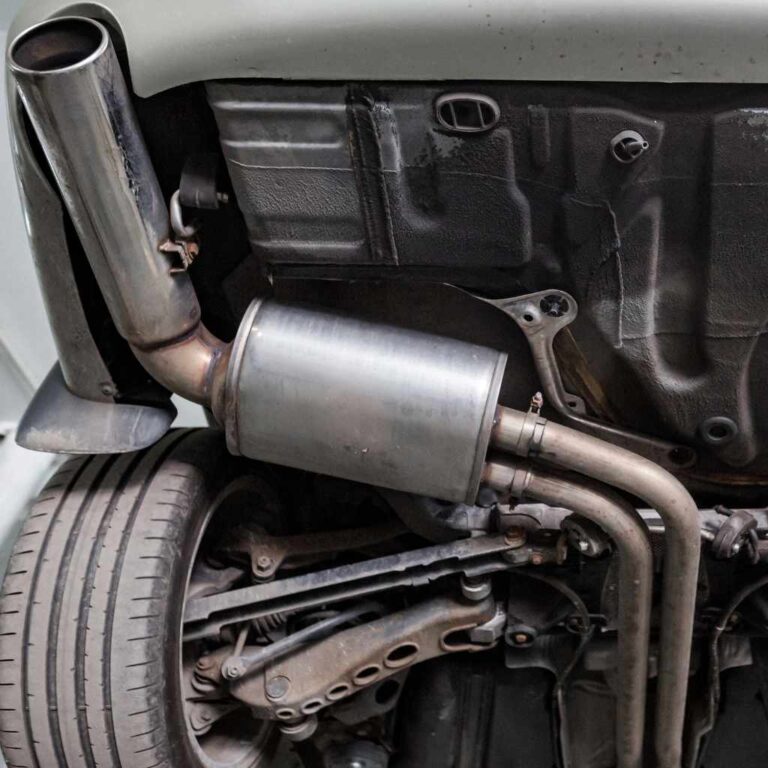
| External spill burn-off | Inspect the oil filter base, drain plug, filter housing, manifold, downpipe, heat shield, and catalytic converter for wet oil or fresh residue. | Smoke begins from the engine bay or undercar area, smells burnt, and usually drops off after a short idle or one short drive cycle. | If smoke is still visible after a short drive, recheck for fresh leaks and look for valve cover seepage or a missed spill on hot exhaust parts. |
| Oil overfill | Check the dipstick on level ground after the oil has settled. Compare the level with the add and full marks. | The level sits above the full mark. You may also see foamy oil, rough idle, or smoke from the tailpipe if the PCV system pulls oil into the intake. | Correct the level to the factory-specified fill capacity. If smoke remains after the level is corrected, inspect the PCV system and intake tract. |
| PCV ingestion | Inspect the PCV valve or PCV hose for clogging, sticking, oil wetness, or loose connections. Look in the intake tube and throttle body for oil film. | Blue-gray smoke comes from the tailpipe, often after idle, deceleration, or a fresh service that changed the oil level. | If the smoke does not fade, test or replace the PCV parts and scan for fuel trim or misfire faults that could point to a deeper engine issue. |
| Unrelated engine fault | Check for valve cover gasket leaks, turbocharger seal leakage on turbo vehicles, coolant loss, and stored OBD-II codes. | Smoke keeps returning, the smell does not match a simple oil spill, or the exhaust shows white vapor, blue-gray smoke, or black smoke with drivability changes. | If smoke persists beyond the burn-off period, use an OBD-II scan tool and seek diagnosis for misfire, rich fuel mixture, coolant loss, or turbo seal wear. |
What causes exhaust smoke after an oil change
Smoke after an oil change usually comes from one of three paths: spilled oil on hot parts, too much oil in the crankcase, or an engine problem that was already there. A small service spill burns off quickly. Persistent blue-gray tailpipe smoke points more toward oil being burned inside the engine.
Temporary smoke from spilled oil
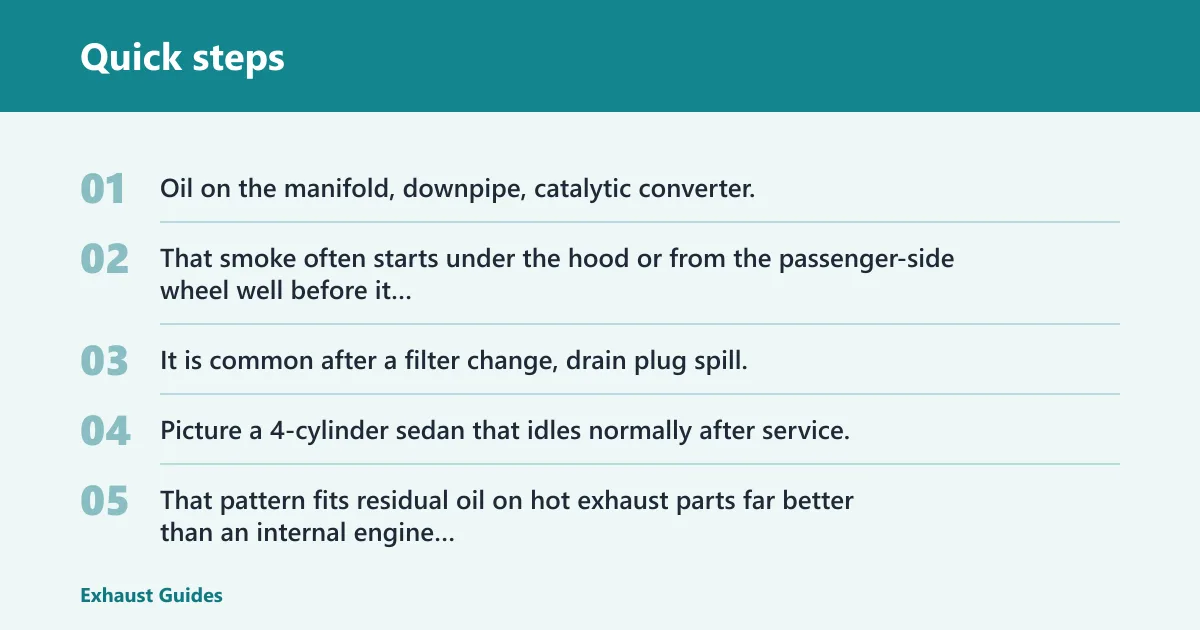
Oil on the manifold, downpipe, catalytic converter, or heat shield burns when those parts heat up. That smoke often starts under the hood or from the passenger-side wheel well before it thins out. It is common after a filter change, drain plug spill, or a sloppy top-off around the filler neck.
Picture a 4-cylinder sedan that idles normally after service, but a thin burnt-oil haze rises from the engine bay at the first stoplight. That pattern fits residual oil on hot exhaust parts far better than an internal engine fault.
Oil overfill and PCV-related oil ingestion
Too much oil can aerate the lubricant, raise crankcase pressure, and push oil mist into the intake through the PCV system. That matters because the smoke can come from the tailpipe, not just the engine bay. This is the post-service mistake that many quick answers miss.
A separate engine fault that was already there
Not every smoke complaint after service comes from the oil change. A worn valve cover gasket, a failing turbocharger seal, or an old PCV problem can surface at the same time as maintenance and look connected even when it is not. If the smoke continues after the spill should have burned away, treat it as a diagnosis problem, not a cleanup problem.
Could spilled oil be burning off?
Yes. That is the most common harmless explanation. Spilled oil on the exhaust manifold, downpipe, or catalytic converter can smoke for a short time and often leaves a burnt-oil odor. The key is whether the smoke starts near hot parts and then fades within a short drive cycle.
Where spill smoke usually starts
Spill smoke usually starts in the engine bay or under the car, not at the tailpipe. Look around the oil filter, drain plug, and the areas above the exhaust manifold or catalytic converter. If the smoke rises from one spot and gets weaker as the residue burns away, that supports spill burn-off.
What you should smell and see
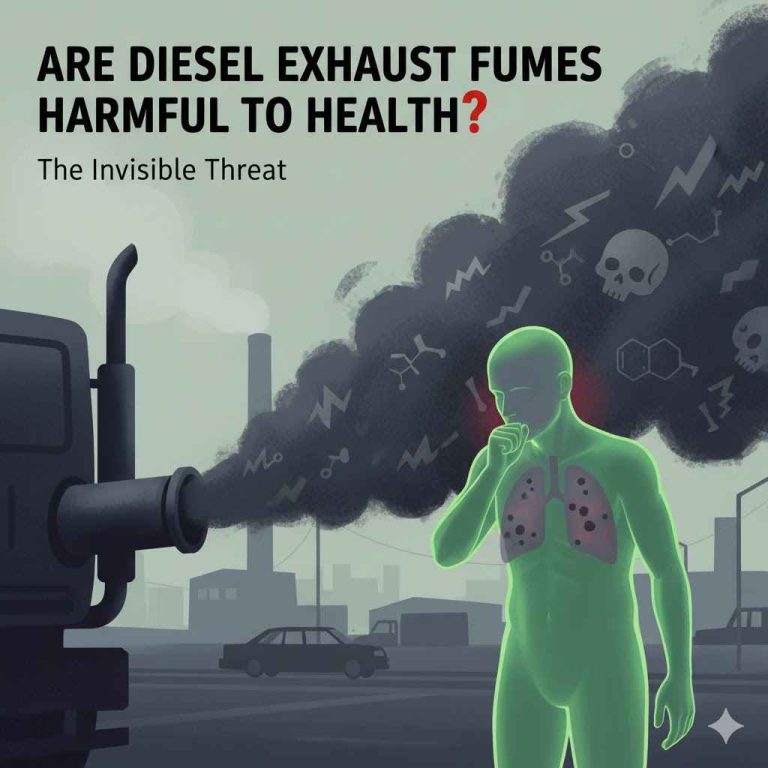
A burnt-oil smell is common. Blue-gray smoke may appear if oil reaches the exhaust, but the volume should fall as the residue burns off. White vapor that disappears quickly in cold weather is often condensation, while black smoke points more toward a fuel-mixture problem than an oil spill.
How long burn-off should last?
Spill smoke often fades after a short idle period or one short drive cycle. If the smoke is still obvious after that, or it returns after the engine has cooled and reheated, stop treating it as a simple spill. Reinspect the filter, drain plug, and valve cover area for fresh oil.
Could overfilling the oil cause smoke?
Yes. Overfilling can cause smoke even when there is no external leak. An oil level above the full mark can aerate the oil and increase crankcase pressure. That pressure can push oil mist through the PCV system and into the intake, where it burns in the cylinders and exits as blue-gray smoke.
How an overfill raises crankcase pressure
When the crankshaft churns through excess oil, the oil can foam. Foamy oil does not control pressure well, and that extra pressure can force oil vapor past seals and through the PCV path. On some engines, the excess is modest enough to pass unnoticed until smoke shows up after service.
Why the PCV system can pull oil into the intake
The PCV system routes blow-by gases from the crankcase back to the intake so the engine can reburn them. If the oil level is too high, or if the PCV valve is stuck or clogged, that system can carry oil mist instead of mostly vapors. The result is oil consumption that looks like exhaust smoke.
How to correct the level safely
Check the dipstick on level ground after the oil has settled. Compare the level to the add and full marks, then remove excess oil until the level sits at the proper mark for that engine. Follow the factory-specified viscosity grade and fill capacity. Wrong oil type or wrong quantity can confuse the diagnosis.
Suppose a compact SUV leaves the bay with the dipstick just above the full mark, then smokes blue-gray at idle after a five-mile drive. That pattern fits overfill and PCV ingestion much better than a spill on the exhaust, because the smoke comes from the tailpipe rather than from under the hood.
How do you tell oil smoke from coolant or condensation?
Smoke color helps, but it is only part of the picture. Blue-gray smoke usually points to oil burning. White vapor can be harmless condensation if it fades quickly, though persistent white smoke with coolant loss suggests a cooling-system fault. Black smoke usually points to a rich fuel mixture, not an oil spill.
Blue-gray smoke
Blue-gray smoke suggests motor oil is entering the combustion chamber or exhaust stream. After an oil change, that may mean overfill, PCV ingestion, a valve cover gasket leak onto hot exhaust, or a turbocharger seal issue on a turbo vehicle. If it keeps coming from the tailpipe, do not treat it as leftover splash alone.
White vapor
White vapor often disappears as the exhaust warms and moisture burns off. In cold weather, that is common. If the smoke stays thick, has a sweet smell, or comes with coolant loss or overheating, suspect coolant entering the engine rather than oil residue from service.
Black smoke
Black smoke points to excess fuel. That can happen with sensor faults, injector issues, or a rich mixture unrelated to the oil change. If black smoke appears after service, an OBD-II scan tool is useful because it can show fuel trim and sensor codes that help separate a service mistake from an engine fault.
When the smell matters
A burnt-oil smell often supports spill burn-off or oil contamination of the catalytic converter. A sweet smell leans toward coolant. A fuel smell points toward richness. If the odor and color do not match a simple spill, move to deeper checks instead of waiting it out.
What if the smoke does not fade?
If the smoke does not fade after a short drive cycle, stop assuming it is residue from service. Persistent smoke can mean a valve cover gasket leak, a turbocharger seal issue, a clogged PCV valve, or an unrelated fault that the oil change merely exposed. That is the point where inspection needs to widen.
Valve cover gasket leaks
A leaking valve cover gasket can drip oil onto hot exhaust parts long after the initial spill is gone. That can produce the same burnt-oil smell people associate with a bad oil change, but the source is a failed seal. Look for oil wetness around the valve cover edge and on nearby heat shields.
Turbocharger seal issues
On turbocharged vehicles, worn turbo seals can send oil into the intake or exhaust side. That can create smoke after service even when the oil change was done correctly. Turbo smoke is more likely to show up under boost, on deceleration, or after idling, and it is not solved by simply wiping up a spill.
Why an OBD-II scan helps
An OBD-II scan tool can check for misfire codes, fuel trim problems, and sensor faults. That matters when smoke keeps returning because it helps separate a service issue from a running problem. If the light is on, the codes matter more than the guesswork.
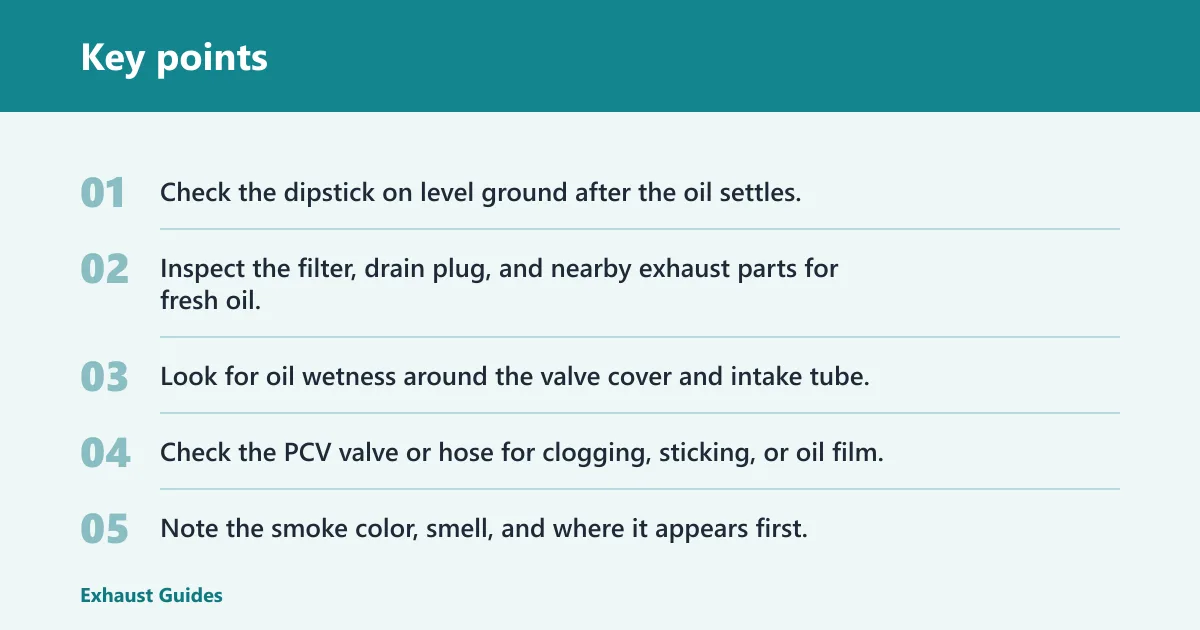
- Check the dipstick on level ground after the oil settles.
- Inspect the filter, drain plug, and nearby exhaust parts for fresh oil.
- Look for oil wetness around the valve cover and intake tube.
- Check the PCV valve or hose for clogging, sticking, or oil film.
- Note the smoke color, smell, and where it appears first.
- Scan for OBD-II codes if the smoke remains after a short drive.
Do not keep driving if the smoke is heavy, persistent, or paired with warning lights, rough running, overheating, or coolant loss. That is the line where a simple service cleanup stops being a safe assumption.
Frequently asked questions
What causes smoke from the exhaust after an oil change
Most often, it is spilled oil burning off hot exhaust parts. If the smoke is blue-gray from the tailpipe, the cause is more likely overfill, PCV oil ingestion, or an engine fault that was already present. Smoke that keeps returning needs a closer inspection.
Why is smoke coming out my exhaust right after changing oil?
Right-after-service smoke can come from a spill near the manifold, downpipe, or catalytic converter. If it comes from the tailpipe and stays blue-gray, check the oil level first and then the PCV system. That pattern is less consistent with simple external burn-off.
Is it normal for a car to smoke after an oil change?
A small amount of smoke for one or two startup cycles can be normal if oil got onto hot parts. It is not normal if the smoke is heavy, lasts beyond a short drive, or is paired with warning lights, rough idle, or coolant loss.
What causes oil in exhaust after an oil change
Oil in the exhaust usually means oil is being burned inside the engine, not just sitting on the outside. Overfill can drive oil mist through the PCV system, and a worn valve cover gasket or turbo seal can do the same. A tailpipe check matters here.
Could overfilling oil cause exhaust smoke?
Yes. Overfilling can aerate the oil, raise crankcase pressure, and push oil mist into the intake through the PCV system. That can produce blue-gray tailpipe smoke. Check the dipstick on level ground after the oil settles, then correct the level to the proper mark.
How do I tell if the smoke is oil, coolant, or condensation?
Blue-gray smoke usually suggests oil. White vapor that fades quickly is often condensation, while persistent white smoke with coolant loss points to coolant. Black smoke usually means a rich fuel mixture. The smell helps too: burnt oil, sweet coolant, or raw fuel each point in different directions.