Best Way to Document Exhaust Smoke for a Mechanic
Take about 2–3 short videos from a cold start, a warm idle, and a brief 1,500–2,500 rpm snap if it is safe to do so, then note smoke color, odor, weather, engine temperature, and whether it happens on acceleration, decel, or idle. Poor documentation sends a mechanic down the wrong system, which can add diagnostic time and parts guesses. This guide gives you a mechanic-ready checklist for filming, timing, labeling, and sending the evidence so the smoke can be reproduced and diagnosed faster.
What to record first

The first pass should capture the conditions around the smoke, not just the smoke itself. Write down the date and time, ambient temperature, whether the engine is cold or warm, and the exact driving event that brought the smoke on.
That order matters because the same exhaust color can mean different things at cold start, idle, acceleration, after warm-up, or deceleration. Light white vapor can be normal on a cold start, while a warm engine should produce nearly invisible exhaust. Cold weather below 32°F can produce significant white vapor for 5-10 minutes, so the weather note helps a mechanic separate normal vapor from a fault.
Date, time, and ambient temperature
Record the time to the minute and the outside temperature where the car was parked or driven. If the weather is damp, note that too. At 32-50°F with high humidity, normal exhaust vapor can last 2-5 minutes. At 50-70°F with high humidity, normal vapor can last 1-2 minutes.
Engine state and operating condition
Say whether the engine was cold, warming up, fully warm, idling, cruising, climbing a hill, accelerating, or lifting off the throttle. If smoke appears only after a hot soak, after hard driving, or on a cold start, write that down exactly. That timing lets a mechanic narrow the likely system quickly.
Smoke color, density, odor, and duration
Describe the color as white, blue, black, or gray, then add how dense it looked. Use plain terms: light vapor, wisps, steady stream, continuous smoke, billowing clouds, or heavy plume. Add the odor if there is one, and note how long the smoke lasted before it faded.
Exhaust smoke evidence packet
Use this as a one-page handoff sheet. Keep it with the video file names, and give the mechanic the same information in text or email if you are booking remotely. A short, complete packet is better than a long story with missing basics.
| Field | What to write | Example entry |
|---|---|---|
| Date/time | When the smoke was seen | a sample date/time |
| Ambient temperature | Outside temperature and weather | 38°F, damp morning |
| Engine state | Cold start, idle, warm, acceleration, deceleration | Cold start, then warm idle |
| Smoke color | White, blue, black, or gray | White with a faint gray cast |
| Smoke density | Light vapor, wisps, steady stream, continuous smoke, plume | Steady stream for 20 seconds |
| Odor | Sweet, burnt oil, fuel, or none | Sweet odor at idle |
| Location | Tailpipe only, underhood, one bank, after a stop | Tailpipe on first start only |
| Duration | How long smoke lasted | About 3 minutes |
| Dashboard warnings | Check engine, temperature, oil, other lamps | Check engine light on |
| Fluid levels | Coolant, engine oil, transmission fluid | Coolant low, oil normal, trans fluid normal |
| Codes | OBD-II codes and pending codes | P0302, P0171 |
| Symptom summary | One or two sentences on when it happens | Smoke appears after overnight park and again after hard braking |
Short symptom summary for the mechanic
Keep the summary tight. For example: “White smoke from tailpipe on cold start, lasts 2 minutes, sweet odor, coolant level low, check engine light on.” That gives the technician enough structure to decide whether the next step is a scan, a cooling-system pressure check, or a physical inspection.
How do you capture usable smoke photos or video?
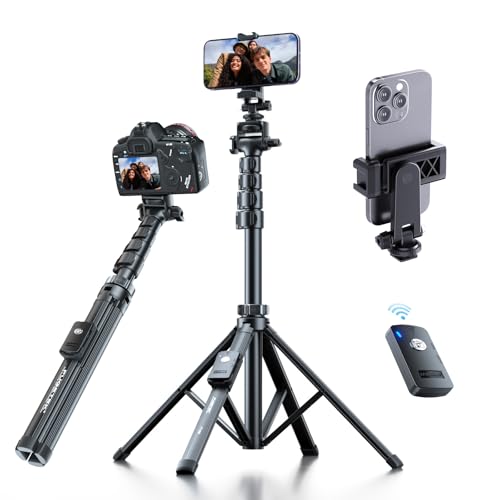
Use the same angle, distance, and lighting each time so the mechanic can compare clips without guessing. Show the tailpipe, the smoke path, and part of the background. A stable clip taken from the same spot is more useful than a shaky close-up that fills the frame with haze.
Choose the same angle and distance each time
Set the camera where the tailpipe, bumper edge, and open air behind the car are visible. Stay far enough back to show how far the smoke travels, but close enough that the color is clear. If you can, record one clip from behind the car and one from the side.
Show the tailpipe, background, and lighting
Bright sun, shade, and garage lighting can change how smoke looks on camera. Point out the lighting in your note if it may change color perception. The mechanic needs to know whether the clip shows true white smoke, light vapor, or a camera artifact from glare.
Record cold start, idle, acceleration, and warm engine runs
Make separate clips for each operating condition. A common sequence is a cold start, then a warm idle, then a brief 1,500–2,500 rpm snap if it is safe to do so. If the smoke appears only after revving, say so in the file name or note.
If the car smokes only after a 20-minute drive and then idles at a light for 30 seconds, record that exact sequence instead of waiting for the next morning. The timing tells the mechanic whether the fault fits hot-soak oil leakage, coolant entry, or a fuel-control issue.
What details help a mechanic sort the cause?
Color helps, but it does not end the diagnosis. White smoke often points to coolant system trouble that needs fast attention. Blue smoke points to oil consumption that can damage the engine. Black smoke points to fuel system or combustion trouble that hurts performance.
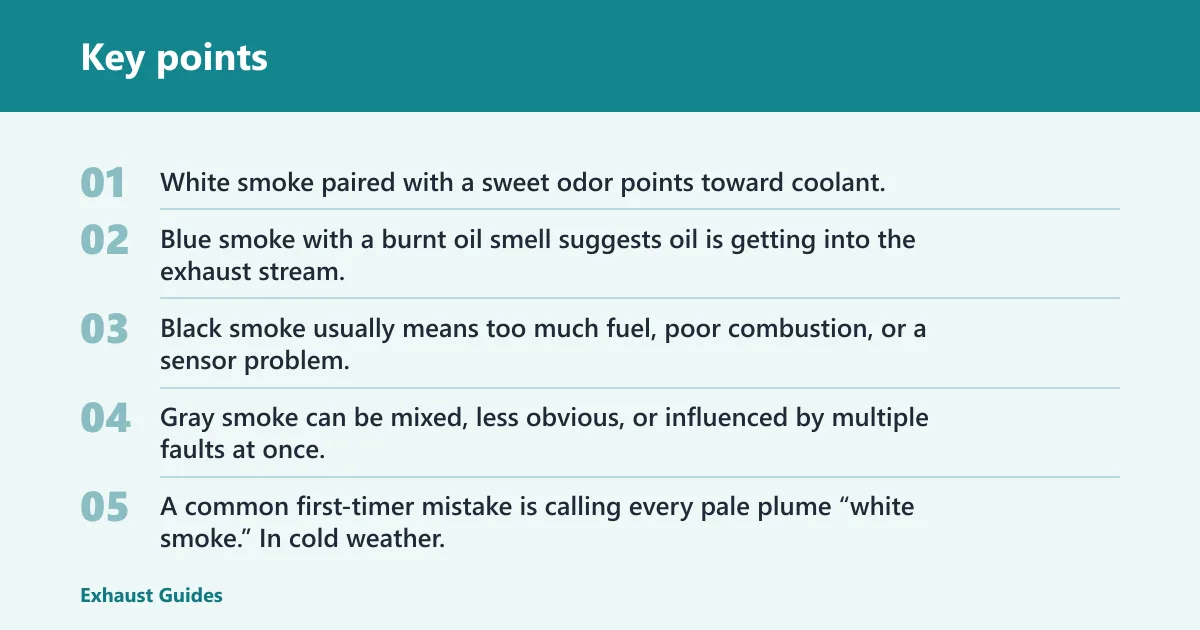
White, blue, black, and gray smoke clues
White smoke paired with a sweet odor points toward coolant. Blue smoke with a burnt oil smell suggests oil is getting into the exhaust stream. Black smoke usually means too much fuel, poor combustion, or a sensor problem. Gray smoke can be mixed, less obvious, or influenced by multiple faults at once.
A common first-timer mistake is calling every pale plume “white smoke.” In cold weather, light white vapor can be normal, especially in the first few minutes. The mechanic needs the temperature, duration, and engine state to tell normal vapor from a true fault.
Light vapor versus heavy plume
Write whether the exhaust was a brief wisp, a light vapor cloud, a steady stream, or a heavy plume. A few wisps that disappear in 30 seconds are very different from continuous smoke that hangs behind the car. That difference changes the urgency and the likely systems to inspect.
Sweet, burnt oil, and fuel odors
Odor is one of the best notes you can add. Sweet odors often indicate coolant leaks that can lead to overheating. Burning oil smells need prompt diagnosis to avoid bearing damage. A fuel smell can point to a rich condition, a misfire, or a combustion problem.
What extra evidence should you send?
Video and notes help, but a mechanic can usually narrow the cause much faster if you also send fluid checks, scan data, and any signs from plugs or compression. This is the point where evidence shifts from “there is smoke” to “here is what the engine is doing while it smokes.”
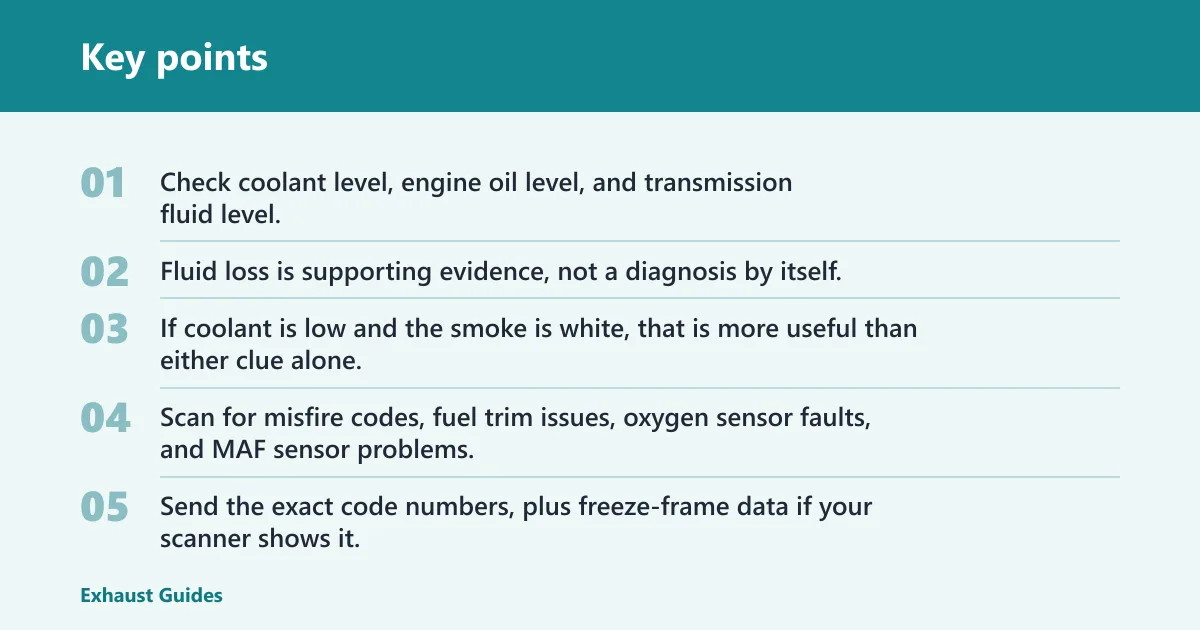
Coolant, oil, and transmission fluid levels
Check coolant level, engine oil level, and transmission fluid level, then note whether any of them dropped since the last check. Fluid loss is supporting evidence, not a diagnosis by itself. If coolant is low and the smoke is white, that is more useful than either clue alone.
OBD-II codes and freeze-frame data
Scan for misfire codes, fuel trim issues, oxygen sensor faults, and MAF sensor problems. Send the exact code numbers, plus freeze-frame data if your scanner shows it. A mechanic can use those codes to decide whether the smoke is more likely a fuel-control issue, a sensor issue, or a mechanical problem.
Picture a car that smokes black under hard acceleration and stores a fuel trim code. The scan data can point a technician toward a rich-running fault instead of an oil leak, saving time during the first inspection.
Spark plug clues and compression test results
When plugs are easy to access, note whether any are oily, have white crust, or show black soot. Cylinder-by-cylinder clues matter because one bad cylinder can point to rings, valve seals, or a head gasket issue. If a compression test has been done, send the cylinder pressure comparison, not just “compression is low.”
Compression readings matter most when the smoke is persistent, one cylinder is clearly different, or the engine misfires along with the exhaust smoke. Uneven compression can support head gasket, ring, or valve trouble, but it still needs a physical inspection to confirm the exact failure.
When a smoke machine or leak check matters
A smoke machine is used for exhaust leak testing and other low-pressure checks. Most automotive smoke machines operate at 0.5 to 1.0 PSI, and a smoke test seals the exhaust system and introduces pressurized smoke. Common exhaust leak points include manifold gaskets, flanges, welds, sensor ports, converters, mufflers, and pipe joints.
If the smoke seems to come from under the car, or you smell exhaust outside the tailpipe area, say that clearly. A technician may need a smoke test to confirm a leak visually, especially when the fault changes with temperature or engine load.
When should you stop driving and book service?
Stop driving if the smoke is persistent, the car is losing power, or the temperature gauge climbs. Heavy smoke can mean serious engine damage, and white smoke with coolant loss can become an overheating problem fast. If warning lights are on, the engine misfires, or the cabin smells like fuel, book service promptly.
Persistent smoke or heavy loss of power
If the smoke does not fade or the engine feels weak, do not assume it is “just vapor.” Continuous smoke plus rough running is a stronger warning than a brief startup puff. At that point, the car needs a shop inspection, not more guesswork.
Rapid fluid loss or overheating
If coolant drops quickly or the engine runs hot, do not keep driving to “see what happens.” White smoke often tracks coolant system trouble, and that can lead to overheating and damage. Add the fluid level note to your evidence packet before the tow or service call.
Warning lights, misfire, or fuel smell
Any check engine light, flashing misfire, or strong fuel smell should move the job up the priority list. Those clues can point to a rich condition, an ignition problem, or a sensor fault that is changing how the engine burns fuel. The smoke may be the result, not the whole problem.
Frequently asked questions
What is the best way to document exhaust smoke for a mechanic?
Give the mechanic a short evidence packet: date, time, ambient temperature, engine state, smoke color, density, odor, duration, warning lights, fluid levels, and codes. Pair that with 2–3 videos from a cold start, warm idle, and a brief rev so the fault can be matched to operating conditions.
What details should I record when my car is smoking from the exhaust?
Write down when it happened, how warm the engine was, whether it was idle or acceleration, the smoke color, how thick it looked, and whether it smelled sweet, oily, or like fuel. Also note coolant, engine oil, and transmission fluid levels, plus any dashboard warnings or OBD-II codes.
How do I take pictures of exhaust smoke so a mechanic can diagnose it?
Use the same angle and distance for every clip, and keep the tailpipe, smoke path, and background in frame. Good lighting helps the color read correctly. Still photos can help, but video is better because it shows duration, density, and whether the smoke changes with throttle or temperature.
What should I write down about the smoke color, smell, and timing?
Record whether the smoke is white, blue, black, or gray, then note if it is a wisp, steady stream, or heavy plume. Add the odor and the timing: cold start, idle, acceleration, after warm-up, or deceleration. Those details help separate normal vapor from a fault.
How long should I let the car run before documenting exhaust smoke?
Document it right away if it appears on a cold start, then again after the engine warms up. That comparison matters because normal exhaust can include light white vapor during cold starts, while a warm engine should produce nearly invisible exhaust. Repeating the test at both stages gives the mechanic a cleaner comparison.
Can a mechanic diagnose exhaust smoke from a video and notes alone?
Sometimes a mechanic can narrow the cause from video, notes, codes, and fluid checks, but not confirm it completely. Compression results, spark plug condition, and physical inspection often decide the final diagnosis. Good documentation reduces guesswork, but it does not replace hands-on testing when the fault is intermittent or mixed.