Are Full System Motorcycle Exhausts Worth It?
A full system motorcycle exhaust is worth it only when you want measurable power, weight, heat, or track-use gains and are willing to pay for tuning and legal tradeoffs; for most street riders, a slip-on is the better buy. Skip that calculation and you can lose low-end drivability, fail noise or emissions rules, or spend far more than the benefit is worth. This guide compares full systems and slip-ons by power, sound, cost, tuning, legality, and daily use.
Full system vs slip-on
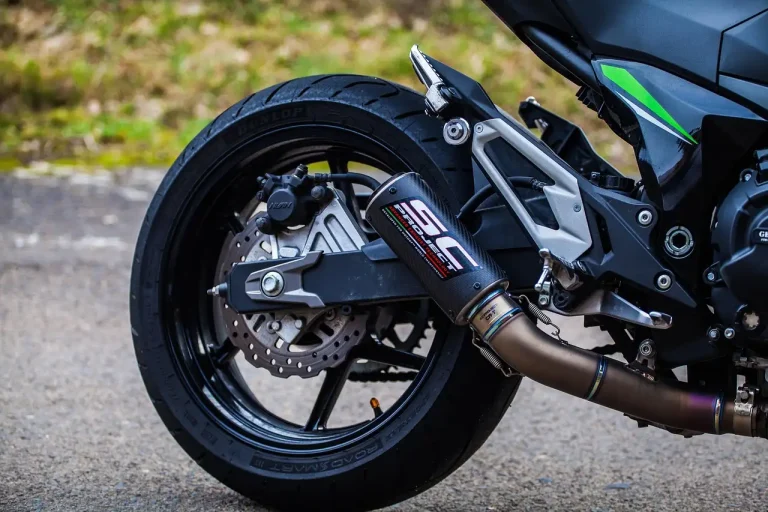
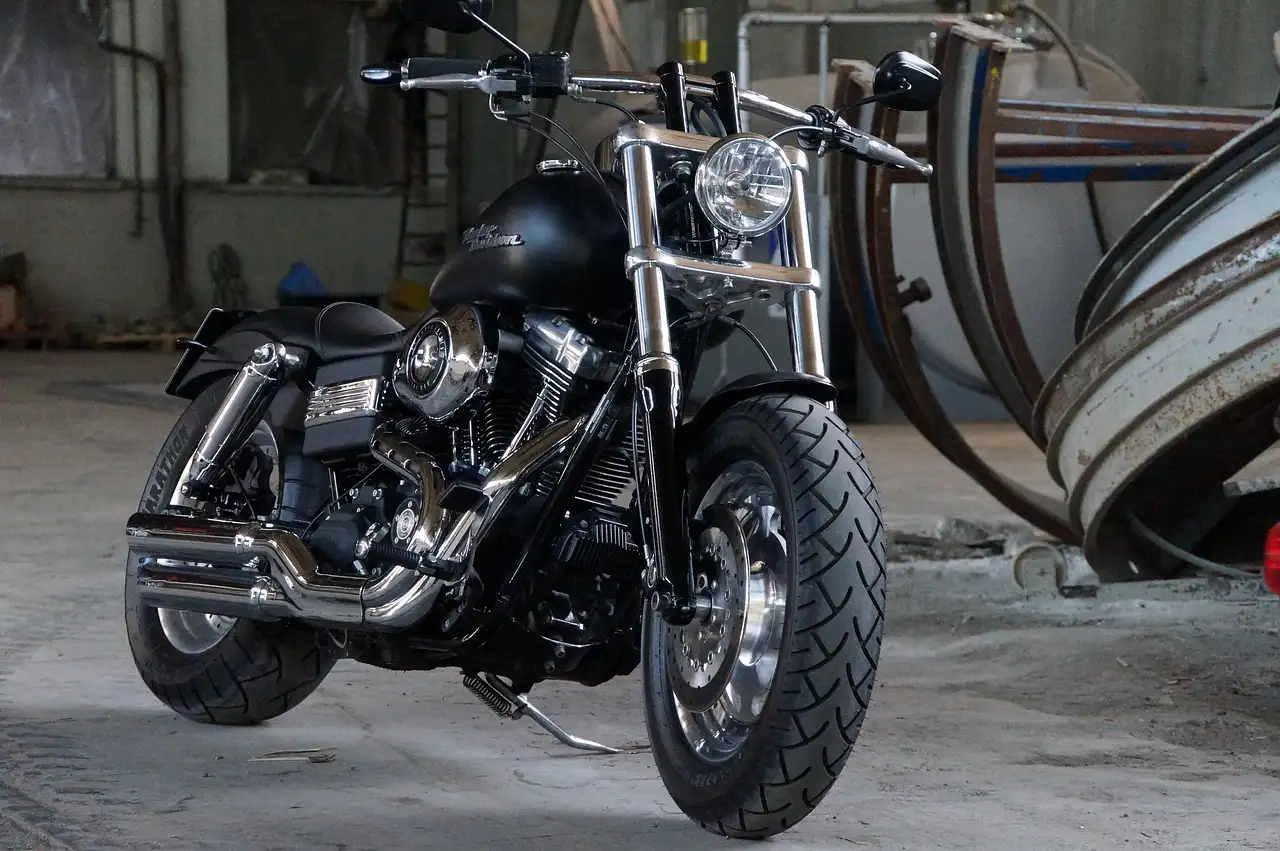
A full system exhaust replaces the headers, mid-pipe or collector, and muffler. A slip-on exhaust replaces only the muffler section. That difference matters because the deeper parts of the exhaust affect flow, heat, weight, and tuning needs much more than the final canister alone.
Stock exhausts are often designed around noise and emissions rules, so an aftermarket full system can free up flow in ways a slip-on cannot. It can also remove more weight. But it usually costs more, takes more work to fit, and may need fueling changes to run correctly.
| Item | Full system exhaust | Slip-on exhaust |
|---|---|---|
| What it replaces | Headers, mid-pipe/collector, and muffler | Only the muffler section |
| Flow impact | Higher potential change to exhaust flow | Lower change to exhaust flow |
| Sound change | Usually louder, often deeper and freer-flowing | Often louder than stock, with a smaller change |
| Weight reduction | Often greater | Usually smaller |
| Tune need | Often requires ECU remapping for best results | Often does not require a tune |
| Install complexity | More technical | Easier |
Which parts affect flow, sound, and weight?
Headers connect directly to the engine, so pipe diameter and routing affect how quickly exhaust gases move out of the cylinders. The mid-pipe or collector shapes how that flow merges and can change the sound character. The muffler or silencer controls loudness, tone, and some backpressure.
A baffle or dB killer can reduce volume and harshness. That helps with drone and fatigue on longer rides. Materials matter too: stainless steel usually balances price and durability, titanium saves weight at a higher cost, and carbon fiber is often chosen for appearance and lower mass in the outer shell. Ceramic coating can help manage heat on some setups.
Are full system motorcycle exhausts worth it?
A full system is worth it when the rider’s goal is clear: more power, less weight, lower heat, or track-oriented performance. It is usually not worth it if the main goal is only sound or appearance, because a slip-on often covers those needs at lower cost and lower risk.
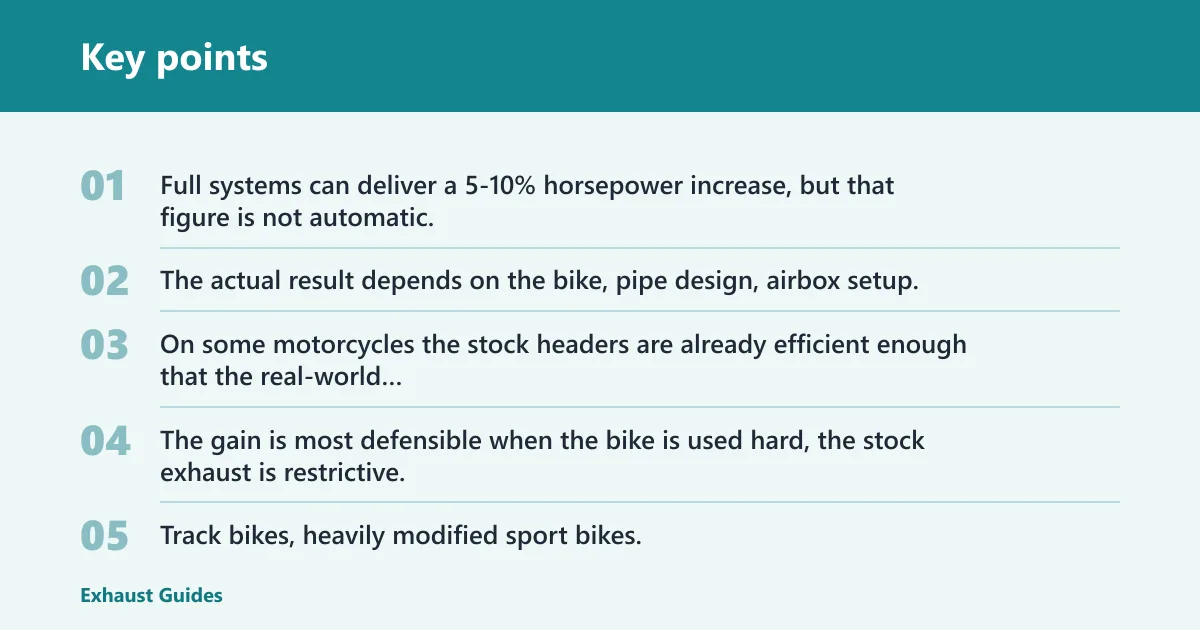
Full systems can deliver a 5-10% horsepower increase, but that figure is not automatic. The actual result depends on the bike, pipe design, airbox setup, and whether the fueling is corrected. On some motorcycles the stock headers are already efficient enough that the real-world gain is modest.
When the gains are real
The gain is most defensible when the bike is used hard, the stock exhaust is restrictive, and the rider wants a matched package with fueling changes. Track bikes, heavily modified sport bikes, and motorcycles that run hot or feel choked at higher rpm are the clearest candidates.
Say your 600cc sport bike feels flat above midrange and the factory system still carries a heavy catalytic converter and bulky muffler. A full system with proper tuning may improve top-end response enough to matter on track, where throttle response and weight reduction count more than quiet operation.
When a slip-on is enough
A slip-on is enough for most commuters, many cruisers, and touring riders who want a better note without opening the whole exhaust system. It keeps the stock headers and catalytic converter in place, usually installs faster, and often does not require a tune.
If the bike already feels strong, passes inspection as-is, and the rider mainly wants a different tone or cleaner look, a slip-on is the safer buy. It gives some of the style and sound change without committing to the larger cost stack of a full system.
Break-even rule: power, weight, and use case
A practical break-even rule is simple: buy a full system only if the combined gains in horsepower, weight, heat control, and intended use are more valuable than the total installed cost. That total includes the pipe, gaskets, tune, labor, and any later rework if the first setup is wrong.
If the bike is street-only, mostly low-rpm, and subject to noise or emissions checks, the break-even point is hard to reach. If the bike is track-focused and the rider wants maximum change, the balance shifts the other way.
What a full system changes
A full system can change how the engine breathes, how the bike sounds, and how it feels in traffic. Those changes do not always move in the same direction. More flow can help top-end output, but it can also make low-speed fueling less smooth if the setup is not tuned correctly.
Power and torque
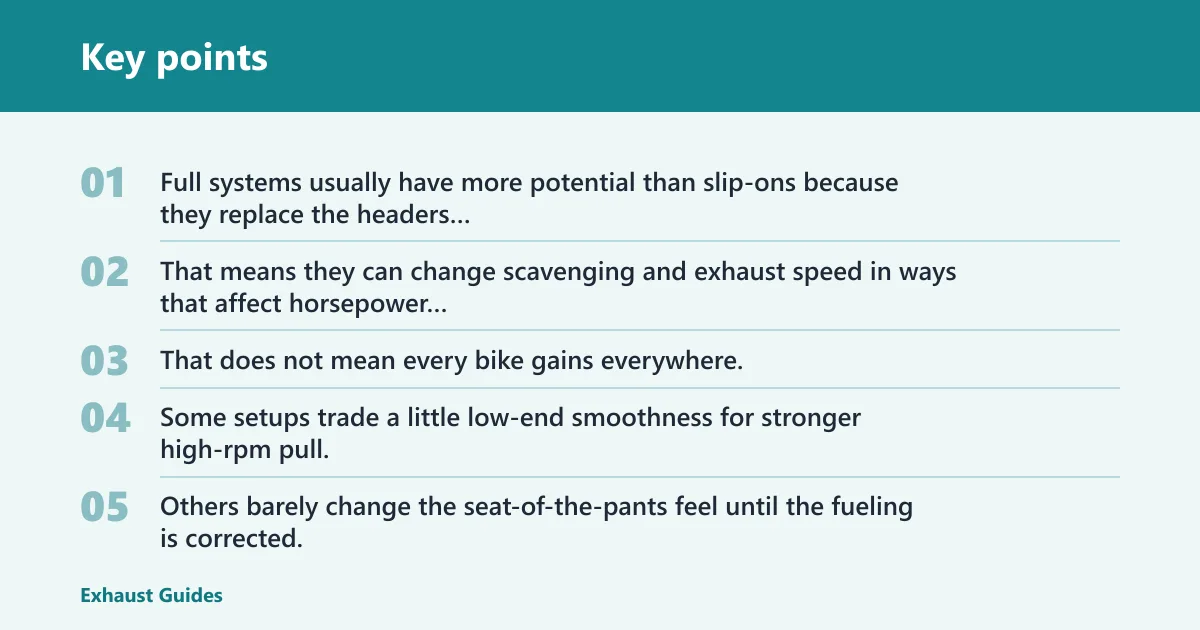
Full systems usually have more potential than slip-ons because they replace the headers and collector, not just the muffler. That means they can change scavenging and exhaust speed in ways that affect horsepower and torque across the rev range.
That does not mean every bike gains everywhere. Some setups trade a little low-end smoothness for stronger high-rpm pull. Others barely change the seat-of-the-pants feel until the fueling is corrected.
Sound and volume
Yes, a full system usually makes a bike louder than stock. It often changes the tone as well, giving a deeper, sharper, or more metallic note depending on pipe length, muffler design, and whether a cat is retained.
Louder is not always better. A bike that sounds exciting at idle can become tiring at highway speed. A baffle or dB killer can be the difference between acceptable road use and constant drone.
Weight, heat, and clearance
Many full systems weigh less than stock, especially when the factory unit uses heavy steel and a large catalytic converter. Titanium is often reported to save substantial weight, and may save more than some other common materials. Stainless steel is often described as a middle-ground option for weight and price. Carbon fiber is often used for the canister body rather than the hot piping itself.
Heat management is not guaranteed. Some systems run cooler at the rider’s leg because they shed the bulky factory cat, while others place hot pipes closer to fairings or boots and create new heat problems. Clearance can also change under the engine, near the swingarm, or around fairing panels.
Do you need a tune after a full exhaust?
Many full systems need an ECU remap or other fueling change for best results. That is because the exhaust flows differently once headers, collector, and muffler are changed. Without correction, the bike may run lean or rich in certain cells and feel worse in normal riding.
A tune is not a cosmetic extra. It is often what keeps the engine smooth, responsive, and safe from the side effects of altered fueling. Some bikes tolerate a full system with the stock map, but many do not run their best that way.
Why fueling changes matter
Fueling changes help keep the air-fuel ratio in a usable range after exhaust flow changes. If the bike runs lean, heat can rise and throttle response can become abrupt. If it runs rich, it may feel soggy and waste fuel.
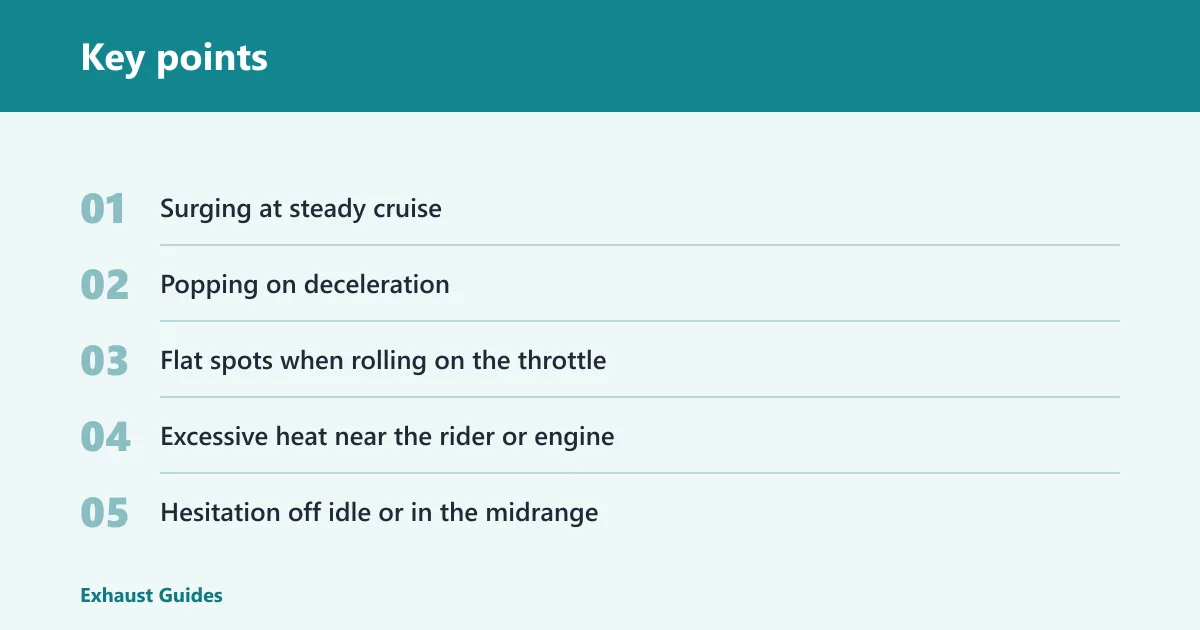
Changed exhaust flow can also affect popping on deceleration, surging at steady throttle, and flat spots in the midrange. Those are the kinds of complaints that often show up after a full system is installed without the matching calibration.
Symptoms of a poor tune
- Surging at steady cruise
- Popping on deceleration
- Flat spots when rolling on the throttle
- Excessive heat near the rider or engine
- Hesitation off idle or in the midrange
ECU remap vs piggyback vs no tune
An ECU remap changes the factory fuel and ignition tables directly. A piggyback controller sits between sensors and the ECU and modifies what the ECU sees. Both can help, but the best choice depends on the bike, the exhaust, and whether future mods are planned.
Skipping tuning is the cheapest path, but it is also the one most likely to leave power on the table or create drivability issues. If the system is a cat-delete design on a bike sensitive to fueling, the risk rises further.
How much does a full system exhaust cost?
A full system exhaust often costs from $800 to $3,000+, before tuning and labor. A slip-on often costs $200 to $800. That gap is only the start, because a full system can also need new gaskets, mounting hardware, and an ECU remap.
Street riders should budget for the whole installation, not just the pipe. The cheapest headline price can become an expensive setup once parts and labor are added.
| Cost item | Typical range | Notes |
|---|---|---|
| Exhaust price | $800 to $3,000+ | Varies by material, brand, and whether it is full titanium or mixed construction |
| Gaskets | Small but real | Often replaced during header installation |
| ECU remap / tuning | Additional cost | Often needed for best results after a full system |
| Labor | Additional cost | Depends on access, fairing removal, and fastener condition |
| Expected resale impact | Usually partial recovery at best | Not every buyer values an exhaust upgrade the same way |
Expected resale impact
Resale value rarely returns the full outlay. A well-known brand and clean installation may help a private sale, but modified exhausts can also narrow the buyer pool if the bike is louder than many riders want or if the cat-delete setup complicates street use.
Picture a rider who spends $1,700 on the pipe, then adds tuning and labor on top. If the next buyer prefers stock quiet and emissions compliance, that money may not come back at sale time. Accessories are not the same as value.
Full system exhaust decision matrix
This matrix is meant for rider fit, not hype. Score the bike by the goal that matters most. A higher value score means the full system is easier to justify for that rider type.
| Rider type | Expected gain | Tuning need | Install difficulty | Legal risk | Comfort impact | Value score |
|---|---|---|---|---|---|---|
| Commuter | Low to moderate | Often needed | Moderate | High if cat is deleted | Can increase noise and fatigue | Low |
| Cruiser | Low to moderate | Sometimes needed | Moderate | Moderate to high | Can help or hurt heat, depending on design | Low to medium |
| Sport/track | Moderate to high | Often needed | Moderate to high | Lower concern off-street, but rules still matter | Usually acceptable for performance use | High |
| Touring | Low to moderate | Sometimes needed | Moderate | Moderate | Higher risk of drone and long-ride fatigue | Low to medium |
How to read the matrix
- Start with use case, not brand name.
- Check whether the bike will stay street legal in your area.
- Add the cost of tuning, gaskets, and labor to the pipe price.
- Ask whether the expected gain is power, weight, heat control, or sound.
- Judge the comfort cost over a full tank, not a 10-minute idle impression.
Choose a full system if… / Choose a slip-on if…
Choose a full system if the bike is track-focused, the stock exhaust is a clear restriction, and you are ready to pay for tuning and possible rework. Choose a slip-on if you mainly want sound, appearance, and a simpler install with less legal and financial risk.
Choose a full system if…
- You want maximum change in power, weight, or heat control.
- The bike will see track days or aggressive sport riding.
- You are ready to budget for ECU remapping and installation labor.
- Your local rules allow the exhaust setup you want, including any catalytic converter change.
Choose a slip-on if…
- You want a different sound without major fueling changes.
- You want a simpler install and lower total cost.
- You ride mostly on the street and value quiet, comfort, and compliance.
- You want to keep the stock headers and catalytic converter in place.
A common first-timer mistake is buying a cat-delete full system for a commuter bike because the price looked close to a premium slip-on. The result can be louder-than-expected cruising, a tune bill, and no meaningful improvement in daily riding. If the stock headers are already doing their job, the upgrade may be hard to justify.
What are the downsides of a full system exhaust?
The main downsides are cost, installation complexity, tuning needs, noise, and legal risk. A full system can also create drone, increase fatigue, and expose clearance or fitment issues that a slip-on would not. On some bikes it can even make low-speed ride quality worse if the fueling is left untouched.
Heat and comfort changes are not predictable from the brochure alone. Some designs move heat away from the rider. Others place hotter pipes closer to boots, legs, or fairing edges. Local inspection rules can be another problem, especially when the catalytic converter is deleted.
Frequently asked questions
What is a full system exhaust?
A full system exhaust includes headers, mid-pipe or collector, and muffler. It replaces more of the factory exhaust than a slip-on does, so it can change power, weight, heat, and sound more deeply. That is why it often needs tuning and costs more.
How much horsepower does a motorcycle exhaust add?
A full exhaust can deliver a 5-10% horsepower increase, but that is a general range, not a promise for every bike. Results depend on the engine, pipe design, air intake, and whether the fueling is corrected. A slip-on usually changes sound more than power.
Is a slip-on enough instead of a full system?
Yes, for many riders. A slip-on replaces only the muffler section, keeps the stock headers and catalytic converter, and is usually easier to install. It is often enough if you want a different sound and look without the added cost, tuning, and legal exposure of a full system.
Will a full system exhaust make my bike louder?
Usually yes. A full system is typically louder than stock, and it often changes tone as well. Whether that sound is pleasant or tiring depends on pipe design, whether the catalytic converter stays in place, and whether a baffle or dB killer is fitted.