

What Cat-Back Exhaust Sounds Best?
The best cat-back sound comes from the setup that keeps cabin tone controlled. V8s usually work well with a deeper straight-through system, turbo fours often sound cleaner with a quieter muffler, and a resonated setup is the safer daily-driver pick. Choose poorly, and you get drone, rasp, or a note that wears thin fast. This guide compares sound character, layout fit, and the tradeoffs that matter before you buy.
What a cat-back exhaust changes
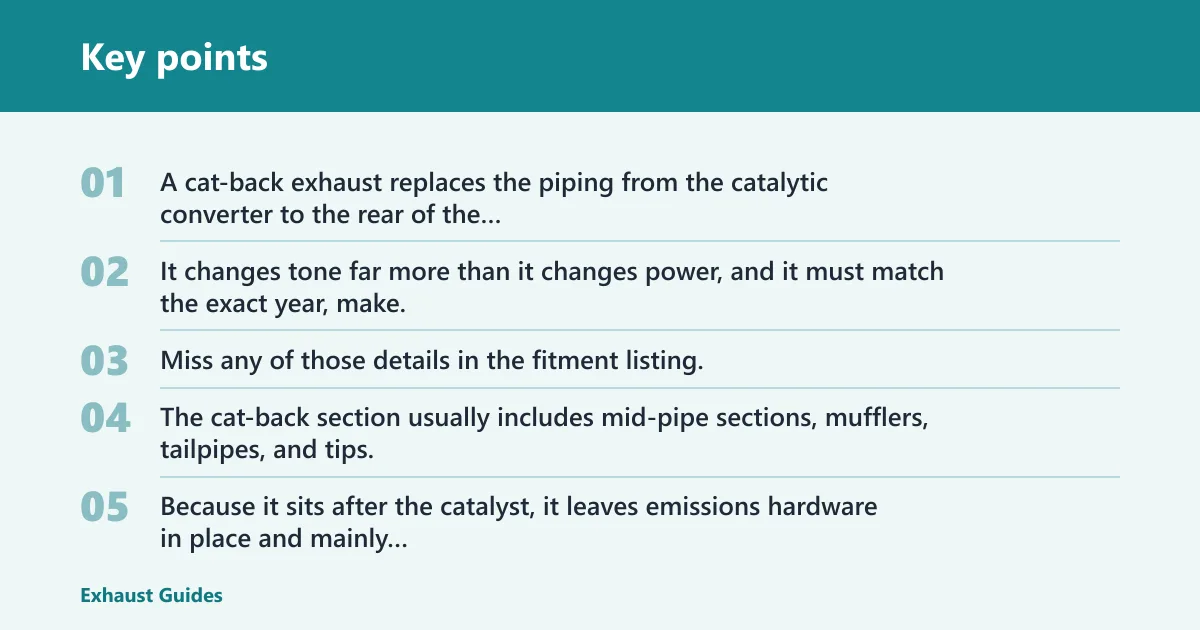


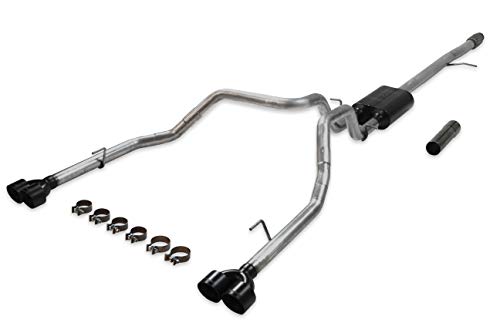
A cat-back exhaust replaces the piping from the catalytic converter to the rear of the vehicle. It changes tone far more than it changes power, and it must match the exact year, make, model, engine, and body style. Miss any of those details in the fitment listing, and the system can land wrong on the chassis.
From catalytic converter to rear
The cat-back section usually includes mid-pipe sections, mufflers, tailpipes, and tips. Because it sits after the catalyst, it leaves emissions hardware in place and mainly shifts how much sound reaches the cabin and the street.
Material matters here too. Stainless steel often lasts longer than aluminized steel, and 304 stainless is generally reported to resist corrosion better than 409 stainless, but it also tends to cost more. Aluminized steel is cheaper still, though it typically gives up long-term rust resistance.
Sound change vs stock
Against stock, a cat-back can be quieter, deeper, raspier, or simply more present. The tone depends on muffler design, resonator choice, pipe diameter, and the engine’s own exhaust pulse pattern. Loud does not automatically mean good.
Why fitment is platform-specific
Two cars with the same engine can still need different cat-backs if the wheelbase, bumper shape, axle routing, or rear suspension differs. That is why reputable listings name the platform, body style, and engine code instead of just saying “fits most models.”
What cat-back exhaust sounds best?
There is no single best-sounding cat-back exhaust. The right choice depends on the tone you want, how your engine pulses, and how much highway drone you will tolerate. Daily commuters often do better with a resonated, straight-through setup than with a very loud, non-resonated system.
Deep, raspy, boomy, and muted tones
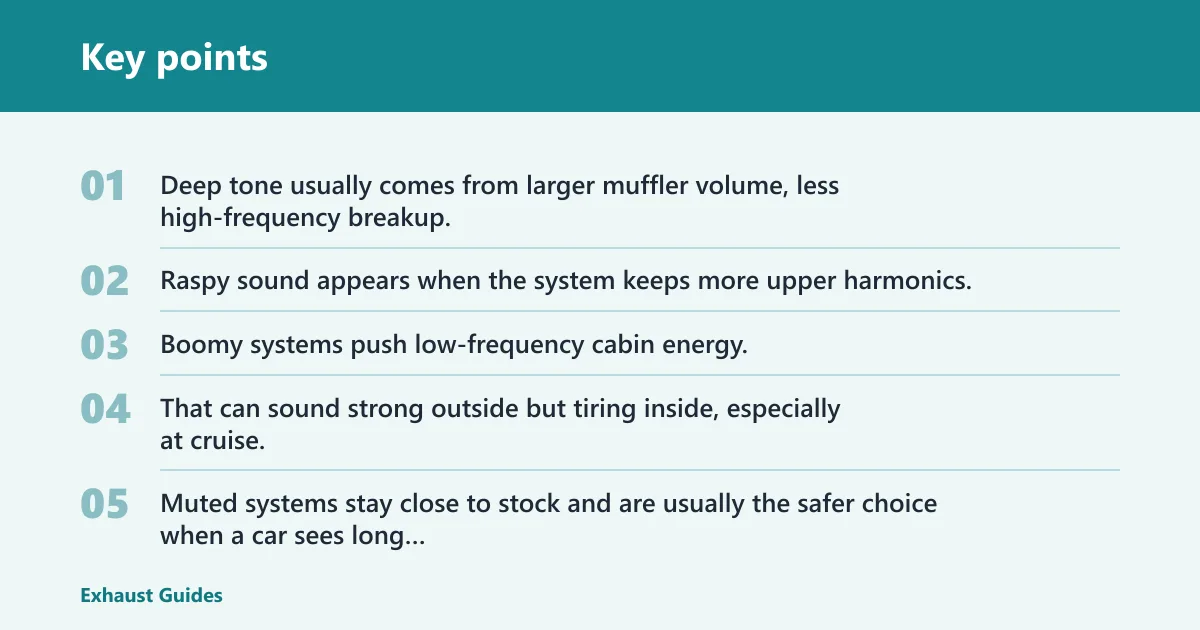
Deep tone usually comes from larger muffler volume, less high-frequency breakup, and engines with slower, stronger pulses, especially V8s. Raspy sound appears when the system keeps more upper harmonics, often from smaller mufflers, less resonator control, or a freer path that lets sharper exhaust noise through.
Boomy systems push low-frequency cabin energy. That can sound strong outside but tiring inside, especially at cruise. Muted systems stay close to stock and are usually the safer choice when a car sees long commutes or late-night starts.
How engine layout changes tone
NA V8s often take well to deep, full systems because the engine may already have strong pulse separation. Turbo fours often sound cleaner with more muffler volume and a resonator, since the turbo itself softens the note but can leave a thin or buzzy edge if the system is too open.
V6 and turbo-six setups tend to sit between those extremes. They can sound smooth with the right resonator, but a very open system may turn coarse at higher load. Trucks often start with a quieter factory note, so the same cat-back change can seem larger than it would on a muscle car.
How street use changes the answer
If the car is a commuter, the best-sounding setup is usually the one that keeps cabin tone controlled at steady speed. If it is a weekend vehicle, you can accept more volume and more rasp. Match the sound outside with the comfort you need inside.
Cat-back sound matrix
This matrix turns the vague “best sounding” question into a usable choice. It maps common engine types and layouts to the tone you should expect, plus drone risk and the muffler or resonator setup that fits the use case.
| Engine type | Common layout | Expected tone | Deep level | Raspy level | Boomy level | Drone risk | Best muffler/resonator setup |
|---|---|---|---|---|---|---|---|
| NA V8 | Long-tube friendly cat-back, dual exit | Deep, strong, classic | High | Low to medium | Medium | Medium | Straight-through muffler with resonator retained |
| Turbo four | Single or dual exit | Clean, sharper at load | Low to medium | Medium | Low to medium | Medium to high | Quieter straight-through muffler, keep resonator |
| V6 | Dual exit or split rear | Balanced, can turn coarse | Medium | Medium | Medium | Medium | Mid-volume straight-through with resonator |
| Turbo six | Single or dual exit | Smooth, restrained, some spool noise | Medium | Low to medium | Low | Medium | Resonated system with moderate muffler volume |
| Truck V8 | Long wheelbase, rear exit | Deep, broad, low-frequency | High | Low | High | High if unmuffled | Large-body muffler plus resonator or dual resonators |
Say your Mustang has a 5.0 V8 and you want more presence without a constant cabin hum. A straight-through cat-back with the resonator kept is usually the safer bet than a fully uncorked system, because the engine already delivers the low-frequency character that most owners want.
How mufflers shape tone
Muffler design controls how much exhaust energy passes through and how much gets redirected or cancelled. Straight-through mufflers usually flow well and keep a more open note. Chambered mufflers tend to add a harder edge and can deepen some applications while creating more drone in others.
Straight-through vs chambered
Straight-through mufflers use perforated cores and packing material. They are common in cat-backs because they keep tone present without choking the system as much. Chambered mufflers route exhaust through internal passages, which can give a pronounced muscle-car character but often trade flow smoothness for sound shaping.
Oval vs round bodies
Body shape affects how much packing volume the muffler can carry. Oval mufflers usually give more internal room, which can help quiet the system and smooth the note. Round bodies are often more compact, but that smaller size can leave more volume and sharper frequencies in the exhaust note.
How volume affects drone
Larger muffler bodies generally calm the cabin more effectively because they offer more space for sound attenuation. Smaller mufflers can sound exciting at idle and throttle, then tire you out at steady speed. Drone is not a sign of quality; it is a sign that the system is letting a narrow frequency build inside the cabin.
Do you need a resonator?
Most daily-driven cat-backs benefit from keeping a resonator. It smooths tone, reduces certain frequencies, and cuts the steady-speed boom that makes a car tiring on the highway. Delete one only if you want more edge and can accept more cabin noise.
Tone smoothing
A resonator helps remove harshness and sharpened metallic notes. On turbo cars, it can soften the flat, buzzy layer that sometimes shows up after the catalyst. On V8s, it can keep the exhaust from sounding hollow or coarse at part throttle.
Drone reduction
Many resonators work by cancelling or muting frequencies that line up with common cruise RPM bands. The exact result depends on engine displacement, gear ratio, axle ratio, tire size, and cabin shape, but the practical effect is simple: less boom at the speeds you use most.
Delete or keep?
Keep the resonator if the car sees commuting, long trips, or shared driving. Delete it only if the car is a weekend toy, the rest of the system is already quiet enough, or you want a sharper note and can live with more noise. A common first-timer mistake is deleting the resonator to “fix” a muted system, then discovering the new tone is louder but worse inside.
Pipe diameter and material choices
Pipe diameter changes both tone and fit. Smaller pipes usually keep velocity up and can sound tighter. Larger pipes often sound louder and lower, but they can also increase boom and reduce the natural backpressure some engines prefer. Match the size to the engine, not to internet hype.
2.25-inch, 2.5-inch, and 3-inch
Two-point-two-five-inch systems are common on smaller displacement engines and some V6 applications where clean tone matters more than maximum flow. Two-point-five-inch pipes are a common middle ground for many V6s, turbo fours, and mild V8 setups. Three-inch systems are common where flow demand is higher, but they can be excessive on smaller engines and may push more drone into the cabin.
304 vs 409 stainless
304 stainless resists corrosion better and usually costs more. 409 stainless is common on many factory-style systems because it offers solid durability at a lower price, though it can surface-rust sooner. For buyers in wet or salted climates, 304 is usually the safer long-term choice.
Aluminized steel tradeoffs
Aluminized steel can cut cost, but it generally gives up longevity to stainless. It can be fine for a budget build in a dry climate, yet it is a weaker pick if winter roads or heavy rain are part of the car’s life. Material choice does not change tone as much as muffler or resonator design, but it does change how long the system keeps its fit and seal.
What about drone and daily driving?
Exhaust drone is steady-speed cabin resonance, usually felt as a low hum or boom rather than a sharp exhaust note. It often appears in a specific RPM band at highway speeds, and that band depends on gearing and engine layout. For commuters, drone control should matter as much as outside sound.
RPM bands where drone shows up
Drone commonly appears around the RPM range used for cruising in top gear, often near 1,500 to 2,500 rpm, though the exact band varies by vehicle. Manual and automatic transmissions can place the engine in different spots, and taller gearing can move the problem up or down the rev range.
Commuter vs weekend use
If the car sees daily traffic, choose the quieter setup with a resonator and moderate muffler volume. If it is mostly a weekend car, a louder cat-back may be acceptable because short drives matter less. The best sounding system on paper can become the worst choice after two long highway runs.
Cabin comfort and resale value
Quiet manners help resale because more buyers can live with the car. A system that is loud only at wide-open throttle is easier to sell than one that drips boom into every commute. Street-friendly tone also reduces the chance that the owner later wants to undo the upgrade.
Cat-back legality and fitment
A cat-back is usually easier to keep street-friendly than parts that move or remove emissions equipment, but legality still depends on local rules. Fitment also matters: the right exhaust must match the exact vehicle platform, and valve systems can trade comfort for complexity.
Cat-back vs axle-back
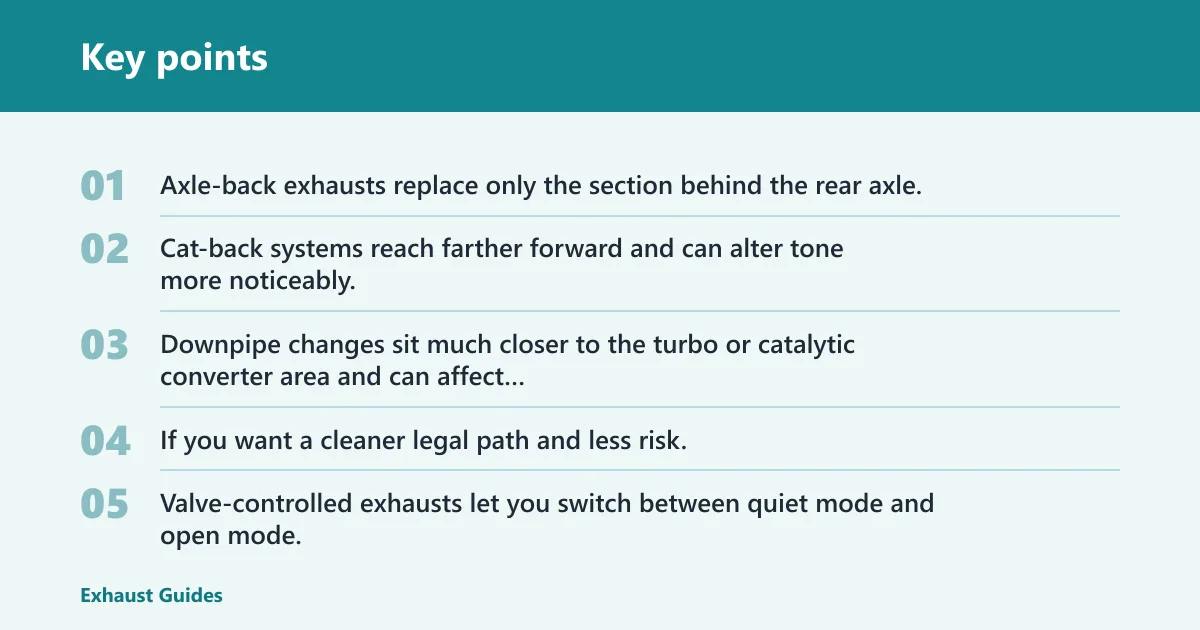
Axle-back exhausts replace only the section behind the rear axle, so they usually change sound less than a full cat-back. Cat-back systems reach farther forward and can alter tone more noticeably, which is why they are the better choice when sound character matters more than a small rear muffler swap.
Cat-back vs downpipe
Downpipe changes sit much closer to the turbo or catalytic converter area and can affect emissions compliance, turbo response, and sound more aggressively than a cat-back. If you want a cleaner legal path and less risk, stay with the cat-back section rather than moving upstream.
Valve-controlled exhaust tradeoffs
Valve-controlled exhausts let you switch between quiet mode and open mode. That can be ideal if you want a calm commute and a louder weekend setting, but the extra hardware adds cost, complexity, and more points of failure. Street legality still depends on local noise rules and how the valve system is used.
Suppose a turbo-four compact car gets a 3-inch cat-back with no resonator because the owner wants more sound. The result can be a louder system that also adds drone around cruise RPM, while a 2.5-inch resonated setup may sound cleaner and stay easier to live with every day.
Frequently asked questions
What is a cat back exhaust?
A cat-back exhaust is the portion of the exhaust system from the catalytic converter to the rear of the car. It usually includes piping, resonators, mufflers, and tips. Its main effect is sound, with only modest power changes unless the stock system was especially restrictive.
What cat back exhaust sounds like?
It depends on the engine and hardware. A V8 can sound deeper and fuller, while a turbo four often sounds cleaner but more muted if the system is tuned well. Straight-through mufflers, resonators, and pipe size decide whether the result is smooth, sharp, or boomy.
What cat back exhaust is legal?
Legality depends on your state, province, or country. A cat-back is often easier to keep legal because it leaves the catalytic converter in place, but noise limits and local inspection rules still apply. Valve systems and very loud setups may draw attention even if emissions hardware stays untouched.
Is a cat back exhaust loud?
It can be, but not always. Some cat-backs are only a mild step up from stock, while others are loud enough to create drone at highway speed. Muffler volume, resonator retention, and pipe diameter determine whether the system stays civil or turns tiring.
What is the best sounding exhaust system?
There is no single answer. For many V8s, a straight-through cat-back with a resonator sounds strongest without going overboard. For turbo fours, a quieter resonated setup usually sounds cleaner. The best system is the one that matches your engine, your commute, and your tolerance for drone.
What cat back exhaust fits my car?
You need a system built for your exact year, make, model, engine, and body style. Wheelbase, bumper shape, axle routing, and hanger positions all affect fit. A listing that leaves out trim or drivetrain details can lead to poor alignment or parts that do not clear the chassis.
