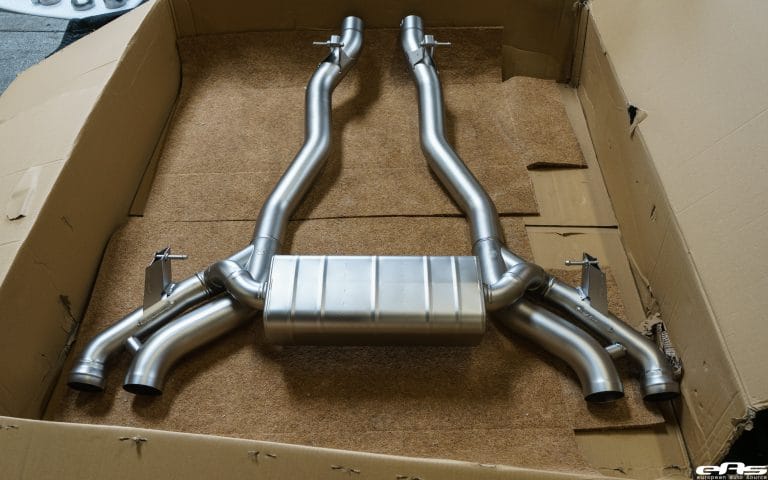
Do Valved Exhausts Pass State Reffs? Essential Guide
Do valved exhausts pass state reffs? It depends. While many valved exhaust systems can pass emissions and noise inspections, they must be legally configured, used correctly, and adhere to your specific state’s regulations. Improper use or illegal modifications will likely cause them to fail.
So, you’ve been looking at a cool valved exhaust system, wondering if it’s the right choice for your ride. It’s a common question, and for good reason! These systems offer a fantastic way to change your car’s sound and performance on demand. But the big worry for many car owners is: “Will t
his new exhaust cause me problems with state inspections, especially those dreaded ‘reffs’ (referrals or inspections)?”. You want that aggressive roar sometimes, but you also need to keep your car street-legal and running smoothly for daily driving. It can feel like a tough balance to strike. Don’t worry, we’ve got you covered. This guide will break down exactly what you need to know about valved exhausts and passing state inspections, making it simple and straightforward.
What Exactly is a Valved Exhaust System?
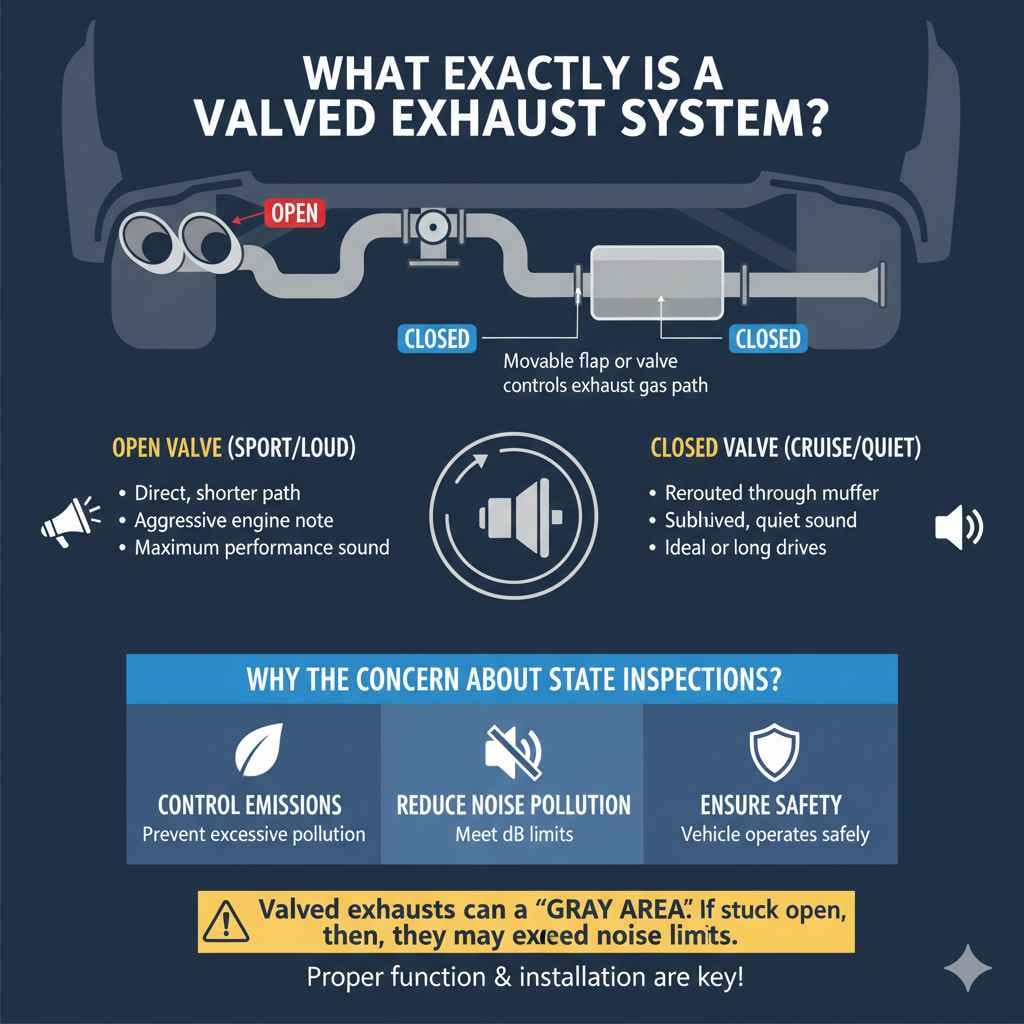
Before we dive into inspections, let’s quickly chat about what a valved exhaust is. Think of it as a “choose your own adventure” for your car’s sound. Unlike a standard exhaust that has a fixed path for gases, a valved exhaust has a movable flap or valve.
This valve can be opened or closed. When the valve is open, exhaust gases take a more direct, often louder, path. This is usually when you want that sportier, more aggressive engine note. When the valve is closed, the gases are rerouted through a muffler or a different path, creating a quieter, more subdued sound. This is perfect for cruising, long drives, or when you just don’t want to attract too much attention.
These systems are often controlled electronically, with a button in the car or even automatically based on driving conditions. It’s a neat piece of tech that gives you control over your car’s auditory personality!
Why the Concern About State Inspections?
State inspections, often called “reffs” when something isn’t up to code, are designed to ensure vehicles meet certain standards for safety, emissions, and noise. Each state has its own specific rules, but they generally aim to:
- Control Emissions: Make sure your car isn’t polluting the air more than allowed.
- Reduce Noise Pollution: Prevent excessively loud vehicles from disturbing the peace.
- Ensure Safety: Check that your vehicle is operating safely.
Valved exhausts can sometimes fall into a gray area because their nature is to change the vehicle’s sound output. If the valve is stuck open, it might exceed noise limits. If the exhaust system somehow interferes with emission control components (which is rare with quality systems but possible with bad installations), it could also be an issue.
How State Inspections Work for Exhausts
Most state inspections focus on two main aspects related to your exhaust system: emissions and noise.
Emissions Testing
This is a crucial part of keeping our air clean. During an emissions test, your car is typically hooked up to a machine that measures the pollutants coming out of your tailpipe. These pollutants include:
- Carbon Monoxide (CO)
- Hydrocarbons (HC)
- Oxides of Nitrogen (NOx)
- Particulate Matter (PM)
Reputable aftermarket valved exhaust systems are designed to work with your car’s existing catalytic converter and other emissions control equipment. They shouldn’t inherently cause your car to fail emissions tests, provided the system is installed correctly and all original emissions equipment remains intact and functional. The primary concern is that the exhaust gases are still passing through the catalytic converter effectively.
You can find official state guidelines on emissions testing requirements from your local Department of Motor Vehicles (DMV) or Environmental Protection Agency (EPA) equivalents. For example, the U.S. Environmental Protection Agency (EPA) provides a wealth of information on vehicle emissions standards.
Noise Level Testing
This is where valved exhausts often raise eyebrows. Many states have laws limiting the decibel (dB) level of vehicle exhaust systems, especially at specific RPMs. These laws are in place to combat noise pollution.
A valved exhaust system has two primary operating modes:
- Quiet Mode: The valve is closed, routing exhaust through mufflers. This mode is usually designed to be as quiet as, or even quieter than, the stock exhaust. This is the mode you’d want to be in during a noise inspection.
- Loud Mode: The valve is open, creating a more aggressive sound. This mode is generally not street-legal in most areas if it exceeds local noise ordinances.
The key to passing a noise inspection with a valved exhaust is ensuring it’s in its quietest setting and that this setting is compliant with local laws. Some states have specific rules about exhaust system modifications, often stating that any modification that increases noise is illegal. For example, many US states reference or adopt standards similar to the Society of Automotive Engineers (SAE) recommended practices for vehicle noise, which often test at specific engine speeds. You can learn more about noise pollution and its impact from organizations like the Environmental Protection Agency (EPA), which also has information on noise control.
Are Valved Exhausts Legal? The Crucial Details
The legality of a valved exhaust system isn’t a simple yes or no. It hinges on several factors, primarily how it’s used and whether it complies with your local laws. Here’s what you need to consider:
- State and Local Laws: Exhaust laws vary SIGNIFICANTLY by state and even by county or city. Some areas are very strict about noise levels and any modifications, while others are more relaxed. It’s your responsibility to know the laws where you live.
- Intended Use: Most valved exhaust manufacturers design their systems with legality in mind. They typically provide a “street mode” (valve closed) that is quiet and emissions-compliant, and a “race mode” (valve open) for track use only. Using the loud mode on public roads is where you’ll likely run into trouble.
- Emissions Compliance: As long as the valved exhaust system doesn’t require the removal or disabling of your catalytic converter and other emission control devices, it should remain emissions-compliant. Performance exhausts are designed to allow gases to flow freely but not circumvent essential emissions controls.
- Noise Regulations: This is the biggest hurdle. If your state has a strict maximum decibel limit, you need to ensure that the “quiet mode” of your valved exhaust meets or beats that limit. Many systems are designed to be legal for street use in their closed-valve configuration.
It’s also worth noting that some modifications might be considered illegal per se. If a “valved exhaust” system is essentially a straight pipe with a remote-controlled bypass, it’s very unlikely to pass any reasonable inspection. Always opt for reputable brands that clearly state their systems are designed for street-legal operation in their closed-valve mode.
Passing Your State Inspection: A Practical Checklist
To give yourself the best chance of passing your state inspection with a valved exhaust, follow this checklist:
1. Choose Wisely: Brand and Quality Matter
Not all valved exhausts are created equal.
Reputable Brands: Stick to well-known manufacturers that have a track record of producing high-quality, street-legal exhaust systems. They usually engineer their systems to meet various regulations.
Check Reviews: See what other users in your region say about passing inspections with a specific system.
Understand the Design: Ensure the system includes mufflers and is designed to function legally in its closed state. Avoid systems that seem overly aggressive or suggest bypassing emissions equipment.
2. Installation is Key
A poorly installed exhaust can cause leaks, rattles, or even misalignments that might be flagged during an inspection.
Professional Installation: If you’re not comfortable with complex exhaust work, have a professional mechanic install it. They can ensure all connections are secure and the system is properly fitted.
Check for Leaks: After installation, ensure there are no exhaust leaks. Leaks can affect emissions readings and make the exhaust significantly louder.
You can find information on proper exhaust installation techniques and best practices from resources like Car Craft for general guidance, though always refer to your specific vehicle’s service manual.
3. Ensure Emissions Equipment is Intact
This is non-negotiable for passing emissions tests.
Catalytic Converter: Do NOT remove or tamper with your catalytic converter. Most quality valved exhaust systems are designed to work around it.
Oxygen Sensors: Ensure all oxygen sensors are properly connected and functioning.
Check Engine Light: Make sure your Check Engine Light (CEL) is OFF. If it’s on, your car will likely fail inspection immediately.
4. Master Your Valve Control
This is the most critical step for passing noise tests.
Know Your Modes: Understand exactly how your valve operates and how to switch it between open and closed.
Quiet Mode for Inspection: Always ensure your valve is in the CLOSED (quiet) position well before arriving at the inspection station. Some systems have a “silent start” feature that automatically closes the valve until the engine is warm, which is ideal for inspections.
Test the Quiet Mode: Before your inspection, get a friend to listen from a distance as you drive by in quiet mode. Does it sound acceptably quiet? Does it sound similar to your stock exhaust? If it’s still loud, there might be an issue with the valve operation or the system itself.
5. Research Your Local Regulations
This cannot be stressed enough.
DMV/RMV Websites: Visit your state’s Department of Motor Vehicles (DMV) or Registry of Motor Vehicles (RMV) website. They often have sections dedicated to vehicle inspections and emissions requirements.
Local Ordinances: Some cities or counties have their own specific noise ordinances that are stricter than state laws. A quick search of your local municipal code can be very helpful.
Neighboring Areas: If your state allows inspections in neighboring counties or areas, research their specific requirements as well, as they might be more lenient or stricter.
Potential Complications and How to Address Them
Even with the best intentions, you might encounter issues. Here’s how to handle them:
1. Exhaust Leaks
Problem: Leaks can make the exhaust louder than intended and can sometimes affect emissions readings.
Solution: </strong Check all exhaust hangers and joints. Professional shops can use a smoke machine to find and fix even small leaks.
2. Malfunctioning Valve
Problem: If the valve gets stuck open or doesn’t fully close, your exhaust will likely be too loud.
Solution: </strong If the valve is faulty, you may need to have it repaired or temporarily disabled (in the closed position) for the inspection. Many high-end systems have robust electronic or vacuum actuators, but they can fail over time.
3. Emissions Malfunctions
Problem: Even with a good exhaust, sensors can fail, catalytic converters can degrade, or the car’s computer can have issues.
Solution: </strong Address any Check Engine Lights immediately. A diagnostic scan can pinpoint the problem, which might require replacing a sensor, the catalytic converter, or other components.
4. Vague or Overly Strict Inspectors
Problem: Sometimes, inspectors may not be fully knowledgeable about newer technologies like valved exhausts, or they might be particularly strict.
Solution: </strong Have documentation handy from the exhaust manufacturer that details the system’s street-legal compliance in its closed mode. Politely explain how the system works and confirm the valve is closed. If you consistently have issues with a particular station, try another reputable inspection facility.
Valved Exhaust vs. Other Muffler Options
It’s helpful to compare valved exhausts with other common exhaust configurations you might consider:
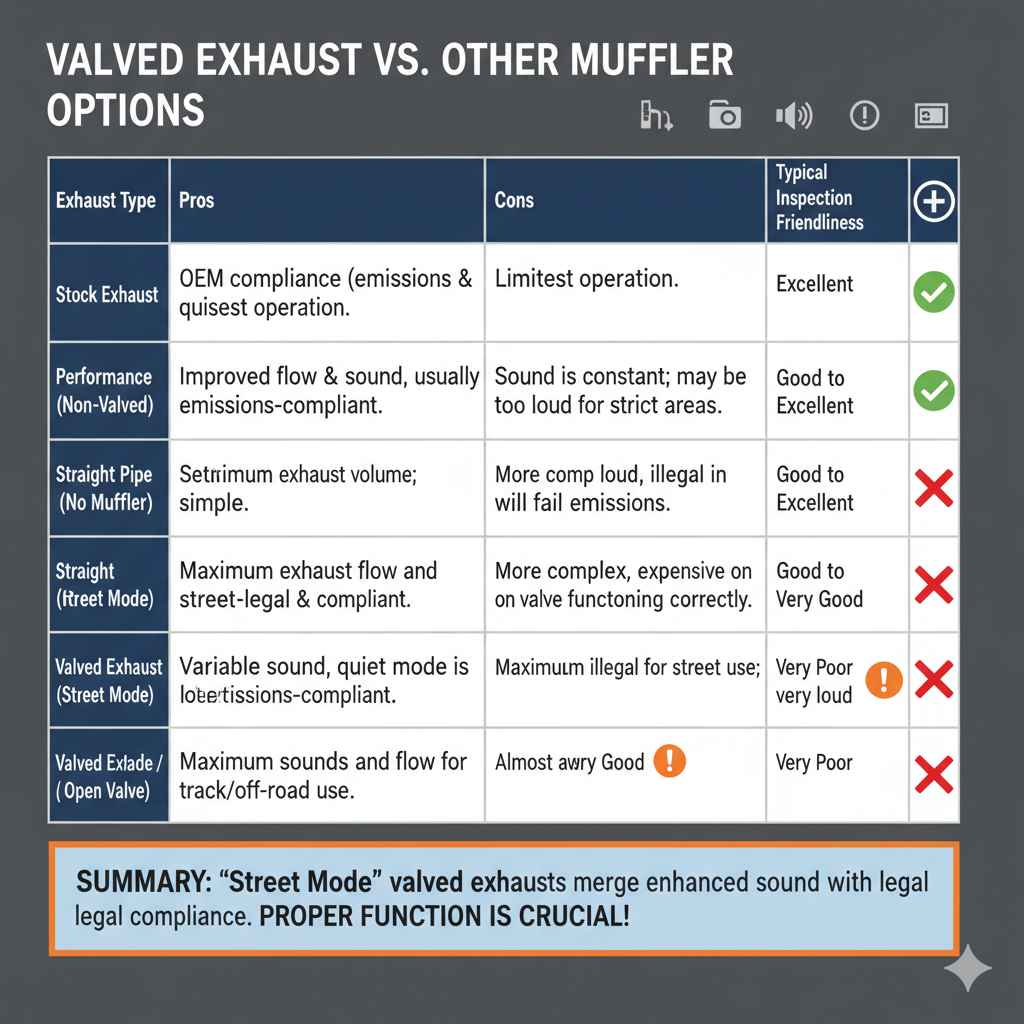
| Exhaust Type | Pros | Cons | Typical Inspection Friendliness |
|---|---|---|---|
| Stock Exhaust | Designed for OEM compliance (emissions & noise), quietest operation. | Limited performance and sound enhancement. | Excellent – Generally has no issues. |
| Performance Muffler (Non-Valved) | Can offer improved flow & sound without being overly loud; usually emissions-compliant. | Sound is constant; may still be too loud for some strict areas. | Good to Excellent – Depends heavily on the specific muffler’s dB level. |
| Straight Pipe (No Muffler) | Maximum exhaust flow and volume; simple. | Extremely loud, illegal in most places, will fail emissions almost universally if it disrupts sensors or flow through the catalytic converter. | Very Poor – Almost guaranteed to fail emissions and noise tests. |
| Valved Exhaust (Street Mode) | Variable sound & performance; quiet mode is often street-legal and emissions-compliant. | More complex and expensive; reliant on the valve mechanism functioning correctly. | Good to Very Good – Heavily dependent on quiet mode compliance and proper function. |
| Valved Exhaust (Race Mode / Open Valve) | Maximum sound and flow for track/off-road use. | Almost always illegal for street use; very loud; can interfere with emissions if not designed properly. | Very Poor – No reasonable expectation of passing any street inspection. |
As you can see, the “street mode” of a valved exhaust offers a compelling middle ground, merging the desire for enhanced sound and performance with the necessity of remaining legally compliant. However, the operative word is “mode” – it operates only as intended when the valve is appropriately controlled.
Do Valved Exhausts Pass State Reffs? The Final Word
To sum it up, whether a valved exhaust system passes state “reffs” (inspections) truly depends on a few key factors:
- The specific system’s design: Is it built by a reputable manufacturer with a focus on street legality?
- Your state and local laws: What are the specific noise and emissions regulations where you live?
- How you use the system: Is the valve in its quiet, street-legal mode during the inspection?
- Proper installation and maintenance: Are there any leaks, and is all emissions equipment functional?
If you choose a quality system from a trusted brand, ensure it’s installed correctly, and most importantly, always operate it in its quiet, closed-valve setting when you need to pass an inspection – you stand a very good chance of success. The excitement of a controllable exhaust note is attainable without sacrificing street legality, but it requires responsible usage and awareness of the rules.
Remember, the goal of inspections is to keep our cars safe, clean, and considerate of our communities. By respecting these goals, you can enjoy your automotive modifications responsibly.
Frequently Asked Questions (FAQ)
1. Can I leave my valved exhaust open all the time?
No, in most jurisdictions, leaving your valved exhaust permanently open is illegal. The open position is generally too loud for public roads and will likely cause you to fail noise emission tests. It’s designed for track use or for off-road enjoyment where noise regulations are different.
2. How do I know if my valved exhaust’s quiet mode is legal?
You should consult your specific state and local noise ordinances. Reputable manufacturers often design their systems to meet common street-legal dB limits in the closed-valve configuration. If you’re unsure, you can have your car professionally tested for decibel levels at a specific RPM before your inspection.
3. What happens if my valved exhaust system fails the inspection?
If your valved exhaust causes your car to fail, it’s usually due to noise levels or potentially, though less commonly, emissions if a component was damaged or removed. You’ll likely be given a rejection sticker and a limited time to fix the issue and re-test. The most common fix is to ensure the valve is fully closed and sealed for re-inspection.