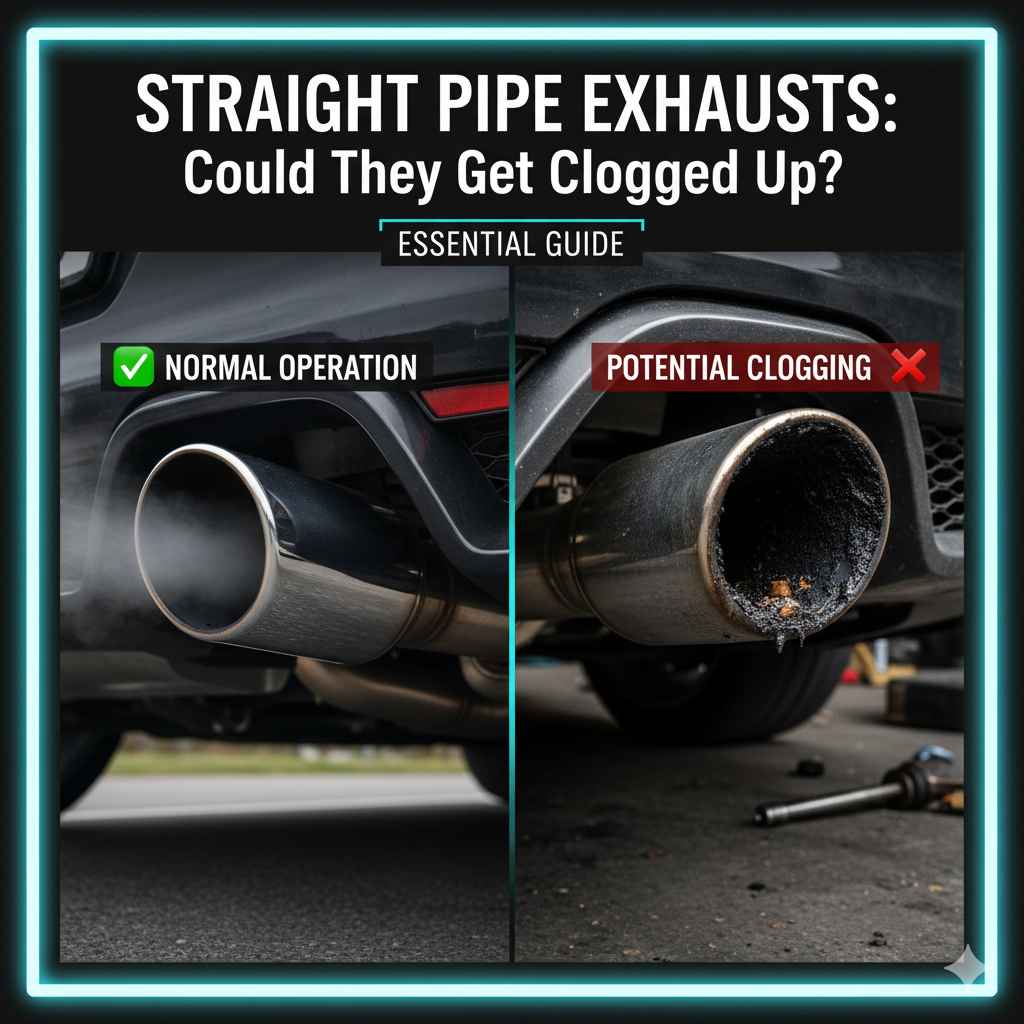
Could Straight Pipe Exhaust Get Clogged Up: Essential Guide
Yes, a straight pipe exhaust can get clogged, despite its name suggesting otherwise. While less prone to the typical blockages seen in factory mufflers, straight pipes can still accumulate carbon buildup, debris, or even suffer damage that restricts flow. This guide explains how and why, helping you keep your straight pipe clear and performing optimally.
Hey there, fellow car enthusiasts! Monowar Shohag here, your go-to guide for all things exhaust systems. Have you ever wondered if that sleek, straight pipe exhaust you’ve installed, or are thinking about installing, could actually get clogged up? It sounds a bit like a contradiction, right? The whole point of a straight pipe is to let exhaust gases flow freely. However, it’s a question that pops up often, and understanding it is key to keeping your ride running smoothly and sounding its best. Don’t worry, this isn’t as complicated as it sounds. We’ll break down exactly why and how this can happen and what you can do about it. Let’s dive in and get your exhaust system in top shape!
What Exactly is a Straight Pipe Exhaust?
Before we talk about clogs, let’s quickly refresh what a straight pipe exhaust is. Essentially, it’s a modified exhaust system where the stock muffler and resonator boxes are removed and replaced with a single, straight piece of pipe. This bypasses the parts designed to reduce noise and often the catalytic converter as well, allowing exhaust gases to exit the engine more directly and quickly.
The main appeals of a straight pipe are:
- Louder, more aggressive exhaust note: This is a big one for many enthusiasts
- Potentially improved exhaust flow: With fewer restrictions, gases can exit faster.
- Simpler system: Fewer complex parts mean potentially less to go wrong.
- Aesthetics: Some prefer the look of a modified exhaust.
While many believe a straight pipe is immune to blockages, that’s not entirely true. The term “straight pipe” refers to the path the exhaust takes, but it doesn’t guarantee zero restriction.
Could Straight Pipe Exhaust Get Clogged Up? The Truth Revealed
So, can a straight pipe exhaust get clogged up? The answer is a nuanced yes. While they are designed to minimize restrictions compared to factory mufflers, they are not entirely immune to blockages. The key difference is how and what can cause a clog.
In a standard exhaust system, mufflers are packed with baffles and sound-deadening material. Over time, soot, carbon deposits, and even moisture can build up inside these chambers, gradually restricting exhaust flow. Catalytic converters, if still present, are also common culprits for clogs due to damaged internal materials or extreme carbon buildup.
A straight pipe, lacking these internal complexities, has fewer places for gradual buildup. However, certain conditions and events can still lead to a blockage:
1. Carbon Buildup
Even without a muffler’s internal chambers, carbon and soot are byproducts of combustion. In engines that don’t run at optimal temperatures regularly (like many short-trip city cars, or engines running too rich), these deposits can still accumulate. While a straight pipe doesn’t have baffles to trap them the way a muffler does, a significant amount of buildup can still adhere to the inner walls of the pipe, especially at bends or the entry/exit points.
This buildup is often less severe than in a baffled muffler but can become problematic over extended periods if not managed. Think of it like a pipe in your house slowly getting gunked up from the inside – the same principle applies, just with exhaust gases.
2. Debris and Foreign Objects
This is a more straightforward, though less common, cause. If your vehicle is driven in areas with loose gravel, dirt, or other debris on the road, it’s possible for small objects to be ingested into the exhaust system, especially if the vehicle is raised or driven off-road. While the exhaust flow usually pushes most things through, a particularly stubborn piece of debris could lodge itself in a bend or at the pipe’s end.
Furthermore, if any part of the exhaust system before the straight pipe (like a flex pipe or connection) begins to fail internally, pieces of those failing components could potentially enter the straight pipe and cause a blockage.
3. Physical Damage and Kinks
Straight pipes, especially those routed low to the ground for ground clearance or aesthetic reasons, are more susceptible to physical damage from impacts. Hitting a speed bump, a pothole, or road debris can bend, crush, or even kink the exhaust pipe. A severe kink can dramatically reduce the internal diameter of the pipe, severely restricting exhaust flow – essentially creating a blockage.
If the pipe is compromised, it might not just be a flow issue. The damage could also create internal edges or protrusions that catch soot and debris, accelerating a clog.
4. Internal Component Failure (If Catalytic Converter is Present)
Many enthusiasts opt to remove the catalytic converter when installing a straight pipe. However, if you retain your catalytic converter or if it’s part of a “cat-back” straight pipe modification, it can absolutely become clogged. Catalytic converters contain a ceramic honeycomb structure coated with precious metals. If this structure breaks down (due to overheating, contamination, or age), the broken pieces can fragment and move downstream, causing a significant blockage.
Symptoms of a clogged catalytic converter often include loss of power, especially under acceleration, and a potential for the exhaust system to rattle.
Signs Your Straight Pipe Exhaust Might Be Clogged
Recognizing the symptoms is crucial. Since straight pipes are typically simpler, the signs of a clog might be more pronounced and directly related to exhaust flow, as opposed to the nuanced issues sometimes seen with a fully intact factory system.
Here are key indicators to watch out for:
- Significant Loss of Power: This is the most common symptom. If your car suddenly feels sluggish, struggles to accelerate, or hesitates, restricted exhaust flow is a prime suspect. The engine can’t expel exhaust gases efficiently, leading to a decrease in performance.
- Engine Misfires or Rough Idling: When exhaust gases can’t escape properly, they can interfere with the engine’s combustion cycle, leading to misfires or an uneven idle.
- Unusual Smells: A clogged exhaust can sometimes lead to a strong smell of exhaust fumes inside or outside the car, especially if the blockage is severe and gases are forced to find alternative routes or if the engine is running rich due to the restriction.
- Overheating Engine: A severely restricted exhaust can cause pressure to build up in the engine, leading to increased operating temperatures and potential overheating.
- Check Engine Light: Modern vehicles have oxygen sensors that monitor exhaust gas composition and flow. A significant restriction can trigger a “Check Engine†warning light, often with codes related to catalyst efficiency or exhaust backpressure.
- “Sputtering” or “Popping” Sounds from the Exhaust: While some popping can be normal for certain performance setups, a sudden or abnormal sputtering could indicate an exhaust system struggling to expel gases.
Troubleshooting a Potentially Clogged Straight Pipe
If you suspect your straight pipe exhaust is clogged, don’t panic! Here’s a step-by-step approach to diagnose and potentially fix the issue. Remember to always prioritize safety when working on your vehicle.
Step 1: Visual Inspection
This is the first and easiest step. Get under your car (safely!) and inspect the straight pipe. Look for:
- Kinks or Crushing: Check if any part of the pipe has been visibly flattened or bent sharply.
- External Damage: Look for holes, dents, or signs of impact that might have affected the internal shape.
- Loose Connections or Hanging Pipes: Ensure the entire exhaust system is securely attached. A sagging pipe could be a sign of internal failure or damage.
Safety Note: Always ensure the vehicle is securely supported on jack stands before going underneath. Never rely solely on a jack. Allow the exhaust system to cool completely to avoid burns.
Step 2: Check for Catalytic Converter Issues (If Applicable)
If your straight pipe setup still includes a catalytic converter, this is a prime suspect for clogs.
- Tap Test: With the engine off and cool, gently tap the catalytic converter with a rubber mallet. If you hear a rattling sound (like broken glass), the internal honeycomb structure has likely broken apart and could be causing a blockage.
- Temperature Check: On a warm, running engine, carefully feel the temperature of the catalytic converter. The inlet should be hotter than the outlet. If they are roughly the same temperature, or the outlet is cooler, the converter might be clogged and unable to process exhaust gases effectively. (Extreme caution needed due to heat!)
For a more definitive check, a mechanic can perform an exhaust backpressure test. This involves measuring the pressure before the catalytic converter. High pressure indicates a blockage.
Step 3: Listen to the Exhaust Notes
While subjective, a severe clog can change the sound of your exhaust. Is it suddenly quieter than usual? Does it sound “choked”? This can be an indicator, especially when combined with other symptoms.
Step 4: Exhaust Backpressure Test
This is a more advanced diagnostic step often best left to a professional, but understanding it is helpful. A mechanic can connect a pressure gauge to a sensor port before the catalytic converter (or sometimes before the muffler in a less complex system). They will then run the engine under various loads. If the pressure reading is significantly higher than the manufacturer’s specifications, it confirms a restriction.
You can find general backpressure specifications for many vehicles online. For instance, Automotive Technician Services LLC often provides valuable insights into diagnostic procedures.
Step 5: Cleaning and Maintenance (Preventative Measures)
While you can’t exactly “snake” a straight pipe like a drain pipe, preventative maintenance can help avoid clogs:
- Regular Driving at Operating Temperature: Avoid consistently making very short trips where the engine doesn’t fully warm up. This helps burn off carbon deposits.
- Occasional High-RPM Driving: A short drive at higher RPMs on the open road can help blow out accumulated carbon.
- Fuel System Cleaner: Periodically using a quality fuel system cleaner can help keep injectors clean and ensure optimal combustion, reducing soot production.
- Engine Tune-Up: Ensure your engine is running efficiently. Issues like faulty spark plugs or a dirty air filter can cause an engine to run rich, leading to more carbon buildup.
Can You Clean a Straight Pipe Exhaust?
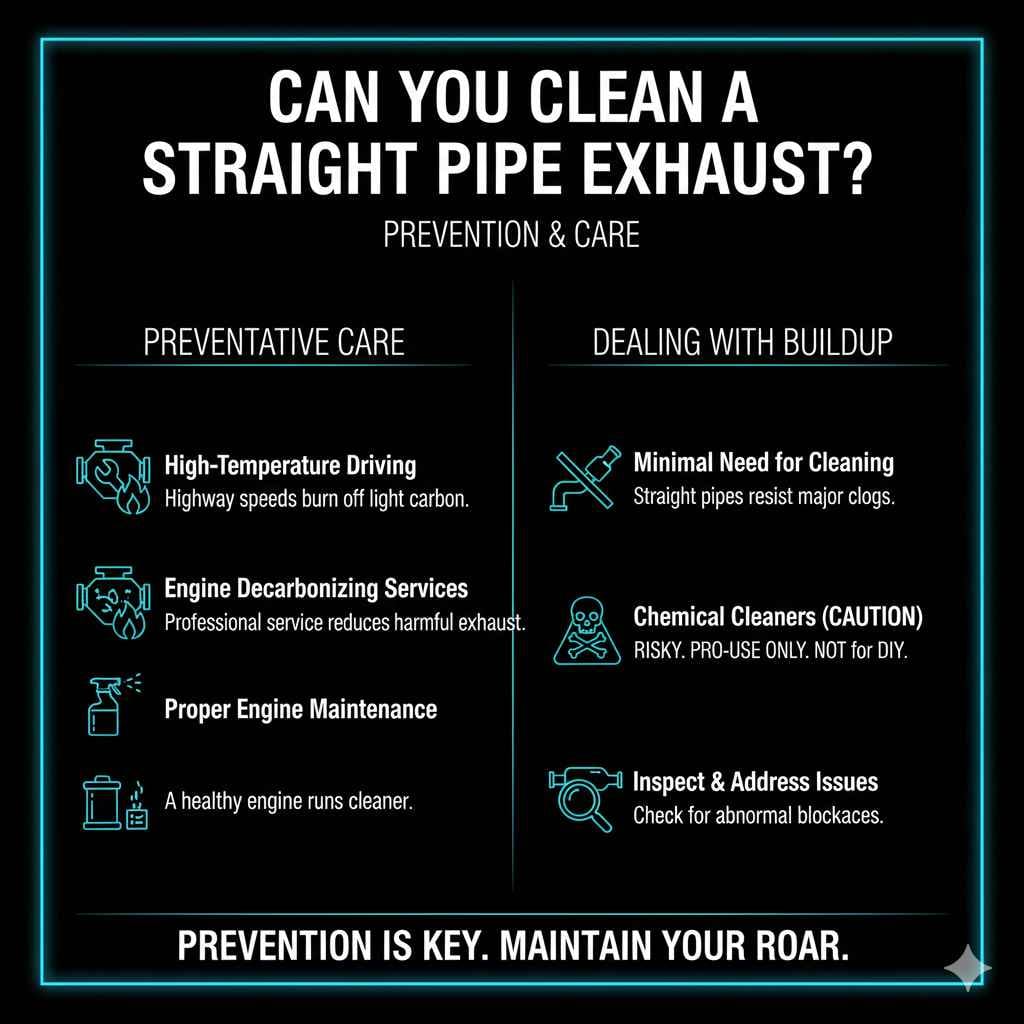
Cleaning a straight pipe exhaust is generally about preventing buildup rather than deep cleaning a severe clog. Unlike a factory muffler with accessible chambers, a straight pipe is usually just a smooth tube.
However, if you’re dealing with moderate carbon buildup on the inner walls of a straight pipe, here are a few things to consider:
- High-Temperature Driving: As mentioned, driving at highway speeds for a sustained period can help burn off some lighter carbon deposits. This is the most practical “cleaning” method for a driver.
- Engine Decarbonizing Services: Professional engine decarbonizing services clean out carbon deposits from the engine itself. While not directly cleaning the pipe, a cleaner engine produces less troublesome exhaust, indirectly benefiting the straight pipe.
- Chemical Cleaners (Use with Extreme Caution): In very rare cases and with extreme caution, some automotive professionals might consider introducing specific chemical treatments designed to break down carbon deposits. This is a risky procedure and can damage exhaust components if not done correctly or with the wrong chemicals. It’s generally not recommended for the average DIYer on a straight pipe. The heat and flow in a straight pipe tend to keep it cleaner than baffled systems, so aggressive chemical cleaning is rarely needed or advised.
The best approach is prevention. Keep your engine running well, drive it appropriately, and you’ll minimize the chances of your straight pipe needing a ‘deep clean’.
Straight Pipe Exhaust Systems: Pros and Cons
To fully understand the context of potential clogging, it helps to weigh the overall advantages and disadvantages of running a straight pipe exhaust.
| Pros | Cons |
|---|---|
| Aggressive Sound: Significantly louder and more resonant exhaust note. | Legal Issues: Often illegal due to noise ordinances and emissions regulations (if the catalytic converter is removed). Check local laws carefully. |
| Potential Performance Gains: Improved exhaust flow can sometimes lead to marginal horsepower increases, especially on modified engines. | Fuel Economy: Can sometimes decrease fuel economy as increased exhaust flow might not be optimally managed by the engine’s ECU without proper tuning. |
| Simpler Design: Fewer internal parts than a stock muffler can mean less chance of internal failure (though not zero chance of blockage). | Drone and In-Cabin Noise: The loud exhaust note can translate into an annoying drone inside the cabin at highway speeds. |
| Lightweight: Removal of bulky mufflers and resonators can save a small amount of weight. | Increased Soot/Emissions (if cat removed): Removing the catalytic converter significantly increases harmful emissions. |
| Cost-Effective Modification: Generally cheaper to install than complex performance exhaust systems. | Potential for Clogging: While rare, carbon buildup or physical damage can still restrict flow. |
| Customizable Sound: Can be tailored to a degree with different pipe lengths or tip designs (though much less so than with mufflers). | Increased Wear and Tear: The louder exhaust and potentially unmanaged flow can, in some cases, lead to faster wear on other engine components if not tuned correctly. |
When considering a straight pipe, always check your local laws regarding emissions and noise. A reputable source like the Environmental Protection Agency (EPA) often has information on emissions standards you can research.

Straight Pipe vs. Muffler: A Comparison of Clogging Potential
Let’s put the clogging potential side-by-side:
| Feature | Muffler | Straight Pipe |
|---|---|---|
| Primary Clogging Mechanism | Accumulation of soot, carbon, and oil within internal baffles and chambers; breakdown of sound-deadening material. | Severe carbon buildup on internal walls (less common due to simpler design); foreign debris; physical damage (kinks/crushing); clogged catalytic converter (if present). |
| Frequency of Clogging | More prone to gradual clogging over time, especially with short trips or engine issues. | Less prone to typical gradual clogging, but susceptible to sudden blockages from damage or debris. |
| Ease of Diagnosis | Symptoms can be subtle initially; requires more diagnosis to differentiate from other engine issues. | More likely to present with pronounced power loss; visual inspection for damage is often key. |
| Ease of Cleaning/Clearing | Difficult to clean internally; often requires replacement. | Prevention is key; physical damage requires repair/replacement; some debris may be cleared by high RPM driving. Direct cleaning is generally not feasible. |
| Impact of Clog | Can lead to gradual power reduction, poor MPG, and eventually complete blockage. | Typically leads to a more immediate and severe loss of power if a significant clog occurs. |
As you can see, while a straight pipe offers a simpler path, it’s not a magic bullet against all exhaust issues. Physical damage and debris are its more likely adversaries compared to the gradual internal decay of a muffler.
Frequently Asked Questions (FAQ)
Q1: If I remove my catalytic converter for a straight pipe, will it definitely get clogged faster?
A: Removing the catalytic converter reduces a major component that can clog. So, in that specific regard, it might be less likely to clog due to catalytic breakdown. However, a straight pipe can still accumulate carbon or get clogged by debris or damage, as discussed. The catalytic converter itself is a common cause of clogs in systems that retain it.
Q2: How do I know if my straight pipe is already clogged, or if it’s just my engine running poorly?
A: It’s a great question! Look for a combination of symptoms. A clogged exhaust typically causes a noticeable and sudden power loss, especially under load. Engine issues can be more varied. A visual inspection for kinks or damage is also crucial. If the car sputters, hesitates severely, or feels like it’s struggling to “breathe” under acceleration, exhaust restriction is high on the list. A mechanic can also perform a backpressure test to be sure.