Do Downpipes Change Sound: Proven Acoustic Secrets
Yes, absolutely! Downpipes dramatically change your car’s exhaust sound by affecting how gases flow and resonate. Replacing your restrictive stock downpipe with a less restrictive aftermarket one often results in a louder, deeper, and sportier exhaust note, especially when combined with other exhaust upgrades. It’s a key component in tuning your car’s sound profile.
Ever wondered if changing your car’s downpipe makes a difference to the noise it makes? You’re not alone! Many car owners dream of that perfect engine rumble or a sportier exhaust note, but sometimes get lost in all the technical talk. Your downpipe is a crucial part of your car’s exhaust system, and yes, it plays a big role in the sound you hear. Let’s dive into how it works and what you can expect when you think about changing it. We’ll break down the simple science behind it all, so you can feel confident about making informed decisions for your ride. Get ready to understand how this often-overlooked part can transform your car’s acoustics!
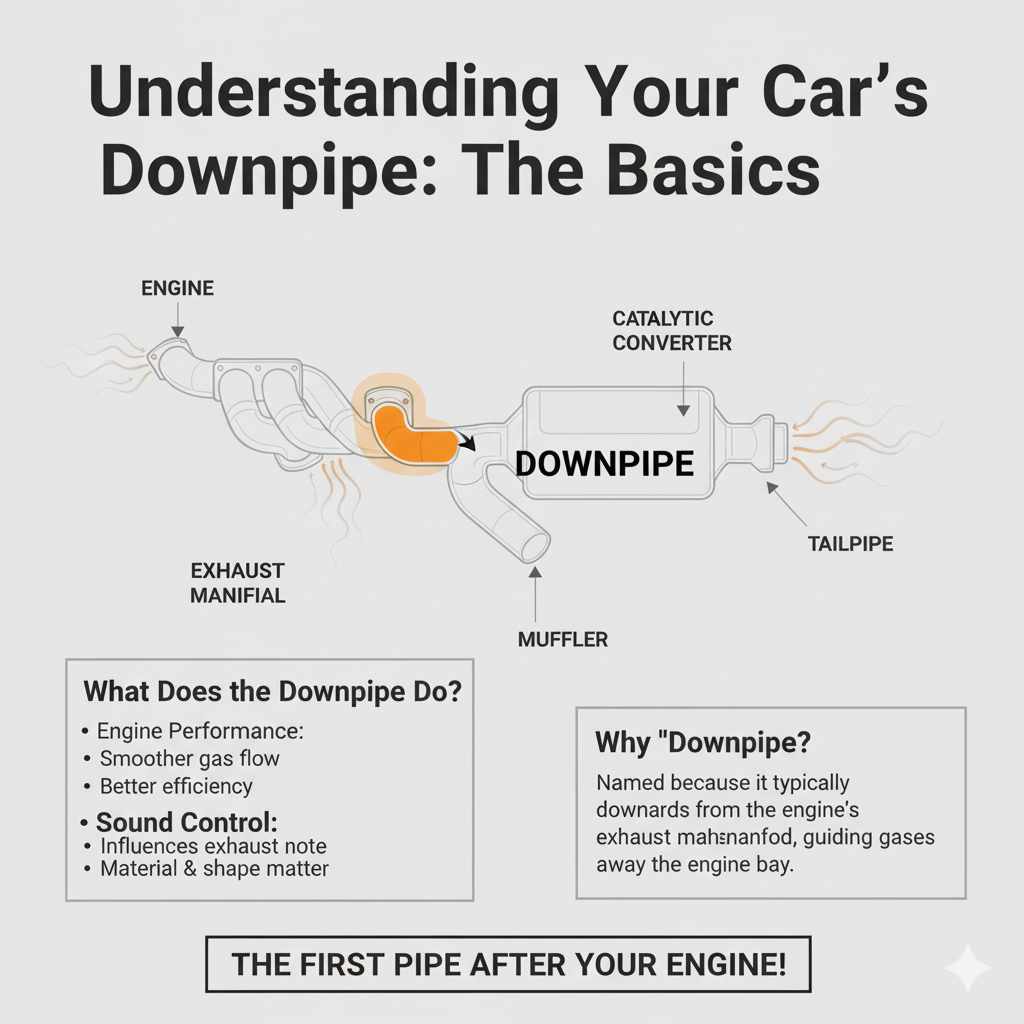
Understanding Your Car’s Downpipe: The Basics
Think of your car’s exhaust system as a pathway for hot gases to escape your engine. This pathway starts right after the engine’s exhaust manifold and ends at the tailpipe. The downpipe is literally the first piece of pipe after your engine’s manifold.
What Does the Downpipe Do?
The main job of the downpipe is to connect the exhaust manifold (where the exhaust gases are collected) to the rest of the exhaust system, which usually includes the catalytic converter and muffler. It does this by “ducting” the hot, expanding gases away from the engine. This flow is important for two main reasons:
Engine Performance: A smoother, less restricted path allows exhaust gases to exit the engine more easily. This can improve how efficiently your engine breathes and performs. Less restriction means your engine doesn’t have to work as hard to push gases out.
Sound Control: The shape, material, and presence of components like the catalytic converter within or attached to the downpipe significantly influence the sound that travels down the exhaust system.
Why is it Called a “Downpipe”?
It’s named “downpipe” because it typically angles downwards sharply from the exhaust manifold, guiding the gases away from the engine bay. It’s a pretty straightforward name for a pretty important piece!
How Downpipes Affect Exhaust Sound: The Acoustic Secrets
The sound your car makes isn’t just about the muffler. The downpipe is surprisingly influential. Here’s how it impacts what you hear:
1. Gas Flow and Velocity
The stock downpipe on most cars is designed to be quiet and to manage emissions. This often means it’s:
Restrictive: It might have smaller diameters, sharp bends, or internal baffling to slow down exhaust gases.
Catalytic Converter: Most factory downpipes contain a catalytic converter. This unit is essential for reducing harmful emissions, but it also acts as a significant sound baffle. The honeycomb structure inside slows gas flow and absorbs sound energy.
When you switch to an aftermarket downpipe, especially a “cat-back” system or a “cat-less” or “high-flow cat” downpipe, you drastically change this.
Smoother Flow: Aftermarket downpipes often have larger diameters and smoother bends. This allows exhaust gases to travel faster and with less turbulence.
Less Restriction: Removing or upgrading the catalytic converter significantly reduces the backpressure and muffling effect.
This faster, less turbulent flow means more of the raw engine sound, the “noise” created by combustion, makes its way down the exhaust system to the muffler and tailpipe.
2. Resonance and Vibration
Sound travels as waves. The material and construction of the downpipe can affect how these sound waves resonate.
Material Thickness: Thicker, heavier steel (like that used in many stock downpipes) can absorb some vibrations. Thinner, lighter materials, often used in performance aftermarket pipes, might transmit more vibration, contributing to a deeper or more pronounced sound.
Internal Structure: While most downpipes are essentially empty tubes (besides the catalytic converter in some), any internal baffles or chambers in a stock system are designed to cancel out specific sound frequencies. Performance downpipes aim for the opposite, allowing more of the engine’s natural harmonic frequencies to pass through.
3. The Role of the Catalytic Converter
This is probably the biggest factor affecting sound in the downpipe area.
Stock Catalytic Converter: These are like mini mufflers. They are designed to convert harmful gases into less harmful ones using precious metals and a honeycomb structure. This structure breaks up sound waves, making the exhaust much quieter.
High-Flow Catalytic Converters: These are designed to be less restrictive than stock units. They still perform the emissions control function but allow exhaust gases to flow more freely, resulting in a noticeable increase in volume and a sportier tone.
Cat-less Downpipes: These remove the catalytic converter entirely. While this offers the biggest performance gains and the loudest sound, it’s important to note that running without a catalytic converter is illegal in many places due to emissions regulations and can cause a “check engine” light to come on. Always check your local laws! For more on emissions standards, the Environmental Protection Agency (EPA) provides valuable information.
4. Downpipe Diameter and Length
While less impactful than the catalytic converter, the diameter and even the length of the downpipe can play a subtle role.
Diameter: A larger diameter pipe can allow for more volume of exhaust gas to flow per unit of time. This can contribute to a deeper, throatier sound rather than a high-pitched rasp. However, if the diameter is too large for the engine, it can reduce exhaust gas velocity too much, potentially negatively impacting low-end torque and creating a “droning” sound at certain RPMs.
Length: The length of a pipe can also affect how sound waves resonate. Longer pipes tend to have lower resonant frequencies (deeper sounds), while shorter pipes can have higher frequencies. However, the downpipe is relatively short compared to the entire exhaust system, so its length’s impact is usually secondary to its diameter and catalytic converter setup.
Types of Aftermarket Downpipes and Their Sound Impact
When people talk about changing their downpipe for sound, they’re usually looking at a few common types:
1. High-Flow Downpipes (with High-Flow Catalytic Converter)
These replace your stock downpipe and catalytic converter with a unit that has a less restrictive, high-flow catalytic converter.
Sound: Expect a noticeable increase in volume and a sportier, more aggressive tone. It’s a good balance between sound enhancement and emissions compliance. The sound will be deeper and more resonant than stock.
Performance: Offers moderate performance gains by reducing restriction.
Legality: Generally legal in most places as it retains the catalytic converter function.
2. Cat-less Downpipes
These replace the stock downpipe and catalytic converter with a straight pipe or a pipe with no catalytic converter.
Sound: This will give you the loudest, most aggressive, and rawest exhaust note. You’ll hear more of the engine’s natural exhaust pulses and backfiring. It’s the direct route to maximum volume.
Performance: Offers the most significant performance gains due to the complete removal of restriction.
Legality: Illegal for road use in most jurisdictions. This is because it bypasses emissions controls. It will almost certainly trigger a “Check Engine” light, and you will fail emissions tests. For information on emissions and aftermarket parts, the U.S. Department of Energy’s Alternative Fuels Data Center can offer insights into fuel efficiency and emissions reduction technologies.
3. Cat-Back Systems (and how they work with downpipes)
While not a downpipe itself, a cat-back system is often installed alongside or in conjunction with a new downpipe. A cat-back system replaces everything from the catalytic converter back to the tailpipe (mid-pipe, muffler, and tailpipe tips).
Sound: The muffler and mid-pipe in a cat-back system are designed for sound. Combined with a performance downpipe, a cat-back system can deliver a wide range of sounds, from a mild growl to a roaring performance note.
Performance: Adds further performance gains by reducing overall exhaust restriction.
Legality: Generally legal for road use as long as it doesn’t bypass emissions equipment (like a catalytic converter).
Choosing the Right Downpipe for Your Sound Goals
Deciding which downpipe is right for you depends on your priorities.
What are Your Goals?
Just a little deeper sound? A high-flow catted downpipe combined with a quality cat-back exhaust might be perfect.
Maximum volume and aggressive tone? A cat-less downpipe (if legal and acceptable for your use) will achieve this, but be prepared for the drawbacks.
Balanced approach? A high-flow catted downpipe is often the best compromise for many enthusiasts.
Sound Characteristics to Consider:
Deepness/Throatiness: Resulting from smoother, larger diameter pipes and less restriction.
Aggressiveness/Sportiness: More direct paths, higher gas velocity, and fewer baffles.
Drone: An unwanted, constant, low-frequency hum that can be annoying at highway speeds. This can sometimes occur with poorly designed aftermarket exhaust systems, particularly those with deleted or very restrictive catalytic converters.
Rasp/Popping: Often associated with high-revving engines and specific exhaust tuning, sometimes more pronounced with cat-less setups.
Table: Downpipe Types and Their Acoustic Impact
| Downpipe Type | Typical Sound Result | Pros | Cons |
|---|---|---|---|
| Stock Downpipe | Quiet, minimal engine noise | Legal, emissions compliant, quiet | Restrictive, little performance gain, muted sound |
| High-Flow Catted Downpipe | Louder, deeper, sportier, more aggressive than stock | Noticeable sound upgrade, moderate performance gains, emissions compliant | More expensive than stock, still has some restriction from the cat |
| Cat-less Downpipe | Loudest, rawest, most aggressive, engine-forward | Maximum performance gains, loudest sound | Illegal for road use, will cause “Check Engine” light, fails emissions |
| Aftermarket Downpipe + Cat-Back System | Wide range of sounds depending on cat-back design | Highly customizable sound and performance, can be street legal | Can be expensive, requires careful selection to avoid drone |
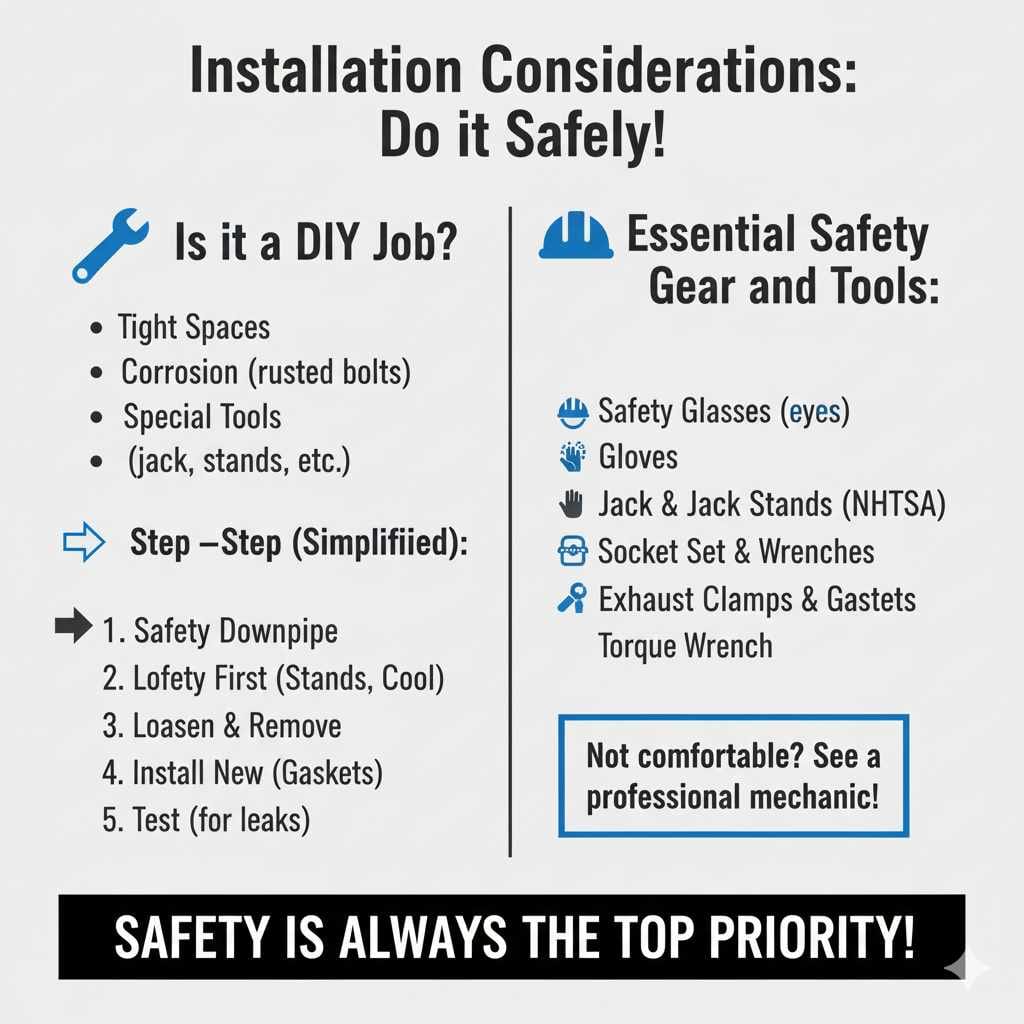
Installation Considerations: Do it Safely!
If you decide to upgrade your downpipe, it’s a job that often requires getting under your car. Safety is always the top priority.
Is it a DIY Job?
For many people with basic tools and knowledge, replacing a downpipe can be a DIY project. However, it can be challenging due to:
Tight Spaces: Exhaust components are tucked away and can be hard to reach.
Corrosion: Older exhaust systems can have bolts that are rusted and difficult to loosen.
Special Tools: You might need specialized tools like exhaust clamps, penetrating oil, and potentially a lift or jack stands.
Essential Safety Gear and Tools:
Safety Glasses: Essential to protect your eyes from rust, debris, and dirt.
Gloves: Protect your hands from heat and sharp edges.
Jack and Jack Stands: Never work under a car supported only by a jack. Use sturdy jack stands on a level surface. For more on vehicle safety, resources like the National Highway Traffic Safety Administration (NHTSA) offer crucial guidance.
Socket Set and Wrenches: You’ll need metric or standard sizes depending on your vehicle.
Penetrating Oil (like PB Blaster or WD-40): To help loosen stubborn bolts.
Exhaust Clamps and Gaskets: New ones are usually recommended for a proper seal.
Torque Wrench: For tightening bolts to the manufacturer’s specifications.
Step-by-Step (Simplified Overview):
1. Safety First: Park your car on a level surface, engage the parking brake, and safely lift the rear of the car using jack stands. Ensure the exhaust system is cool to the touch.
2. Locate the Downpipe: Find the pipe connecting your exhaust manifold to the rest of the exhaust system.
3. Loosen and Remove: Carefully loosen the bolts or clamps connecting the downpipe. You may need to remove heat shields.
4. Install New Downpipe: Position the new downpipe, ensuring it aligns correctly. Install new gaskets and tighten all bolts securely, but avoid over-tightening.
5. Test: Start the car and listen for exhaust leaks (hissing sounds). Check that all bolts are tight.
If you’re not comfortable working under your car or dealing with potentially seized bolts, taking it to a professional mechanic is always the best and safest option. They have the lifts, tools, and experience to do the job quickly and correctly.
Common Questions About Downpipes and Sound
Here are some answers to questions beginners often have.
Q1: Will changing just the downpipe make my car loud?
A1: It depends on the type of downpipe. A cat-less downpipe will make a significant difference in volume. A high-flow catted downpipe will make it louder and sportier, but less dramatically than a cat-less one. The stock muffler still plays a big role in overall sound.
Q2: What’s the difference between a sporty sound and just loud?
A2: A “sporty” sound is often described as deeper, more resonant, and having a pleasant growl or rumble. “Just loud” can sometimes mean a harsh, raspy, or overly boomy sound, often with unwanted drone at cruising speeds. The quality of the downpipe and the rest of the exhaust system contributes to achieving a desirable sporty sound.
Q3: Can changing the downpipe affect my car’s performance?
A3: Yes, absolutely! By reducing restrictions, a performance downpipe allows your engine’s exhaust gases to exit more easily. This can lead to improved horsepower and torque, especially at higher RPMs. Cat-less pipes generally offer the most performance gain.
Q4: Will I fail emissions testing if I change my downpipe?
A4: If you replace your stock downpipe with a cat-less version, you almost certainly will fail emissions testing, as the catalytic converter is a key component for reducing pollutants. A high-flow catted downpipe is designed to meet most emissions standards. Always check local regulations.
Q5: How much does it cost to change a downpipe?
A5: The cost varies greatly. A basic aftermarket downpipe can range from $150 to $500, while more complex or high-end systems can go higher. Professional installation typically adds $100 to $300, depending on labor rates and the complexity of the job.
Q6: What is “drone” and how can I avoid it?
A6: Drone is a persistent, low-frequency hum that can be heard inside the car, usually at steady highway speeds. It’s often caused by exhaust systems that are too free-flowing or have specific resonating frequencies. Choosing a well-designed cat-back system in conjunction with your downpipe, or one that includes a resonator, can help minimize drone. Some aftermarket downpipes are also designed with resonance chambers to combat this.
Q7: Can changing the downpipe void my warranty?
A7: Modifying your exhaust system, including changing the downpipe, can* potentially void your manufacturer’s warranty on related components. If your car is still under warranty and you’re concerned, it’s best to consult with your dealership or choose parts that are specifically noted as warranty-friendly if such a thing exists for your vehicle and modification. The Magnuson-Moss Warranty Act in the U.S. protects consumers’ rights to choose aftermarket parts, but it doesn’t obligate manufacturers to cover damage caused by those parts.
Conclusion: Tuning Your Car’s Voice
So, to answer the question directly: yes, downpipes absolutely change your car’s sound, and often quite dramatically. By altering how exhaust gases flow and by housing or removing the restrictive, sound-dampening catalytic converter, the downpipe is a critical component in defining your vehicle’s acoustic signature.
Whether you’re aiming for a subtle enhancement or a truly roaring performance note, understanding the role of the downpipe is your first step. A high-flow catted downpipe offers a popular middle ground, providing a noticeable improvement in sound and performance while remaining emissions-compliant. For those seeking the ultimate in sound and power, a cat-less pipe is an option, but one that comes with significant legal and environmental considerations.
Remember, safety is paramount. If you’re not experienced with exhaust work, let a professional handle the installation. But with the right knowledge and guidance, you can confidently choose and, perhaps even install, a downpipe that gives your car the voice you’ve been looking for. Enjoy the journey of tuning your ride!