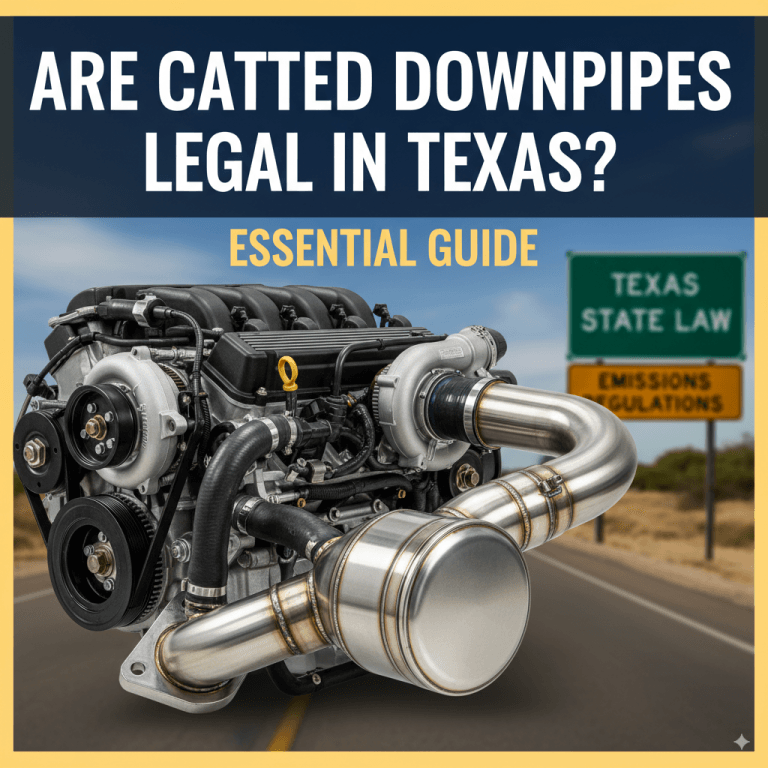
Are Downpipes Legal in Connecticut? Essential Guide
In Connecticut, aftermarket downpipes are generally legal to install and use on your vehicle, provided they do not alter the emissions control system in a way that violates state and federal environmental regulations. The focus is on maintaining factory-installed emissions equipment.
Having a car you love is great, and sometimes you want to make it sound a little sportier or perform a bit better. One part many folks consider is the downpipe. But before you go changing anything, especially under your car, it’s natural to wonder about the rules. Are those cool-sounding downpipes actually allowed on the road here in Connecticut? It’s a common question, and it’s wise to ask! Don’t worry, we’ll break down what you need to know in simple terms. We’ll explore the laws and what they mean for your ride, so you can make informed decisions without any confusion, keeping both your car and the law happy.
What Exactly is a Downpipe?
Let’s start with the basics: what is a downpipe in the first place? Think of it as a key piece of your car’s exhaust system, located right after the turbocharger (if your car has one) and before the rest of the exhaust pipes. Its main job is to help guide the exhaust gases from the turbo down into the rest of the exhaust system.
An aftermarket downpipe often replaces the original one. People do this for a few reasons:
- Sound: It can give your car a deeper, more aggressive exhaust note.
- Performance: Some designs can help exhaust gases flow more freely, which might lead to small gains in horsepower and throttle response, especially on turbocharged cars.
- Aesthetics: Sometimes, they are made from polished stainless steel and look pretty slick under the car.
The original downpipe is usually designed to work with the car’s emissions control systems. This is where the legal questions often come in.

The Law and Emissions: What Connecticut Cares About
Connecticut, like all states, is serious about air quality. The state follows strict emissions testing and regulations to keep our air clean. This is managed by agencies like the Connecticut Department of Energy and Environmental Protection (CT DEEP). For car owners, this means your vehicle needs to pass an emissions inspection to be registered and legally driven.
When it comes to exhaust modifications like downpipes, the core concern for regulators is whether the change affects how well your car controls pollution. The key phrase here to remember is “emissions control equipment.”
The Role of Catalytic Converters
A vital part of your car’s emissions system is the catalytic converter. This component looks a bit like a small metal box in your exhaust pipe. Its job is to convert harmful pollutants in the exhaust gases (like carbon monoxide, nitrogen oxides, and unburned hydrocarbons) into less harmful substances (like water vapor and carbon dioxide).
Many aftermarket downpipes don’t include a catalytic converter, or they might use a “high-flow” catalytic converter that’s different from the original one. It’s this removal or modification of emissions control equipment that can cause legal issues.
Are Downpipes Legal in Connecticut? The Nuance
So, are downpipes legal in Connecticut? Here’s the straightforward answer: Yes, installing an aftermarket downpipe is generally legal in Connecticut, as long as it doesn’t cause your vehicle to fail emissions standards or compromise the function of required emissions control equipment.
Connecticut’s regulations, much like federal ones, focus on ensuring your vehicle meets the emissions standards it was designed for. This typically means that:
- Your vehicle must retain its original, factory-installed catalytic converter(s).
- Any aftermarket catalytic converter must be EPA-certified and designed for your specific vehicle or a range of vehicles.
- Modifications that remove the catalytic converter entirely or replace it with a non-compliant device are illegal.
The Connecticut Department of Motor Vehicles (CT DMV) oversees vehicle registrations and inspections. Their rules align with broader environmental protection goals. If your car has had its catalytic converter removed or significantly altered—which could happen with certain types of aftermarket downpipes—it will likely fail the state’s emissions test.
Understanding the “Catless” Downpipe Issue
This brings us to “catless” downpipes. These are aftermarket pipes made to replace the original downpipe and, crucially, do not have a catalytic converter. While they might be popular among some enthusiasts for maximum exhaust flow and sound, they are a major red flag legally and environmentally.
In Connecticut, a car equipped with a catless downpipe will:
- Fail Emissions Tests: Without a working catalytic converter, the exhaust gases will contain high levels of pollutants, making it impossible to pass the state’s emissions inspection.
- Be Illegal for Road Use: Driving a vehicle that doesn’t meet emissions standards is against the law.
It’s important to note that some people might install these for off-road use, like track days, where emissions regulations are different. However, for daily driving on public roads in Connecticut, a catless downpipe is a no-go.
High-Flow Catalytic Converters: A Middle Ground?
What about those “high-flow” catalytic converters? These are often combined with aftermarket downpipe designs. The idea is to offer better exhaust flow than stock while still cleaning the exhaust gases.
In theory, a high-flow catalytic converter can be legal if:
- It is EPA-certified for use in the United States.
- It is designed to be a direct replacement (or a compatible upgrade) for your vehicle’s original converter.
- It effectively converts pollutants to meet emissions standards.
However, even with a high-flow converter, there can be challenges. Inspectors are looking to ensure the original emissions control equipment is present and functional. Sometimes, even if a high-flow converter is installed, it might not be recognized as a proper replacement by the inspection station, or it might not perform as well as the original factory unit in reducing specific pollutants.
A good resource to check for EPA-certified aftermarket parts is the California Air Resources Board (CARB) website, as their standards are often a benchmark for emissions compliance, and many EPA-certified parts will be listed there or provide documentation referencing EPA approval.
State Laws and Federal Regulations: What to Know
Connecticut’s vehicle emissions regulations are largely influenced by federal standards set by the Environmental Protection Agency (EPA). The Clean Air Act is the foundational law that requires states to adopt programs to control air pollution from vehicles.
Under federal law, it is illegal to tamper with, remove, or disable any pollution control device installed on a motor vehicle. This includes catalytic converters. Connecticut’s laws echo this sentiment, aiming to ensure that vehicles on its roads meet the emissions requirements they were built with.
Here’s a quick breakdown of what’s generally prohibited:
- Removing a catalytic converter.
- Replacing a catalytic converter with one that is not EPA-certified for your vehicle.
- Any modification that makes your vehicle’s emissions higher than its original standard.
Connecticut’s Emissions Testing Program
Connecticut uses a program called “Emissions Requirments” or “ER” for vehicle inspections. If your car is subject to emissions testing (most gasoline-powered vehicles model year 1996 and newer, certain diesel vehicles, and all model year 2000 and newer internal combustion engine vehicles, excluding motorcycles and certain heavy-duty vehicles registered as commercial), it must pass this inspection to renew its registration.
During the inspection, the system checks for:
- OBD-II (On-Board Diagnostics II) readiness codes.
- Physical presence and apparent condition of the catalytic converter and other emissions control components.
- Actual exhaust emissions readings (on a dynamometer for some vehicles).
If your downpipe modification interferes with any of these checks, you won’t pass.
Tips for Choosing and Installing a Downpipe Legally in Connecticut
If you’re looking to upgrade your downpipe, it’s essential to do it the right way to stay compliant in Connecticut. The key is to ensure you’re not violating emissions laws.
Step-by-Step Considerations for a Legal Upgrade:
- Identify Your Vehicle’s Requirements: Know your car’s make, model, year, and engine type. This is crucial for selecting parts.
- Research Aftermarket Downpipes: Look for downpipes that are specifically designed as replacements for your stock unit and, most importantly, include a CARB-compliant or EPA-certified catalytic converter.
- Verify Catalytic Converter Status: Ensure the aftermarket downpipe comes with a catalytic converter that is certified and legal for use in the US. Look for labels or documentation from the manufacturer. Many reputable manufacturers will clearly state if their product is emissions-legal for road use.
- Avoid “Catless” Options: Unless you are absolutely certain the pipe will only be used for off-road racing and can be legally swapped for emissions testing, steer clear of catless designs.
- Consult with a Trusted Mechanic: Before purchasing or installing, talk to a mechanic who is familiar with Connecticut’s emissions laws and has experience with exhaust modifications. They can advise you on compliant brands and installation practices.
- Professional Installation: Have the downpipe installed by a qualified professional. They will ensure it’s fitted correctly and that no other emissions-related systems are inadvertently damaged or altered.
- Keep Documentation: Save all receipts and documentation for the aftermarket downpipe. This includes any certifications or proof of EPA compliance. This can be helpful if any questions arise about your modification.
Impact of Aftermarket Downpipes on Your Car
While legality is a big concern, it’s also useful to understand how an aftermarket downpipe might affect your vehicle.
Potential Benefits:
- Sound Enhancement: Many drivers enjoy a sportier exhaust note.
- Performance Increase (Turbocharged Cars): On turbocharged vehicles, a less restrictive downpipe can allow the turbo to spool up faster, potentially leading to a bit more horsepower and quicker acceleration.
- Reduced Turbo Lag: By improving exhaust flow, the turbocharger might respond more quickly to throttle input.
Potential Drawbacks and Risks:
- Emissions Failures: As discussed, if not equipped with a proper, certified catalytic converter, you will fail your Connecticut emissions test.
- Check Engine Light: Sometimes, changing the exhaust can trigger a “Check Engine” light. This is because the car’s computer might detect changes in exhaust flow or sensor readings that it doesn’t expect.
- Noise Violations: While not strictly an emissions issue, excessively loud exhaust systems can lead to noise complaints or citations from law enforcement, though Connecticut’s focus is primarily on emissions.
- Voided Warranty: Some manufacturers may void your powertrain warranty if they determine an aftermarket exhaust modification caused a component failure.
- Reliability Concerns: Poorly designed or installed aftermarket parts can sometimes lead to leaks or other issues.
Legal Considerations for Different Vehicle Types
The rules can sometimes vary slightly depending on the type of vehicle.
Passenger Cars and Light Trucks
These are the most common vehicles subject to standard emissions testing in Connecticut. For these, retaining a functional, compliant catalytic converter is paramount. Aftermarket downpipes designed to replace the factory unit must either preserve its function or incorporate a certified aftermarket replacement.
Heavy-Duty Vehicles
Larger trucks and commercial vehicles have different emissions standards and testing procedures. While the principle of not tampering with emissions control equipment still applies, the specific regulations and testing methods might differ. It’s always best to check the CT DMV or CT DEEP guidelines specific to your vehicle class.
Classic Cars and Modified Vehicles
Connecticut, like many states, offers exemptions or alternative standards for certain classic cars or specially modified vehicles. If you have a vehicle that is primarily used for show or historical purposes, it might be exempt from regular emissions testing. You would typically need to apply for such an exemption.
For more information on exemptions, you can check the Connecticut DMV’s Emissions Requirements page.
Table: Downpipe Types and Connecticut Legality
To help clarify, let’s look at common downpipe types and their general standing in Connecticut:
| Downpipe Type | Description | Connecticut Legality (General) | Reason for Legality/Illegality |
|---|---|---|---|
| Factory/OEM Downpipe | The original downpipe that came with your car from the manufacturer. | Legal | Designed to work with emissions controls and meets all standards. |
| Aftermarket Downpipe with EPA-Certified Catalytic Converter | Replaces the factory downpipe and includes a new catalytic converter that is certified by the EPA for use in the US. | Generally Legal | If the converter is properly certified and the system as a whole meets emissions standards. |
| Aftermarket Downpipe with High-Flow Catalytic Converter | Replaces the factory downpipe and uses a high-flow catalytic converter. | Potentially Legal / Risky | Must be EPA-certified and capable of meeting emissions standards. May still face scrutiny if it deviates significantly from OEM function. |
| “Catless” Aftermarket Downpipe | Replaces the factory downpipe and does not include any catalytic converter. | Illegal for Road Use | Removes essential emissions control equipment, will fail inspection, and violates Clean Air Act. |
Who Enforces These Laws?
The enforcement of emissions laws in Connecticut involves a couple of key players:
- CT DMV: The Department of Motor Vehicles is responsible for vehicle registration and ensuring that vehicles meet inspection requirements. They are the primary gatekeepers for road legality.
- CT DEEP: The Department of Energy and Environmental Protection sets the environmental standards and works to ensure compliance with air quality regulations. They can also investigate cases of gross vehicle tampering.
- Law Enforcement: Local police and state troopers can issue citations for vehicles that are clearly not roadworthy, which could include visible exhaust modifications that suggest tampering, though their primary focus is often on safety and traffic violations.
For practical purposes, passing your Emissions Requirments inspection at a certified testing station is your main benchmark for legality on Connecticut roads.

Frequently Asked Questions (FAQ)
Q1: Do I need a catalytic converter if I buy an aftermarket downpipe in Connecticut?
A1: Yes, absolutely. For your vehicle to be legal for road use in Connecticut, it must have a properly functioning catalytic converter that meets emissions standards. Removing it or using a non-compliant one is illegal.
Q2: What happens if my car fails emissions because of my downpipe?
A2: If your downpipe modification causes you to fail emissions testing, you will not be able to renew your vehicle registration. You’ll need to revert the modification or install a compliant catalytic converter to pass inspection before you can legally drive your car again.
Q3: Are there any exemptions for older cars regarding downpipes?
A3: Connecticut has exemptions for some older vehicles (typically pre-1996 gasoline vehicles might have different rules, but newer vehicles are strictly tested). Modified vehicles or those primarily for show may qualify for specific exemptions, but these require application and approval. Always check with the CT DMV for current exemption criteria.
Q4: Can I legally install a downpipe that’s meant for off-road use on my daily driver in Connecticut?
A4: No, it is not legal to use an off-road-only downpipe (like a catless one) on a vehicle intended for daily driving on public roads in Connecticut. These parts are not designed to meet emissions standards and will cause your vehicle to fail inspection.
Q5: How can I be sure an aftermarket downpipe is legal in Connecticut?
A5: Ensure the downpipe comes with an EPA-certified catalytic converter. Manufacturers should provide documentation or state clearly that the part is emissions-legal for road use in the US. Consulting with a reputable mechanic or the CT DMV is also advisable.
Q6: Is it illegal to simply own a catless downpipe in Connecticut?
A6: Owning the part itself might not be illegal if it’s intended for off-road racing vehicles or for parts inventory. However, it is illegal to install and use a catless downpipe on a vehicle registered for on-road use in Connecticut, as it violates emissions regulations.
Conclusion
Navigating modifications for your vehicle can feel tricky, especially when laws are involved. When it comes to downpipes in Connecticut, the rule is clear: keep your emissions systems functioning correctly. Installing an aftermarket downpipe is permissible, but only if it includes a legally compliant catalytic converter that ensures your vehicle continues to meet state and federal air quality standards.