Are Downpipes Illegal In New Jersey? Essential Facts
Downpipes are generally NOT illegal in New Jersey if they are part of a factory-installed exhaust system and function correctly. However, modifying or removing catalytic converters for “off-road” use can lead to violations of state and federal emissions laws. Always ensure your exhaust system complies with New Jersey’s environmental regulations.
Have you ever been curious about what exactly a “downpipe” is on your car, or maybe heard whispers about them being a potential issue? It’s a common question, especially when you’re thinking about your vehicle’s exhaust. We all want our cars to run smoothly and legally, and figuring out the rules can sometimes feel like a puzzle. This guide is here to clear the air and give you the essential facts about downpipes and their legality in New Jersey, explained in simple terms. No confusing jargon, just straightforward information to help you understand and keep your car performing at its best, safely and legally. Let’s get started so you can drive with confidence!
Understanding Your Car’s Exhaust System: The Basics
Let’s start with the basics. Think of your car’s exhaust system as its way of breathing out. It’s a series of pipes and components that carry burnt gases (exhaust fumes) away from the engine and out into the atmosphere. This system does a few really important jobs:
- Safety: It safely directs harmful gases away from the vehicle’s cabin, protecting you and your passengers.
- Performance: It helps reduce engine noise and can influence how efficiently your engine runs.
- Environment: Key parts of the exhaust system, like the catalytic converter, help reduce pollution before the gases are released.
The whole system typically includes the exhaust manifold, the catalytic converter, the muffler, and of course, the pipes that connect them all. The downpipe is just one piece of this important puzzle.

What Exactly is a Downpipe?
In simple terms, a downpipe is the first section of the exhaust pipe that comes right after the exhaust manifold on your engine. The exhaust manifold is where all the exhaust gases from your engine cylinders collect. From there, they pass into the downpipe.
On many vehicles, especially those with turbocharged engines, the downpipe is where the catalytic converter is often located. The catalytic converter is a crucial component that uses special metals (like platinum, palladium, and rhodium) to convert harmful exhaust gases like carbon monoxide into less harmful substances like carbon dioxide and water vapor. After the catalytic converter, the exhaust then flows through the rest of the system (mid-pipe, muffler, and tailpipe) to be further silenced and released.
Why You Might Hear About Downpipes
You might hear about downpipes in a few different contexts, which can sometimes lead to confusion:
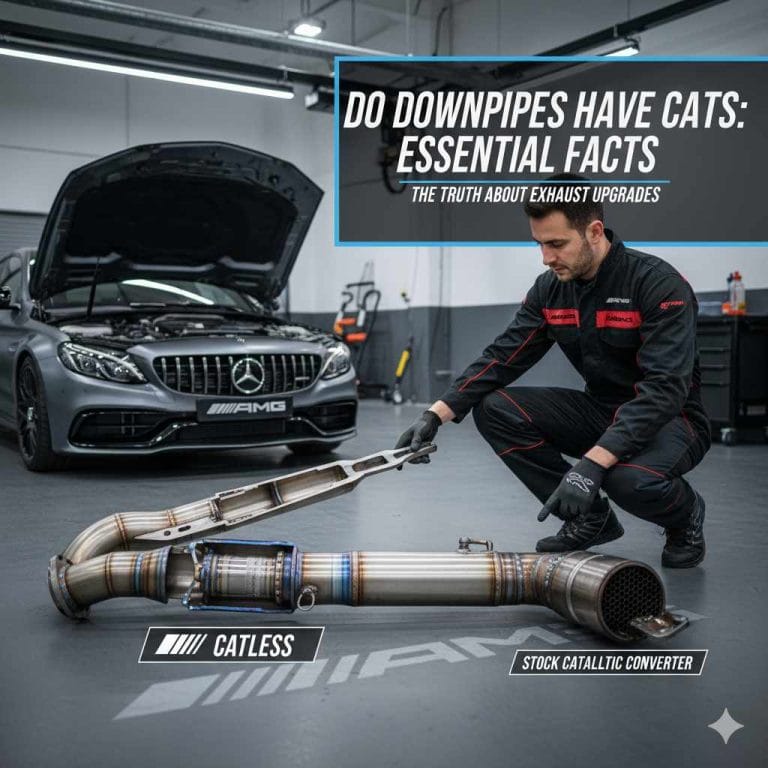
- Performance Upgrades: Some car enthusiasts modify or replace the stock downpipe with an aftermarket one. These “performance” downpipes are often designed with a larger diameter or a high-flow catalytic converter (or sometimes, no catalytic converter at all – these are often called “catless” downpipes) to supposedly improve engine power and turbo spool speed.
- Emissions Regulations: Because the downpipe is closely tied to the catalytic converter, any modifications here can have a significant impact on your car’s emissions.
- Noise Levels: Altering the exhaust system, including the downpipe, can also change the sound your car makes.
It’s these performance and emissions aspects that often bring up questions about legality, particularly when it comes to specific locations like New Jersey.
Downpipes and Legality in New Jersey: The Essential Facts
Now, let’s get to the heart of the matter: Are downpipes illegal in New Jersey? The short answer is that having a downpipe itself, as part of a standard, legally operating vehicle, is not illegal in New Jersey. What can be illegal are modifications that cause your vehicle to fail emissions tests or violate state and federal environmental laws.
New Jersey, like many states, has strict regulations regarding vehicle emissions to protect air quality. These regulations are primarily enforced through emissions testing programs and inspections. The key is that your vehicle must meet the emissions standards set by the U.S. Environmental Protection Agency (EPA) and the New Jersey Department of Environmental Protection (NJDEP).
The Role of Catalytic Converters
The biggest factor determining the legality of your downpipe is whether your catalytic converter is present and functioning correctly if your car is equipped with one from the factory. Removing, tampering with, or bypassing a catalytic converter is a serious offense and is illegal in New Jersey and under federal law.
Why is this so important? Catalytic converters are essential for reducing harmful pollutants. Data from the EPA highlights their critical role: “Catalytic converters are a part of your vehicle’s pollution control system. They change harmful exhaust gases into less harmful substances.”
If your downpipe houses the catalytic converter, and that converter is missing or damaged, your car is expelling far more pollutants. This is why inspections will fail vehicles with tampered exhaust systems.
New Jersey’s Emissions Testing Program
New Jersey employs a vehicle emissions inspection program designed to ensure that vehicles on the road are not excessively polluting. This program is administered by the New Jersey Motor Vehicle Commission (MVC) in conjunction with the NJDEP.
When you take your vehicle for an inspection, it undergoes an emissions test. This test checks the levels of pollutants in your exhaust. If your vehicle has a modified exhaust system that causes it to produce emissions above the legal limits, or if it’s missing key emissions control components like a catalytic converter, it will not pass the inspection. Passing inspection is mandatory for vehicle registration renewal in New Jersey.
Federal Laws and Tampering
It’s crucial to understand that tampering with emissions control systems is not just a New Jersey issue; it’s also a violation of federal law. The Clean Air Act, enforced by the EPA, prohibits the removal or disabling of any device installed on a motor vehicle to comply with emissions standards. Penalties for tampering can be quite substantial.
For more information on these federal regulations, you can refer to the EPA’s guidance on tampering with emission control systems.
Common Downpipe Modifications and Their Legal Implications
Many questions about downpipe legality arise from aftermarket modifications. Let’s break down some common ones:
1. Catless Downpipes
A “catless” downpipe is exactly what it sounds like: a downpipe that has had the catalytic converter removed or deliberately omitted. These are primarily sold for “off-road use only” by manufacturers.
- Why people use them: They can slightly increase horsepower, improve throttle response, and make a more aggressive exhaust sound.
- Legality in New Jersey: Using a catless downpipe on a vehicle driven on public roads in New Jersey is illegal. It directly violates emissions standards and tampering regulations. Your car will not pass an emissions inspection.
2. High-Flow Catalytic Converters
These are aftermarket catalytic converters designed to be less restrictive than factory converters. They might still offer some emissions control but allow exhaust gases to flow more freely.
- Why people use them: They can provide a modest performance gain while still offering some level of emissions control.
- Legality in New Jersey: The legality of high-flow catalytic converters can be a gray area. If the aftermarket converter is EPA-certified and meets New Jersey’s (and federal) emissions standards, it may be legal. However, a common issue is that many high-flow converters are not certified for use in all states, and their effectiveness over time can vary. If your vehicle fails an emissions test with one installed, it’s still illegal for road use. It’s best to choose EPA-approved converters for use in states with strict emissions testing.
3. Larger Diameter Downpipes
Some performance downpipes have a larger internal diameter than stock.
- Why people use them: Primarily for turbocharged vehicles, a larger diameter can help reduce backpressure, potentially allowing the turbocharger to build boost faster and improve exhaust flow.
- Legality in New Jersey: The diameter itself isn’t the main legal concern. The legality hinges on whether the modification, combined with other factors (like catalytic converter status), results in the vehicle exceeding emissions standards or violating tampering laws. If a larger diameter pipe replaces or bypasses a functioning catalytic converter, it’s illegal.
4. Exhaust System Leaks
Even if your downpipe is stock, a leak somewhere in the exhaust system can cause problems.
- Why it’s an issue: Exhaust leaks can affect performance, make your car louder, and can sometimes trigger ‘check engine’ lights if they affect sensor readings. A leak before the oxygen sensor can lead to inaccurate readings and affect fuel mixture and emissions.
- Legality in New Jersey: While not directly related to downpipe modification, significant exhaust leaks are often a reason for failing inspection. The system must be sealed to function correctly and safely.
How to Identify Your Exhaust System Components
Knowing your car’s parts can be empowering. For a typical passenger car, here’s a simplified look at the exhaust path and where the downpipe fits in:
| Component | Location / Function |
|---|---|
| Exhaust Manifold | Bolted directly to the engine cylinder head. Collects exhaust gases from each cylinder. |
| Downpipe | Connects to the exhaust manifold. Often contains the primary catalytic converter and oxygen sensors. |
| Catalytic Converter | Usually integrated into or immediately following the downpipe. Reduces harmful emissions. |
| Mid-pipe / Resonator | Connects the front section of the exhaust to the muffler. May contain a resonator to further reduce sound. |
| Muffler | Reduces exhaust noise output. Located towards the rear of the vehicle. |
| Tailpipe | The final section of the exhaust, exiting at the rear of the vehicle. |
If you’re unsure about your car’s specific setup, especially if you have a turbocharged vehicle where the downpipe is more prominent, a quick look underneath (when the car has cooled down!) or consulting your car’s owner’s manual or an online repair manual for your make and model can be very helpful.
Ensuring Your Downpipe and Exhaust System are Compliant in New Jersey
So, how do you make sure you’re on the right side of the law and keeping your car running cleanly?
- Keep Your Factory Exhaust Intact: For most drivers, the simplest and most reliable way to stay compliant is to keep the original, factory-installed exhaust system. These systems are designed to meet all emissions standards.
- Be Wary of Aftermarket Claims: If you’re considering aftermarket parts, especially downpipes, do your research thoroughly. Look for parts that explicitly state they are compliant with EPA and CARB (California Air Resources Board) emissions standards, as these are often the most stringent and cover many state requirements.
- Check for EPA Certification: When purchasing any emissions-related part, especially catalytic converters, look for an EPA certification number stamped on the unit. This signifies it has been tested and approved. You can learn more about EPA-certified replacement parts from this EPA brochure on catalytic converter fraud, which highlights why genuine parts matter.
- Understand “Off-Road Use Only”: If a part is labeled “for off-road use only,” it means it is not legal for use on public roads. Using such parts in New Jersey is a violation.
- Regular Maintenance: Keep up with routine maintenance. This includes checking for exhaust leaks and ensuring your oxygen sensors (O2 sensors) are functioning correctly. Your O2 sensors play a vital role in managing your engine’s fuel mixture and emissions.
- Pass Your Inspection: The ultimate test is passing your New Jersey emissions inspection. If your car has a modified exhaust system, be prepared for it to be scrutinized.
What to Do if You Have Emissions Concerns
If you’re experiencing issues like a “Check Engine” light, a decrease in fuel efficiency, or strange noises from your exhaust, it’s a good idea to get it checked out by a qualified mechanic. They can diagnose problems with your exhaust system, including any issues with the downpipe or catalytic converter, and advise on the best course of action to ensure your car is both safe and legal to drive.
Ignoring these signs can lead to more significant, expensive damage down the line, not toMention failing your next inspection. A professional can also help you understand if any modifications you might be considering are likely to cause problems with New Jersey’s stringent regulations.

Frequently Asked Questions (FAQ)
Q1: Can I legally remove the catalytic converter from my downpipe in New Jersey?
No, it is illegal to remove the catalytic converter from your downpipe or any part of your emissions control system in New Jersey. This violates federal and state laws designed to protect air quality and will cause your vehicle to fail inspection.
Q2: What happens if my car fails emissions inspection in New Jersey due to exhaust modifications?
If your car fails the emissions inspection because of exhaust modifications (like a missing catalytic converter), you will not be able to renew your vehicle registration until the issue is corrected. You’ll need to revert the system to a compliant state or install EPA-approved parts to pass.
Q3: Are “performance” downpipes illegal in New Jersey?
Not all performance downpipes are inherently illegal. However, if a performance downpipe lacks a functioning, EPA-compliant catalytic converter or causes your vehicle to exceed regulated emissions levels, it is illegal for use on public roads in New Jersey.
Q4: Can I use an “off-road” downpipe on my daily driver in New Jersey?
No. Parts labeled “for off-road use only” are not street-legal. Using a downpipe without a catalytic converter or with a non-compliant one on a vehicle driven on public roads in New Jersey is illegal and will result in a failed inspection.
Q5: How can I tell if my downpipe has been modified?
Modifications can sometimes be visually apparent. Look for sections of pipe that seem different from the factory design, especially near where the catalytic converter would be. A mechanic can also thoroughly inspect your exhaust system to identify any non-standard components or alterations.
Q6: What are NOx and CO, and why are they important for emissions?
NOx (Nitrogen Oxides) and CO (Carbon Monoxide) are harmful pollutants. NOx contributes to smog and respiratory problems, while CO is a toxic gas. Catalytic converters are vital in converting these, along with unburnt hydrocarbons (HC), into less harmful substances like nitrogen gas, carbon dioxide, and water vapor.
Conclusion: Drive Legally and Cleanly
Navigating the rules about car parts can seem tricky, but when it comes to downpipes and legality in New Jersey, the key takeaway is to prioritize compliance with emissions standards. A factory-installed downpipe and exhaust system that is in good condition and functioning as intended is perfectly legal and what is expected for New Jersey inspections. Modifications, especially those that involve removing or tampering with the catalytic converter, are where issues arise. These changes aren’t just illegal in New Jersey; they are violations of national environmental laws and can lead to significant penalties, not to mention negatively impacting air quality for everyone.
Your goal as a car owner should be to ensure your vehicle is safe, runs efficiently, and meets all legal requirements. By understanding the function of your downpipe and its role within the broader exhaust and emissions system, you can make informed decisions. If you’re considering any exhaust work or upgrades, always ask questions, do your research, and err on the side of caution by choosing EPA-certified parts and ensuring your vehicle passes its mandatory New Jersey emissions inspection. This approach will not only keep you on the road legally but also contribute to a cleaner environment. Happy and safe driving!