
Do Downpipes Remove Cats: Essential Guide Revealed!
No, “downpipes” do not remove catalytic converters. They are separate exhaust system components. Downpipes connect the exhaust manifold to the catalytic converter, not replace it. Understanding their roles prevents confusion and ensures proper exhaust system maintenance.
Ever find yourself staring at your car’s exhaust system, wondering about all those fancy names and parts? It’s easy to get mixed up, especially when terms like “downpipe” and “catalytic converter” get thrown around. You might even be asking, “Do downpipes remove cats yourself?” Let’s clear that up right now: they don’t! Think of them as teammates, not replacements.
Your car’s exhaust system is a complex network designed to keep your ride running smoothly and cleanly. It’s crucial for performance, efficiency, and something we all care about – the air we breathe. But understanding it doesn’t have to be a headache. We’re here to break down exactly what a downpipe is, what a catalytic converter does, and how they work together.
By the end of this guide, you’ll know your exhaust parts like the back of your hand. We’ll make sure you understand their roles clearly, so you can feel confident talking about your car and keeping it in top shape. Let’s dive in and demystify your exhaust system, starting with those crucial parts.
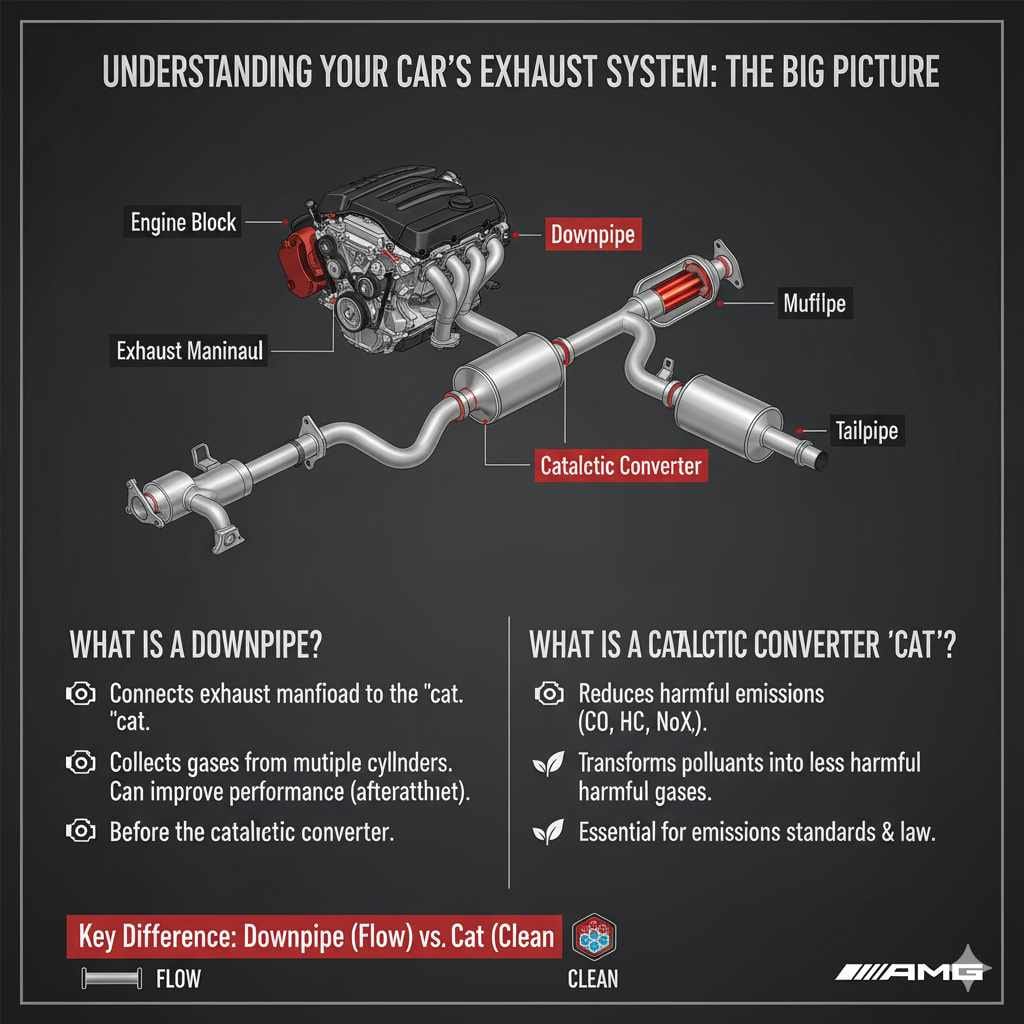
Understanding Your Car’s Exhaust System: The Big Picture
Your car’s exhaust system is more than just a pipe sticking out the back. It’s a vital part of your engine’s operation. Its main job is to safely channel harmful gases produced during combustion away from the engine and out of your vehicle. This process not only keeps you and your passengers safe from toxic fumes but also helps your engine run efficiently and quietly.
The exhaust system has several key components, each with a specific function. Think of it as a team working together to achieve one goal: a clean, efficient exhaust. We’re going to focus on two important players: the downpipe and the catalytic converter. Knowing their individual jobs helps us understand how they contribute to the overall system and why they are often discussed together, even though they do very different things.
What is a Downpipe?
So, let’s talk about the downpipe. Imagine it as the first major pipe after your engine’s exhaust manifold. The exhaust manifold is the part where all the hot, spent gases from your engine’s cylinders come together. The downpipe’s primary role is to collect these gases from the manifold and direct them downwards, towards the rest of the exhaust system. It’s essentially the initial pathway for the exhaust gases to travel.
The downpipe is usually a relatively short, stout section of pipe. Its shape and length can vary depending on the vehicle’s make and model. In many performance-oriented vehicles, aftermarket downpipes are available. These can sometimes be designed to be larger in diameter or have fewer restrictions, aiming to improve exhaust flow and, consequently, engine performance. However, it’s essential to note that any modifications to the exhaust system, including the downpipe, must comply with local emissions regulations and laws.
A crucial point to remember is that the downpipe is located before the catalytic converter in the exhaust stream. This positioning is key to understanding its relationship with the “cat.”
Key Features of a Downpipe:
- Connects the exhaust manifold to the next component (usually the catalytic converter).
- Collects exhaust gases from multiple cylinders.
- Can be a target for performance modifications.
- Designed to handle high temperatures and pressures.
What is a Catalytic Converter (“Cat”)?
Now, let’s shine a spotlight on the catalytic converter, often shortened to “cat.” This is where the magic of emissions control happens. The catalytic converter is an essential part of your car’s exhaust system designed to reduce harmful pollutants produced by the engine before they are released into the atmosphere. We all want to do our part for the environment, and the catalytic converter is a big helper.
Inside this metal box, which looks a bit like a muffler but is specifically designed for chemical reactions, are precious metals like platinum, palladium, and rhodium. These metals act as catalysts – hence the name! They help convert toxic gases like carbon monoxide (CO), unburnt hydrocarbons (HC), and nitrogen oxides (NOx) into less harmful substances such as carbon dioxide (CO2), nitrogen gas (N2), and water vapor (H2O).
The catalytic converter is strategically placed in the exhaust system after the downpipe and before the muffler. This placement allows it to receive the hot exhaust gases after they’ve traveled through the downpipe, giving the catalysts the optimal temperature and conditions to do their job effectively. Tampering with or removing a catalytic converter is not only illegal in most places due to environmental regulations but can also lead to poor engine performance, increased fuel consumption, and can cause your vehicle to fail emissions tests.
You can find more information about the function and importance of catalytic converters from resources like the U.S. Environmental Protection Agency (EPA).
Why Catalytic Converters are Important:
- Reduce harmful exhaust emissions (CO, HC, NOx).
- Transform pollutants into less harmful gases (CO2, N2, H2O).
- Essential for meeting emissions standards.
- Required by law in most regions.
How the Downpipe and Catalytic Converter Work Together
The relationship between the downpipe and the catalytic converter is one of sequence and collaboration. They are not interchangeable parts; rather, they work in a specific order to achieve the overall goal of your exhaust system.
When your engine runs, it burns fuel, creating hot exhaust gases. These gases exit the engine cylinders and enter the exhaust manifold. From the manifold, they are immediately directed into the downpipe. The downpipe channels these gases downwards and also serves as the first major section of pipe carrying these gases away from the engine.
After leaving the downpipe, the exhaust gases flow directly into the catalytic converter. It is here, within the catalytic converter, that the chemical reactions take place to clean up the emissions. Think of the downpipe as the delivery truck, bringing the exhaust gases to the processing plant – the catalytic converter.
Following the catalytic converter, the now-cleaned exhaust gases move on to the muffler, which reduces noise, and finally exit your vehicle through the tailpipe. This seamless flow is critical for your engine to operate efficiently and for your car to meet environmental standards.
Here’s a simple visual of the flow:
| Component Order | Primary Function |
|---|---|
| Engine Exhaust Manifold | Collects exhaust gases from cylinders |
| Downpipe | Channels gases from manifold to the next stage |
| Catalytic Converter | Converts harmful gases into less harmful ones |
| Muffler | Reduces exhaust noise |
| Tailpipe | Expels treated gases from the vehicle |
As you can see, the downpipe precedes the catalytic converter, acting as a conduit. It does not perform the chemical conversion that the catalytic converter does.
Common Misconceptions and Why They Arise
It’s easy to understand why people might get confused about the terms “downpipe” and “catalytic converter.” Both are critical parts of the exhaust system, and they are located close to each other. The confusion often stems from a few common points:
- Performance Modifications: In the world of car tuning, people often talk about “cat-back” exhaust systems. This refers to the part of the exhaust system after the catalytic converter. However, there are also “cat-delete pipes” or high-flow downpipes that enthusiasts might install. These aftermarket parts can alter the exhaust flow significantly. When people hear about modifications involving the catalytic converter’s position or removal (even if they’re just installing a straight pipe in its place in off-road applications), they might mistakenly associate the downpipe with this removal.
- Visual Similarity: Sometimes, the downpipe and the catalytic converter housing can look like a single, integrated unit from a distance, especially on older vehicles or if they haven’t been maintained well. This can lead to a visual assumption that they are one piece or that one might serve the function of the other.
- Interchangeable Terms: In casual conversation or online forums, terms can sometimes be used loosely. Someone might mistakenly refer to a component as a “downpipe” when they are actually talking about a replacement pipe that bypasses the catalytic converter.
It’s important to remember that in a factory-standard vehicle, the downpipe and catalytic converter are distinct components with separate, vital functions related to performance and emissions. The downpipe is purely about directing the flow of gases, while the catalytic converter is about cleaning them.
Modifications: Can You Replace or Remove Them?
When it comes to modifying your car’s exhaust system, both downpipes and catalytic converters are potential targets, but for very different reasons and with vastly different legal and environmental implications.
Modifying the Downpipe
Modifying or replacing the downpipe is a common practice in the performance tuning world. Aftermarket downpipes are available that can offer:
- Increased Diameter: Larger pipes can allow exhaust gases to flow more freely, reducing backpressure.
- Smoother Bends: Less restrictive bends can further improve flow.
- Reduced Weight: Some performance downpipes might be made from lighter materials.
The primary goal of a performance downpipe modification is typically to improve engine performance, horsepower, and torque by allowing the engine to “breathe” more easily. However, it’s crucial to understand that changing the downpipe can affect noise levels and emissions, and it must be done with careful consideration of local laws and regulations.
Some performance downpipes are designed to be “catless” or allow for the installation of high-flow catalytic converters. A “catless” downpipe, as the name suggests, is designed to bypass the catalytic converter entirely. This is typically done for maximum performance gains on race vehicles. However, using a catless downpipe on a road-legal vehicle is illegal in most jurisdictions worldwide due to its significant environmental impact.
For guidance on vehicle modifications and emissions, consult your local Department of Motor Vehicles or equivalent transportation authority.
Modifying or Removing the Catalytic Converter
Replacing or removing a catalytic converter is a much more serious matter. The catalytic converter is a mandated emissions control device. Its removal or tampering is strictly prohibited by environmental protection agencies in almost all countries.
Reasons catalytic converters are legally protected:
- Environmental Protection: They are critical for reducing air pollution and protecting public health.
- Legal Compliance: Vehicle emissions are regulated to ensure cars meet certain environmental standards.
- Emissions Testing: Most regions require vehicles to pass emissions tests, which a missing or faulty catalytic converter will cause them to fail.
While some specialized vehicles used solely for off-road racing might be legally permitted to remove catalytic converters under very specific circumstances, this is not applicable to daily drivers. Installing a “delete pipe” in place of a catalytic converter is illegal for road use.
If your catalytic converter is damaged or failing, the correct and legal procedure is to replace it with a new one that meets the specifications for your vehicle and complies with local emissions standards. You can find information on emissions compliance and vehicle standards from the U.S. Department of Energy.
Signs of Problems with Your Exhaust System
Even if you’re not looking to modify your car, knowing the signs of a failing or problematic exhaust system is important for safety, performance, and avoiding costly repairs down the line. Both the downpipe and the catalytic converter can experience issues.
Signs Related to the Downpipe
Since the downpipe is a metal pipe, the most common issues are physical damage or leaks:
- Rattling or Clanging Noises: This could indicate the downpipe is loose, damaged, or its mounting brackets have failed.
- Hissing or P-ting Noises: A leak in the downpipe, especially near the manifold connection, will often produce a hissing sound as exhaust gases escape under pressure.
- Reduced Engine Performance: A significant leak in the downpipe can affect exhaust flow and potentially lead to a loss of power or rough idling.
- Visible Damage: Inspecting the underside of your car can reveal rust holes, cracks, or bending in the downpipe.
Signs Related to the Catalytic Converter
A failing catalytic converter often shows symptoms related to its primary function: emissions control and flow restriction:
- Check Engine Light: This is the most common indicator. An illuminated check engine light, especially with codes related to catalytic converter efficiency (e.g., P0420, P0430), points to a problem.
- Reduced Engine Power: A clogged catalytic converter acts like a bottleneck, preventing exhaust gases from escaping. This can severely reduce engine performance, making the car feel sluggish.
- Rotten Egg Smell: If your catalytic converter is failing and not converting sulfur compounds properly, you might notice a sulfuric or “rotten egg” smell from the exhaust.
- Increased Fuel Consumption: When the engine’s efficiency is compromised by a struggling catalytic converter, you might see a drop in your miles per gallon.
- Overheating: A severely clogged catalytic converter can cause excessive heat buildup in the exhaust system, potentially damaging other components.
If you suspect any of these issues, it’s best to have your vehicle inspected by a qualified mechanic. They have the tools and expertise to diagnose the problem accurately and recommend the appropriate repairs.
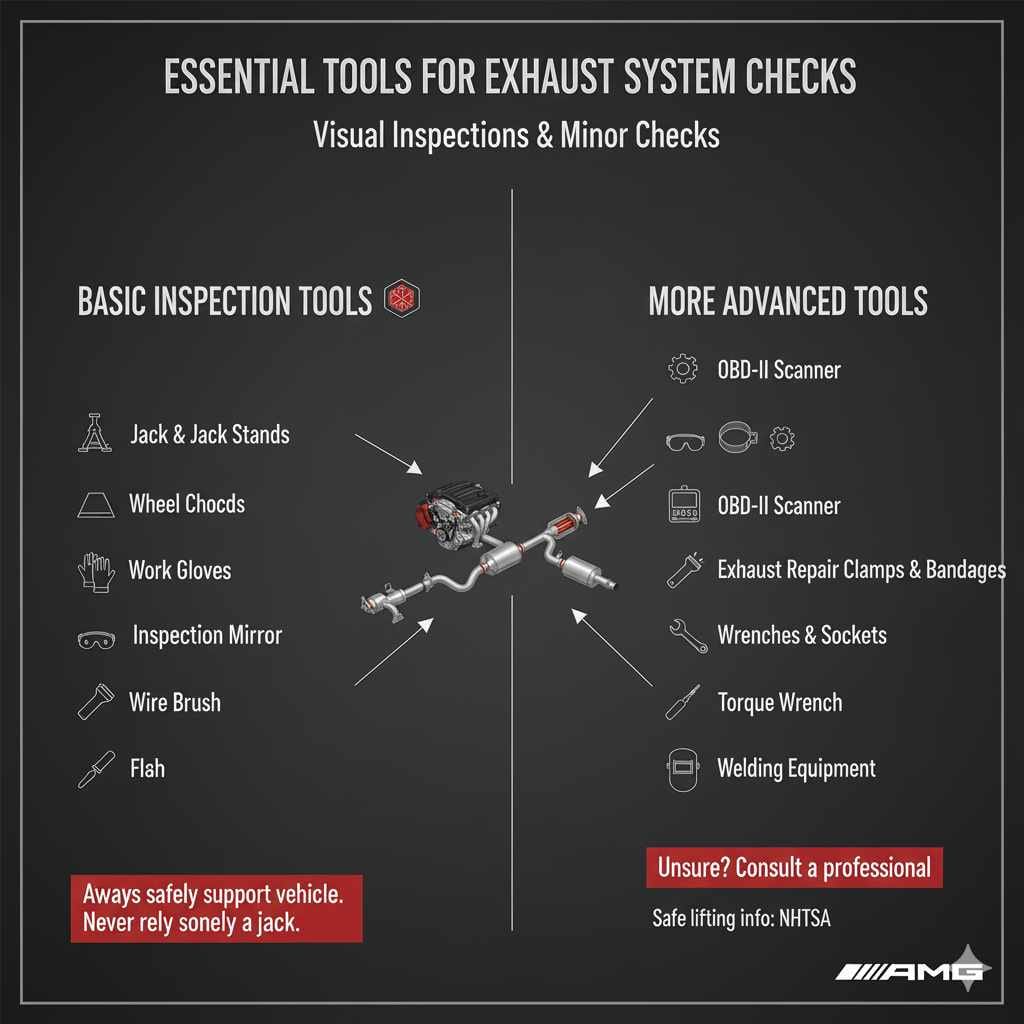
Essential Tools for Exhaust System Checks
While detailed exhaust system repairs often require specialized equipment, there are a few basic tools that can help you perform visual inspections and minor checks. Always ensure your vehicle is safely supported if you plan to get underneath it.
Basic Inspection Tools
- Jack and Jack Stands: Essential for safely lifting your vehicle to access the underside. Never rely solely on a jack.
- Wheel Chocks: To prevent the vehicle from rolling.
- Work Gloves: Protect your hands from dirt, grease, and sharp edges.
- Safety Glasses: Protect your eyes from debris.
- Flashlight: To illuminate dark areas under the vehicle.
- Inspection Mirror: Helps to see hard-to-reach spots.
- Wire Brush: For cleaning off rust and debris to get a clearer view of the metal.
More Advanced Tools (Usually for Mechanics)
- OBD-II Scanner: Crucial for reading diagnostic trouble codes (DTCs) that trigger the check engine light.
- Exhaust Repair Clamps and Bandages: For temporary fixes on small leaks.
- Wrenches and Sockets: For removing and re-installing exhaust hangers and clamps.
- Torque Wrench: For ensuring bolts and connections are tightened to the correct specifications.
- Welding Equipment: For permanent repairs to pipes or brackets.
If you’re unsure about any step or the job requires more than basic visual checks, it’s always best to consult a professional. For information on safe vehicle lifting practices, resources like NHTSA (National Highway Traffic Safety Administration) provide safety guidelines.
Frequently Asked Questions (FAQ)
Here are some common questions beginners have about downpipes and catalytic converters:
Q1: Do downpipes remove catalytic converters?
A: No, a downpipe is a pipe that connects the exhaust manifold to the catalytic converter. It does not remove or replace the catalytic converter; it precedes it in the exhaust system flow.
Q2: Can I drive my car without a catalytic converter?
A: In most places, it is illegal to drive a vehicle on public roads without a functioning catalytic converter. It’s a critical emissions control device required by law for environmental protection.
Q3: What happens if my catalytic converter fails?
A: A failed catalytic converter can cause your check engine light to come on, reduce engine performance, increase fuel consumption, and lead to a failed emissions test. It also means your car is releasing more harmful pollutants into the air.
Q4: How can I tell if my downpipe is leaking?
A: Signs of a downpipe leak include hissing or puffing noises from under the car, especially when the engine is cold, and potentially a decrease in engine performance or a richer exhaust smell.