
Are 2004 WRX and STI Downpipes the Same?
Hey there! If you’re a Subaru WRX or Subaru STI owner, you’ve probably wondered, “Are 2004 WRX and STI downpipes the same?” I’ve been down this road myself, tinkering with my own Subaru and digging into the nitty-gritty of exhaust systems. Let me tell you, it’s a question that sparks a lot of debate among car enthusiasts. In this guide, I’ll break it all down for you, sharing what I’ve learned from my own experience and research. We’ll explore the differences, why they matter, and what you need to know to make the right choice for your ride. So, grab a coffee, and let’s dive in!
Understanding the Downpipe’s Role in Your Subaru
Let’s start with the basics. A downpipe is a critical part of your car’s exhaust system. It’s the pipe that connects the turbocharger to the rest of the exhaust, carrying hot exhaust gases away from the engine. Think of it as the highway for your engine’s exhaust flow. For a Subaru WRX or Subaru STI, the downpipe is especially important because it affects turbo performance. A good downpipe can reduce backpressure, letting the turbo spool up faster and boosting horsepower.
When I first started modding my 2004 WRX, I didn’t realize how much the downpipe mattered. I thought, “It’s just a pipe, right?” Wrong! The design, diameter, and whether it has a catalytic converter can make or break your car’s performance. For the 2004 models, both the WRX and STI rely on their downpipes to optimize exhaust flow, but they’re not identical. Let’s explore why.
Key Differences Between 2004 WRX and STI Downpipes
So, are the downpipe differences between a 2004 WRX and STI significant? Yes, and here’s why. The 2004 Subaru WRX and Subaru STI have different engines and performance goals, which affect their exhaust setups. The WRX uses a 2.0-liter turbocharged EJ20 engine, while the STI rocks a 2.5-liter EJ25 engine. These engines have different power outputs and exhaust flow needs, so their downpipes are designed differently.
The WRX’s stock downpipe has a smaller diameter, typically around 2.25 inches, and includes two catalytic converters to meet emissions compliance. The STI’s downpipe, on the other hand, is larger, about 2.5 inches, and usually has only one catalytic converter. Why? The STI is built for higher performance, so it needs better exhaust flow to handle the extra power.
I remember chatting with a buddy at a car meet who swapped an STI downpipe onto his WRX. He said the car felt more responsive, but he ran into issues with fitment and emissions. That’s because the physical dimensions and mounting points differ slightly. The STI downpipe is designed to mate with its specific midpipe and catback system, which can cause headaches if you try a direct swap without adjustments.
Here’s a quick comparison table to make things clear:
| Feature | 2004 Subaru WRX Downpipe | 2004 Subaru STI Downpipe |
|---|---|---|
| Engine | 2.0L EJ20 | 2.5L EJ25 |
| Diameter | ~2.25 inches | ~2.5 inches |
| Catalytic Converters | Two | One |
| Fitment | WRX-specific | STI-specific |
| Performance Focus | Balanced, emissions-focused | High-performance, less restrictive |
Why the Downpipe Matters for Performance
Let’s talk about why this matters. The downpipe differences affect how your car breathes. A restrictive downpipe, like the WRX’s stock one, can choke the turbo, slowing spool-up and limiting power. The STI’s larger downpipe allows more exhaust flow, which means quicker turbo response and more horsepower. When I upgraded my WRX’s downpipe to an aftermarket downpipe, I felt the difference instantly—faster acceleration and that sweet turbo whistle.
But here’s the catch: swapping an STI downpipe onto a WRX isn’t plug-and-play. The larger diameter and different flange design mean you might need adapters or a custom exhaust setup. Plus, the STI’s single catalytic converter might not pass emissions in states with strict laws, like California. I learned this the hard way when my friend got a fix-it ticket for a catless downpipe. Always check your local regulations!
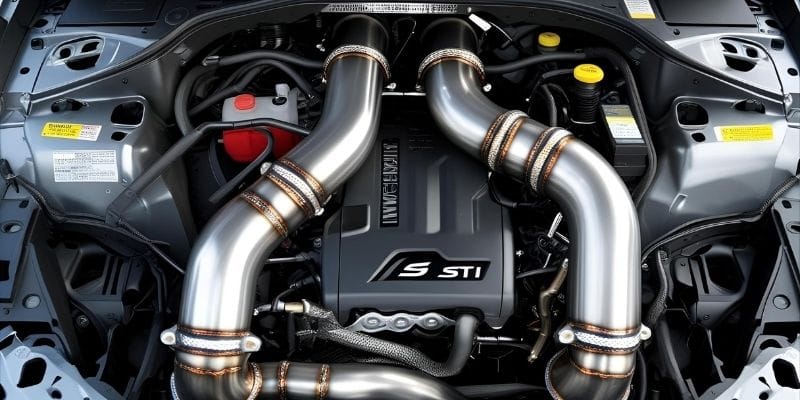
Can You Swap a 2004 STI Downpipe onto a WRX?
This is a common question I hear at Subaru meetups. Technically, you can swap an STI downpipe onto a 2004 WRX, but it’s not straightforward. The mounting points and flange designs are slightly different, so you might need a custom adapter or modifications to make it fit. I’ve seen guys at the shop spend hours tweaking hangers and gaskets to get it right.
Another issue is emissions compliance. The WRX’s stock downpipe has two catalytic converters to meet stricter emissions standards. The STI’s single-cat design is less restrictive but might trigger a check engine light (CEL) on a WRX without proper tuning. When I helped a friend install an aftermarket downpipe, we used a Cobb AccessPort to tune out the CEL, but it still required a pro tune to run smoothly.
If you’re set on swapping, consider an aftermarket downpipe designed for both models, like those from Cobb or Grimmspeed. These often come with adapters and high-flow catalytic converters to balance performance and legality. Just be ready to invest in a tune to avoid engine damage from running too lean.
Aftermarket Downpipes: A Game-Changer for Both Models
Speaking of aftermarket downpipes, they’re a popular upgrade for both the 2004 WRX and STI. Why? They’re designed to maximize turbo performance by reducing backpressure and increasing exhaust flow. Most aftermarket options use 3-inch piping, which is larger than both stock downpipes, and offer catted or catless versions.
When I upgraded my WRX, I went with a catted Grimmspeed downpipe. It gave me about 20 extra horsepower on the dyno, and the sound was incredible—deep and throaty without being too loud. For STI owners, brands like Invidia and Tomei make high-flow downpipes that can push power gains even higher, especially if you’re running a bigger turbo.
Here’s what to consider when choosing an aftermarket downpipe:
- Catted vs. Catless: Catted downpipes have a high-flow catalytic converter for better emissions compliance. Catless ones offer maximum flow but are often illegal for street use.
- Material: Look for stainless steel for durability. My Grimmspeed downpipe has held up through years of salty winters.
- Tune Requirement: Any downpipe upgrade needs a tune to adjust air/fuel ratios. I learned this after installing mine and getting a CEL until I got a pro tune.
The Role of the Catback Exhaust in the Equation
While we’re on the topic, let’s touch on the catback exhaust. The downpipe connects to the midpipe and catback, so they all work together. The 2004 WRX and STI have different stock catback exhaust systems, too. The WRX’s is quieter with a 2.25-inch diameter, while the STI’s is louder and slightly larger at 2.5 inches.
When I paired my new downpipe with an Invidia Q300 catback, the sound transformed. It was like my WRX woke up! But here’s the thing: if you’re swapping downpipes, make sure your catback can handle the increased flow. A mismatched system can cause leaks or reduce performance. For example, pairing a 3-inch downpipe with a stock WRX catback might create a bottleneck.
Emissions and Legal Considerations
Let’s talk about the elephant in the room: emissions compliance. In the USA, especially in states like California, modifying your exhaust system can get you in trouble. The WRX’s stock downpipe is designed to pass emissions with its two catalytic converters. The STI’s single-cat setup is less strict but still legal. If you go catless, you’re rolling the dice on passing inspections.
I once helped a buddy swap back to his stock downpipe before an emissions test. It was a pain, but it saved him from failing. If you want to stay legal, go for a catted aftermarket downpipe with a high-flow catalytic converter. Brands like Cobb and Grimmspeed use GESI cats, which are known for balancing flow and emissions.
Tuning for Success
Whether you stick with stock or go aftermarket, tuning is crucial. The 2004 WRX and STI have sensitive ECUs, and a new downpipe can mess with air/fuel ratios. Without a tune, you risk running lean, which can damage your engine. I use a Cobb AccessPort for my WRX, and it’s been a game-changer. It lets me load off-the-shelf maps for my downpipe and adjust as needed.
For STI owners, a pro tune is even more important if you’re pushing higher boost levels. I’ve seen guys hit 300 wheel horsepower with just a downpipe, catback, and a good tune. But don’t skip this step—trust me, your engine will thank you.
My Personal Experience and Tips
When I started modding my 2004 WRX, I was overwhelmed by all the options. I spent hours reading forums and talking to mechanics. Here’s what I wish I knew from the start:
- Start with a tune: Even a stock downpipe benefits from a tune to optimize performance.
- Check fitment: Not all downpipes are universal. Double-check compatibility with your model.
- Think about sound: A downpipe changes your exhaust note. Test different catbacks to find your vibe.
- Budget for extras: Gaskets, hangers, and tuning add up. My downpipe project cost about $800 total.
I’ll never forget the first time I floored it after installing my downpipe. The turbo spooled so fast, it felt like a new car! But I also learned to respect the process—rushing into mods without research can lead to headaches.
Conclusion
So, are 2004 Subaru WRX and Subaru STI downpipes the same? Not quite. The WRX’s smaller, dual-cat downpipe prioritizes emissions compliance, while the STI’s larger, single-cat design focuses on turbo performance. Swapping them is possible but requires tweaks, and aftermarket downpipes offer the best of both worlds if you tune properly. Whether you’re chasing horsepower or that iconic Subaru rumble, understanding these downpipe differences is key to unlocking your car’s potential.
I’ve loved diving into this topic, and I hope this guide helps you make the right call for your ride. If you’re ready to upgrade, do your homework, check local laws, and get that tune. Your Subaru deserves it! Got more questions? Drop them in the comments, and let’s keep the conversation going.
FAQ
Are 2004 WRX and STI downpipes interchangeable?
No, they’re not directly interchangeable. The WRX has a 2.25-inch downpipe with two catalytic converters, while the STI uses a 2.5-inch downpipe with one. Fitment and flange differences mean you might need adapters or modifications to swap them.
Will an STI downpipe fit on my 2004 WRX?
It can fit, but it’s not plug-and-play. You’ll likely need custom adapters or adjustments to the exhaust system. Also, the STI’s single-cat design might cause emissions issues on a WRX.
Do I need a tune for an aftermarket downpipe?
Yes, absolutely. An aftermarket downpipe changes exhaust flow and air/fuel ratios, so a tune is essential to prevent engine damage. A Cobb AccessPort or pro tune works best.
Can I pass emissions with an aftermarket downpipe?
It depends. A catted aftermarket downpipe with a high-flow catalytic converter, like a GESI cat, has a better chance of passing emissions. Catless downpipes are usually illegal for street use and won’t pass in strict states.
How much horsepower does a downpipe add to a 2004 WRX or STI?
With a proper tune, an aftermarket downpipe can add 15-30 horsepower on a WRX and 20-40 on an STI, depending on other mods like a catback exhaust or turbo upgrade.
What’s the difference between a catted and catless downpipe?
A catted downpipe has a high-flow catalytic converter for better emissions compliance, while a catless one maximizes flow but is often illegal for street use. Catted is safer for daily driving; catless is louder and riskier.