Best Exhaust Setups for Drag Racing (2026): Research Shows
The quietest exhaust that still runs quickest is usually the smallest mandrel-bent system that keeps backpressure low for the power level: about 2.5-inch for many street/strip cars under roughly 600 hp, about 3-inch for roughly 600 to 900 hp, and larger only when the engine truly needs it. For many quarter-mile cars, a 3-inch straight-through system is often a sensible starting point.
Quick comparison
| Product | Badge | Best for | Price | ||
|---|---|---|---|---|---|
 | Dynomax Race Bullet 24250 Exhaust ResonatorDynomax | Our pick | Universal · Resonator · Compact design | $29.78 Price as of 21 Oct 2026 | View |
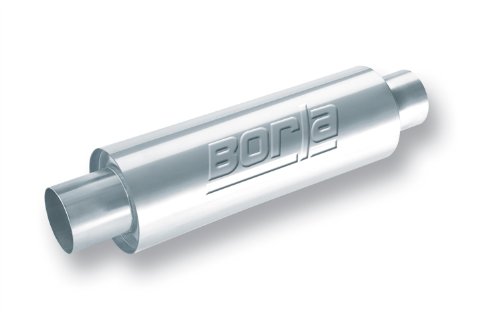 | BORLA 40086 XR-1 Sportsman XR-1 Sportsman Racing Muffler –Borla | Also great | Stainless Steel · Universal · Reversible | $167.99 Price as of 21 Oct 2026 | View |
 | Flowmaster 15430S Outlaw Series Race MufflerFlowmaster | Also great | Aluminized Steel · Race Muffler · Round | $139.95 Price as of 21 Oct 2026 | View |
Use this as a sizing guide, not a loudness contest. The best setup keeps flow up, sound down, and the car legal for the strip or the street it has to leave from.
How we chose
The selection here follows four points: pipe diameter matched to horsepower band, muffler style matched to flow need, fitment and routing that do not create avoidable restriction, and noise compliance for local rules or race-series limits.
Material and fabrication matter too. Mandrel bends keep the tube size consistent through turns, while stainless steel or other high-grade steel helps the system survive heat, vibration, and repeated passes.
We also separated naturally aspirated, turbocharged, and supercharged guidance, because each one reacts differently to exhaust restriction. A turbo car usually needs close attention to turbine flow and outlet routing. A supercharged car often wants a cleaner, lower-restriction path than a mild naturally aspirated build.
Best overall setup: 3-inch mandrel-bent straight-through system
A 3-inch mandrel-bent straight-through system is the best all-around answer for many strip-focused cars because it keeps restriction low without jumping to an oversized pipe that hurts response. It is the quietest setup that still runs hard for a wide middle band of power levels, especially around 600 to 900 hp.
Why this is the default pick for many quarter-mile cars
Exhaust back pressure is the resistance the engine works against as spent gas leaves the cylinders. At high RPM, too much restriction costs horsepower, slows turbo spool, and can flatten torque where the car needs it most. A straight-through muffler with a perforated core gives flow a clean path and usually carries less restriction than a baffled design.
For drag use, that matters more than absolute loudness. A well-sized 3-inch system often gives you the best tradeoff between mph, heat control, and venue compliance. It is also easier to package than a larger system on cars that need ground clearance and a clean exit path.
2.5-inch setup: best for mild street-strip cars
For a milder car, 2.5-inch tubing is often the quietest practical choice that still keeps the car quick. It fits well on many street-strip builds, helps packaging under the floorpan, and can improve response when the engine does not need more area.
When smaller pipe helps response and packaging
Smaller diameter helps when the engine output is modest and the car needs clean routing more than maximum flow. The pipe stays easier to fit around the axle, suspension, and rear bumper exits. In a tight chassis, a properly routed 2.5-inch mandrel system can be the better drag setup because it avoids needless bulk.
Say your car is a 5.0-liter-style street/strip build that still spends time on the highway. A 2.5-inch straight-through system can keep sound in check and still leave enough flow for consistent quarter-mile passes, as long as the rest of the exhaust path is not crushed or pinched.
When 2.5-inch becomes a restriction
Once the engine output climbs, undersized pipe becomes a choke point. That shows up at higher RPM first, then as a loss of mph or a car that feels lazy at the top end. If the build is moving into serious power, 2.5-inch can become too small even if it sounds civilized.
The rule is simple: smaller pipe helps if the engine can use it; it hurts if the engine outflows it. Do not size for noise alone.
3-inch straight-through setup: best for higher-horsepower cars
For many higher-horsepower drag cars, 3-inch tubing paired with a true straight-through muffler is the cleanest balance of flow and control. The perforated core matters because it lets exhaust pass with less turbulence than a heavily baffled design, while still taking the edge off sound.
Perforated-core mufflers and low restriction
The Vibrant race muffler is a 3-inch stainless steel unit described as a true straight-through core. That type of layout is the reason these mufflers show up in drag-oriented setups: they reduce restriction without turning the exhaust into open pipe. A true race muffler like that can be the right answer when rules or neighbors do not allow full-open exhaust.
High-flow mufflers reduce back pressure, but that does not mean every high-flow part is right for every car. A 3-inch straight-through system makes sense when the engine is already asking for more area, or when a turbo system needs a freer outlet to keep exhaust energy moving.
Where larger diameter starts paying off
One competitor explicitly ties larger diameters to better flow in high-horsepower applications, and that matches the basic sizing logic here. Bigger tubing supports more flow, but only when the engine needs it. Oversizing the pipe on a mild car can reduce exhaust velocity and dull the car’s response.
For a high-output naturally aspirated build, a 3-inch system is usually the point where the quiet-versus-quick balance starts to make sense. Go larger only when the power band, class rules, and packaging all support it.
Chambered muffler setup: best for muscle-car drag builds
A chambered muffler can be the right answer for a muscle-car drag build that wants a harder tone without giving up too much flow. Flowmaster-style Delta Flow designs are the familiar example here: they are more aggressive sounding than a straight-through race muffler, yet they can still control noise better than open exhaust.
Delta Flow style design
Chambered mufflers use internal chambers to shape the exhaust pulse, which changes tone and can keep the car within some noise limits. They are popular in older V8 muscle-car applications because the sound is part of the package, but they still need to be matched to power level and pipe size.
That tradeoff matters. A chambered muffler can work well when a driver wants a period-correct note or a slightly quieter setup than open headers, but a straight-through design usually wins on absolute flow. If the car is making serious power, the chambered option needs more careful sizing.
Where chambered mufflers make sense
They make the most sense when the car is a street/strip muscle build, the owner wants some sound control, and the engine is not so far beyond the system that restriction becomes a real penalty. A chambered layout can be a practical middle ground when a class or local rule does not allow open pipe.
They are less attractive when the build is turbocharged and every bit of outlet efficiency matters. In that case, a straighter path usually works better.
Do you need open exhaust for drag racing?
Open exhaust can help when a class allows it and the car benefits from the least possible restriction, but it is not the default best answer. Mufflers often win on repeatability, noise compliance, and fitment. For many cars, a well-sized straight-through system is quick enough and easier to keep legal.
When open exhaust can help
Open exhaust is most useful when the rulebook permits it and the car is already built around maximum flow. It can help a high-output combination leave with less back pressure, especially if the exhaust is short and direct. Some setups are intended for Funny Car chassis, where the packaging and class rules are very different from a street-based build.
Cutouts are the compromise option. They let a car keep a quieter path for tech, staging lanes, or the drive home, then open for a run when the rules allow it.
When mufflers win on rules and repeatability
Mufflers win when the venue has a strict sound limit or the car must remain street legal. They also help if the team wants fewer rule headaches and fewer variable parts hanging under the car. A quiet setup that passes every time is often faster over a season than a louder one that gets sent home or fails tech.
Suppose the car is a turbo small-block that already makes strong torque. Open exhaust may sound appealing, but a legal straight-through system with good routing can produce nearly the same result with less risk of failing a noise check.
Drag exhaust decision table
| Engine type | Horsepower band | Race use | Recommended diameter | Muffler style | Keep catalytic converter? |
|---|---|---|---|---|---|
| Naturally aspirated | Under 600 hp | Street-strip, occasional track passes | 2.5-inch | Straight-through race muffler | Yes, if the car must stay street legal |
| Naturally aspirated | 600 to 900 hp | Quarter-mile focused | 3-inch | Straight-through race muffler | Only if class or street rules require it and the cat is a low-restriction type |
| Turbocharged | Under 700 hp | Strip-first, quiet street use | 3-inch | Straight-through race muffler | Usually yes for street legality, unless the venue permits cat-delete use |
| Turbocharged | 700 hp and up | Race-focused | 3-inch or larger as the combination demands | Straight-through race muffler or cutout strategy | Usually no for race-only use, but follow local law |
| Supercharged | Under 700 hp | Street-strip, bracket use | 2.5-inch or 3-inch | Straight-through or chambered muffler | Yes, if street legality matters |
| Supercharged | 700 hp and up | Strip-focused, louder venue | 3-inch | Straight-through race muffler | Only if required by law or class rules |
The same table applies across combinations, but the priorities shift. Turbo cars care more about outlet efficiency. Supercharged cars often need cleaner flow than they get from small, baffled systems. Naturally aspirated cars can be more forgiving, but they still lose mph when the exhaust is too small.
Failure cases to avoid
- Oversized pipe on a mild engine, which can drop exhaust velocity and make the car feel lazy off the line.
- Poor collector pairing, especially when a center-in, center-out muffler is forced into a layout that needs a different inlet or outlet path.
- Crushed bends or sharp misroutes that create extra back pressure and heat under the car.
- A setup that is too loud for the venue, which can fail local noise limits or race-series rules even if the car runs well.
Which one should you buy?
If the car is a budget street/strip build, start with a 2.5-inch mandrel system and a straight-through muffler. If the car is making more power and the owner wants the quietest setup that still runs quick, move to 3-inch straight-through tubing. For a muscle-car build where sound matters as much as flow, a chambered muffler can make sense.
The Borla 40086 XR-1 Sportsman is the cleanest premium pick here for a universal drag-style layout. It uses T-304 stainless steel, a reversible design, and approximately 3.5-inch center inlet and outlet sizes, which can be useful when the system is being built around higher flow and flexible routing.
The Flowmaster 15430S Outlaw Series is the louder, simpler race-minded option. It uses fully welded 16 gauge aluminized steel and is designed for maximum horsepower and torque, but the lack of internal packing also means it is not the quietest answer for a strict noise venue.
The Dynomax Race Bullet 24250 is the compact choice when space is tight. It is a universal resonator with a lightweight compact design and a 100% welded build, which helps packaging, but it is not the most complete muffler solution for every drag car.
Fitment, routing, and collector layout
Center-in, center-out layouts are common because they make a straight path easier to package. Dual-out variants can help with fitment to existing piping, but they can also add fabrication complexity. The fewer odd transitions and the cleaner the path, the less likely the system is to pick up unnecessary restriction.
Mandrel-bent tubing belongs on strip cars because it keeps the internal diameter consistent through bends. That is not a styling detail. It is the difference between a tube that flows like its labeled size and a tube that narrows at every corner.
Materials and weight
Lightweight materials matter because less exhaust mass can help overall vehicle weight, and the system has to survive heat and vibration. Stainless steel is the usual premium choice for durability. High-grade steel is also common where the builder wants strength and a sensible weight penalty.
The choice is not only about the muffler shell. Hangers, flanges, and weld quality decide whether the system stays sealed and aligned after repeated launches.
How to choose
- Match the diameter to the engine’s power band first, not to the sound you want.
- Use straight-through mufflers when flow matters most and the venue still needs sound control.
- Choose chambered mufflers only when tone, muscle-car character, or class rules make them the better compromise.
- Keep bends mandrel-formed so the tube does not choke itself at every turn.
- Check collector and outlet sizes before you buy anything. A good muffler with the wrong inlet or outlet can still force ugly fabrication.
- Keep a catalytic converter when street legality or series rules require it. Remove it only when the rulebook and local law allow it.
A common rookie mistake is bolting on oversized pipes just because they look aggressive, even though a tighter, properly tuned exhaust can help the car leave harder at the strip. Picture a 650 hp turbo car with a cheap, overlarge exhaust that routes too low under the rear suspension. It may get louder, but it can also lose ground clearance, pick up heat, and become harder to pass tech.
Another common mistake is using a tight, crushed-bend system on a car that otherwise has the right muffler. The car can still feel slower because the restriction is now in the tubing, not the muffler. A quiet exhaust that still runs quick starts with flow-friendly routing.
Frequently asked questions
What is the best exhaust setup for drag racing?
The best setup is usually the quietest mandrel-bent system that still matches the car’s power level.
Should I run open exhaust or mufflers for drag racing?
Open exhaust can be quicker in rules-allowed, race-only use, but it is not the best default for most cars. Mufflers often win when you need repeatability, better noise control, and easier tech compliance. A straight-through muffler usually gives the best compromise.
What exhaust pipe diameter is best for drag racing
For most builds, 2.5-inch is the right size for milder street/strip cars and 3-inch fits stronger quarter-mile combinations. Larger diameters support higher flow, but too much pipe can reduce velocity and hurt response if the engine does not need it.
Do mufflers hurt drag racing performance?
They can, if the muffler is too restrictive or the pipe is too small. A true straight-through race muffler usually keeps the penalty low because its perforated core flows better than many baffled designs. A well-sized muffler is often the smarter legal choice.
Is a straight-through muffler best for drag racing?
- T-304 Stainless Steel construction
- Reversible design for flexible installation
- Made in USA
For most drag-focused builds, yes. A straight-through muffler gives the lowest restriction among common street-friendly options and is the easiest way to keep the car quieter without choking flow. It is especially strong on turbo and higher-horsepower naturally aspirated setups.
Should drag cars use single exhaust or dual exhaust?
Neither is automatically better. Single exhaust is often simpler, lighter, and easier to route on a strip-focused car. Dual exhaust can help fitment on some chassis and can work well when the engine and packaging support it, but it adds complexity without guaranteeing more speed.