Does Seafoam Harm Old Seals and Gaskets
Many people wonder, Does Seafoam Harm Old Seals and Gaskets? This question pops up because Seafoam is a popular engine cleaner, and older cars sometimes have worn-out rubber parts. It can feel tricky to know if using a product like Seafoam is safe for your beloved classic car or high-mileage vehicle.
We’re here to make it simple. We’ll break down exactly what you need to know, step by step, so you can use Seafoam with confidence. Get ready to learn how to keep your engine running smoothly without worrying about those seals and gaskets.
Understanding Seafoam And Its Effects
Seafoam is a chemical product designed to clean deposits from inside your engine. It works by breaking down carbon buildup and other gunk that can make your engine run poorly. This cleaning action is generally beneficial for engine performance.
However, because Seafoam contains solvents, there’s a common concern about how these chemicals might react with the various materials used in older engines, especially rubber and plastic components like seals and gaskets.
This section explores the core components of Seafoam and how they interact with engine parts. We will look at the types of solvents present and their known properties when exposed to rubber and plastic. The goal is to provide a clear picture of the chemical interactions, helping you understand the basis for the common questions surrounding its use.
Key Ingredients In Seafoam
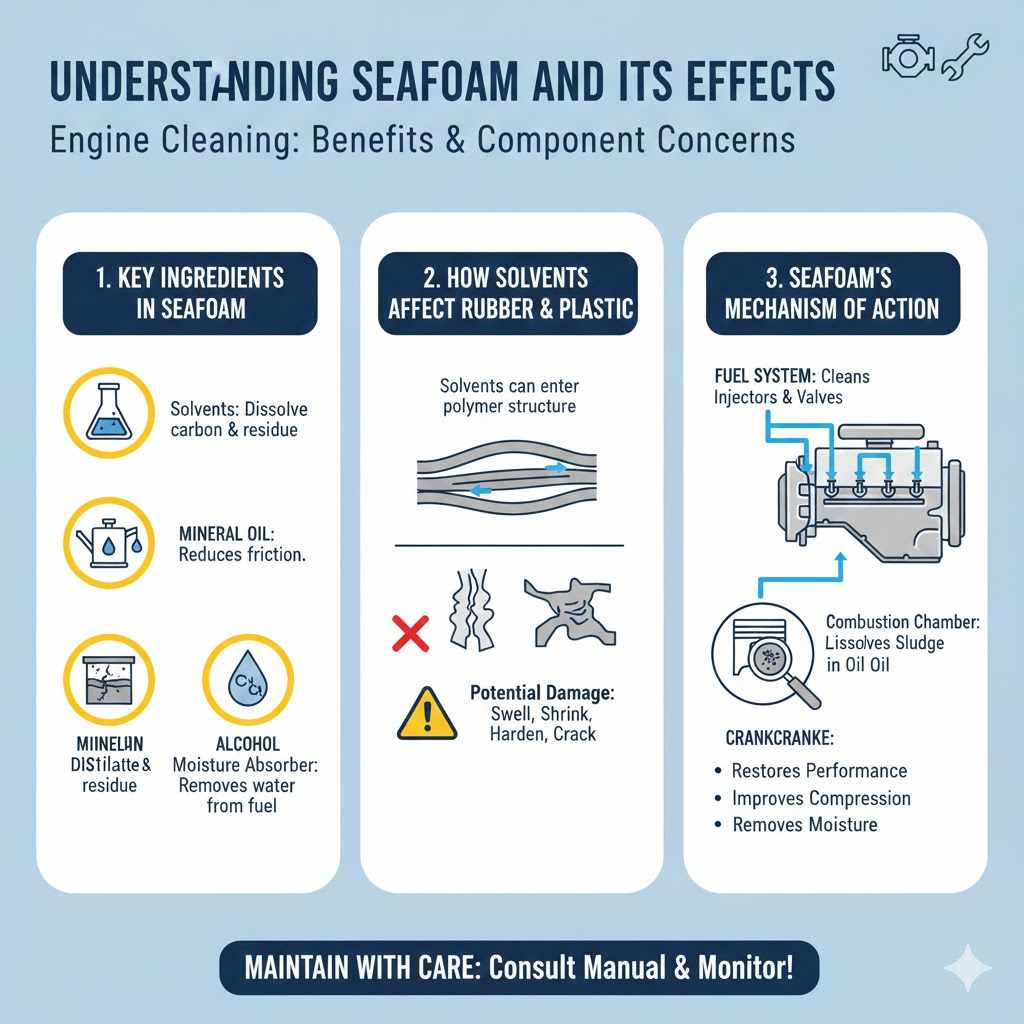
Seafoam’s effectiveness comes from its blend of ingredients. The main components are typically petroleum distillates, mineral oil, and alcohol. Each plays a role in cleaning and lubricating the engine.
- Petroleum Distillates: These are hydrocarbon-based solvents. They are excellent at dissolving carbon deposits and other sticky residues found in engines. Think of them like a powerful degreaser for metal parts.
- Mineral Oil: This ingredient acts as a lubricant. While Seafoam is primarily a cleaner, the mineral oil helps to reduce friction and protect parts as the cleaning process happens. It’s a balancing act to clean without causing excessive wear.
- Alcohol: Usually isopropyl alcohol, this component helps to absorb moisture in the fuel system. Water in your fuel can cause corrosion and poor engine performance. The alcohol helps to get rid of that unwanted water.
The precise formulation of Seafoam is proprietary, meaning the exact ratios and any minor additives are not publicly disclosed by the manufacturer. However, the core functions of these main ingredients are well-understood in automotive chemistry. The balance of cleaning power and lubrication is a key feature advertised by Seafoam.
How Solvents Affect Rubber And Plastic
Solvents are chemicals that can dissolve or break down other substances. In the context of an engine, different materials react differently to various solvents. Rubber and plastic, commonly used for seals and gaskets, are polymers.
Some strong solvents can cause polymers to swell, shrink, harden, or become brittle. This is because the solvent molecules can penetrate the polymer structure, disrupting the bonds between the long chains that make up the material. This disruption changes the physical properties of the rubber or plastic.
For instance, a solvent might leach out plasticizers, which are additives that make rubber flexible, causing it to become stiff and prone to cracking.
Petroleum distillates, a key component in Seafoam, are generally known to be safe for most common automotive rubber compounds in short-term contact. However, prolonged exposure or contact with specific types of rubber or seals could potentially lead to degradation over time. The concentration of the solvent and the specific type of rubber or gasket material are crucial factors.
Seafoam’s Mechanism Of Action In Engines
Seafoam works by circulating through the engine’s fuel and oil systems. When added to the crankcase, it mixes with the engine oil and helps to dissolve sludge and varnish. When added to fuel, it travels through the fuel injectors, intake valves, and combustion chambers.
The solvents in Seafoam work to loosen and break down carbon deposits that form on piston rings, intake valves, and combustion chamber walls. This cleaning action can restore proper function to these components. For example, stuck piston rings can lead to poor compression and oil burning.
Cleaning them can often resolve these issues.
The alcohol component also plays a role by helping to carry moisture out of the fuel system, preventing water from causing rust or freezing in fuel lines. This multi-pronged approach makes Seafoam a versatile product for engine maintenance. Its ability to clean various parts of the engine is why it’s so popular.
The Concern About Old Seals And Gaskets
The main worry when using products like Seafoam in older vehicles is the condition of the seals and gaskets. Over time, rubber components can become hardened, cracked, or brittle due to heat, age, and exposure to various fluids and chemicals. This makes them more susceptible to damage from aggressive cleaning agents.
If Seafoam were to cause significant degradation of these seals and gaskets, it could lead to leaks. Leaks can manifest in many ways, from minor oil seepage to more serious fuel or coolant leaks. These issues not only create messes but can also lead to mechanical problems and costly repairs.
Let’s explore why this concern is so prevalent and what factors make certain seals and gaskets more vulnerable than others. Understanding the potential risks helps in making informed decisions about using Seafoam. We’ll look at common seal materials and their typical wear patterns.
Why Old Seals Are A Concern
Older seals and gaskets are often made from materials that are less resilient than modern ones. Natural rubber, for instance, tends to degrade faster when exposed to heat, ozone, and petroleum products compared to synthetic rubbers like Viton or EPDM used in newer vehicles.
As rubber ages, it loses its elasticity. The molecules within the rubber become cross-linked, making the material stiff. This aging process can be accelerated by repeated exposure to high temperatures and the byproducts of combustion.
A hardened seal can no longer create a tight barrier, leading to leaks.
When an aggressive solvent like Seafoam comes into contact with aged, brittle rubber, it can exacerbate the problem. The solvent might further dry out the rubber, remove protective oils, or even begin to dissolve the degraded material. This can cause small cracks to widen or existing weak spots to fail.
Common Seal Materials And Their Susceptibility
Automotive seals and gaskets are made from a variety of materials, each with different properties. The type of material directly influences how it will react to chemicals like those found in Seafoam.
- Nitrile Rubber (NBR): This is a common and relatively robust synthetic rubber used for many seals, including O-rings and gaskets. It offers good resistance to oils and fuels. However, prolonged exposure to certain aggressive solvents can cause it to swell or become less flexible over time.
- EPDM Rubber (Ethylene Propylene Diene Monomer): EPDM is excellent for resistance to heat, ozone, and weathering. It’s often used for coolant hoses and weather stripping. EPDM generally has good resistance to polar solvents but can be affected by petroleum-based solvents.
- Viton (FKM – Fluoroelastomer): Viton is a high-performance synthetic rubber known for its exceptional resistance to heat, chemicals, and fuels. It is often used in demanding applications like fuel injector seals and high-temperature engine gaskets. Viton is generally considered very resistant to solvents found in engine cleaners.
- Silicone Rubber: This material is prized for its high and low-temperature stability and good sealing properties. However, silicone can be susceptible to swelling and degradation when exposed to petroleum-based fuels and oils, and some solvents.
The exact formulation of Seafoam’s solvents is key. While generally mild for most common rubbers, the age and condition of the seal play a significant role. A well-maintained, newer seal made of a resistant material is less likely to be affected than an old, dried-out seal made of a less resilient compound.
How Leaks Can Occur After Using Seafoam
When Seafoam is used as a fuel system cleaner, it passes through fuel injectors and can come into contact with any rubber components in the fuel lines or at connection points. If an older seal is already weakened or cracked, the solvent action of Seafoam might cause it to fail completely, leading to a fuel leak.
If Seafoam is used as an engine flush added to the oil, it circulates with the oil and can reach oil seals, such as those around the crankshaft or camshaft. Again, if these seals are already brittle and degraded, the solvent might cause them to break down further, resulting in an oil leak.
Sometimes, the “leak” observed after using Seafoam isn’t necessarily caused by the Seafoam itself degrading a seal. Instead, Seafoam’s cleaning action might dislodge carbon deposits that were actually acting as a temporary plug in a small, already-leaking seal. Once the carbon is gone, the leak becomes apparent.
This is sometimes referred to as a “phantom leak” or a leak that was already present but masked.
Does Seafoam Actually Harm Old Seals And Gaskets?
The direct answer to the question “Does Seafoam Harm Old Seals and Gaskets?” is nuanced. While Seafoam is formulated with solvents that are generally considered safe for most common automotive seals and gaskets in typical use, there is a potential for issues, especially with very old, degraded, or specific types of rubber components.
The concern is valid, particularly for vehicles with many miles or those that have not been meticulously maintained. The materials used in older seals might be less resistant to the solvents present in Seafoam compared to modern synthetics. Therefore, while not a universal problem, it’s a possibility that cannot be entirely dismissed.
We’ll now examine the evidence, expert opinions, and practical experiences to paint a clearer picture. Understanding the probabilities and conditions under which harm might occur is crucial for making an informed decision about using Seafoam in your vehicle.
Evidence And Expert Opinions
Many automotive professionals acknowledge the potential for solvents to affect rubber. However, the consensus among many mechanics and manufacturers of such products is that Seafoam, when used as directed, is unlikely to cause widespread or catastrophic damage to seals and gaskets in most vehicles.
The formulation of Seafoam is designed to be effective as a cleaner without being excessively harsh. Manufacturers state their products are safe for all engine types and do not harm seals or gaskets when used according to instructions. This is a common claim across many engine treatment products.
However, independent anecdotal evidence and forums dedicated to automotive repair often feature discussions where users report leaks appearing after using Seafoam or similar products. These reports are more frequent for older vehicles with high mileage. It’s difficult to definitively link these leaks solely to Seafoam without proper laboratory analysis, as other factors could be at play.
The Society of Automotive Engineers (SAE) and similar bodies do not typically issue specific warnings about Seafoam or similar products regarding seal damage. However, general guidelines for using chemical additives in vehicles always recommend following manufacturer instructions and being cautious with older vehicles. The potential for interaction is always present when introducing new chemicals.
Factors Influencing Potential Harm
Several factors can influence whether Seafoam might negatively affect seals and gaskets:
- Age and Condition of Seals: This is the most critical factor. Seals that are already brittle, cracked, or dried out are much more susceptible to damage from solvents. If a seal is already on the verge of failure, any aggressive chemical contact could be the final straw.
- Type of Seal Material: As discussed earlier, different rubber compounds have varying degrees of resistance to solvents. Older vehicles might use less resistant materials, or seals may have degraded over time, changing their chemical makeup.
- Concentration and Exposure Time: How much Seafoam is used and for how long it remains in contact with the seals matters. Using the product at recommended concentrations and for the specified duration is crucial. Extended or excessive use could increase risk.
- Specific Seafoam Product and Formulation: While the general ingredients are known, minor variations in formulation across different Seafoam products (e.g., for fuel system vs. crankcase) could exist, potentially affecting their interaction with rubber.
- Other Engine Conditions: Factors like extreme engine temperatures or the presence of other contaminants in the oil or fuel could interact with Seafoam and affect seal longevity.
For instance, a 30-year-old car with original rubber seals that have never been
When Seafoam Might Be Safe To Use
Seafoam is generally considered safe to use in most vehicles when the following conditions are met:
- Following Instructions: Always use Seafoam exactly as directed on the product label. Do not exceed the recommended amount or duration.
- Vehicle Age and Seal Condition Assessment: If your vehicle is very old or you know its seals are in poor condition, you might want to have them inspected or replaced before using Seafoam. If the seals are in good shape, the risk is lower.
- Targeted Use: For many issues, a single treatment as a fuel system cleaner or a standard engine flush is often sufficient. Repeated, long-term use may increase the risk.
- Modern Vehicles: For vehicles manufactured in the last 15-20 years, the likelihood of significant damage to seals and gaskets from Seafoam is generally very low, as they use more advanced and resistant materials.
One user on an automotive forum reported using Seafoam in their 2005 Honda Civic’s fuel system annually for five years without any noticeable issues with seals or gaskets. Their reasoning was that the fuel system components were relatively modern and likely made of resistant materials. Another user with a 1985 Toyota pickup, however, chose to replace the fuel injector seals before attempting a fuel system cleaner, due to the age and known wear on original components.
How To Use Seafoam Safely With Older Engines
If you are concerned about using Seafoam in an older engine, or if you want to be extra cautious, there are several steps you can take to minimize potential risks. These precautions focus on understanding the state of your engine’s components and using the product judiciously.
The best approach is often preventative maintenance. If your vehicle is old and its history is unknown, a thorough inspection of seals and gaskets is a wise first step. If you decide to proceed with using Seafoam, doing so at the recommended dosage and duration is paramount.
We will cover specific methods for different applications and highlight important checks.
Pre-Application Inspection Of Seals And Gaskets
Before you even open a can of Seafoam, take some time to look over your engine. This visual inspection can tell you a lot about the condition of your seals and gaskets.
Check for any visible signs of leaks. Look around areas where seals and gaskets are located, such as around the oil pan, valve covers, oil filter housing, and fuel lines. If you see fresh oil, coolant, or fuel residue, it indicates a leak.
These areas are prime candidates for potential issues if a solvent is introduced.
Feel the rubber components if you can safely access them. Are they hard and brittle? Do they look cracked or dried out?
This is especially important for older hoses, fuel injector O-rings, and valve cover gaskets. If they appear to be in poor condition, it might be wise to consider replacing them before using any chemical cleaner.
A professional mechanic can perform a more thorough inspection, using their expertise to identify potential weak points you might miss. They can also advise on the likely material of your seals and their expected lifespan.
Recommended Application Methods For Older Vehicles
When using Seafoam in an older vehicle, moderation and following instructions are key. Here are some recommendations for different applications:
- Fuel System Cleaning: Add the recommended amount of Seafoam to your fuel tank. It’s often advised to use it when the tank is about half full, then drive the vehicle until the tank is nearly empty. This ensures the cleaner circulates thoroughly but doesn’t sit in the system for an excessively long time. Avoid using more than the recommended dosage.
- Engine Oil Flush: If you choose to use Seafoam as an oil flush, add it to the crankcase about 50-100 miles before your scheduled oil change. Run the engine at idle or drive gently during this period. Ensure you don’t exceed the recommended mileage for the flush. Immediately after, drain the oil and filter and refill with fresh oil and filter.
- Intake Cleaning (Less Common for DIY): If you are performing an intake clean where Seafoam is introduced directly into the intake manifold, be extra cautious. This method can introduce a larger concentration of solvents directly onto valve seals. Ensure the engine is running at the correct RPM and that the Seafoam is introduced gradually.
The idea is to use Seafoam to clean what needs cleaning without over-exposing or over-taxing older, potentially weaker rubber components. A single, properly executed treatment is often all that’s needed.
Monitoring For Leaks After Application
After you have used Seafoam, it is crucial to monitor your vehicle closely for any new leaks. This is where you’ll find out if any previously hidden issues have surfaced or if any seals have been compromised.
Keep an eye on your oil pressure gauge and check your oil levels regularly in the days and weeks following the treatment. Also, inspect the ground under your vehicle for any new oil spots. Do the same for coolant if you’ve used it in a way that might affect cooling system seals, and be mindful of any fuel smells.
Pay attention to any new warning lights on your dashboard. A sudden appearance of an oil pressure light or a check engine light could indicate a leak that needs immediate attention. Addressing any issues promptly is key to preventing further damage.
If you do notice a new leak, do not panic. It’s important to identify the source of the leak. If it appears to be related to a seal or gasket that could have been affected by Seafoam, you will need to plan for its repair or replacement.
This proactive monitoring can save you from more significant engine problems down the road.
Alternatives To Seafoam For Engine Cleaning
If you have a very old vehicle, or if you are simply hesitant to use a solvent-based cleaner like Seafoam, there are alternative methods for cleaning your engine or fuel system. These options might be gentler on rubber components or offer a different approach to maintenance.
Exploring these alternatives can provide peace of mind and ensure your engine receives the care it needs without unnecessary risks. We will cover several different approaches, from mechanical cleaning to more natural methods, giving you a range of choices. Understanding these will allow you to select the best option for your specific situation.
Mechanical Cleaning And Maintenance
Sometimes, the best way to clean an engine is through good old-fashioned mechanical work and regular maintenance. This avoids the use of chemicals altogether.
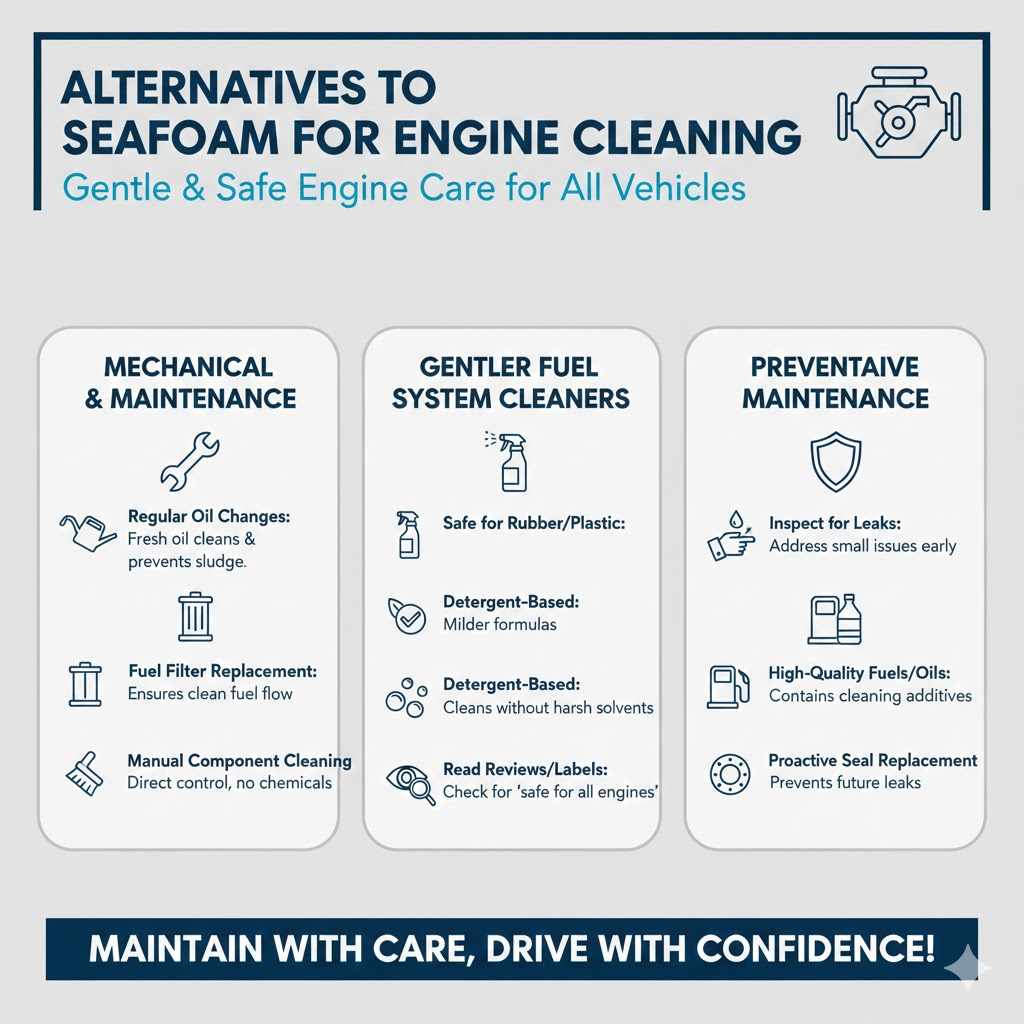
Regular oil changes with high-quality oil are fundamental. Fresh oil has detergents that help keep the engine clean and prevent sludge buildup. Using the correct grade of oil recommended by your vehicle manufacturer is essential for proper lubrication and sealing.
For fuel systems, regularly replacing your fuel filter is a simple yet effective way to ensure cleaner fuel reaches your injectors. A clogged fuel filter can lead to reduced fuel flow and can sometimes make older fuel systems work harder.
In some cases, manual cleaning of specific components, like removing intake valves for manual cleaning, can be performed by experienced mechanics. This is a more labor-intensive process but provides direct control over what is being cleaned and avoids introducing any chemicals that could potentially harm seals.
Gentler Fuel System Cleaners
Not all fuel system cleaners are created equal. Some are formulated to be less aggressive than others, offering a balance between cleaning power and material compatibility.
Look for fuel system cleaners that specifically state they are safe for all rubber and plastic components. These often use milder solvent packages or a different approach to cleaning deposits. For instance, some may rely more on detergents and less on harsh solvents.
Read reviews and product descriptions carefully. If you’re concerned about older seals, a product marketed as “mild” or “safe for all engines” might be a better choice. Always compare the ingredients if possible, though this can be difficult with proprietary formulations.
A practical example: a user with a classic car might opt for a fuel system cleaner that claims to be specifically designed for older vehicles or has a reputation for being gentle on rubber seals. They might choose this over a more aggressive, high-power cleaner, prioritizing the longevity of their engine’s original components.
Preventative Maintenance Strategies
The best way to avoid issues with seals and gaskets, whether from age or from cleaning products, is through consistent preventative maintenance.
Regularly inspect your engine for any signs of wear or leaks. Addressing small issues before they become big problems is always more cost-effective and less risky. This includes checking hoses, belts, and fluid levels.
Using high-quality fuels and oils can also contribute to the longevity of your engine’s components. Top-tier fuels often contain detergent additives that help keep the fuel system clean naturally. Choosing oils recommended by your vehicle manufacturer ensures optimal performance and protection.
Consider a proactive replacement of key seals and gaskets if your vehicle is particularly old or has high mileage. For example, replacing the valve cover gasket or oil pan gasket as part of a routine service on a classic car can prevent future oil leaks and the need for aggressive cleaning methods.
Frequently Asked Questions
Question: Can Seafoam damage new seals and gaskets?
Answer: Generally, new seals and gaskets made from modern synthetic materials are designed to be highly resistant to common automotive chemicals, including those found in Seafoam. Therefore, damage to new components is highly unlikely when Seafoam is used as directed.
Question: Is Seafoam safe for diesel engines concerning seals?
Answer: Yes, Seafoam is typically safe for diesel engines concerning seals. The formulation is designed to be compatible with both gasoline and diesel fuel systems and their associated rubber components. However, always follow the specific product instructions for diesel applications.
Question: How long does it take for Seafoam to work its magic?
Answer: The effectiveness of Seafoam can vary. For fuel system cleaning, it often works as you drive, with noticeable results after a full tank or two have been consumed. For engine oil flushes, results are typically seen during and after the oil change process.
Question: Should I use Seafoam if my car leaks oil already?
Answer: If your car already leaks oil, it’s best to address the leak first by repairing or replacing the faulty seal or gasket. Using Seafoam in an engine with existing leaks might potentially worsen the situation by further degrading the compromised seal, or by cleaning away a temporary plug.
Question: Can Seafoam clean out sludge without harming seals?
Answer: Seafoam is designed to clean sludge and deposits. While it contains solvents, the formulation is generally considered safe for most engine seals. However, very old or deteriorated seals may be more susceptible.
It’s always a good idea to inspect seals if your vehicle is of significant age or mileage.
Conclusion
Ultimately, the question Does Seafoam Harm Old Seals and Gaskets? has a simple answer. While Seafoam is formulated to be safe for most automotive seals and gaskets when used as directed, very old or degraded rubber components may be more susceptible to damage.
Careful inspection and adherence to usage instructions are key. By taking preventative measures and monitoring your vehicle, you can confidently use Seafoam for engine maintenance.